The honest answer is that you cannot fully check a second-hand kids helmet, because its crash history is unknowable — and a helmet that has already absorbed one impact may fail in the next one. You can inspect certification, age, foam, shell, and straps, and those checks catch the worst helmets. But a new helmet is the safe default, especially for kids.
Hand-me-downs make sense for bikes and scooters, so it is natural to ask whether helmets can be passed along too. This guide walks through what you can check, what you can never check, and when a used helmet should simply be refused.
Why Is a Second-Hand Helmet Risky in the First Place?
A bicycle helmet protects by crushing. The foam liner is designed to deform permanently in a crash, absorbing energy so your child’s head does not. That damage is often invisible: the shell springs back while the foam underneath stays compressed.
With a used helmet, you are trusting a stranger’s — or even a sibling’s — memory of every fall, drop, and car-trunk ride the helmet has survived. A drop onto concrete from a handlebar can be enough to compromise foam. No visual inspection can reveal crushed foam that hides under an intact shell.
That is why safety organizations generally advise against buying used helmets. If the helmet’s past is unknown, its protection is unknown too.
What Can You Actually Check on a Used Helmet?
Start with the certification label inside the helmet. Bike helmets sold in the US must meet the CPSC standard, and the label should be present and readable, along with the manufacturer name and the date of manufacture. No label means no proof the helmet was ever certified — walk away.
Check the age. Manufacturers generally suggest replacing a helmet after several years of use — in general terms, often around five years — because sweat, heat, sunlight, and everyday knocks degrade materials. If the date sticker shows a helmet older than that window, pass on it even if it looks new.
Then confirm the model has not been recalled. Manufacturers and the US Consumer Product Safety Commission list recalled helmets by brand and model; a quick search of the exact model name tells you whether it was ever pulled from sale.
How Do You Inspect the Foam, Shell, and Straps?
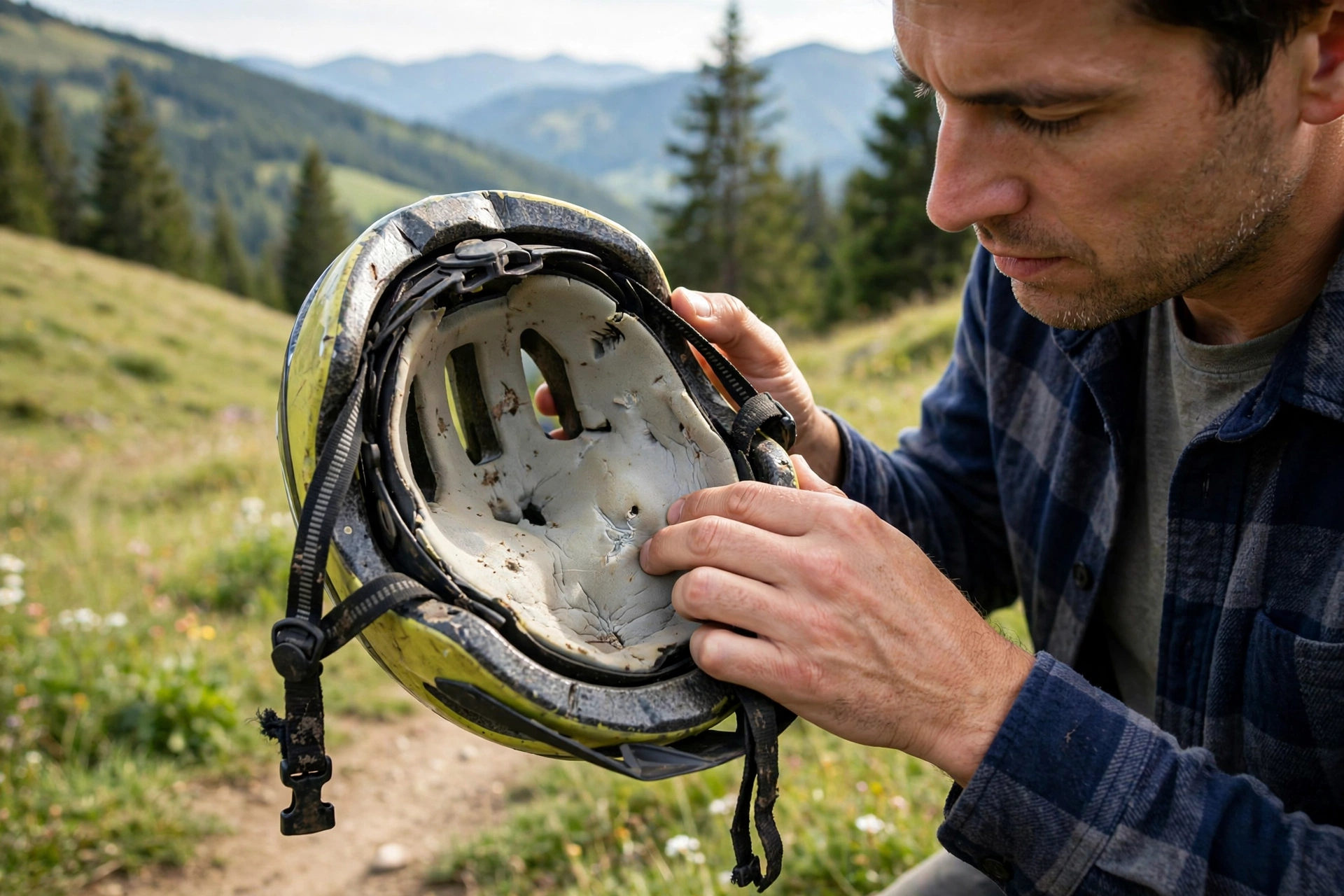
Remove the removable pads and press the foam liner gently with your thumbs all around. It should feel firm and uniform. Soft spots, dents, cracks, crumbling edges, or foam separating from the shell are all retirement signs.
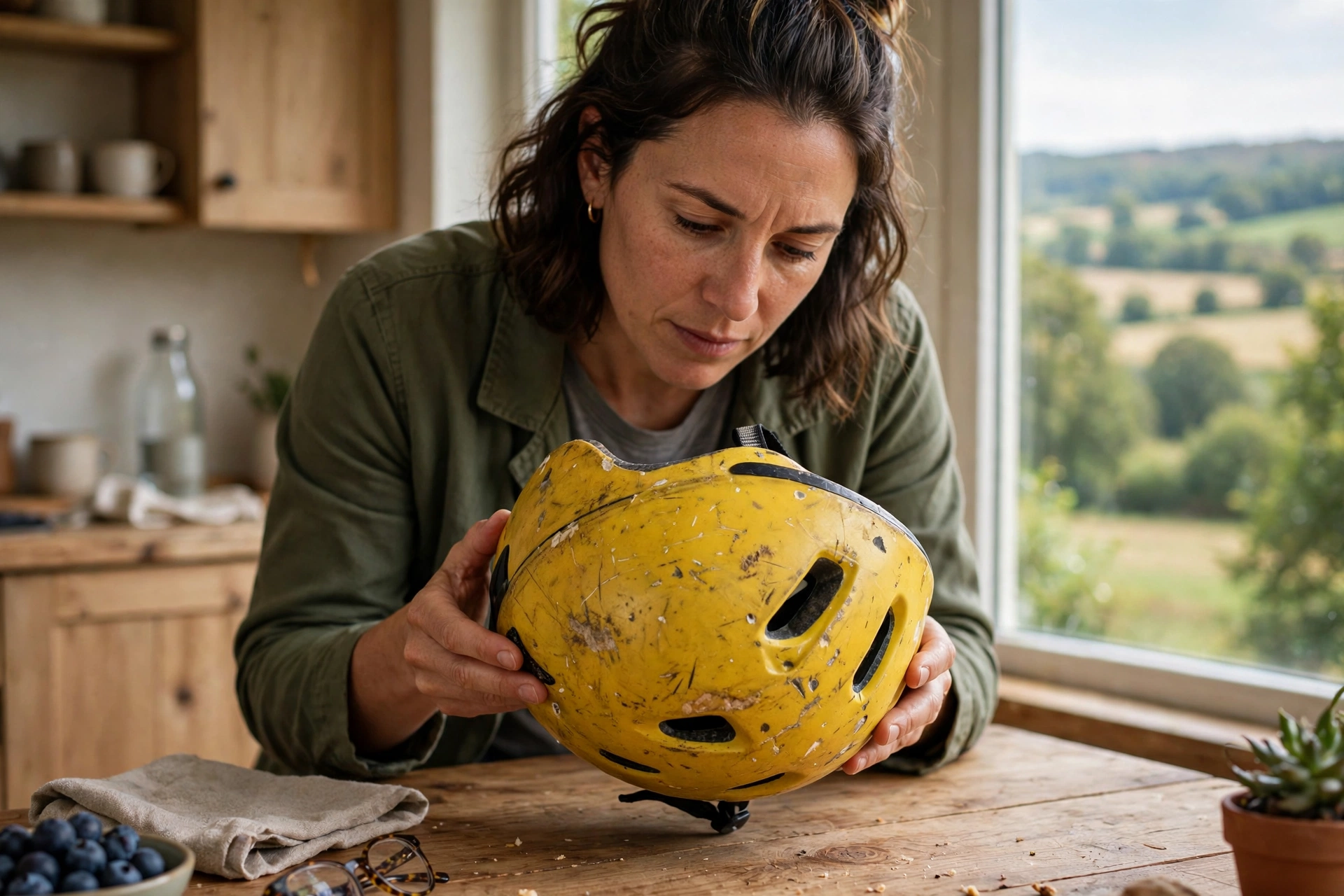
Examine the outer shell under good light for cracks, deep scratches, dents, and sun fading. Squeeze the shell gently; a creaking or flexing shell on a rigid helmet is a bad sign. Check that the shell is still firmly attached to the foam everywhere.
Then test the retention system. Straps should not be frayed, cut, or stiff with grime, the buckle should click closed and hold under a firm tug, and the adjustment dial should turn and hold its setting. Missing pads matter too: pads control fit, and a helmet missing its pad set rarely fits safely.
Look inside the vents and along the foam’s edge for mold, mildew smell, or signs the helmet lived outdoors. Squeeze each strap’s stitching and anchor points — if a strap pulls loose from the shell or the stitching is rotten, the helmet fails. Also confirm the helmet is complete: no missing buckle half, no cracked adjustment dial, and no aftermarket parts swapped in from a different helmet.
What Questions Should You Ask the Seller or Previous Owner?
Ask directly: has this helmet ever been in a crash or dropped hard? Why is it being sold? How was it stored? A helmet stored in a hot car or attic ages faster than one kept in a cool closet.
For a sibling hand-me-down within your own family, you have a real advantage — you may actually know its history. A helmet that was outgrown, never crashed, properly stored, and is still within its usable age is the one situation where passing a helmet down is reasonably defensible.
Even then, fit the helmet carefully to the new child. Helmets are personal safety gear sized to one head, and a hand-me-down only works if it truly fits the next rider. Technologies inside also evolve — newer helmets increasingly include rotational protection, as explained in our article on what MIPS is and how it works — which is another point in favor of buying new when you can.
When Should You Refuse a Used Helmet Outright?
Refuse any helmet with no certification label, an unreadable or missing date, visible cracks or dents, compressed foam, damaged straps or buckle, or a seller who cannot explain where it came from. Refuse helmets from bulk thrift bins where helmets of unknown origin are mixed together.
Also refuse a helmet that does not fit your child perfectly today. “They will grow into it” is not a safe standard for head protection.
And if your budget is the reason for buying used, look at new entry-level certified helmets first. Basic certified kids helmets are among the least expensive pieces of safety gear in cycling, and sales and community helmet programs often lower the cost further.
What Should You Do With a Helmet That Fails the Check?
Do not donate it onward — that just passes the risk to another family. Cut the straps so no one else can use it, and recycle or dispose of the helmet according to the manufacturer’s guidance. Some brands run take-back or crash-replacement programs that offer a discount on a new helmet when you return a damaged or old one, which softens the cost of doing the right thing.
Then buy the replacement new, fit it properly, and write the purchase date inside with a marker so the next age check takes seconds.
Frequently Asked Questions
Q: Is it ever OK for a younger sibling to use an older child’s helmet?
A: It can be, if you know the helmet was never crashed or dropped hard, it is within its usable age, all parts are intact, and it fits the younger child properly. If any of those are uncertain, buy new.
Q: Can I wash and sanitize a second-hand helmet?
A: You can wash removable pads and wipe the shell with mild soap and water, but cleaning does not restore impact protection. Hygiene is fixable; hidden foam damage is not.
Q: How old is too old for a kids helmet?
A: In general terms, manufacturers suggest replacing helmets after about five years of use, and kids usually outgrow one first. Check the manufacture date inside and retire older helmets.

Olivia
Writer at Helmet Today, covering helmet reviews, fit and riding safety.