There is no single legal minimum age for a child riding on the road in most places — the real answer depends on your child’s skills, judgment, and the traffic on the specific road, plus any local rules that apply where you live. Many children are ready for quiet residential streets years before they are ready for busy roads, and a helmet is required thinking at every stage.
Parents often hope for a magic number. Instead, use the milestones in this guide to judge readiness honestly, and build up from driveways to calm streets to busier routes in stages.
Is There a Legal Minimum Age for Riding on the Road?
In general terms, US states regulate bicycle helmets and equipment far more than rider age. Many states set helmet requirements by age — commonly for riders under 16 or 18 — but a blanket minimum age for riding a bike on public roads is unusual. Some cities and towns have local ordinances, and rules for riding on sidewalks vary widely by place.
That means the responsibility lands on parents. The law may allow a young child on a quiet street, but legality is not the same as readiness. Check your local ordinances, then judge the child, the bike, and the road in front of you.
Remember too that where a child may ride — road, sidewalk, or bike lane — changes the risks. Sidewalks feel safer but hide their own hazards at every driveway, where drivers do not expect fast-moving children.
What Skills Should a Child Have Before Riding on the Road?
Road riding needs automatic bike handling, because attention must go to traffic, not balance. Your child should be able to start and stop smoothly, ride a straight line without wobbling, brake with both brakes without skidding, and look over a shoulder without swerving.
They should also manage one-handed riding briefly, because signaling a turn means taking a hand off the bars. Add scanning at intersections, yielding, and understanding right of way — first as a passenger in conversation, then in practice on quiet streets with you beside them.
Physical readiness plays a part too. The bike should fit your child now, with feet able to reach the ground securely at stops and hands able to squeeze both brake levers with real strength. A child wrestling an oversized bike has no attention left for traffic. Strength, coordination, and focus all mature at different rates, which is why two children of the same age can be a year or more apart in road readiness.
Finally, test judgment, not just mechanics. Does your child stop at every driveway and side street without being reminded? Do they race friends, dart after balls, or show off? Honest answers matter more than birthdays.
How Do Parents Usually Build Up Road Riding in Stages?
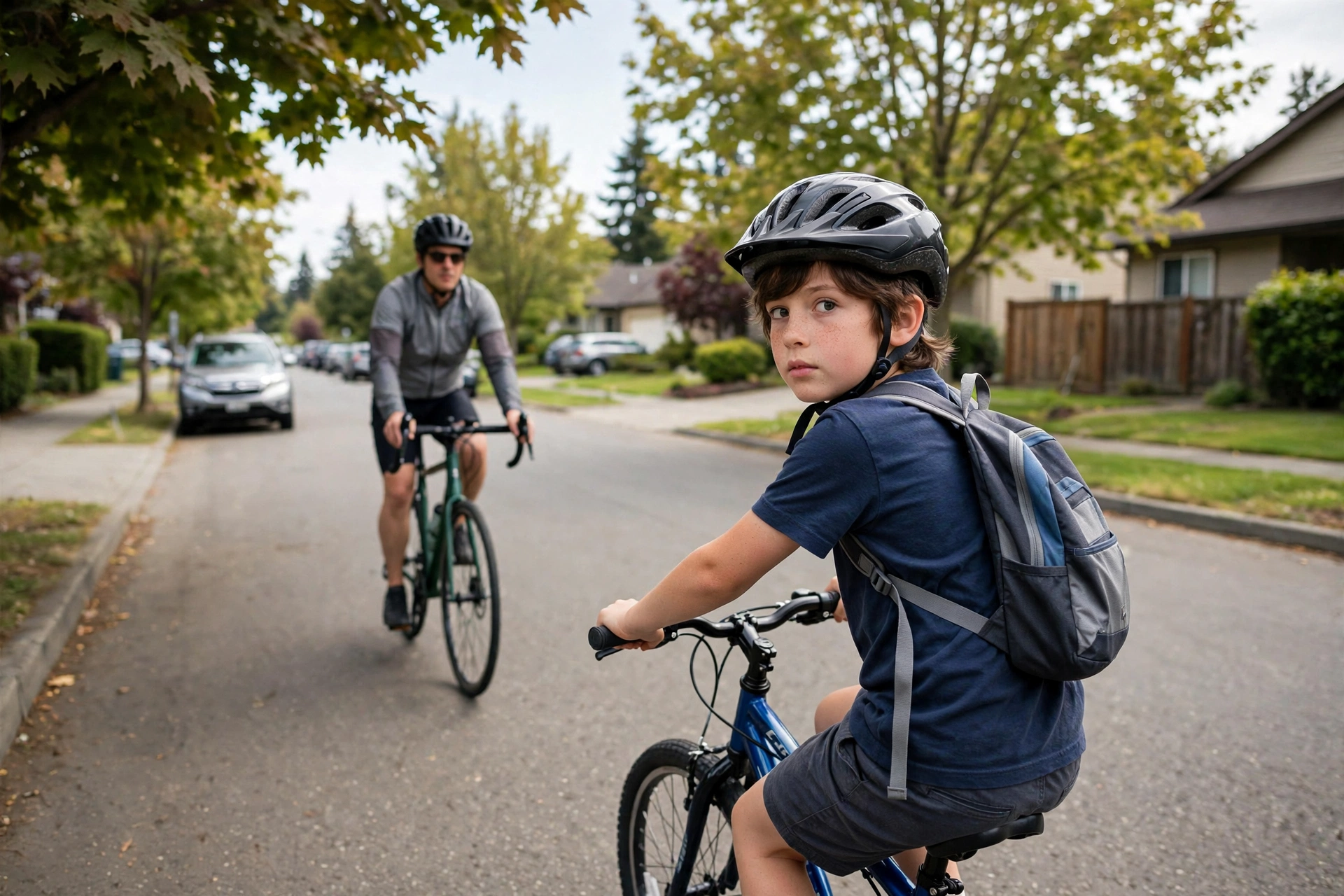
A common progression starts with driveways and empty parking lots, moves to riding with a parent on very quiet residential streets, then to short, familiar routes — to a friend’s house or school — once the child has proven consistent stopping and scanning.
Riding together is the bridge. Ride behind and slightly to the traffic side of your child, call out hazards, and debrief mistakes calmly afterward. Many families ride the school route together several times before letting a child ride it alone or with friends.
Group riding with peers deserves its own test. Even a careful child may follow friends through a stop sign. If your child cannot hold the rules when friends break them, they are not ready for unsupervised road riding yet, whatever their age. This staged approach, building skills before exposure, is the same logic behind layered protection in equipment — including systems covered in our guide to what MIPS is and how it works.
What Role Does the Helmet Play at Every Age?
The helmet rule never graduates away. A properly fitted, certified helmet is essential on the road at six, twelve, or sixteen. Remember that many state helmet laws cover young riders explicitly, so skipping the helmet can be both unsafe and unlawful.
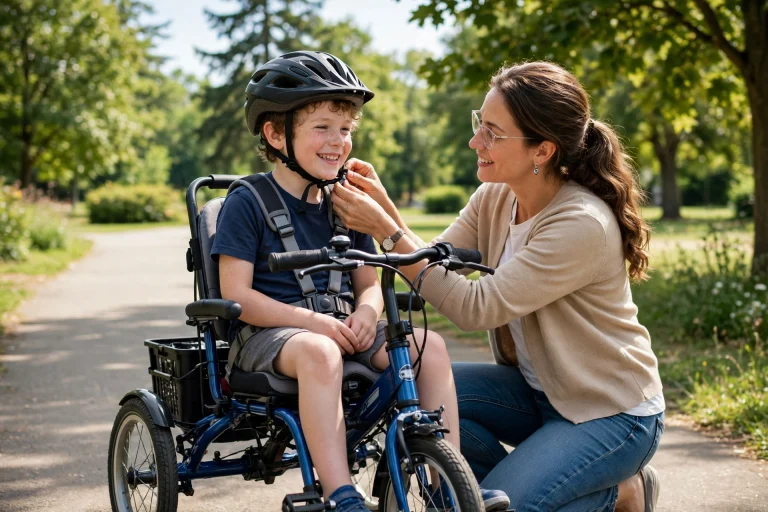
Fit changes as kids grow, so recheck it each season: level on the head, low on the forehead, snug without rocking, straps in a V under the ears. An old, outgrown, or crashed helmet should be replaced before road riding begins, not after the first scare.
Model the behavior. Children who watch parents grab a helmet for every ride treat it as normal; children who hear “do as I say” treat it as a childhood rule to outgrow.
How Do Traffic and Road Type Change the Answer?
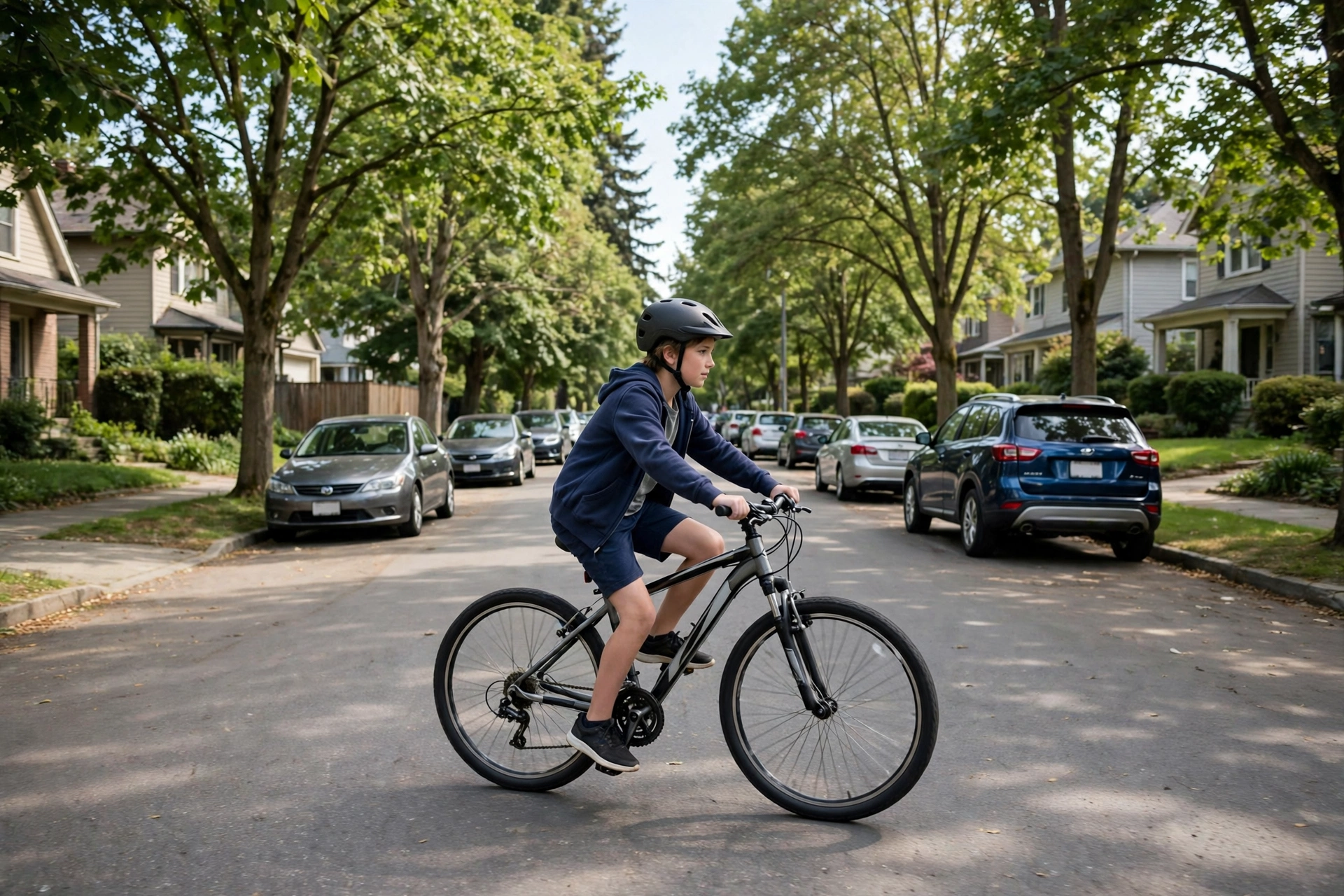
The same child can be ready for one road and nowhere near ready for another. Quiet, low-speed residential streets with good visibility are the starting point. Roads with higher speeds, heavy traffic, parked cars hiding driveways, or complex intersections demand far more skill and judgment.
Route choice is a parenting tool. Pick the calmest route, even if it is longer. Ride it yourself first and count the hazards: blind corners, fast crossings, stretches without space for a wobbling rider. If a route worries you on your own bike, it is not a route for your child yet.
Time of day counts as well. A route that is gentle on a Sunday morning may be a different world at weekday rush hour.
Visibility is part of readiness too. As children move onto roads, bright clothing, a white or brightly colored helmet, and lights in dull weather help drivers spot them early. Teach route planning as a skill in itself: a longer route on calm streets beats a short route along a fast road every time, and planning the trip together is good practice for the day your child rides it alone.
Frequently Asked Questions
Q: What age do most kids start riding on quiet streets?
A: It varies a lot. Many children ride residential streets with a parent somewhere in the later elementary years once they can stop, scan, and follow rules consistently — but skills, not age, should decide.
Q: Does my child legally have to wear a helmet on the road?
A: In many states, yes — helmet laws commonly cover riders under 16 or 18, and some cities require helmets for everyone. Even where no law applies, a certified helmet is essential.
Q: Should my child ride on the sidewalk instead of the road?
A: Local rules differ, and sidewalks carry their own risks at driveways and crossings. Teach your child that every driveway is a mini-intersection wherever they ride.

Olivia
Writer at Helmet Today, covering helmet reviews, fit and riding safety.