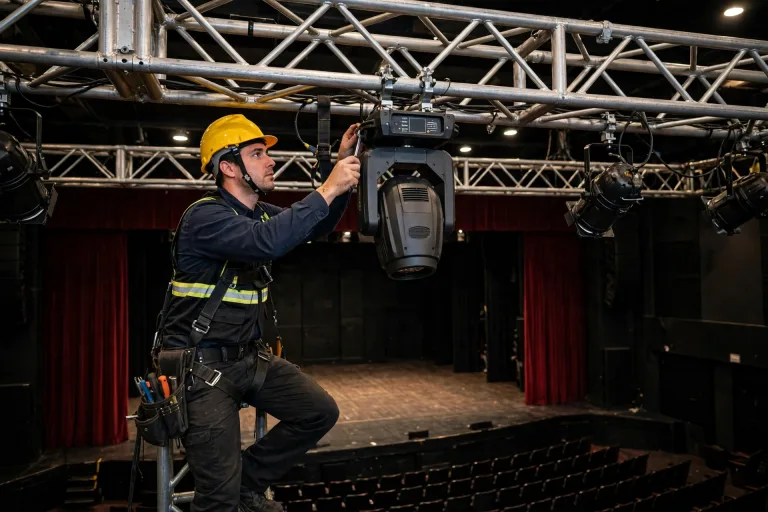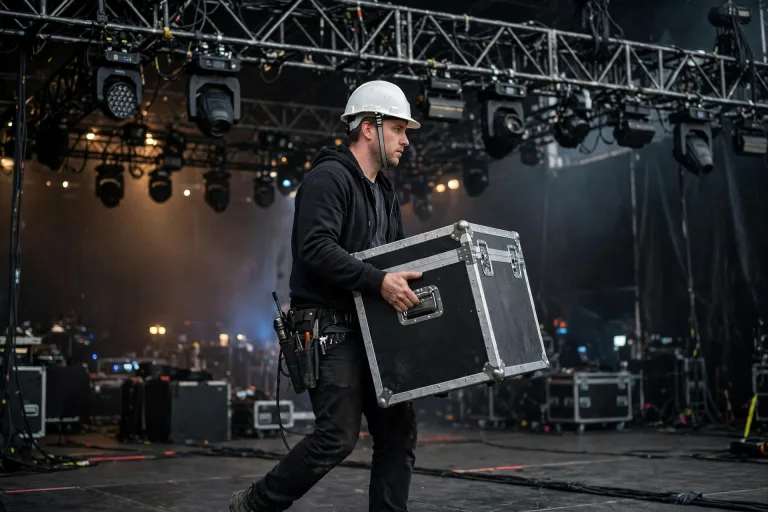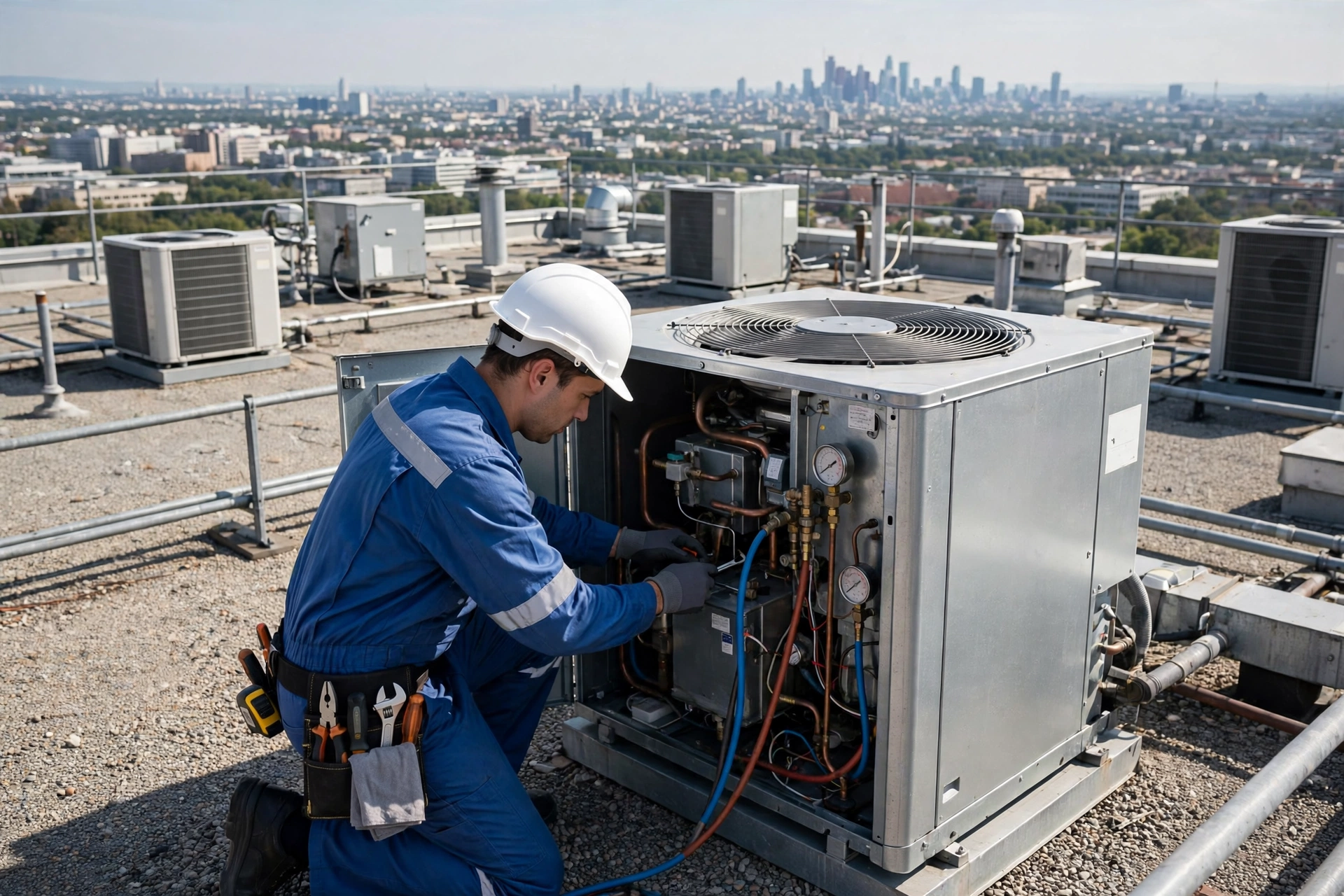
A helmet for HVAC technicians is a hard hat worn by a person who installs and repairs heating, ventilation, and air conditioning systems, and in general terms it should protect the head in plant rooms, roof spaces, and on rooftops. An HVAC technician works in many different places in one day, from a basement plant room to a rooftop unit, and may be climbing ladders, working in a ceiling void, or standing beside heavy equipment. A helmet is part of the protective clothing for that job, and it should be worn whenever the site rules ask for it, not only when a job looks risky.
The work of an HVAC technician is physical and varied, and the head can be at risk in ways that are easy to overlook. A technician may bang their head on a low duct, a pipe, or a beam in a ceiling void, or be struck by a tool or a part that falls from above. In general terms, a helmet for HVAC technicians is a safety item that should fit well, stay comfortable in warm plant rooms, and be checked often.
Why do HVAC technicians need a helmet?
HVAC technicians need a helmet because they work in tight spaces, under overhead equipment, and around machinery that is being installed or repaired. A technician may be working in a ceiling void with ducts and pipes at head height, or standing under a unit that is being lifted into place, and a knock to the head can happen in a moment. A helmet spreads the force of a blow and helps to protect the skull from a serious injury if something strikes the head.
A helmet does not stop a fall, but it can reduce the harm if the head strikes something hard. In general terms, a helmet is worth wearing because the risks in HVAC work are present all through the day, not only during one task.
What kind of helmet is best for HVAC technicians?
The best helmet for HVAC technicians is, in general terms, a hard hat that meets the safety standard required by the site and fits the technician well. Most HVAC technicians wear a standard industrial hard hat with a smooth shell, because it is light, easy to clean, and gives protection against bumps and falling objects.
Some technicians choose a helmet with a chin strap, which keeps the helmet in place when they climb a ladder, bend into a ceiling void, or look up at a unit above them. A chin strap is useful in HVAC work, because a helmet that slips forward over the eyes or falls off a rooftop is no help at all. A technician should also think about comfort and ventilation, because plant rooms can be warm and a helmet that feels hot will be tempting to take off. A helmet with an adjustable headband and good ventilation is easier to wear for a full working day.
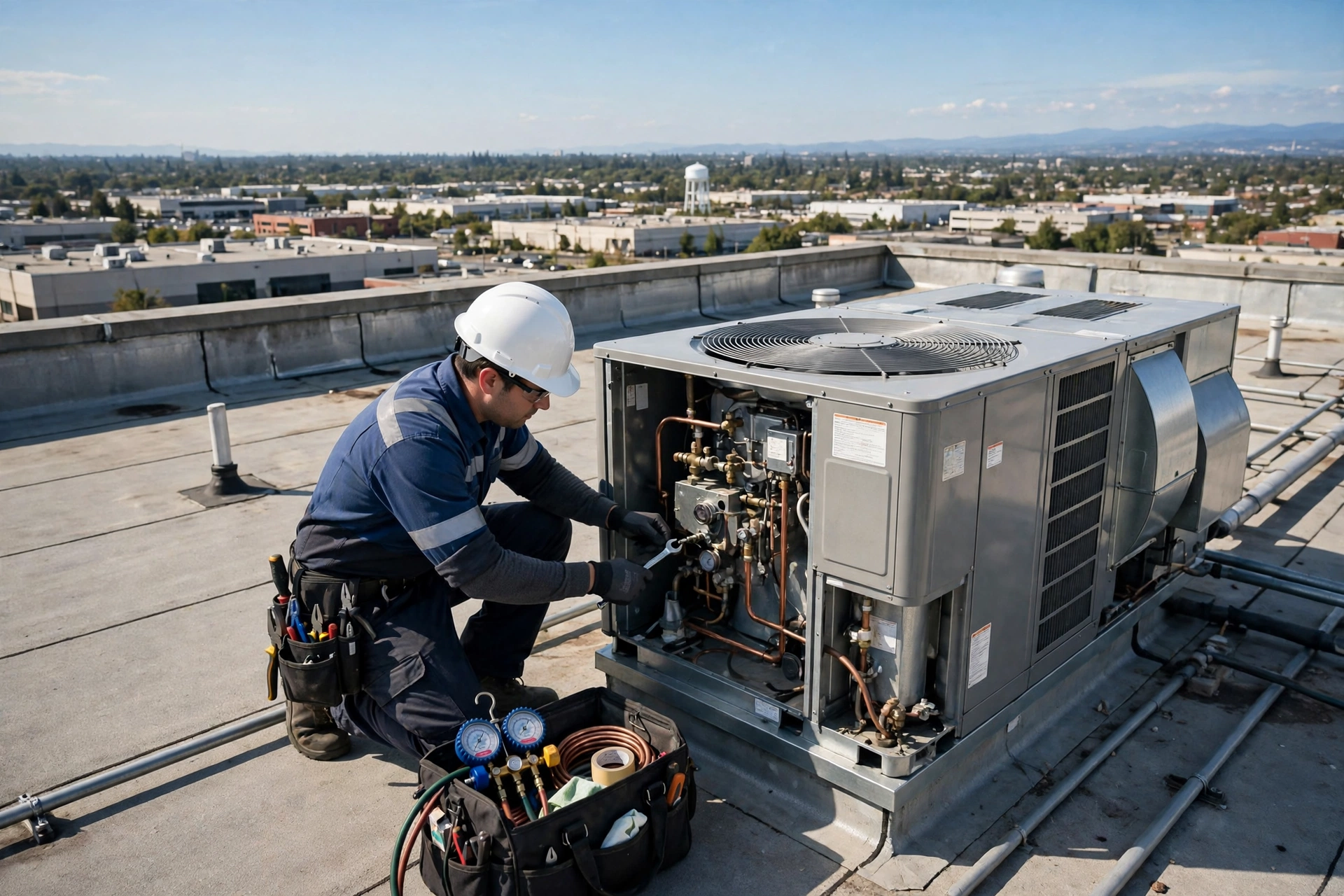
How should a helmet for HVAC technicians fit?
A helmet for HVAC technicians should fit snugly, sit level on the head, and stay in place when the technician climbs, bends, or looks up. The helmet should cover the top of the head and the forehead, and the headband should be adjusted so that the helmet does not rock from side to side. A chin strap, where one is fitted, should be fastened securely every time the technician is on a roof, a ladder, or a work site, because a loose strap lets the helmet lift or slide at the worst moment.
The fit should be checked with the other clothing the technician wears, such as a hood, a cap, or ear protection, because these can change how a helmet sits. A hood should lie flat under the helmet without bunching up, and ear protection should sit neatly without pushing the helmet forward. The technician should also check that the helmet does not block their hearing, because an HVAC technician needs to hear warnings, machinery, and calls from other workers, as well as the sound of a unit running.
What safety rules apply to HVAC technicians on site?
The safety rules for HVAC technicians are set by the site, because the technician may be working on a roof, in a plant room, or on a live construction site, and each place has its own risks. In general terms, a technician should wear a helmet where the site asks for it, should use a ladder safely, and should never work on live electrical equipment without the right training and permission. A technician who is working at height should also follow the site rules on fall protection, and should not step onto a roof that looks unsafe.
Some sites ask technicians to wear a bright helmet and a high-visibility jacket, so that they can be seen by other workers and by drivers on site. A technician who is unsure about the safety rules should ask a supervisor, because a short question can save a problem later in the day, and a technician who feels unsafe should stop the work and tell the supervisor at once.
How should an HVAC technician’s helmet be looked after?
An HVAC technician’s helmet should be looked after with regular cleaning and sensible storage, in the same way as any industrial helmet. After a day’s work, the technician should wipe the shell clean, let the inside dry out, and check the headband for wear. A helmet that is stored wet or dirty can smell, can irritate the skin, and can wear out faster, so it should be kept in a dry place away from direct heat and sunlight. The helmet should be stored in a bag or in the van, not thrown on the floor, where it can be stepped on or damaged.
The helmet should also be checked for cracks, dents, or damage to the shell before every job, and in general terms a helmet that has taken a serious impact should be replaced rather than used again. Technicians who want to learn more about how helmets protect the head may find it useful to read about features that can help in an impact, including a system designed to reduce rotational forces, such as MIPS, which is found in some helmets. A well-kept helmet, worn every time, gives an HVAC technician the best chance of getting through a working day without a head injury.
Do HVAC technicians have to wear a helmet?
Yes, in general terms a helmet is required for HVAC technicians on most construction and industrial sites, and the site rules decide where it must be worn. A technician should follow the site rules and wear the helmet whenever the site asks for it.
Can a normal hard hat be used for HVAC work?
A normal hard hat that meets the site standard is often the right choice, as long as it fits well and is comfortable in warm plant rooms. A technician should check the site rules first, because some sites have rules about colour or chin straps.
When should an HVAC technician’s helmet be replaced?
An HVAC technician’s helmet should be replaced after a hard impact, or when it no longer fits well, shows cracks or damage, or has become hard to keep clean. When in doubt, replace it rather than keep working in it.

Olivia
Writer at Helmet Today, covering helmet reviews, fit and riding safety.