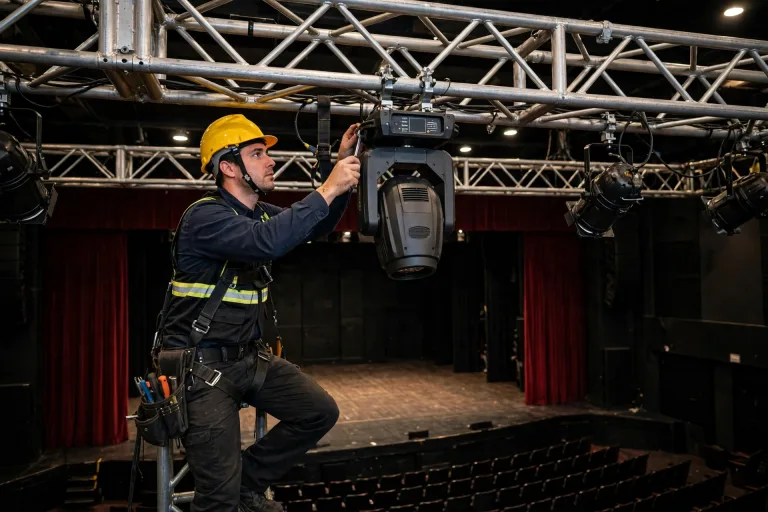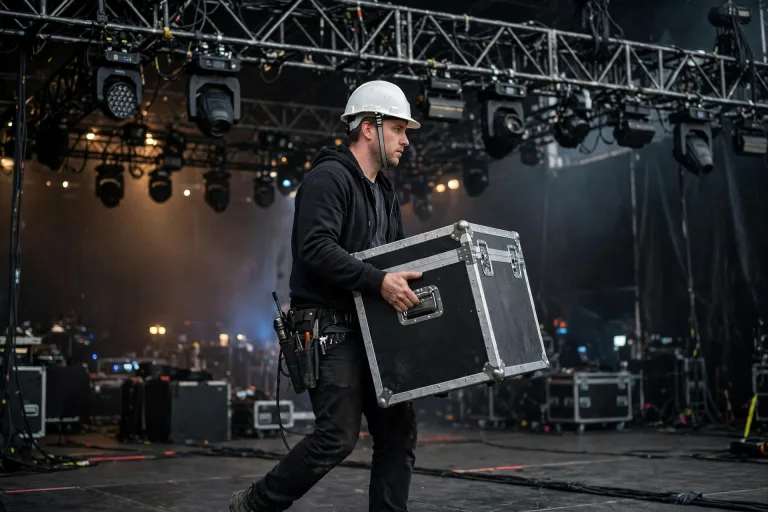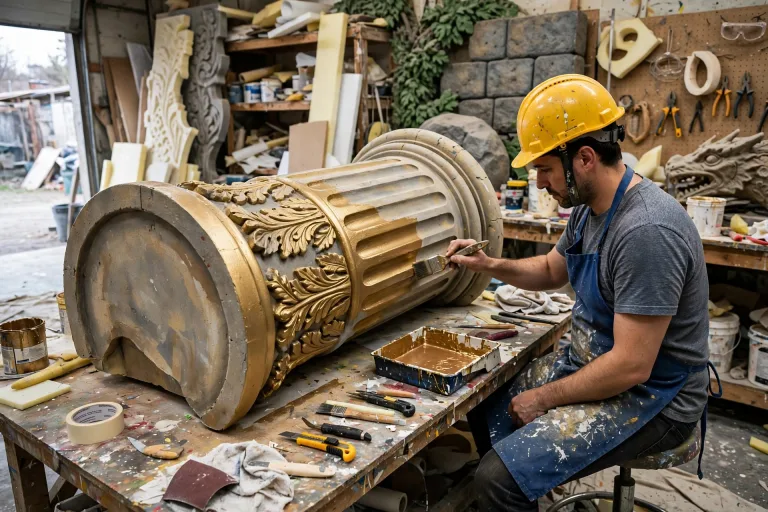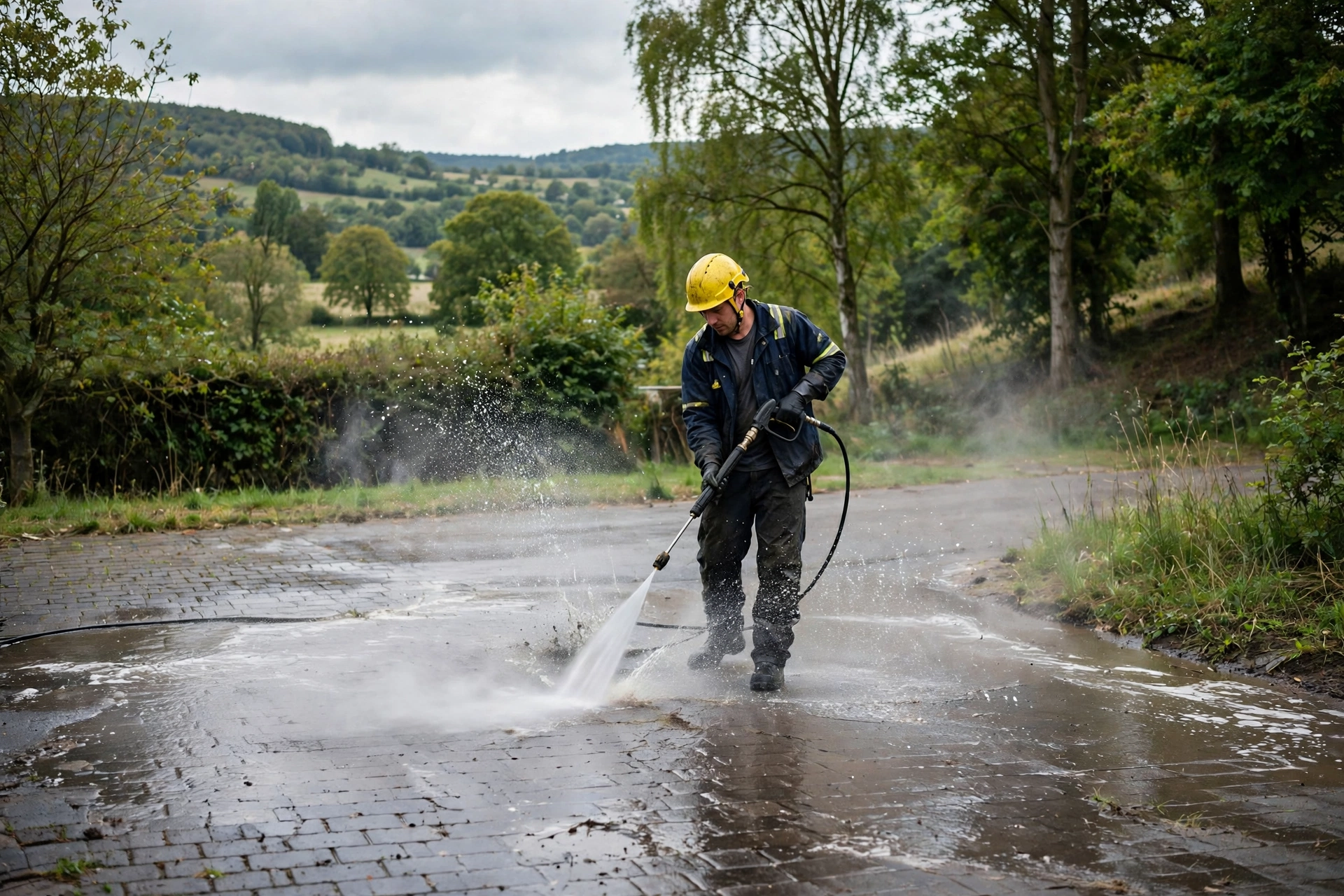
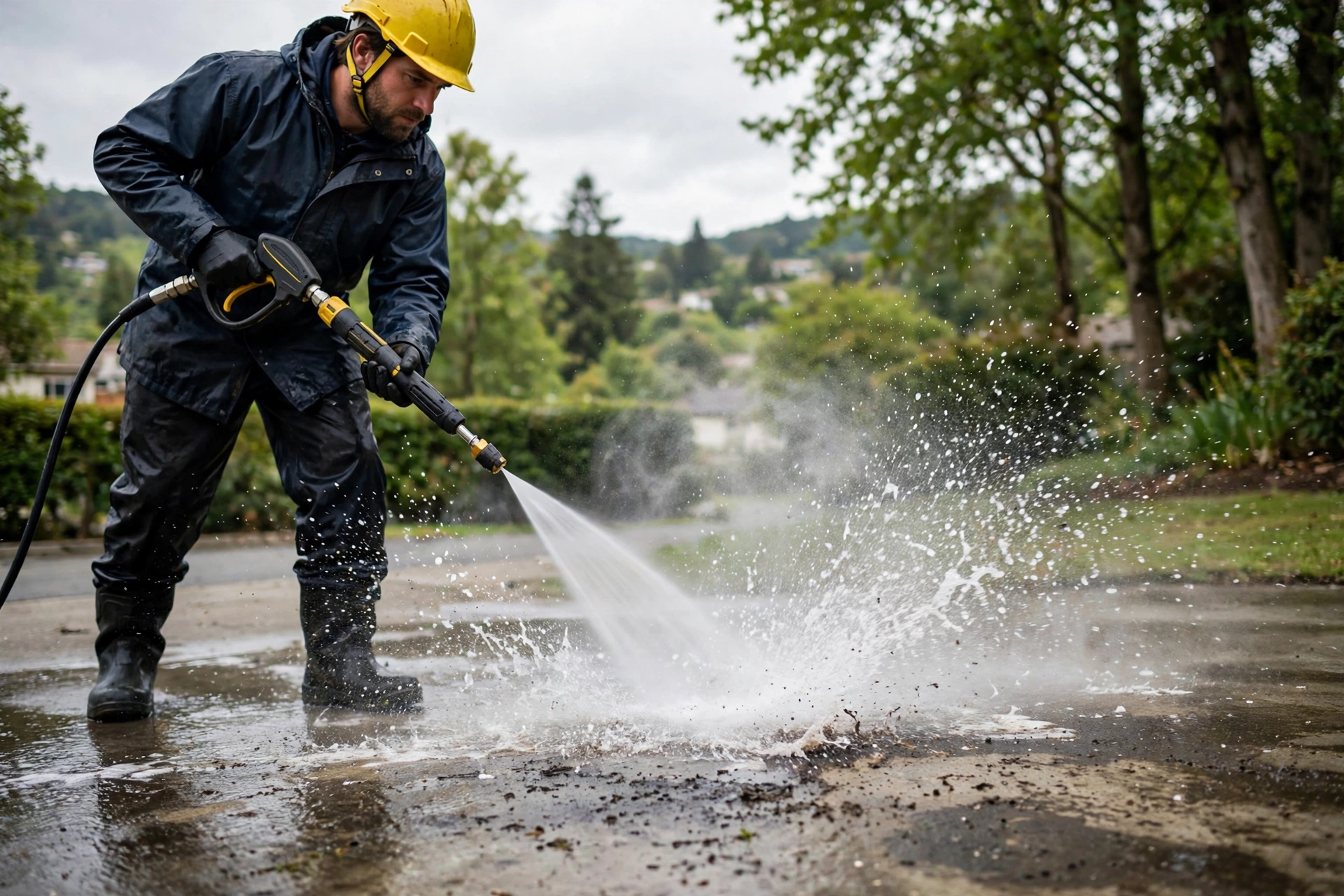
A helmet for pressure washing workers is a protective helmet worn while cleaning with a high-pressure water jet, and in general terms it is a good idea whenever there is a risk of slipping, falling, or being struck by debris thrown up by the spray. Pressure washing looks like a simple job, but it involves powerful water jets, slippery surfaces, and work at height on roofs, walls, and driveways. A helmet gives a worker protection in exactly those moments.
A pressure washing worker spends the day moving around wet surfaces, handling a heavy lance, and working near walls, fences, and roofs. The ground underfoot is often wet and slippery, and a fall onto concrete or paving can be a serious one. The water jet can also throw up stones, grit, and pieces of old paint or render, and those small objects can fly back towards the worker’s head and face.
Why do pressure washing workers need a helmet?
Pressure washing workers need a helmet because their working space is wet, slippery, and full of things that can be thrown up by the water jet. A worker who slips on a wet driveway or a mossy roof can fall backwards and strike their head on concrete, stone, or a metal gutter. In general terms, a helmet takes the edge off that kind of fall, and it can turn a serious injury into a minor one.
There is also the risk of objects falling from above. When a worker is cleaning a roof, a gutter, or the top of a wall, tiles, moss, and pieces of render can come loose and fall onto the head. The water jet itself can be dangerous too: at close range it can cut skin, and the spray can throw small stones and grit back at the worker’s face. A helmet, worn with eye protection, helps to guard against both the falling objects and the flying debris.
What kind of helmet is best for pressure washing workers?
The best helmet for pressure washing workers is, in general terms, a light, waterproof helmet that fits snugly, stays in place when the worker bends and reaches, and does not get in the way of the work. Many workers choose a light industrial helmet or a bump cap, because those helmets protect against bumps and falling objects without the bulk of a heavy hard hat. A helmet with a short brim is useful, because it helps to keep spray and drips off the face.
The helmet should be comfortable enough to wear for a full working day in wet conditions. A pressure washing job can take hours of standing, reaching, and moving around, so a helmet that is too heavy or too hot will soon be taken off and left on the ground, where it does no good at all. Good ventilation, a padded inner lining, and an adjustable fit are worth looking for, and the helmet should be easy to rinse clean and to dry out after a wet day. A chin strap is useful when the worker is looking up at a roof or a high wall, because it keeps the helmet in place when the head is tilted back.
How should a helmet for pressure washing fit?
A helmet for pressure washing should fit snugly, sit level on the head, and stay in place when the worker bends forward to clean a low wall or looks up at a roof. The helmet should cover the top of the head and the forehead, and the fit should be checked with the worker wearing it in a working position, not just standing upright. A helmet that slides forward when the worker bends down will block their view and soon be pushed back, leaving the head unprotected.
The fit should be adjusted with the headband or the dial at the back of the helmet, and the worker should be able to shake their head gently without the helmet moving. If the worker wears safety glasses or a face shield, the helmet should be checked with those on too, because eyewear can change how a helmet sits. A helmet that presses on the arms of glasses will be uncomfortable within an hour, and a worker who is uncomfortable is a worker who takes the helmet off.
Should pressure washing workers wear a helmet on every job?
Pressure washing workers should, in general terms, wear a helmet on every job where there is a risk of a slip, a fall, or falling debris, and that covers most pressure washing work. A small job, such as cleaning a patio, may seem too minor for a helmet, but even a small job can involve a slippery surface and a hard landing.
There are also jobs where a helmet is not just sensible but expected. On a building site, or on a larger job where other trades are working nearby, a helmet may be required by the site rules, and a worker who turns up without one may not be allowed to work. Even in a private home, a customer is more likely to trust a worker who arrives with proper safety gear, because it shows that the worker takes the job seriously.
How should a pressure washing helmet be looked after?
A pressure washing helmet should be looked after with regular cleaning and sensible storage, in the same way as any work helmet. After a day of washing, the helmet should be rinsed with clean water to remove grit, moss, and cleaning chemicals, and the lining should be cleaned or aired out. Chemicals and dirty water can build up inside a helmet over time, and a lining that is never cleaned will become uncomfortable and may irritate the skin.
The helmet should be stored in a dry place, away from direct heat and strong sunlight, and it should not be thrown into a van with heavy tools where it can be knocked about. A helmet that has been dropped from a height, or that has taken a hard knock, should be looked at with care, and in general terms a helmet that has taken a serious impact should be replaced rather than used again. Workers who are choosing a new helmet may also want to learn about features that can help in a fall, including a system designed to reduce rotational forces, such as MIPS, which is found in some helmets made for work and active use. A well-kept helmet, worn on every job, gives a pressure washing worker the best chance of finishing the day without a sore head.
Is a bump cap enough for pressure washing?
In general terms, a bump cap is enough for light pressure washing work where the main risk is bumping the head or a small falling object. For roof work or heavy cleaning, a full industrial helmet gives more protection.
Can a pressure washing worker wear a helmet with safety glasses?
Yes, a pressure washing worker can wear a helmet with safety glasses, as long as the helmet is checked with the glasses on and does not press on the arms or push them out of place.
When should a pressure washing worker replace their helmet?
A pressure washing worker should replace their helmet after a hard impact, or when it no longer fits well, shows cracks or damage, or has been worn for a long time. When in doubt, replace it rather than keep working in it.

Olivia
Writer at Helmet Today, covering helmet reviews, fit and riding safety.