Yes, in general terms a helmet can protect against falling objects, because its hard outer shell spreads the force of an impact over a wider area and its inner liner absorbs some of that energy before it reaches your head. That is exactly what helmets are designed to do, whether the object is a tool dropped from scaffolding, a stone kicked up on a trail, or a branch falling from a tree. A helmet does not make you invulnerable, and a very heavy or sharp object falling from a great height can still cause serious harm, but for everyday knocks and drops, a helmet is one of the simplest and most effective pieces of protection you can wear.
What Kinds of Falling Objects Can a Helmet Protect Against?
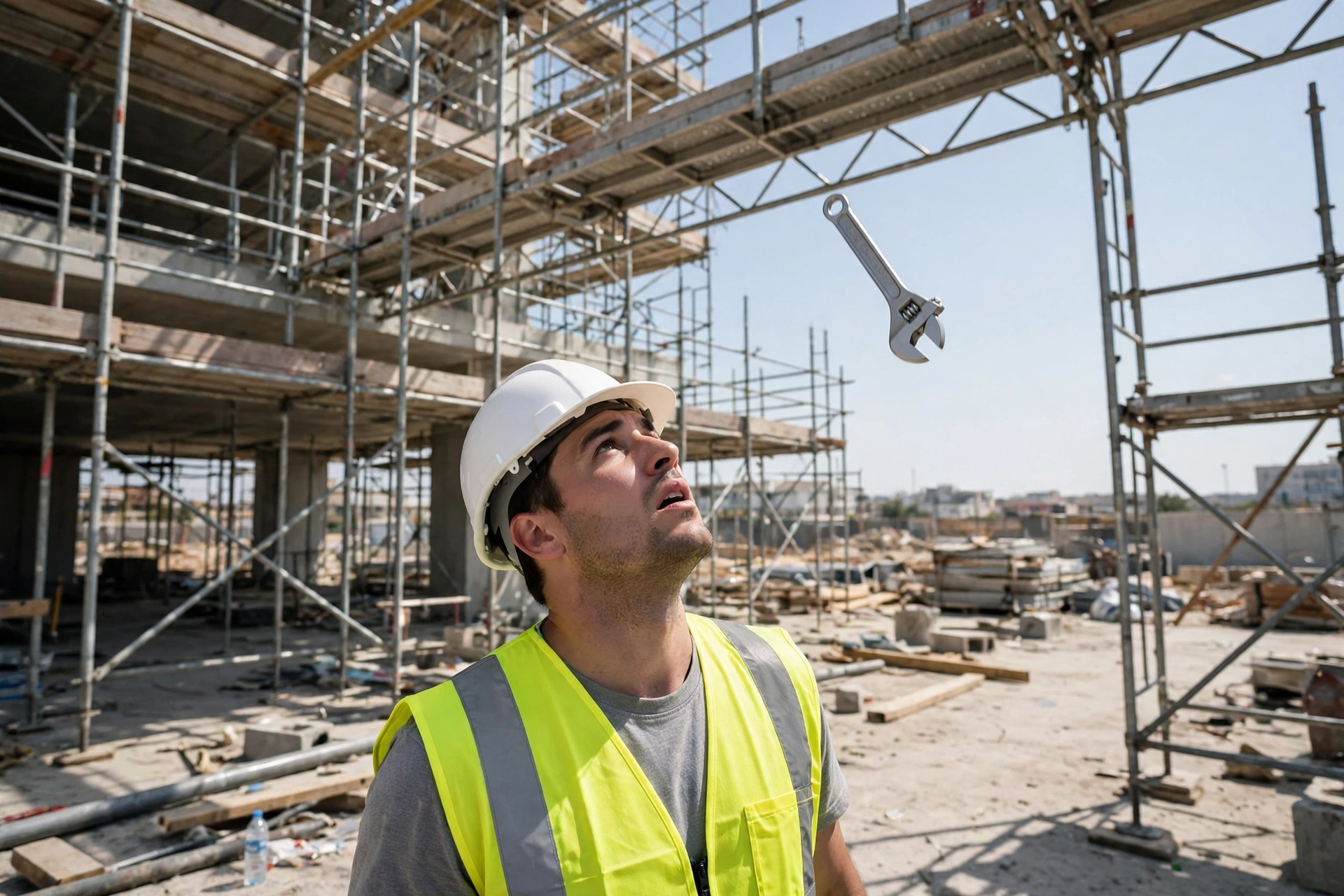
Helmets are built to deal with small and medium-sized objects striking the head from above: a spanner or bolt dropped on a building site, a stone thrown up by a passing vehicle, or a pine cone or small branch dislodged on a trail. In each case, the helmet shell takes the first hit, spreads the force across its surface, and the liner inside cushions the blow so less energy reaches the skull.
The key point is that the object is usually small enough, and moving slowly enough, for the helmet to absorb the impact within its design limits. A hard hat, for example, is made to a standard that assumes tools and small debris falling from a working height, while a bike helmet assumes the kinds of impacts a cyclist meets, including objects flicked up from the road. If the object is small and the fall is short, a helmet will turn what could have been a painful blow into a much lighter one.
How Does a Helmet Absorb the Impact of a Falling Object?
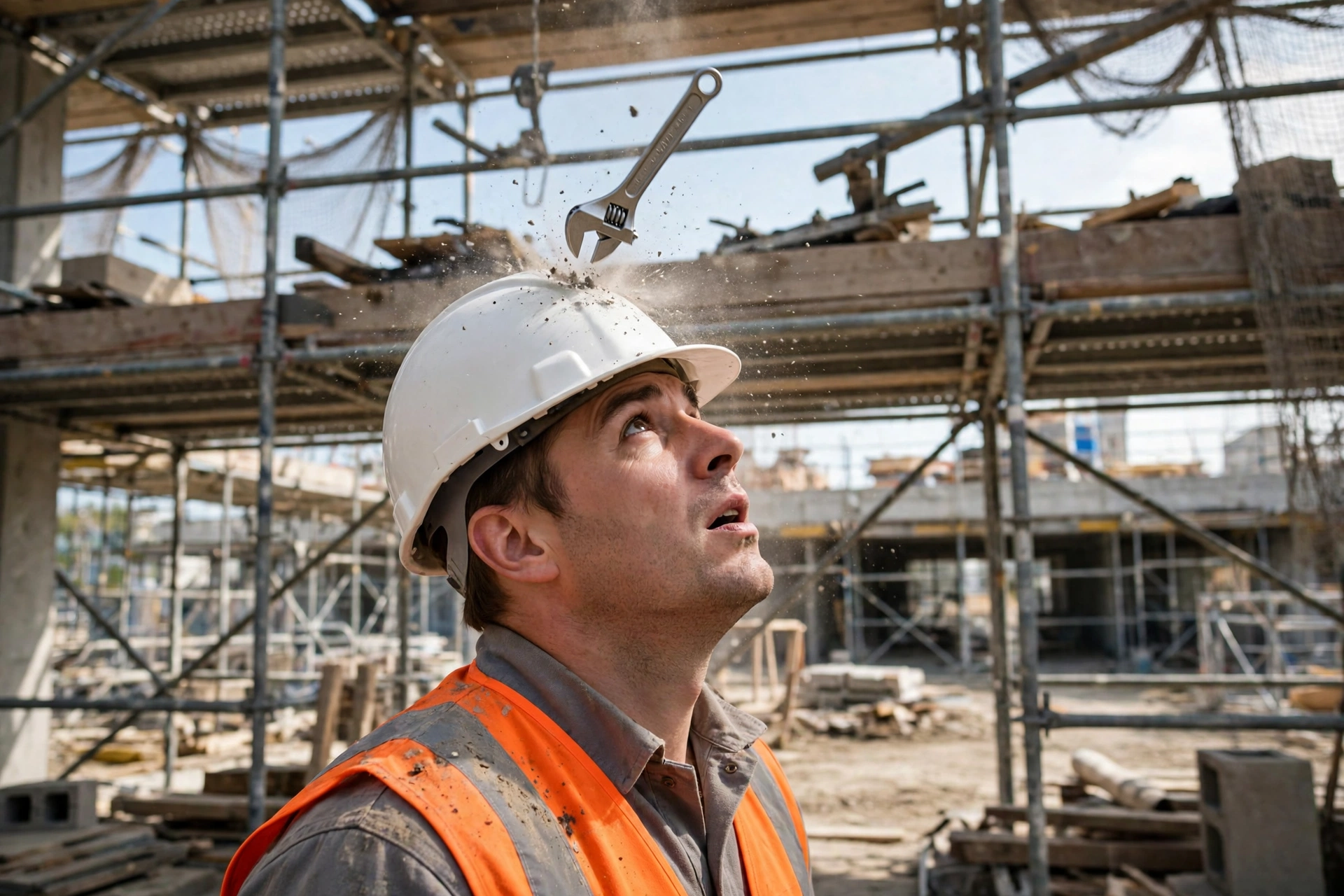
A helmet works in two stages when something hits it. First, the hard outer shell takes the blow and spreads the force over a much larger area than the object itself would have hit, so the pressure at any one point is far lower. The shell also stops sharp edges from cutting the scalp, which matters when the falling object has corners or points.
Second, the liner inside the helmet, usually a foam that crushes on impact, absorbs energy as it deforms. This slows the head down more gently than a sudden stop would, and that gentler slowing is what protects the brain, much like a crumple zone in a car. If you want to understand one of the technologies that helps helmets manage rotational forces in an impact, reading about what MIPS is for helmets is a useful starting point. The liner does its job once, in a hard impact, which is why a helmet that has taken a heavy blow should be checked carefully afterwards.
Are There Falling Objects a Helmet Cannot Protect Against?
Yes, and it is important to be honest about the limits. A very heavy object, such as a large steel beam or a big rock falling from a cliff, carries far more energy than any helmet is designed to absorb. The helmet may still reduce the injury slightly, but it cannot be expected to prevent serious harm. Helmets are tested against realistic impacts, not against the worst thing that could possibly fall from any height.
Sharp, pointed objects are another limit. A helmet shell can be punctured by a sharp point carrying enough force, and a long, thin object may find its way through a vent. That is why construction workers are taught to keep tools tethered and to stay out of drop zones rather than relying on the helmet alone. A helmet is a last line of defence, not a substitute for safe working practices or keeping a sensible distance from hazards overhead.
Do Different Helmets Offer Different Protection Against Falling Objects?
Yes, helmets are designed for the hazards of the activity they serve, and the protection they offer against falling objects varies. A hard hat worn on a building site is shaped to deflect objects falling from directly above, with a suspension system inside that creates a gap between the shell and the head, giving falling objects extra room to slow down. A climbing helmet is built to cope with rocks falling from above as well as impacts from a fall, and it often has a hard shell that covers more of the head.
A bike or motorcycle helmet, by contrast, is mainly designed for crashes and road impacts, and while it will still help against a falling object, it is not its main job. The lesson is to wear the right helmet for the activity: a hard hat on site, a climbing helmet on a rock face, and a cycling helmet on a bike. Using the wrong helmet is better than wearing none at all, but the protection will not be as well matched to the hazard.
What Should You Do If Something Falls on Your Helmet?
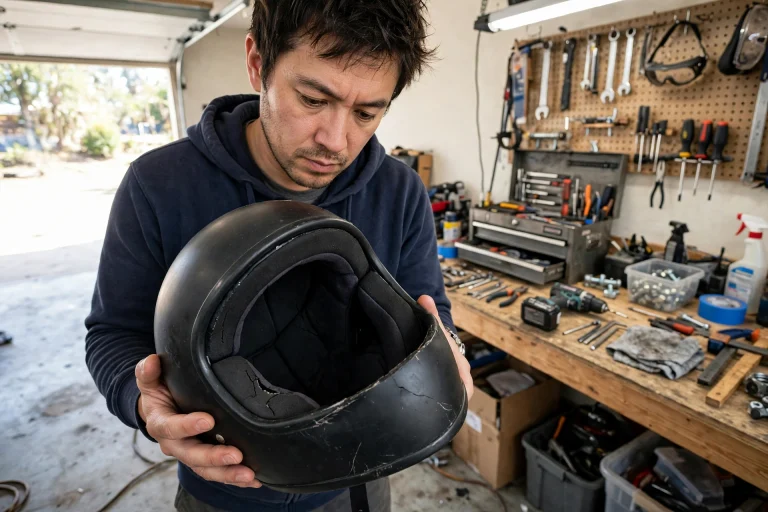
If an object hits your helmet, stop and check it straight away, even if you feel fine. Look for cracks in the shell, dents, or damage to the liner and straps. A hard blow can crush the foam liner inside without leaving obvious damage outside, so if the impact felt heavy, or the object was large, it is sensible to retire the helmet and replace it rather than trusting it again. Many manufacturers advise replacing a helmet after any significant impact, and that advice is worth following.
You should also check yourself for injury, even if the helmet did its job. A blow that is partly absorbed can still leave you shaken, and symptoms such as headache, dizziness, or confusion can appear later, so seek medical advice promptly if you feel unwell. Finally, think about what happened: a dropped tool that lands on a helmet is a warning that tools should be tethered, loads secured, and exclusion zones respected.
How Can You Reduce the Risk From Falling Objects?
The best protection against falling objects is a mix of good habits and a good helmet. On a building site, that means wearing your hard hat at all times in the work area, keeping tools tethered or in tool belts, and never working directly below someone else without protection. On a trail or a climb, it means staying aware of loose rock above, keeping a sensible distance from other climbers, and wearing your helmet wherever rockfall is possible.
For cyclists and motorcyclists, debris from the road or from other vehicles is hard to predict, so the habit is simply to wear the helmet on every ride, even a short one. A helmet only works if it is on your head when the object falls, and falling objects do not give warning. The helmet is the safety net, and good habits are what keep you from needing it.
Do helmets protect against falling objects?
Yes, in general terms a helmet protects against small and medium-sized falling objects by spreading the force of the impact across the shell and absorbing energy in the liner, turning a blow that could have caused a serious head injury into a much lighter knock.
Can a helmet stop a heavy object falling from a great height?
Not always. A very heavy object falling from a great height carries more energy than a helmet is designed to absorb, so while a helmet may reduce the injury, it cannot be relied on to prevent serious harm in that situation.
Should I replace my helmet after something falls on it?
Yes, if the impact was heavy. A hard blow can crush the liner inside without visible damage outside, so it is sensible to check the helmet carefully and replace it after a significant impact rather than trusting it again.

Olivia
Writer at Helmet Today, covering helmet reviews, fit and riding safety.