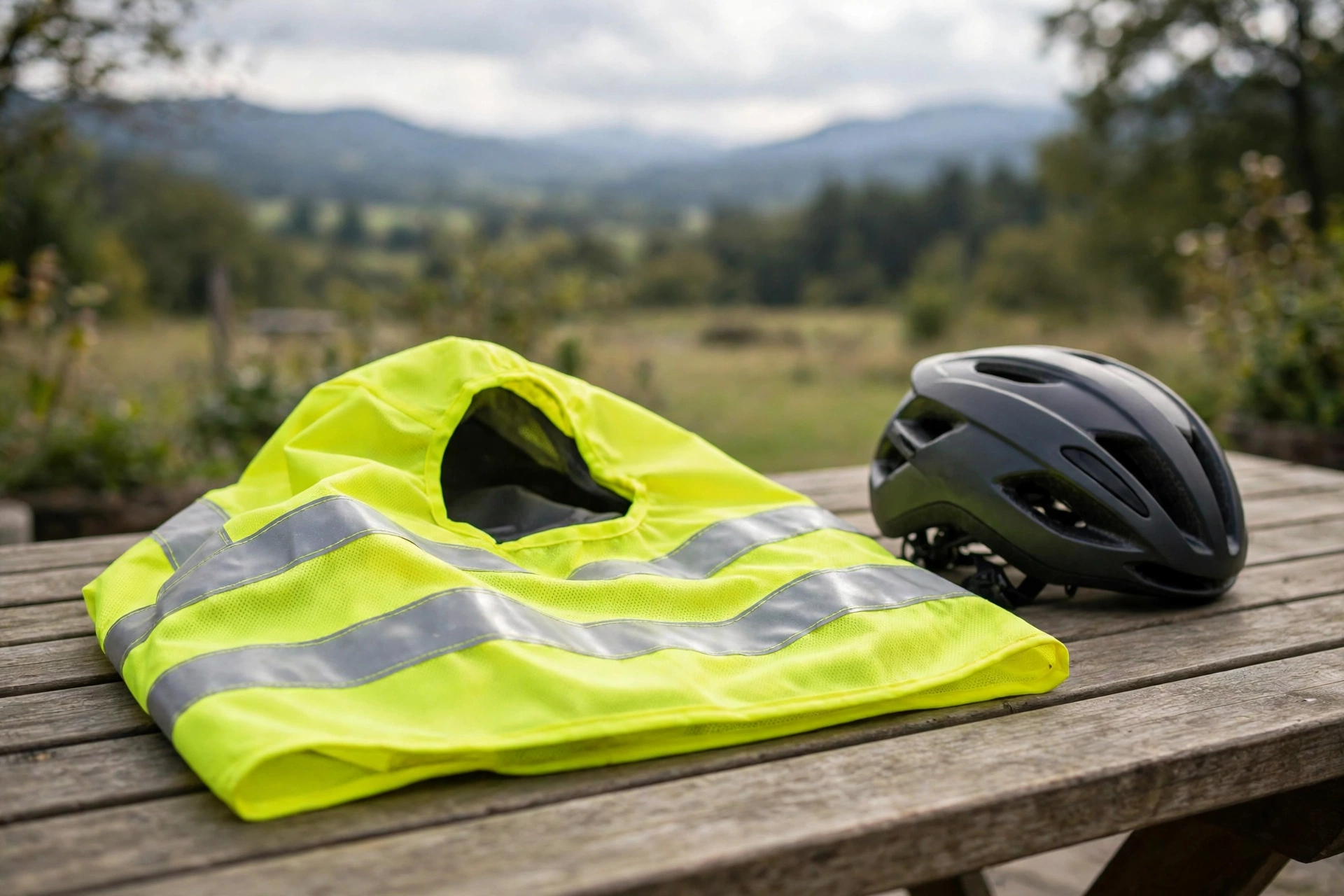
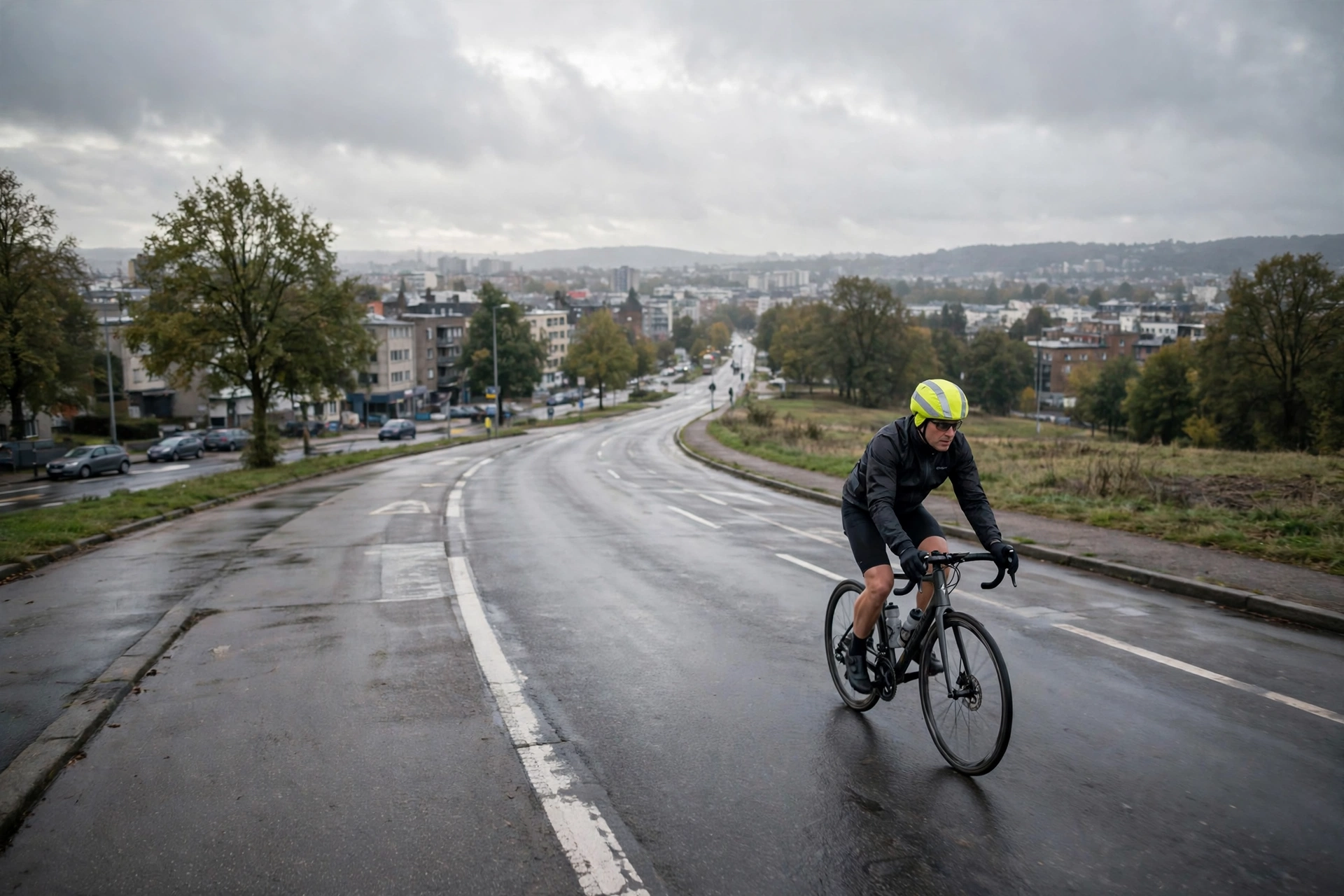
Hi-vis helmet covers are bright, fluorescent covers that stretch over a helmet to make the rider much easier to see, especially in dull light, rain, or busy traffic. They are usually made from a stretchy, water-resistant fabric in a vivid yellow, orange, or green, often with reflective strips that catch headlights at night. For riders who want to be noticed without buying a new helmet, a cover is a quick and inexpensive option.
Being seen is one of the simplest ways to stay safer on the road, and a helmet is one of the highest and most visible parts of a rider. A hi-vis cover turns that high point into a bright signal that other road users can spot from a distance. This guide explains what hi-vis helmet covers are in general terms, how they work, and what to look for when choosing one.
What Is a Hi-Vis Helmet Cover?
A hi-vis helmet cover is a close-fitting sleeve that pulls over the outside of a helmet, covering the shell while leaving the visor, vents, and straps free. Most covers are made from a stretchy fabric such as lycra or a coated nylon, so one cover can fit a range of helmet sizes. Some are plain and bright, while others add reflective panels, a logo, or a waterproof coating.
The bright colour is the key feature. Fluorescent yellow, orange, and green stand out against most backgrounds, from grey roads to green countryside, and they are much easier to spot in peripheral vision than a dark helmet. At night, the fluorescent colour alone does less, which is why many covers also include reflective strips that shine back when headlights hit them.
In general terms, a hi-vis cover is an accessory, not a part of the helmet itself. It does not change how the helmet protects you in a crash, and it should never be fitted in a way that covers vents or interferes with the visor. A good cover fits snugly and stays in place without needing to be adjusted while you ride.
How Do Hi-Vis Covers Help Other Road Users See You?
Other road users notice movement and contrast first, and a bright helmet cover gives them both. The colour contrasts with the road, the sky, and other vehicles, so the rider stands out in a driver’s field of view. Because the helmet is at head height, it is also visible over the tops of cars in traffic, where a bright jacket might be hidden.
At junctions and roundabouts, where many collisions happen, a bright cover can help a driver spot a rider a fraction earlier. That small extra moment can be enough for a driver to wait rather than pull out. In poor weather, when rain and spray reduce visibility, the effect is even more useful, since a dark helmet can almost disappear against a wet road.
It is important to keep this in perspective. A hi-vis cover helps you be seen, but it does not make you invincible, and it does not replace careful riding or good road positioning. Some drivers may still fail to notice a rider, so it is best to think of the cover as one layer of protection alongside lights, positioning, and awareness. If you want to learn about the safety systems inside the helmet itself, reading about what MIPS is for helmets is a useful starting point.
How Do You Choose the Right Hi-Vis Cover?
Start with the fit. A cover should stretch snugly over your helmet without sagging or flapping at speed, and it should not cover the vents or the visor opening. Most covers are sold by helmet size or as one-size-fits-most, so check the maker’s sizing guide and measure your helmet if you are unsure. A cover that is too loose can shift around and distract you, while one that is too tight may be hard to put on and could tear.
Next, look at the colour and the reflective parts. A bright fluorescent colour is the most important feature for daytime visibility, while reflective strips matter most at night. A cover with both is the best choice for all-round use. If you ride mostly in daylight, a plain fluorescent cover may be enough, but if you ride after dark, reflective panels are worth having.
Also consider the weather. Some covers are waterproof or water-resistant, which keeps the helmet dry and can help the cover stay in place in rain. Others are made from a light mesh that lets air through to the vents, which is better in hot weather. A waterproof cover over a well-vented helmet can make the helmet hotter, so think about the conditions you ride in most often.
Do Hi-Vis Covers Affect Helmet Ventilation or Safety?
A well-fitting cover should not affect safety, but a poorly fitting one can cause problems. The main risk is covering the vents, which can make the helmet hotter and cause the visor to mist up. Before you ride, check that every vent on your helmet is still open and that air can flow through the cover or around it. If the cover blocks a vent, choose a different cover or cut the vent openings carefully if the maker allows it.
Another thing to watch is the visor. The cover should sit behind the visor opening and should not press on the visor or stop it from moving. If the cover catches on the visor when you open or close it, it needs adjusting or replacing. In general terms, a cover that interferes with the visor or the straps is not safe to use.
Some riders worry that a cover might affect the helmet in a crash, for example by catching on the road. In general terms, a snug, stretchy cover is unlikely to change how a helmet slides, but a loose or baggy cover could catch or bunch up. That is another reason to choose a cover that fits tightly and stays in place, and to replace it if it becomes stretched or damaged.
How Do You Look After a Hi-Vis Helmet Cover?
Hi-vis covers are easy to care for, but the bright colour can fade over time. Wash the cover by hand or on a gentle cycle with mild detergent, and let it air-dry rather than putting it in a dryer. Avoid bleach and harsh chemicals, which can damage the fluorescent dye and the reflective strips.
Check the cover regularly for wear. The fabric can stretch out with repeated use, and the reflective strips can crack or peel. A cover that has faded badly or lost its reflective panels is less effective, so it should be replaced. In general terms, a cover that is still bright and snug is still doing its job, while one that is dull, stretched, or torn is ready for a replacement.
Frequently Asked Questions
Q: Do hi-vis helmet covers really make a difference?
A: In general terms, yes. A bright cover makes a rider easier to spot, especially in dull light and busy traffic. It is not a guarantee of being seen, but it is a simple and inexpensive way to stand out more.
Q: Will a hi-vis cover fit my helmet?
A: Most covers are made to stretch over a range of helmet sizes, but you should check the maker’s sizing guide. The cover should fit snugly without covering the vents or the visor, and it should stay in place at speed.
Q: Do hi-vis covers work at night?
A: The fluorescent colour works best in daylight, but at night the reflective strips are what matter. A cover with good reflective panels will shine back when headlights hit it, so choose one with both bright colour and reflective strips for night riding.

Olivia
Writer at Helmet Today, covering helmet reviews, fit and riding safety.