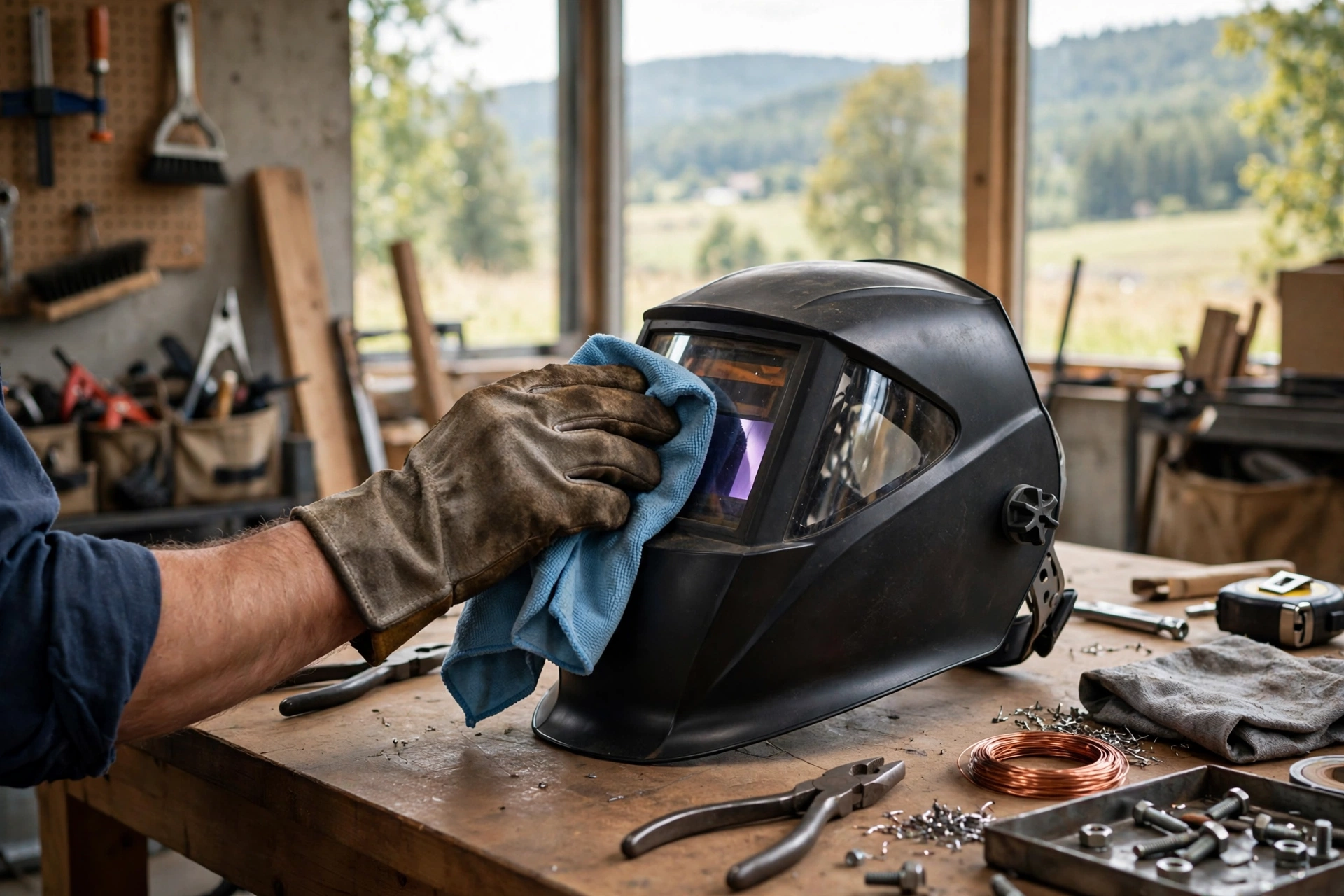
To clean a welding helmet lens properly, wipe it gently with a soft, clean microfiber cloth and a lens-safe cleaner — or plain mild soapy water — working on the replaceable outer and inner cover lenses, and treat the auto-darkening filter itself with the lightest touch, dry-dusting it rather than scrubbing. Never use solvents, abrasive pads, shop chemicals, or paper towels: they scratch or chemically cloud the plastic covers and coatings, and a scratched lens steals the clarity you paid for every time you look through it.
A welding lens gets dirty in a unique way: spatter pits the outer cover, grinding dust coats everything, and fingerprints appear exactly where you look. Cleaning it wrong is almost as bad as not cleaning it — most lens damage is inflicted by well-meaning cleaning, not by welding. This guide covers the safe method for each layer of the lens stack.
What Are the Parts of the Lens You Are Actually Cleaning?
A modern auto-darkening helmet has a stack. Outside is a clear, replaceable cover lens — a sacrificial plastic plate that takes the spatter, sparks, and scratches. Behind it sits the auto-darkening filter cartridge itself. Inside, facing your eyes, is another clear cover lens that protects the filter from sweat, dust, and your breath’s moisture.
Nearly all your routine cleaning should happen on the two cover lenses, because they are the dirty parts and they are designed — and priced — to be cleaned and eventually replaced. The filter between them stays largely protected and normally needs nothing more than a gentle dust-off when you have the stack apart.
Knowing the stack changes how you clean: the covers can take a proper wash; the filter cannot. If your view is cloudy, the culprit is almost always a cover lens, not the filter — which is good news, because covers are cheap.
How Do You Clean the Cover Lenses Safely?
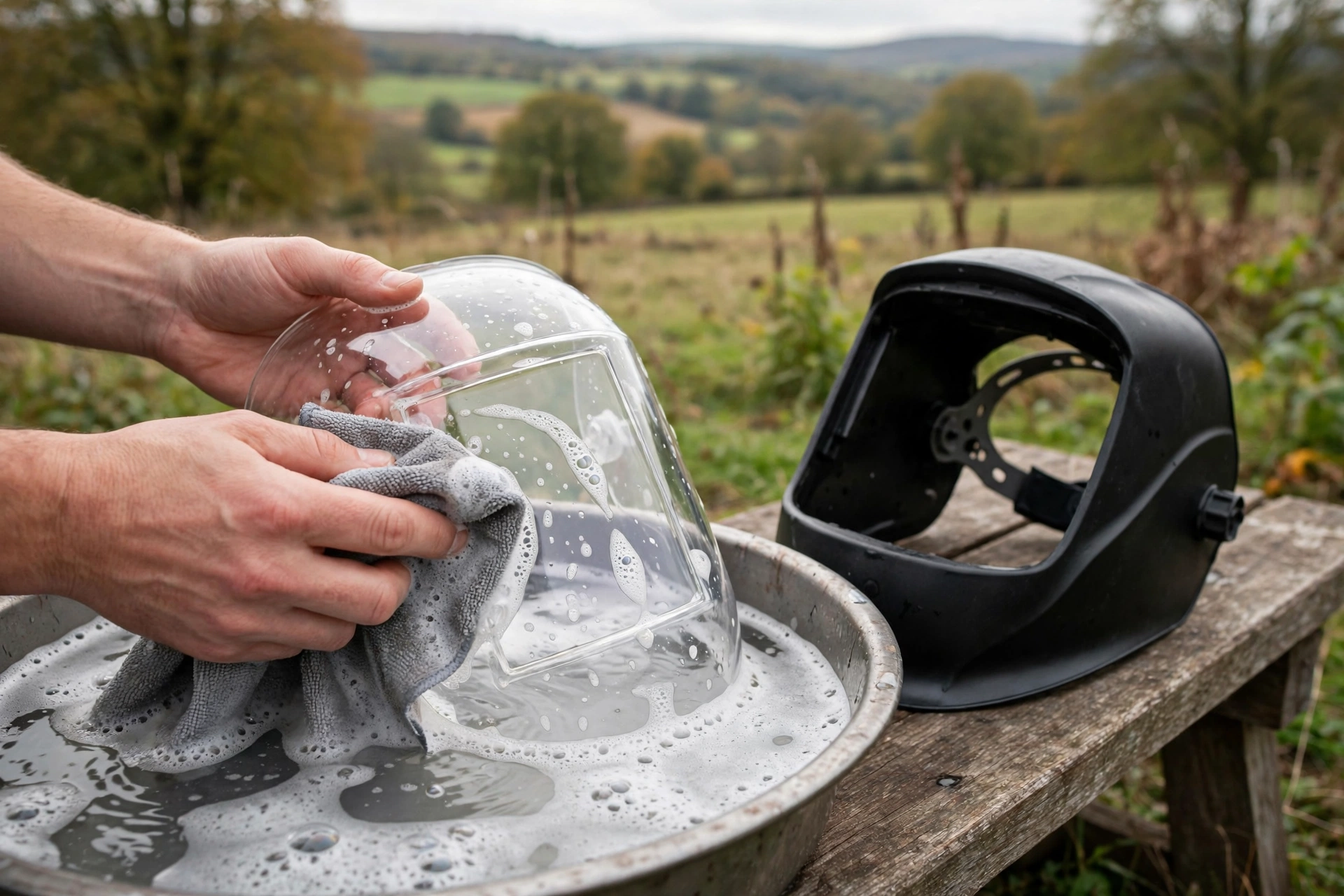
Remove the outer cover lens first — it usually unclips or slides out from inside or outside the shell, depending on the model. Brush or blow off loose grit and spatter before any cloth touches it; wiping dry grit across plastic is how fine scratches are made. Then wash with lukewarm water and a drop of mild soap, or use a lens cleaner made for coated optics, and wipe with a clean microfiber cloth in gentle, straight passes.
Dry with a second clean microfiber or let it air dry. Inspect it against the light: if pitting from spatter or a network of fine scratches still clouds the view after cleaning, the cover has done its job — replace it rather than polishing harder. Polishing a pitted plastic cover just rounds the damage into a permanent haze.
Clean the inner cover lens exactly the same way. It rarely gets spatter, but it collects a film of sweat and shop dust that quietly fogs your view, and it is the layer most welders forget exists. A surprising share of “my helmet’s optics went bad” turns out to be a dirty inner cover.
How Should You Clean the Auto-Darkening Filter Itself?
Barely. With the covers removed, dust the filter’s surfaces with a soft, dry microfiber cloth or a gentle puff of air, using almost no pressure. If there is a stubborn smudge, breathe on it lightly or use the faintest trace of lens cleaner on the cloth — never spray anything directly onto the filter, and never soak it.
The filter is an electronic cartridge with layered optical coatings. Liquid worked into its edges, solvent contact, or abrasive wiping can damage those coatings or the seals, turning an expensive component into a cloudy one. In general terms, if the filter only ever meets a dry soft cloth, it will outlast several sets of covers.
While the stack is apart, also check the filter’s sensors — the small windows along its top edge. A sensor filmed over with dust or partly covered by a damaged cover lens can cause late or missed darkening. A dry wipe is all they need; keep them uncovered and clean.
What Cleaners and Materials Should You Never Use?
Solvents are the big one: acetone, brake cleaner, gasoline, strong degreasers, and alcohol-heavy industrial cleaners can craze, soften, or cloud polycarbonate and the coatings on it — sometimes in a single wipe. Glass cleaners with ammonia are also a poor choice for coated optics and plastic covers.
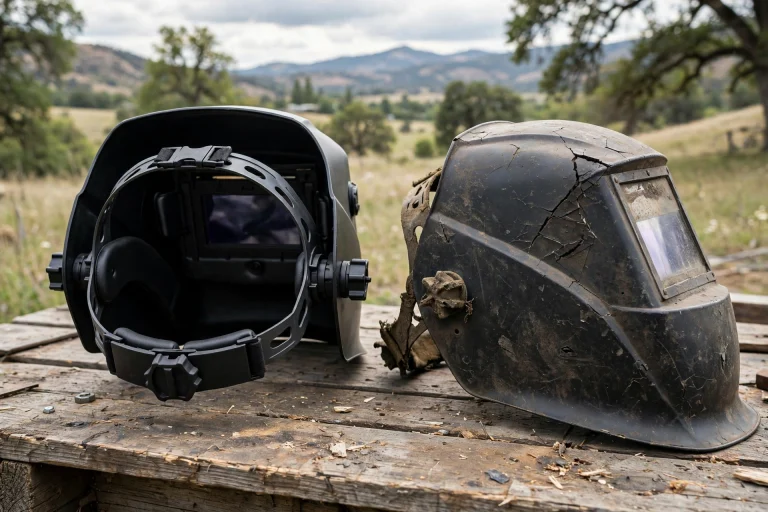
Abrasives are the second trap. Paper towels, shop rags with embedded grit, scrubbing pads, and even tissues are harder than they feel and leave micro-scratches on plastic that accumulate into a permanent fog. The same goes for polishing compounds: a lens cover is a replaceable part, not a restoration project.
Keep a dedicated, clean microfiber in a sealed bag with your helmet so the right cloth is the easy cloth. Contaminated cloths — the one that wiped a greasy bench yesterday — do more harm than a dirty lens.
How Often Should You Clean the Lens?
Wipe the outer cover down at the start of a session if the day’s work matters, and give the full stack a proper clean whenever the view starts to dull — for a daily welder that may be weekly; for a hobbyist, whenever you notice it. Spatter-heavy processes like flux-core and overhead work foul covers fastest.
Build the habit into storage: a helmet stored clean, in its bag or on a hook away from grinding dust, needs far less cleaning than one left open on the bench where every passing job coats it. Storage is cleaning, done in advance.
And replace covers on condition, not on a schedule: when cleaning no longer restores a clear view, the cover is spent. Keeping a spare pack of covers for your exact model turns a cloudy-view day into a two-minute fix.
Care habits like these — gentle cleaning, sacrificial wear parts replaced on time — are how all protective helmets stay effective. Riders do the same with padded liners and straps, and our guide to how MIPS liners work in riding helmets is a good companion read on keeping head protection in top condition.
Frequently Asked Questions
Q: My lens is still cloudy after cleaning. Is the filter ruined?
A: Probably not — the cloudiness almost always lives in the outer cover lens, which pits and scratches in normal use. Fit a fresh cover before blaming the filter. If a new cover does not restore clarity, check the inner cover too, then suspect the filter.
Q: Can I use the same spray I use on my safety glasses?
A: If it is a lens cleaner made for coated optics or anti-fog safety eyewear, in general terms yes — those are formulated to be gentle on coatings. Avoid household glass cleaners with ammonia and any solvent-based shop spray.
Q: Is it safe to rinse the whole helmet under a tap?
A: No. Wash the removed cover lenses in the sink if you like, but keep the helmet shell and filter away from running water — moisture in the filter cartridge or electronics can damage them. Wipe the shell with a damp cloth instead.

Olivia
Writer at Helmet Today, covering helmet reviews, fit and riding safety.