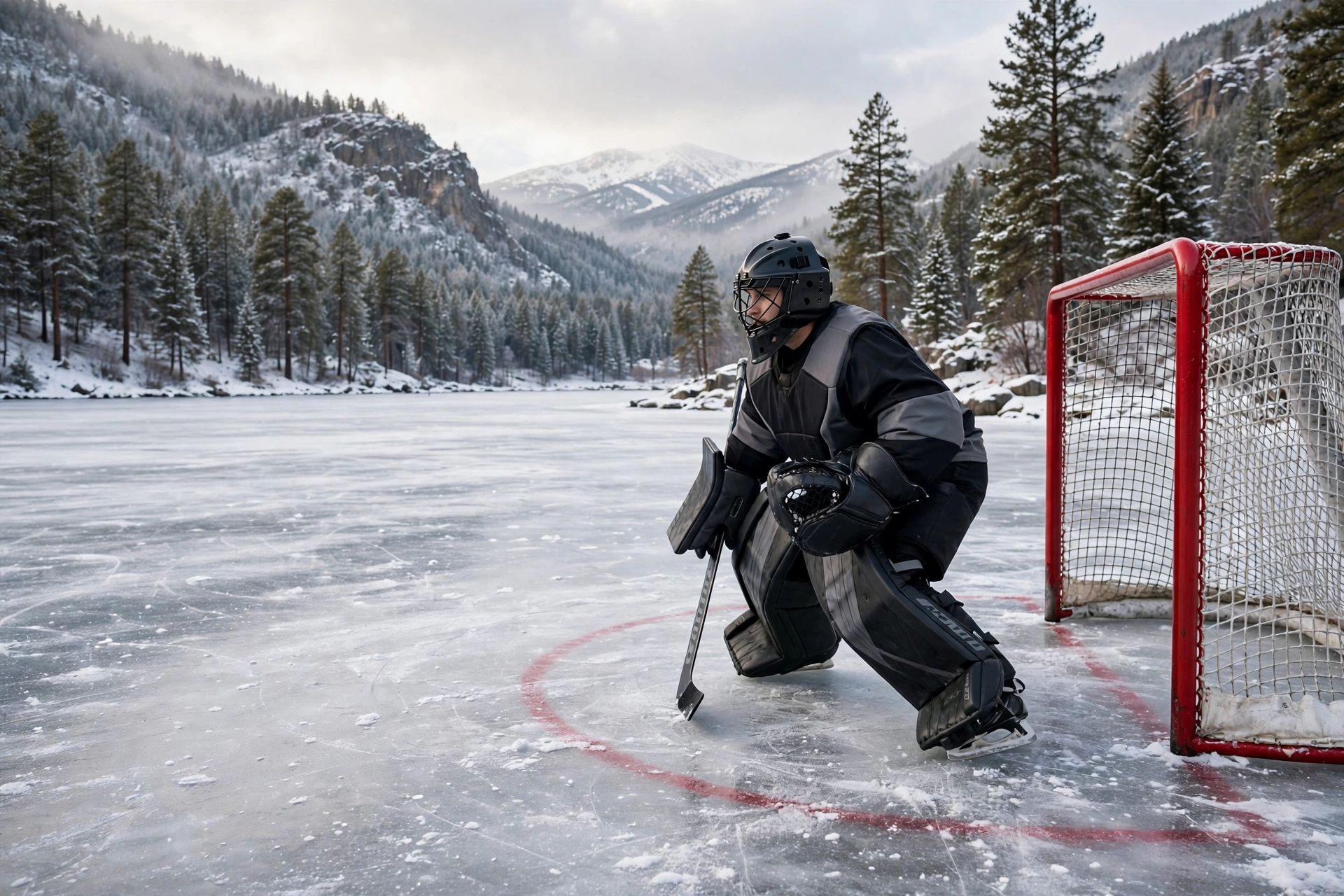
A goalie mask fits correctly when it sits snug against your forehead and cheeks with no rocking, the chin cup cradles your chin without jamming it, and the backplate straps hold even tension so the mask stays put when you move, sweat, and take a puck. Start with a certified mask in the right size for your head circumference — everything else is adjustment.
Unlike a player helmet, a goalie mask is a single protective unit built to take direct puck impact to the face. A poor fit is not just uncomfortable: gaps let the shell shift on impact, pressure points distract you mid-play, and a loose mask can move at the exact moment you need it most. This step-by-step guide walks through sizing, positioning, strap adjustment, and the checks that confirm a fit is right.
What Size Goalie Mask Do You Need?
Start with a tape measure. Wrap it around your head just above your eyebrows and ears — the widest part of your head — and note the circumference in centimeters or inches. Manufacturers size goalie masks (usually junior, intermediate, and senior fits, or small/medium/large) by that measurement, and their size charts map your number to a fit range.
Two rules matter here. First, buy a certified mask: look for recognized hockey certification such as HECC or CSA approval, which indicates the mask and cage have been tested as a unit for hockey use. A certified cage should always be paired with the mask it was certified for. Second, never size up “to grow into” with youth goalies. A mask that is too big rocks on the head, opens gaps at the cheeks, and can shift on impact. If a player is between sizes, the smaller snug fit — adjusted correctly — is almost always the safer choice.
How Should a Goalie Mask Sit on Your Face?
Put the mask on and look for contact and symmetry. A well-fitted mask should:
- Make firm, even contact at the forehead and along both cheeks — these are the shell’s main contact points
- Sit centered, with the cage square to your face rather than rotated to one side
- Leave no obvious gaps between the foam and your face where the mask could travel on impact
- Feel snug all over without a single painful pressure point
The foam inside the mask should compress slightly against your face. If you can slide the mask side to side while it is strapped, it is too loose or too big. If it presses so hard at the temples or cheekbones that it hurts within a minute, it is too small or the wrong head shape for you — masks vary by fit profile, and trying a different model is better than forcing a bad one.
How Do You Adjust the Chin Cup and Backplate Straps?
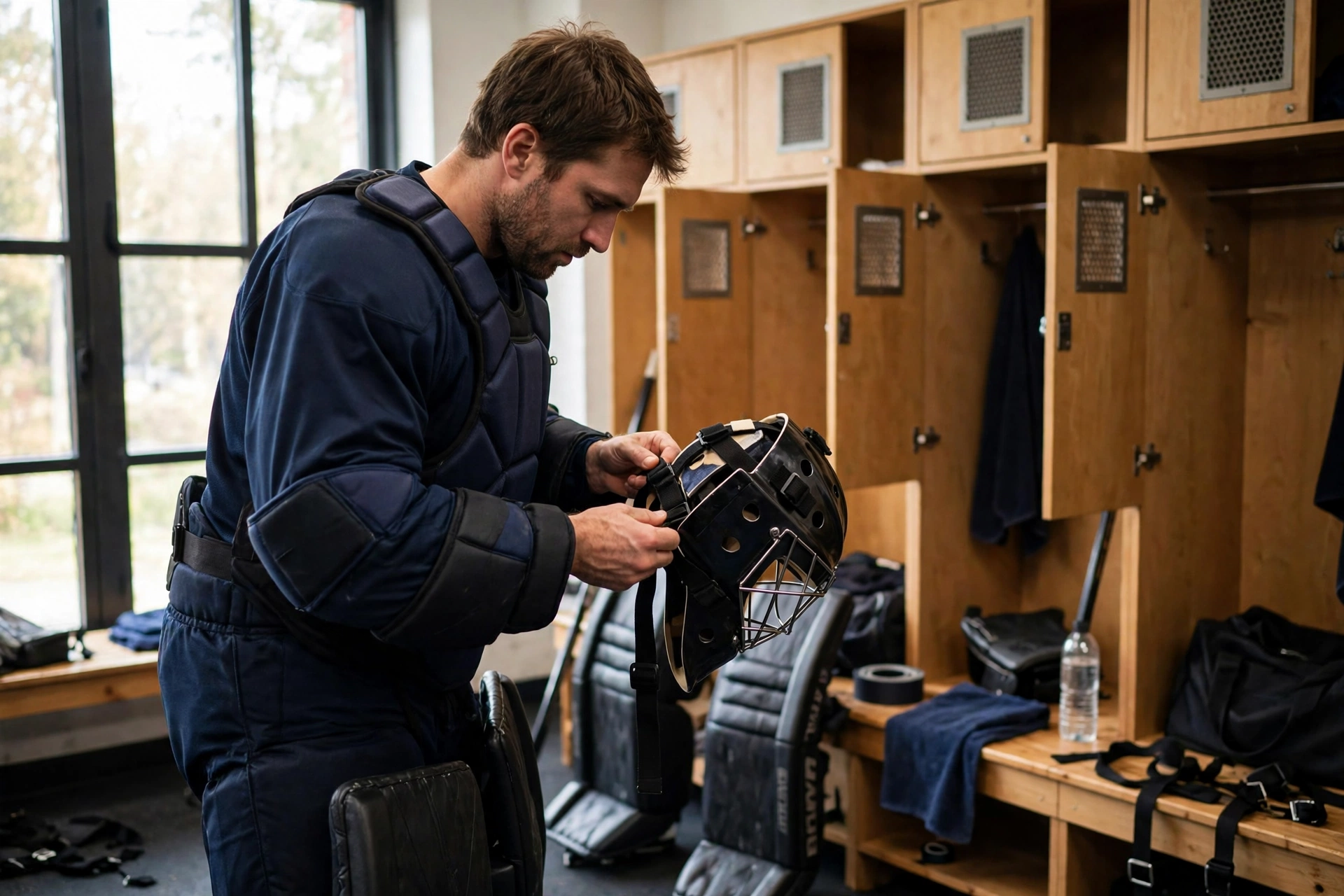
The chin cup should cradle your chin — cupping it so your jaw sits inside the cup, centered, with the strap snug. Your chin should not be jammed hard against the shell, and the cup should not sit so loose that your chin can slip out when you look down or get bumped. Many goalies adjust the cup’s position and strap length until the chin stays seated through a full range of head movement.
The backplate (the plate at the back of the head) is held by a set of straps, usually five points of adjustment. Work them evenly: tighten each strap a little at a time, alternating sides, so tension stays balanced and the mask does not get pulled crooked. The goal is firm, even pressure — snug enough that the mask cannot rock, not so tight that it gives you a headache by the second period. After adjusting, re-check the contact points at the forehead and cheeks, because strap changes shift how the shell sits.
How Do You Check the Cage and Your Vision?
The cage is part of the fit, not an accessory. It should sit close enough to protect, but it must not press against your nose or chin — if the cage touches your face, a puck impact can drive it into you. There should be a small, consistent gap between cage and face all the way around.
Then run the movement checks:
- Shake test: Shake your head side to side and up and down. The mask should move with your head, not lag or flop.
- Vision check: Look left, right, up, and down. You should have a clear view through the cage with no bar blocking puck tracking, and enough downward vision to find rebounds at your feet.
- Drop test: Get into your stance and move like you would in a game — butterfly, recover, look over each shoulder. The mask should not shift, pinch, or ride up.
If the mask passes standing still but moves in the stance, revisit the backplate tension and chin cup before deciding the size is wrong. Small adjustments fix most fit complaints. For more on how modern helmet and mask protection manages impact forces, see our explainer on what MIPS is and how helmet safety systems work.
When Should You Replace a Goalie Mask?
Fit is only half the story — condition is the other half. Inspect your mask regularly and replace it, or have it professionally evaluated, when you find:
- Cracks, dents, or stress marks in the shell, especially after a hard puck impact
- A bent, cracked, or damaged cage
- Foam that is compressed, cracked, dried out, or no longer springy
- Worn straps, frayed edges, or hardware that will not hold adjustment
- An expired certification sticker — certifications carry expiration dates, and leagues may require current certification
A hard shot to the mask is exactly what the mask is for, but repeated or severe impacts can compromise the shell and foam in ways that are not always visible. When in doubt, err on the side of replacement. Your face is worth more than one more season out of a damaged mask.
Frequently Asked Questions
Q: How tight should a goalie mask be?
A: Snug enough that it cannot rock or shift when you shake your head, with firm contact at the forehead and cheeks — but not so tight it causes pain or headaches. The chin cup should be snug with even backplate strap tension.
Q: Should the cage touch your face?
A: No. There should be a small, even gap between the cage and your face all around. If the cage presses your nose or chin, the fit or cage size is wrong, and an impact could drive the cage into your face.
Q: Can a young goalie size up to grow into a mask?
A: No. An oversized mask rocks on the head, opens gaps, and can shift on impact. Buy the size that fits now, based on head circumference and the manufacturer’s chart, and replace it as the player grows.

Olivia
Writer at Helmet Today, covering helmet reviews, fit and riding safety.