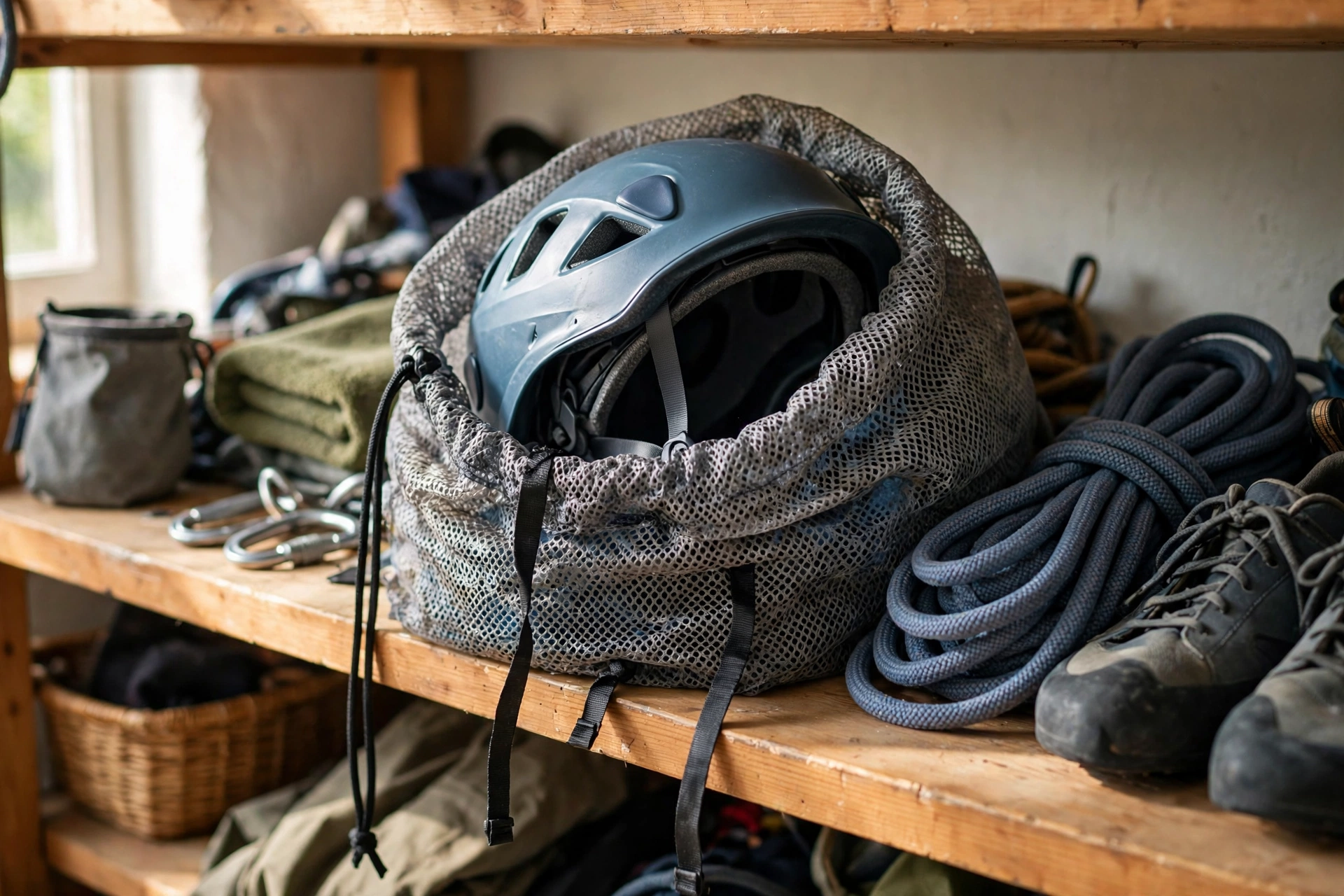
Store a climbing helmet clean, fully dry, and uncompressed in a cool, dark, dry place — ideally in a loose cloth bag on a shelf, away from sunlight, heat sources, and chemicals. Never leave it crushed under heavy gear, baking in a car trunk, or hanging by its chin strap in a sunny window; storage like that quietly shortens the helmet’s protective life.
A helmet spends far more of its life in storage than on your head. How it spends that time decides whether it is still trustworthy when you need it.
What Should You Do Before Storing a Climbing Helmet?
Never put a dirty, sweaty helmet straight into storage. Sweat is salty and acidic, and trapped moisture invites mildew in the pads and webbing. After a trip, wipe the shell inside and out with a cloth dampened with water and a little mild soap, rinse by wiping with a clean wet cloth, and clean the straps and pads the same way.
Then let everything dry completely in open air, out of direct sun. Do not use a hair dryer, radiator, or any direct heat — heat ages foam and adhesives. A helmet that feels dry on the surface may still hold moisture in the pads, so give it several hours, ideally overnight, before bagging it.
While it dries, do a quick inspection: cracks, dents, foam condition, strap wear, buckle function. Catching damage at home, rather than at the trailhead, gives you time to replace the helmet before the next trip instead of borrowing one in a panic — or worse, climbing in a damaged helmet. If you find problems, check whether they mean the helmet is finished using the retirement checklist for climbing helmets.
Where Is the Best Place to Store a Climbing Helmet?
The ideal spot is indoors, at normal room temperature, dry, and out of sunlight: a gear closet shelf, a bin reserved for soft and protective gear, or a cupboard. Cool and dark slows the aging of foam, shell plastics, and nylon webbing, all of which degrade with ultraviolet light and heat.
Keep the helmet away from chemicals. Garages and workshops hold solvents, fuels, paints, and sprays whose fumes and splashes can attack helmet foam and shells, sometimes invisibly. If the garage is your only option, store the helmet in its bag inside a closed bin, as far from chemicals as the space allows.
Two storage spots to avoid entirely: the car and the attic. Car interiors and trunks swing between freezing and oven-hot, and a helmet living there ages in fast-forward. Attics have the same heat problem in summer. The few seconds of convenience are not worth months of service life.
Should You Hang a Helmet or Keep It on a Shelf?
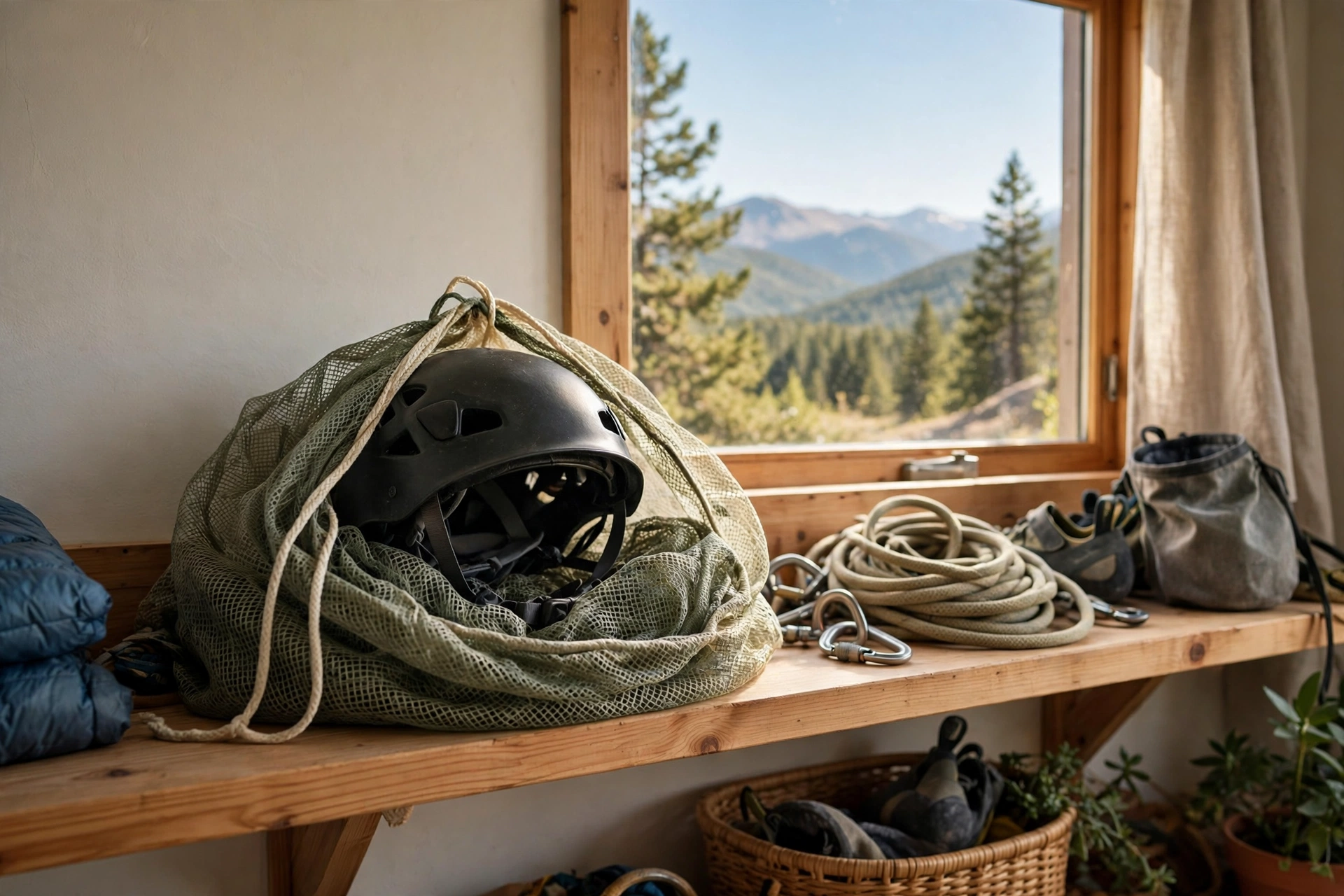
A shelf is the safer default. Rest the helmet right side up or on its side on a flat surface, in its bag, with nothing stacked on top of it. Sustained weight — a rope bag, a rack of hardware, a crate — resting on the shell for weeks can slowly deform foam and stress the shell, and compression damage is exactly the kind you cannot see.
Hanging is acceptable with care. A wide hook or peg under the shell distributes weight better than hanging the helmet by its chin strap, which puts constant tension on the webbing, buckle, and their attachment points. Whatever you choose, make sure the helmet cannot fall: a helmet that drops onto a concrete floor from a high hook has taken an impact, and you will have to judge it accordingly. For mixed-gear households, a dedicated helmet hook at modest height, over carpet or a mat, works well.
Loose in a gear bin is fine too, provided helmets and soft goods are on top of the pile, not under boots and hardware — the same reason many climbers choose purpose-built helmets with durable shells for travel-heavy use, a factor discussed in our climbing and via ferrata helmet comparison.
Why Use a Bag, and What Kind?
A loose, breathable bag — the cloth sack many helmets come with, a cotton tote, or an old pillowcase — protects against dust, scratches, and casual UV exposure while letting any trace moisture escape. Breathable is the key word. Sealing a helmet in an airtight plastic box or bag traps humidity and encourages mildew and odor, especially if the helmet was not perfectly dry.
Leave the chin strap loosely fastened or laid naturally rather than yanked tight, and keep the fit-adjustment dial at a relaxed setting. Long-term tension on straps and mechanisms does them no favors. If you store a headlamp with the helmet, take the batteries out of the lamp and keep them alongside instead.
Labeling helps in multi-helmet households: a small tag with the helmet’s manufacture date and owner makes the pre-trip age check instant.
What Is a Good Pre-Trip Inspection Routine?
Storage and inspection are one habit. Every time the helmet comes out, spend sixty seconds on this routine:
- Look — shell for cracks, dents, fading, or chalkiness; foam for cracks, crumbling, or compressed spots.
- Touch — squeeze the foam gently in a few places; it should feel uniform, with no soft or separated areas.
- Straps — run the webbing through your fingers for frays or stiffness, and check stitching at attachment points.
- Function — buckle and unbuckle the chin strap, spin the fit dial, and confirm the headlamp clips are intact.
- Fit — put it on. A helmet that suddenly fits differently may have compressed foam — or you need a haircut.
Any structural doubt means the helmet stays home and gets replaced. A minute of inspection is the cheapest safety check in climbing.
Frequently Asked Questions
Can I store my climbing helmet in the garage?
Only if it stays cool, dry, and away from fuels, solvents, and paint. Use the helmet’s bag inside a closed bin. If your garage gets very hot in summer, an indoor closet is a better choice.
Is it bad to keep a helmet in its stuff sack between trips?
A loose, breathable sack is good storage. Just make sure the helmet goes in clean and completely dry, and that nothing heavy is stacked on top of it.
How long can a helmet sit in storage before it is too old?
Manufacturers set a maximum life from the date of manufacture — often up to around 10 years depending on the model — and poor storage shortens it. Check the date label and inspect the helmet before relying on an older one.

Olivia
Writer at Helmet Today, covering helmet reviews, fit and riding safety.