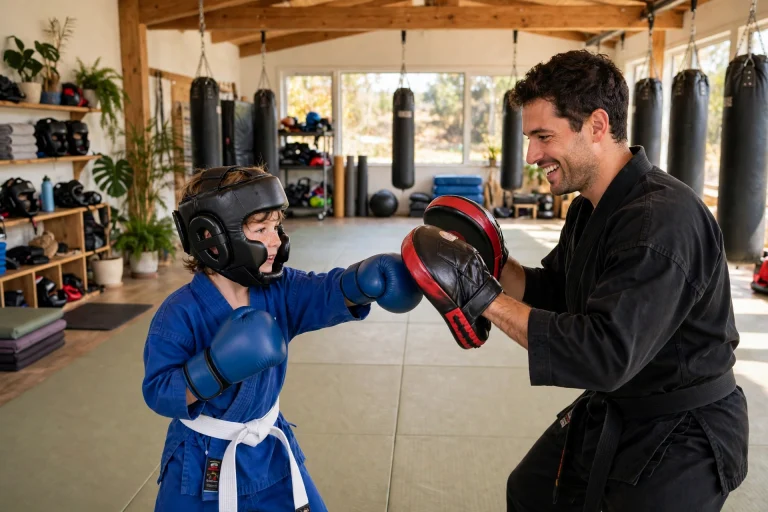
Kickboxing headgear is padded protective gear worn over the head during training and sparring to soften blows and reduce the risk of cuts and bruises. It covers the forehead, temples, cheeks, ears, and the back of the head, while leaving the eyes, nose, and mouth open so you can see and breathe. It is not a hard-shell helmet: it is soft, flexible padding held in place with straps, made for the repeated light-to-moderate contact of training rather than full-power competition striking.
Kickboxing involves punches and kicks aimed at the head, so even controlled sparring carries some risk of knocks, grazes, and swelling. Headgear does not make the head invulnerable, and it does not prevent concussion, but it does spread the force of a glancing blow and protects the skin and ears. This guide explains what kickboxing headgear is, why it is worn, what it covers, and how to choose a pair that fits properly.
What Is Kickboxing Headgear?
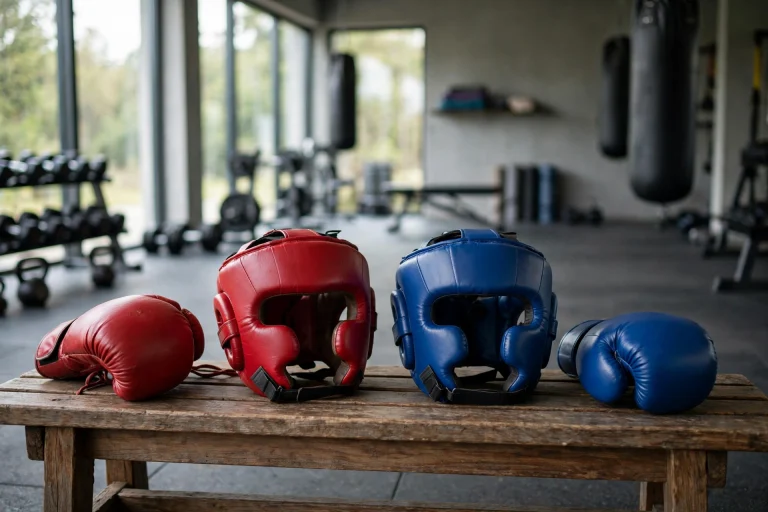
Kickboxing headgear is a padded guard that wraps around the head and fastens under the chin, usually with Velcro straps, laces, or a combination of both. Most designs are made from synthetic leather or vinyl over layers of foam padding. The padding is thickest over the forehead, temples, and the back of the head, where blows are most likely to land, and thinner around the ears and cheeks so the guard stays light and does not block hearing too much.
There are two broad styles. Open-face headgear leaves the whole face exposed, giving the widest field of vision and the easiest breathing. It suits light sparring and technical drills where the aim is to practise timing and movement. Full-face or cheek-protection headgear adds padded bars or extra cheek coverage in front of the cheekbones, which gives more protection against punches but narrows the view slightly and can feel warmer. In general terms, beginners and younger athletes often start with more coverage, while experienced sparring partners may prefer the open style.
Why Do Kickboxers Wear Headgear in Training?
The main reason is to reduce the minor injuries that come with regular sparring. A padded guard spreads the force of a punch or a kick over a wider area, which lowers the chance of a cut above the eyebrow, a split lip from a glancing glove, or a swollen ear. It also protects the ears themselves: repeated friction and knocks can lead to sore, swollen ears over time, and a guard with ear coverage helps prevent that.
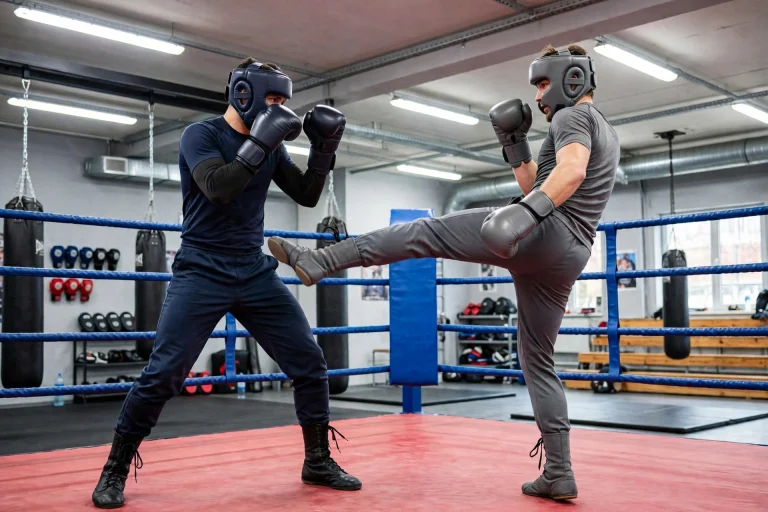
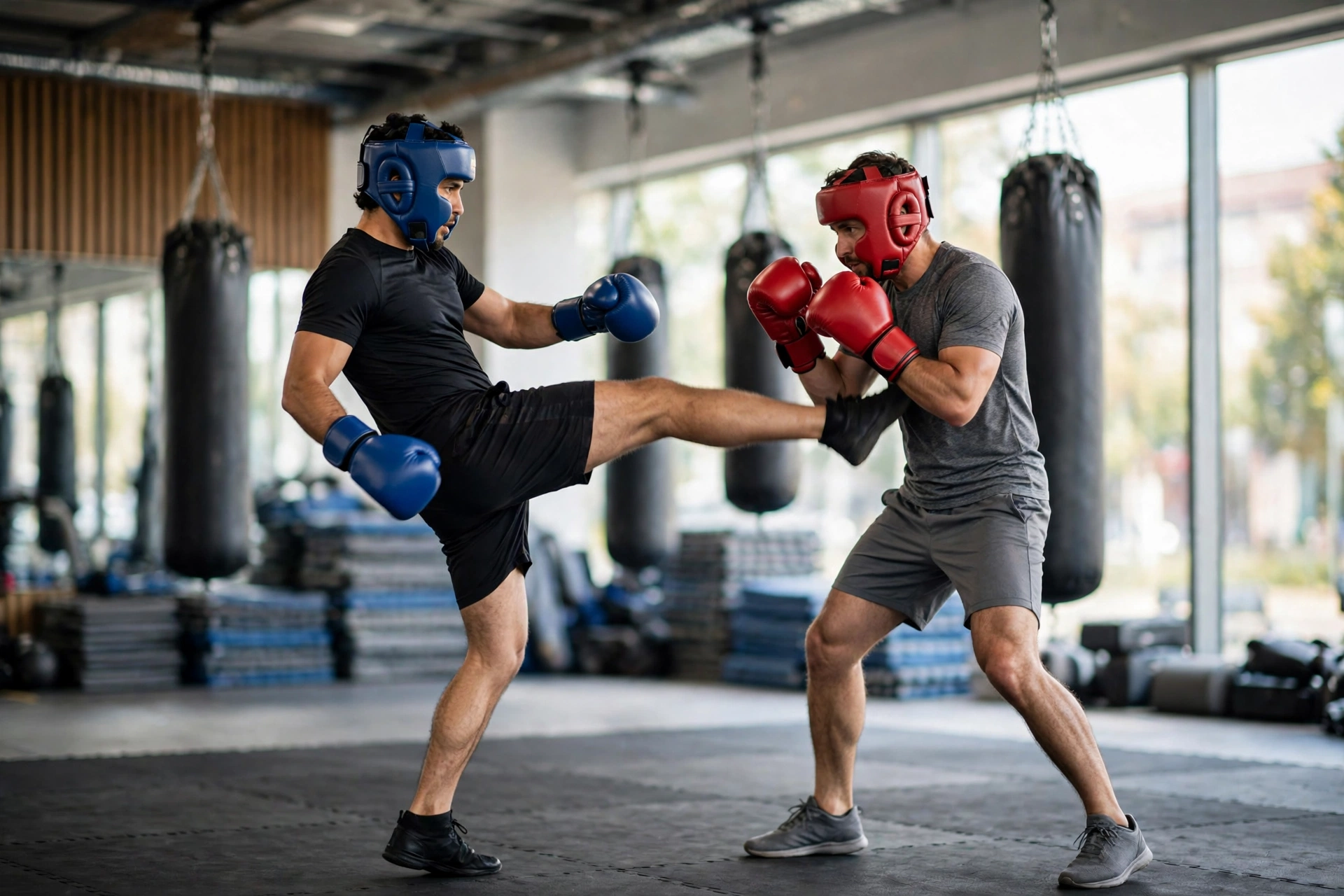
Headgear also gives training partners confidence. When both people in a sparring round wear headgear, they can practise combinations, footwork, and defence at a realistic pace without worrying that every light contact will leave a mark. That confidence matters for learning: athletes who are afraid of getting hurt tend to freeze or flinch, which slows their progress. A guard does not remove the risk, but it makes the training environment feel safer.
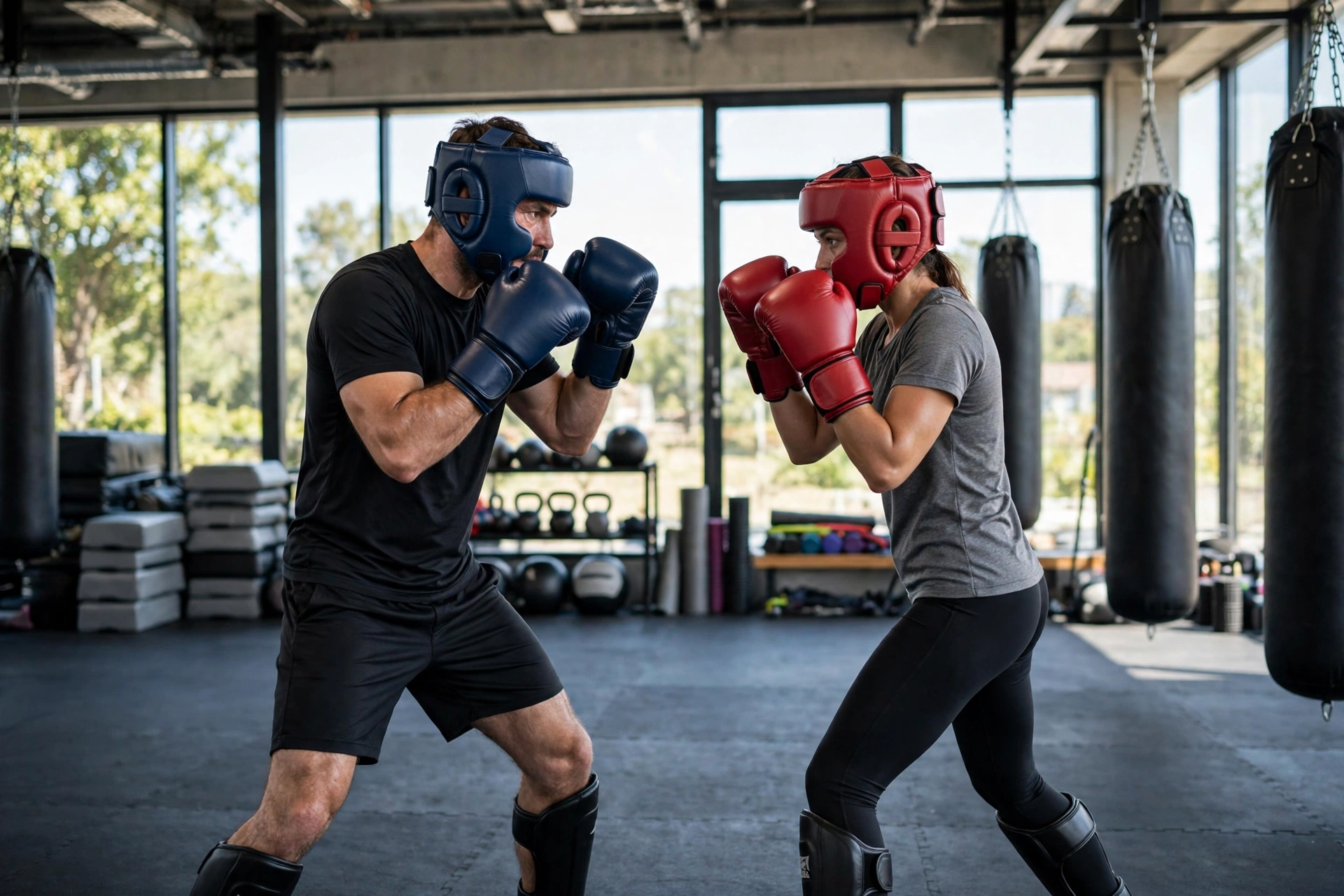
What Parts of the Head Does Kickboxing Headgear Protect?
The forehead is the most heavily padded area on most designs, because it is a common target for straight punches and roundhouse kicks. Thick foam across the brow spreads the impact and reduces the chance of a cut where the skin is thin over bone. The temples get similar treatment, since a blow to the side of the head can be disorienting, and the padding there helps absorb some of the force.
The cheeks and cheekbones are covered on many designs, either by the main body of the guard or by extra padded sections. This matters because a hook punch that lands on the cheekbone can cause bruising and swelling that makes it hard to train the next day. The ears sit inside padded cups or behind foam panels, which protect them from friction and direct knocks. The back of the head is covered too, which helps when a spinning kick or a clinch sends a blow around the side.
How Should Kickboxing Headgear Fit?
A good fit is snug all round without pressing hard on any one spot. The guard should sit level on the head, with the brow padding just above the eyebrows so it does not slip down over the eyes when you move. When you shake your head from side to side, the guard should stay in place rather than wobbling or sliding. If it shifts during a round, it will distract you and may leave part of the head exposed at the wrong moment.
Check the view before you buy. Look straight ahead, then glance left and right: your peripheral vision should feel only slightly narrowed, and you should be able to see your training partner’s shoulders and hands clearly. Check your hearing too — the ear padding will muffle sound a little, but you should still be able to hear your coach’s instructions. If the guard squeezes your temples or presses on your ears, try a larger size or a different shape, because a painful fit will make you dread wearing it.
The chin strap should fasten firmly and hold the guard in place without digging in. Most designs use Velcro, which is quick to adjust between rounds, while lace-up designs take longer to put on but can be tightened more precisely. Try the guard on with your mouthguard in and your hands wrapped, as you would wear it in training, so the fit you test is the fit you will actually spar in. If you are learning about how helmets handle different kinds of impact, reading about what MIPS is for helmets can help you understand one of the technologies used in modern helmet design.
When Is Headgear Not Used in Kickboxing?
In professional kickboxing bouts, headgear is generally not worn: fighters compete bare-headed, with gloves and shin guards as their protection. That is a competition rule, not a judgement that headgear is useless — professional fighters accept a higher level of risk, and the sport is organised around that. Amateur kickboxing is different, and in general terms headgear is often required for amateur bouts, especially for younger age groups, depending on the rules of the organisation running the event.
Headgear is also usually left off for bag work, pad work, and shadowboxing, because there is no incoming strike to protect against. Some athletes wear it for heavy bag rounds to get used to the feel of it, but that is a personal choice rather than a rule. The place headgear really belongs is sparring: any session where another person is throwing punches and kicks towards your head is a session where a guard earns its keep.
If you train at a club, follow your coach’s rules. Some clubs require headgear for all sparring, while others leave it to the individual. Either way, a guard that fits well and is in good condition is a sensible part of a kickboxer’s kit bag, alongside gloves, shin guards, a mouthguard, and hand wraps.
Frequently Asked Questions
Q: Does kickboxing headgear prevent concussion?
A: In general terms, no. Headgear spreads the force of a blow and protects the skin and ears, but it does not stop the brain moving inside the skull, so concussion is still possible and sparring should stay controlled.
Q: Can I use boxing headgear for kickboxing?
A: In general terms, yes, for light training — but a guard made for kickboxing usually has more padding around the temples and the top of the head, where kicks land, so check the coverage before you rely on a boxing-only design.
Q: How do I clean kickboxing headgear?
A: Wipe the outside with a damp cloth after training and let it air-dry away from direct heat. Avoid soaking it, and check the straps and stitching regularly for wear.

Olivia
Writer at Helmet Today, covering helmet reviews, fit and riding safety.