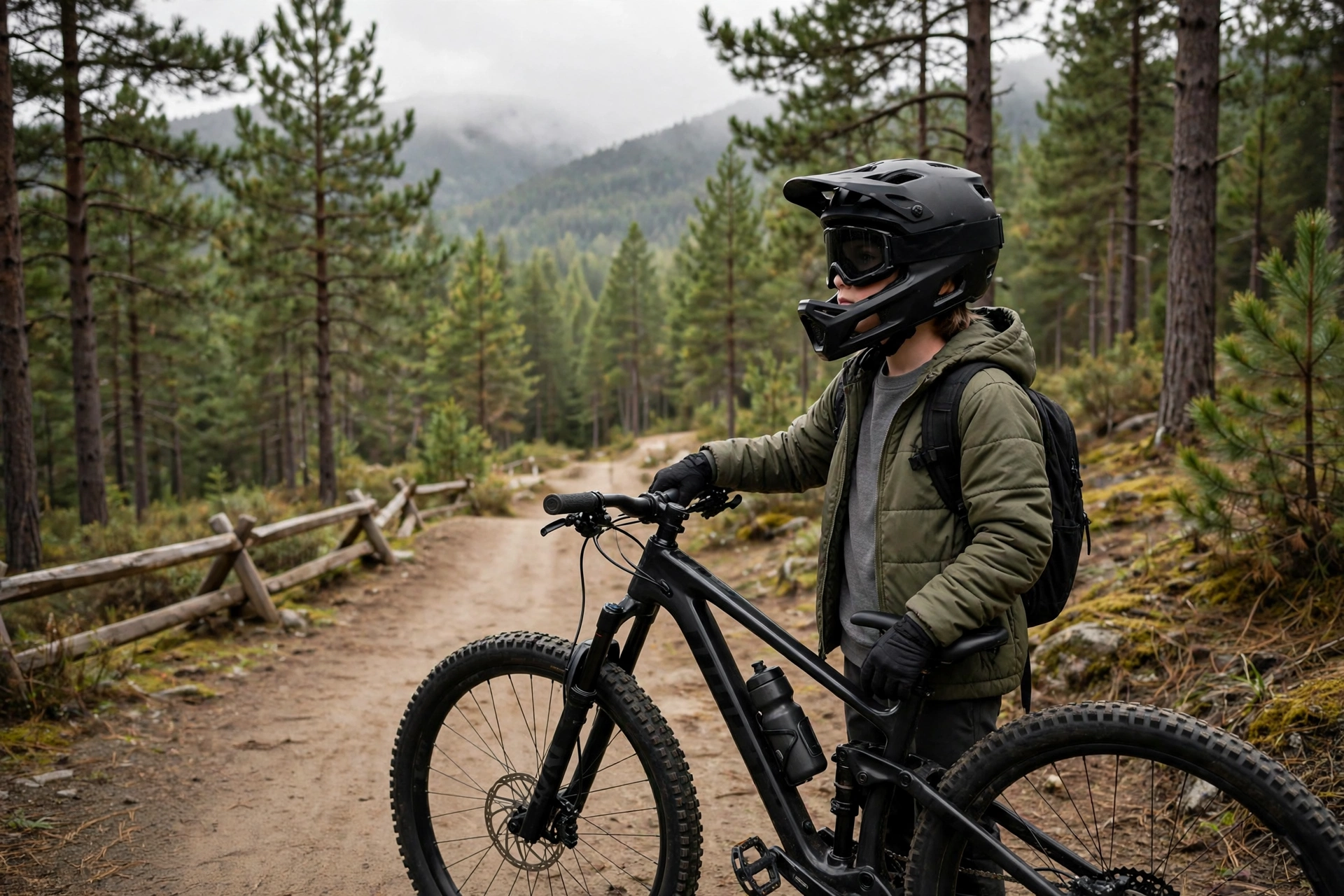
In general terms, when choosing a kids downhill MTB helmet, parents should check fit first, then full-face protection, downhill certification, and a goggle-compatible eyeport — in that order. Children riding downhill need the same level of protection as adults, in a helmet sized for a smaller head. Downhill riding means steep terrain, speed, jumps, and falls where the face and jaw are at risk, so an open-face helmet is not enough for dedicated downhill runs. Getting the right helmet, and getting it to fit, is one of the most important safety decisions a parent can make.
Kids also grow, lose interest, and crash more often than adults — all of which affect what to buy and when to replace it. This guide covers the checks that matter, and the mistakes to avoid.
Why Does a Kids Downhill Helmet Need to Be Full Face?
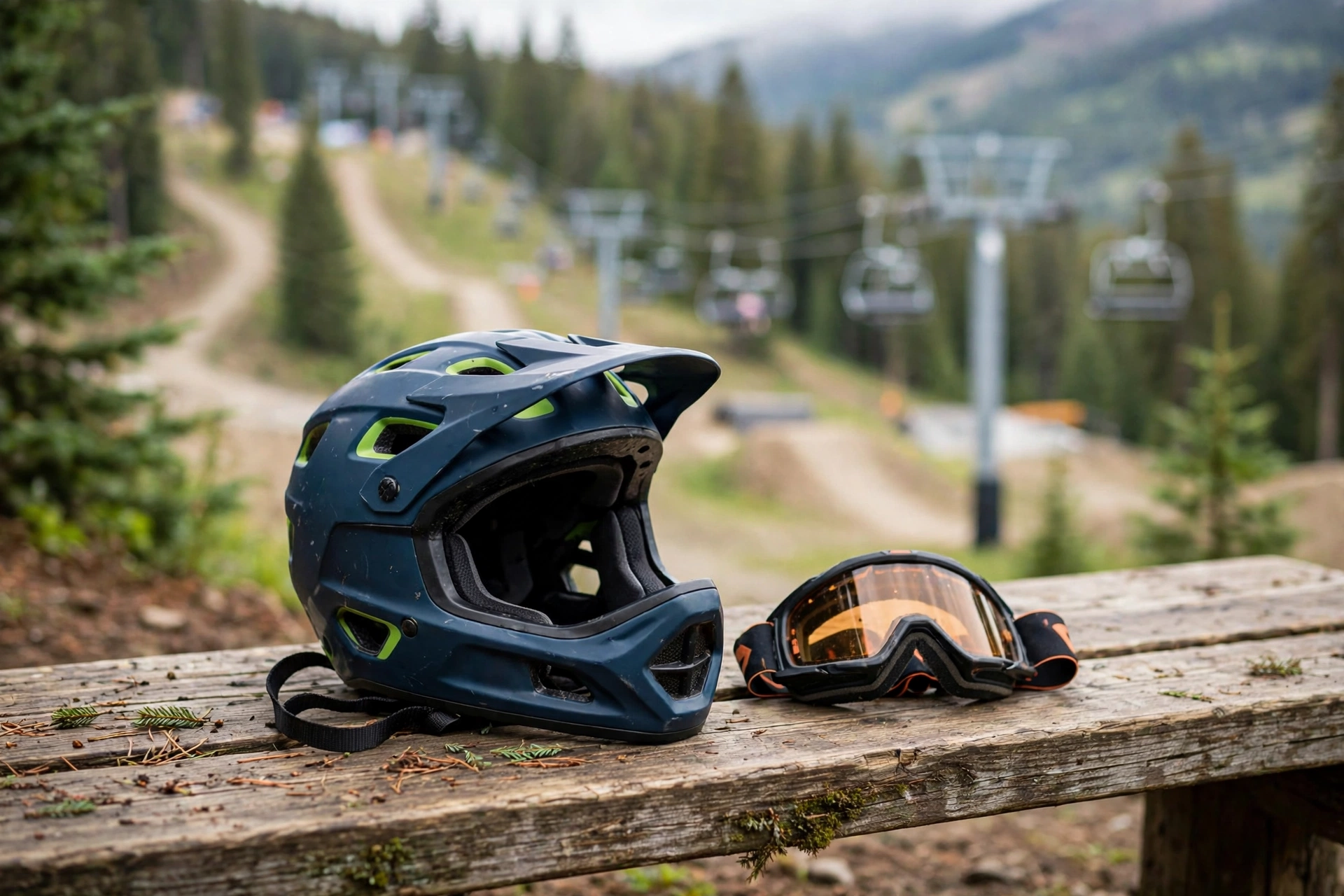
Downhill falls frequently involve the face. A child pitched forward over the bars, or sliding face-first on a steep section, needs a chin bar protecting the jaw, chin, and teeth. An open-face helmet leaves all of those areas exposed, and children are less able than adults to tuck, roll, or protect their faces in a fall.
A full-face kids helmet also typically offers more complete coverage around the sides and back of the head, with cheek pads that hold the helmet firmly in place. That snug, enveloping fit matters at speed, because a helmet that shifts in a crash protects less well. For gentle trail riding, an open-face helmet may be fine — but for lift-served bike parks and dedicated downhill tracks, full-face is the right choice.
Some parents worry that a full-face helmet is too much for a child. In practice, kids adapt quickly, especially when their friends wear the same style, and modern kids full-face helmets are lighter and better ventilated than older designs. The protection is worth the adjustment period.
How Should a Kids Downhill Helmet Fit?
Fit is the single most important check, and it matters more than brand or price. The helmet should sit level on the child’s head, cover the forehead, and feel snug all round without pressure points. The cheek pads should hold the cheeks gently, the chin bar should sit close to the chin without pressing on it, and the helmet should move with the head — not slide around it — when you shake it gently.
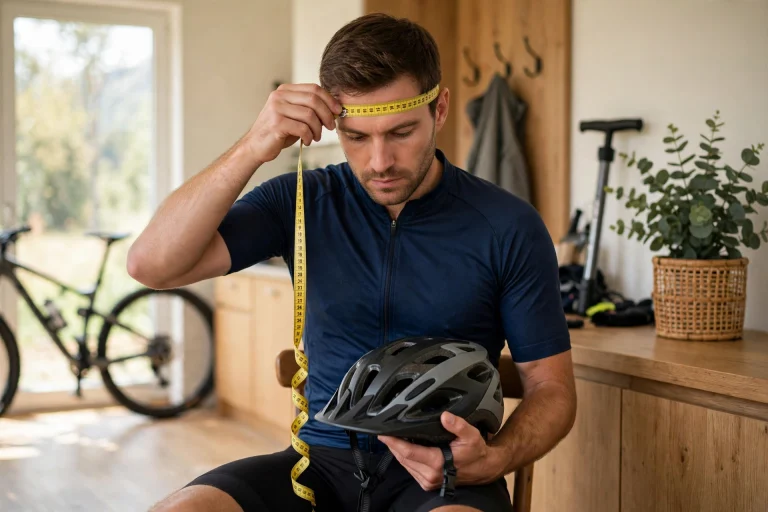
Measure the child’s head circumference and compare it with the manufacturer’s sizing chart, but always try the helmet on as well, because head shapes differ. Adjust the straps so the buckle sits under the chin and the side straps form a neat triangle around the ears. If the helmet rocks, lifts, or presses on the brow, try another size or model.
Do not buy a helmet to grow into. A helmet that is too big will shift in a crash and may come off entirely, which defeats its purpose. Buy the size that fits now, and accept that children outgrow helmets — that is normal, and it is far safer than riding in an oversized one. Hand-me-down helmets are also a risk unless you know their full history: a helmet that has already crashed should not be passed on.
What Certification and Features Should Parents Look For?
Check that the helmet is certified for downhill or mountain biking use, not just general cycling. Downhill helmets are tested for higher-energy impacts, and a helmet certified only for general cycling may not be designed for downhill speeds and terrain. Look for the certification label inside the helmet and confirm it matches the riding your child will do.
Rotational impact protection is worth having on a kids helmet, since children’s crashes are just as likely to be angled as adults’. This guide to what MIPS means for helmets explains how one such system works and why it matters for angled impacts.
Goggle compatibility is a practical must. Kids downhill helmets are worn with goggles, and the eyeport must fit your child’s goggles without gaps or pressure on the nose. Try the helmet and goggles together before buying, and check that the child can see clearly up, down, and to the sides. Ventilation matters too — a hot, uncomfortable helmet is one a child will want to take off.
How Do You Get a Child to Actually Wear the Helmet?
Comfort is the biggest factor. A helmet that fits well, breathes, and does not press or pinch is one a child will wear without complaint. Let the child choose the colour or design within the safe options you have shortlisted — ownership makes a big difference to willingness.
Set the example as well. Children copy what adults do, so always wear your own helmet when you ride together, and make helmet-wearing a non-negotiable part of getting on the bike — like a seatbelt in a car. Consistency matters more than lectures.
Check the fit regularly, not just when you buy. Children grow fast, and a helmet that fitted in spring may be tight by autumn. Check the fit at the start of each season, after growth spurts, and whenever the child complains of discomfort. A helmet that no longer fits should be replaced, even if it looks new.
When Should a Kids Downhill Helmet Be Replaced?
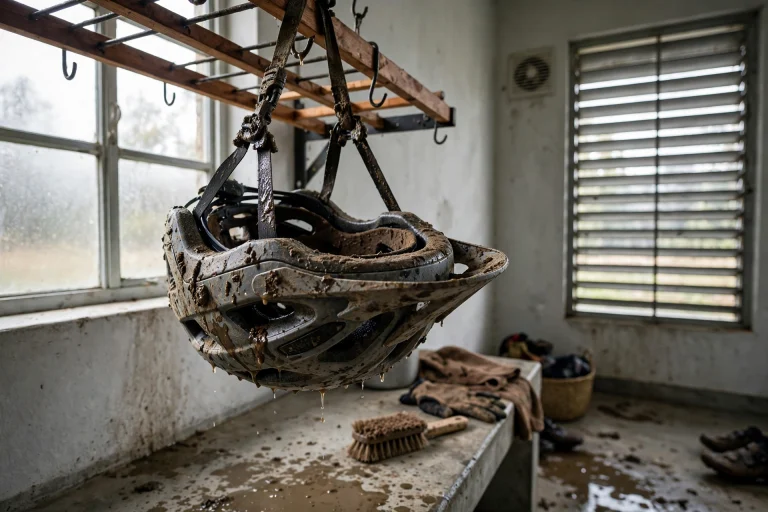
Replace the helmet after any serious crash, even if it looks undamaged. Foam liners can be damaged invisibly, and a helmet that has absorbed one big impact should not be trusted with another. Teach children to tell you about crashes, even small ones, so you can inspect the helmet together.
Replace it when it no longer fits, when straps or buckles are worn or broken, or when the shell shows cracks, dents, or deep scratches. Regular inspection — a quick check of the shell, straps, pads, and visor before rides — catches wear early.
Also replace helmets that have been stored badly or are very old, since heat, sunlight, and time degrade materials. A helmet kept in a hot car boot or a damp shed will not last as long as one stored cool and dry. When in doubt, replacing a kids helmet is cheap insurance compared with the cost of an injury.
Frequently Asked Questions
Q: Can my child use an adult helmet in a small size?
A: In general terms, it is better to buy a kids-specific helmet, because kids helmets are shaped and weighted for smaller heads. An adult helmet in a small size may fit, but check the fit carefully and prefer a kids model when available.
Q: Should I buy a bigger helmet so my child grows into it?
A: No — an oversized helmet can shift or come off in a crash. Buy the size that fits now, and replace it as your child grows.
Q: Can my child reuse a helmet after a crash?
A: After a serious crash, no — replace it even if it looks fine, because the foam may be damaged invisibly. After a very minor knock with no visible damage, inspect it carefully and replace it if you have any doubt.

Olivia
Writer at Helmet Today, covering helmet reviews, fit and riding safety.