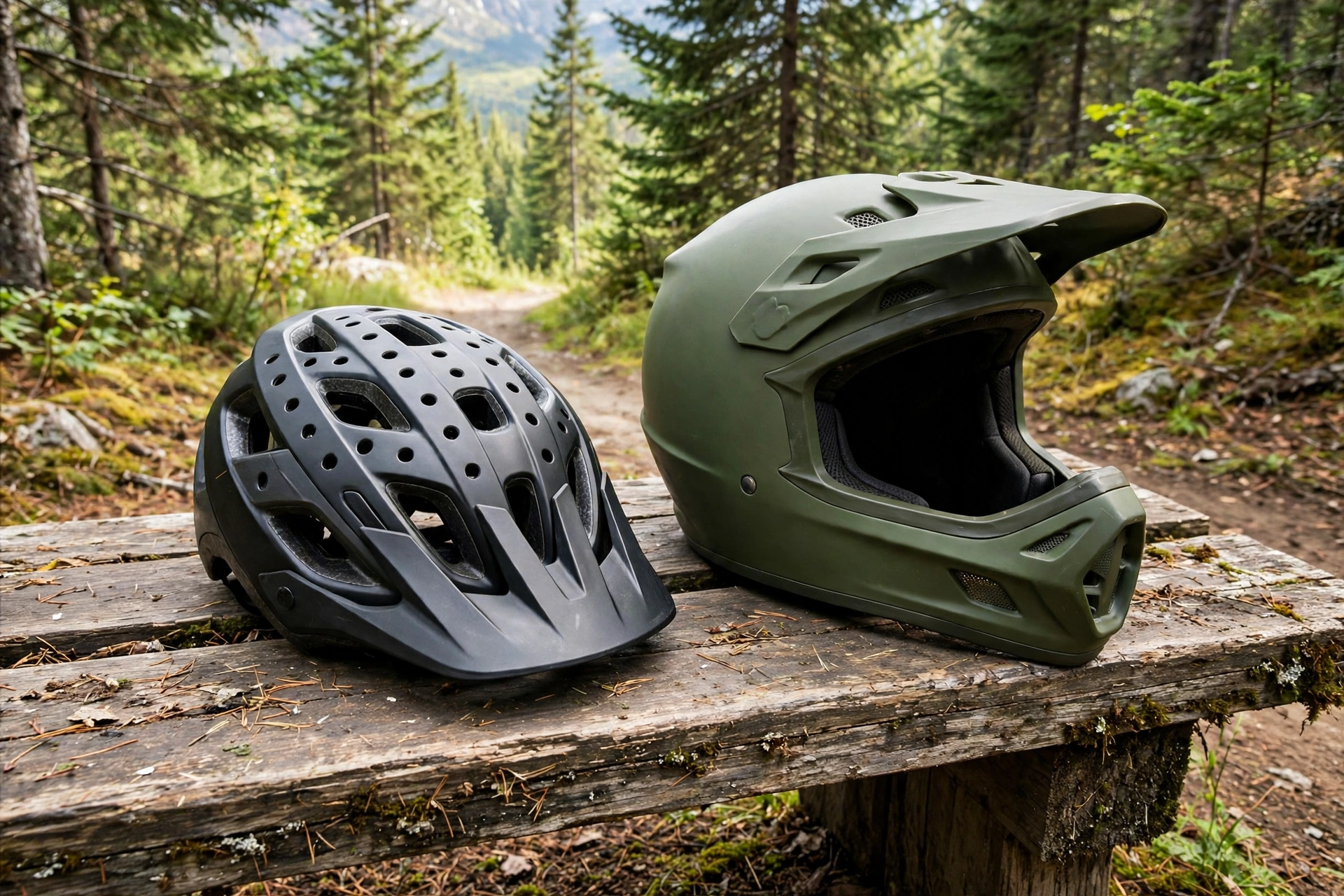
In general terms, an MTB helmet and a motocross helmet are built for different sports, so they differ in weight, ventilation, certification, and fit — an MTB helmet is lighter and airier for pedalling, while a motocross helmet is heavier and tougher for powered riding. They may look similar at a glance, especially the full-face versions, but swapping one for the other is usually a compromise rather than a straight substitute.
Mountain bikers sometimes eye motocross helmets because they look rugged and often cost less than a premium downhill MTB helmet. Motocross riders, meanwhile, rarely consider MTB helmets at all. This guide explains what actually separates the two, where they overlap, and which one suits your riding.
What Is an MTB Helmet Built For?
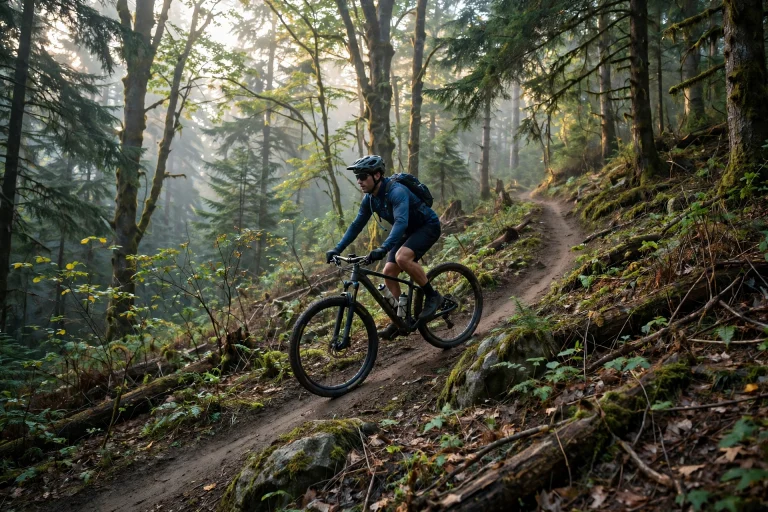
Mountain bike helmets are designed around human-powered riding. Even full-face downhill MTB helmets are built for riders who pedal, climb, or at least ride lift-accessed trails where weight and heat still matter. Open-face trail helmets dominate the sport, with large vents, internal air channels, and a light shell that you can wear comfortably for hours.
MTB helmets are certified to bicycle standards, which reflect the impact speeds and crash types of cycling. Trail and cross-country helmets cover the back and sides of the head more than a road helmet, because sideways and backward falls are common on trails. Downhill MTB helmets add a chin bar and meet downhill-specific testing, but they remain lighter than motocross helmets and breathe better.
Another MTB priority is compatibility with cycling gear. Trail helmets work with sunglasses and have adjustable visors, while full-face MTB helmets are shaped around goggles. Weight is kept down because every extra gram is felt on a climb, and ventilation matters because a rider generating their own power also generates a lot of heat.
What Is a Motocross Helmet Built For?
Motocross helmets are designed for powered off-road riding, where speeds are higher, bikes are far heavier, and crashes involve roost thrown up by other bikes, jumps, and hard-packed or rutted tracks. The shell and liner are built to handle higher-energy impacts, and the helmet is tested to motorcycle standards rather than bicycle standards.
Because motocross riders do not pedal, weight and ventilation are lower priorities. A motocross helmet can be heavier and less ventilated without ruining the ride, and its larger, sturdier construction reflects that freedom. The eyeport is big and shaped for motocross goggles, and the peak visor is long, designed to block roost, mud, and sun at speed.
Motocross helmets also assume a different crash profile. Falls can happen at motorcycle speeds, and a rider may be hit by their own bike or another rider’s roost. The helmet’s job is to manage those higher-energy impacts, and its construction, padding, and chin bar are all tuned accordingly.
How Do Weight and Ventilation Compare?
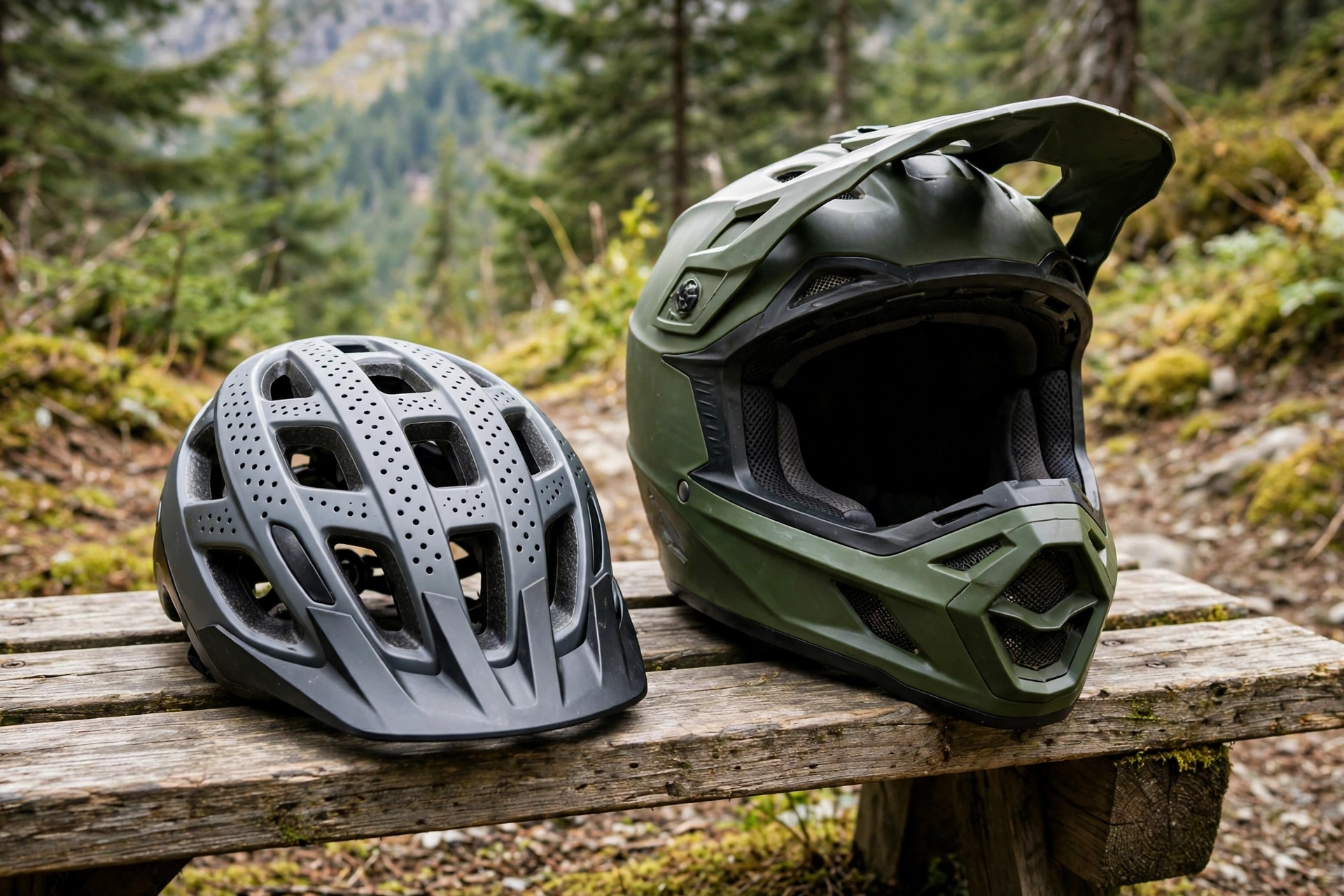
Weight is the most noticeable difference when you pick both helmets up. An MTB helmet, even a full-face downhill model, is generally much lighter than a motocross helmet, because it is built for a rider who pedals and carries their own weight uphill. A motocross helmet’s extra material and denser liner add weight that a motorbike rider barely notices but a cyclist feels quickly.
Ventilation follows the same logic. MTB helmets use large vents and airflow channels to keep a pedalling rider cool, especially on climbs. Motocross helmets have fewer, smaller vents, because the rider is not generating the same body heat and because large openings would let in more mud and roost. On a long climb, a motocross helmet can feel hot and stifling compared with an MTB helmet.
The peak visor also differs. An MTB visor is usually shorter and adjustable, meant to shade the eyes and deflect branches. A motocross peak is longer and stiffer, built to block roost at speed. Both work for their sport, but neither is ideal in the other.
Can You Wear a Motocross Helmet for Mountain Biking?
In general terms, you can, but it is rarely a good idea for regular riding. A motocross helmet will protect your head, and some downhill riders on a tight budget do use them at bike parks. For lift-served downhill days, where you are not pedalling uphill, the weight and heat penalty matters less, and the extra toughness may feel reassuring.
For trail or cross-country riding, though, a motocross helmet is a poor fit for the job. It is heavy on climbs, hot in warm weather, and may not fit comfortably with cycling eyewear. It also lacks some MTB-specific features, such as the extended rear coverage tuned for cycling falls, and its certification is for motorcycle use rather than cycling.
There is also a practical point: bike parks and events may have their own helmet rules, and some specify bicycle-certified helmets. Check the rules before relying on a motocross helmet for an organised ride or race.
Can You Wear an MTB Helmet on a Motorcycle?
This is the direction to avoid. An MTB helmet is not certified for motorcycle use, and it is not designed for motorcycle speeds or impact energies. Wearing one on a motorcycle means relying on a helmet outside its designed purpose, and in many places it would also fail legal requirements for motorcycle helmets.
The difference is not about quality — a good MTB helmet is a well-made product — but about the job it was tested for. Motorcycle standards test for higher-speed impacts and different impact surfaces than bicycle standards. An MTB helmet has not passed those tests, so it should never be treated as a motorcycle helmet substitute.
If you ride both sports, you need two helmets. That is an extra cost, but each helmet is doing a job the other was never designed for, and no single helmet covers both properly.
Which Helmet Should You Choose?
Choose by the sport you actually ride most. If you mountain bike, buy an MTB helmet: open-face for trail and cross-country, full-face for downhill and bike parks. You will get the right certification, a weight you can pedal with, ventilation that works on climbs, and a fit designed around cycling eyewear and goggles.
If you ride motocross, buy a motocross helmet. You need motorcycle certification, a shell built for higher-energy crashes, and a peak and eyeport designed for roost and motocross goggles. An MTB helmet is not a cheaper shortcut here — it is the wrong tool.
For riders who do both, budget for both helmets and keep them separate. And whatever you ride, look for rotational impact protection, which matters in the angled crashes common to both sports. This guide to what MIPS means for helmets explains how one such system works.
Frequently Asked Questions
Q: Is a motocross helmet safer than an MTB helmet?
A: Not in general terms — each is safer for its own sport. A motocross helmet is built for higher-energy motorcycle crashes, while an MTB helmet is tuned for cycling falls, weight, and ventilation. Safer means matched to the riding you do.
Q: Can I use a motocross helmet at a bike park?
A: Some riders do for lift-served downhill days, but check the park’s rules first, as some require bicycle-certified helmets. For regular trail riding, an MTB helmet is far more comfortable.
Q: Why are motocross helmets heavier than MTB helmets?
A: They use more material and a denser liner for higher-energy impacts, and weight matters less when a motor does the work. MTB helmets are kept light because the rider pedals.

Olivia
Writer at Helmet Today, covering helmet reviews, fit and riding safety.