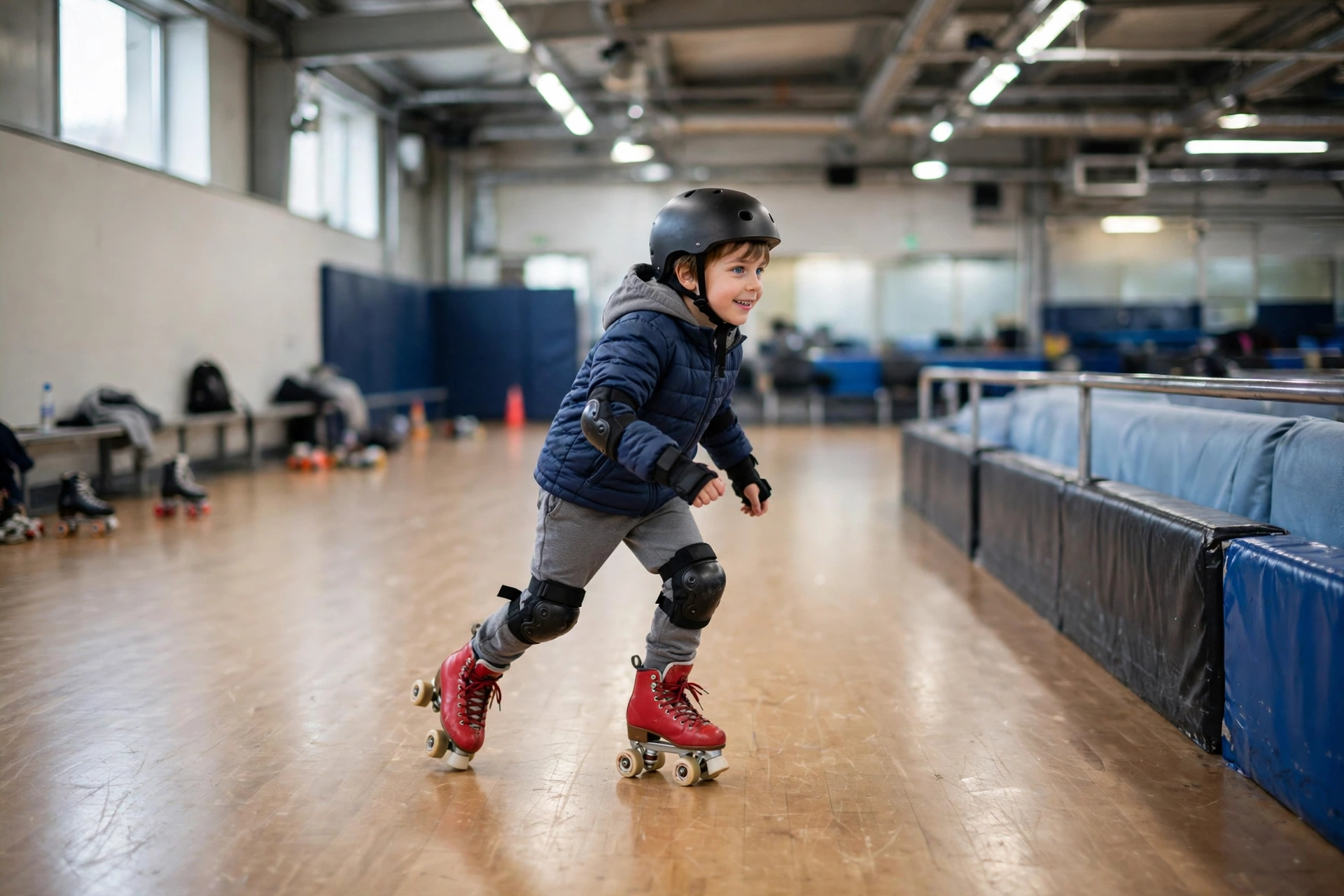
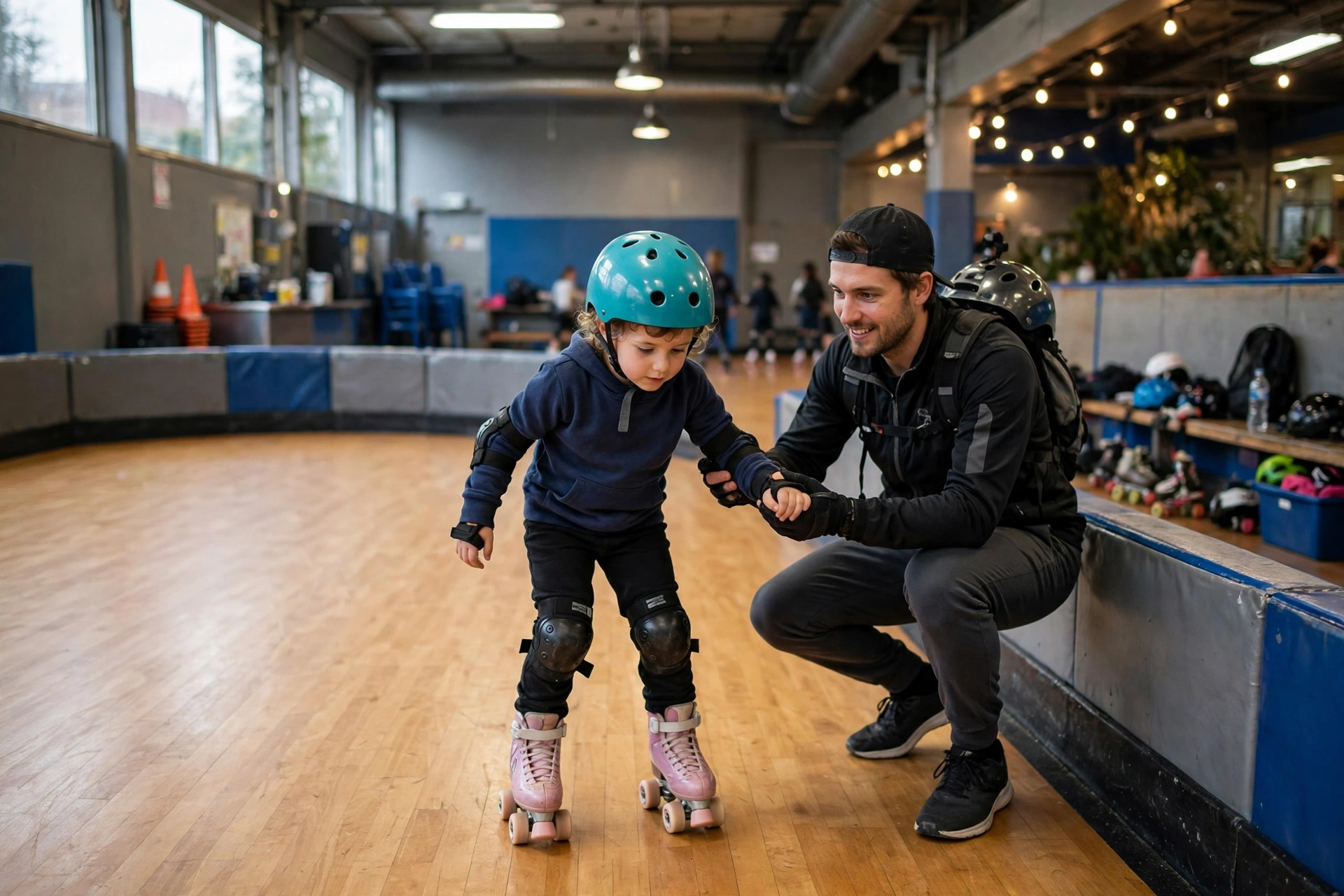
For a first roller skate lesson, a child needs a well-fitting kids’ helmet that sits level on the head, with the straps snug under the chin and the buckle done up every time they skate. Roller skating is great fun, but beginners fall a lot while they learn to balance, and a helmet is the most important piece of protection for those early lessons.
A first roller skate lesson usually takes place at a rink or on a smooth, flat surface, with an instructor or a parent close by. The child will be learning to stand, glide, and stop, and all three involve wobbles and falls. A helmet protects the head when a fall happens, and it gives the child the confidence to keep trying after a tumble.
What type of helmet suits a roller skate lesson?
A multi-sport helmet is a good choice for a first roller skate lesson, because it is made for activities like skating, scooting, and cycling. These helmets usually have a hard shell that covers more of the back and sides of the head, which suits the kind of falls skaters have.
A standard kids’ bike helmet can also work for roller skating, especially if the child already owns one that fits well. It gives good head protection, although it may cover slightly less of the back of the head than a multi-sport helmet.
Avoid helmets made for other sports, such as climbing or horse riding, because they are built for different kinds of impact. A helmet made for skating or cycling is shaped and padded for the falls a child is likely to have on skates, and that is what matters for a first lesson.
How should a kids’ helmet fit for skating?
A kids’ helmet should sit level on the head, covering the forehead down to about two finger-widths above the eyebrows. It should not tilt back, which leaves the forehead exposed, or tilt forward, which blocks the child’s view of the rink.
The helmet should feel snug but not tight. When the child shakes their head gently, the helmet should stay in place, with only a small amount of movement. If it slides around easily, it is too loose, and if it leaves red marks or the child complains that it hurts, it is too tight.
Most kids’ helmets have a dial or pads inside that let you adjust the fit. Turn the dial until the helmet sits snugly, and use the pads to fill any gaps. Check the fit before the lesson, because a helmet that fitted a few months ago may be too small now, as children grow quickly.
How do you adjust the straps and buckle?
The side straps should form a neat V shape just below each ear, with the straps lying flat against the child’s face. If the V sits too far forward or too far back, slide the strap adjusters until it sits just below the ear.
The chin strap should be snug enough that only one or two fingers fit between the strap and the chin. If you can fit more fingers than that, the strap is too loose, and the helmet could come off in a fall. If the strap is so tight that the child cannot open their mouth comfortably, loosen it a little.
Always do the buckle up before the child puts their skates on, and check that it clicks shut properly. A helmet that is not buckled is of little use in a fall, because it can fly off on impact. Make buckling up part of the routine, every time, without exception.
What other protection should a child wear?
Alongside a helmet, knee pads and elbow pads are a sensible choice for a first roller skate lesson, because beginners often fall onto their knees or hands. Wrist guards are also useful, because children tend to put their hands out when they fall.
Comfortable clothes that allow free movement are best, and long sleeves and trousers give a little extra protection against scrapes on the rink floor. Avoid loose scarves or dangling drawstrings, which can catch on things while the child is skating.
Check that the skates themselves fit well and are done up properly before the lesson starts. Loose skates make balance harder and falls more likely, and a child who is struggling with their skates will find it harder to enjoy the lesson.
How do you help a child enjoy their first lesson?
Keep the lesson relaxed and let the child learn at their own pace. Most first lessons focus on standing, taking small steps, and learning to stop, rather than going fast or doing tricks. Praise small wins, like standing up alone or gliding a few steps, because these build confidence.
Stay close by and be ready to help them up after a fall. A child should be supervised during their first roller skate lesson, and an encouraging adult nearby makes the whole experience feel safer and more fun.
If the child gets tired, upset, or frustrated, take a break. Short, happy lessons are better than long, tiring ones, and a child who enjoys their first lesson is far more likely to want to go back for a second one.
How do you check the helmet before each lesson?
Before every lesson, check that the helmet sits level and feels snug, and that the dial or pads inside have not loosened since the last use. Children grow quickly, and a helmet that fitted well a few weeks ago may need a small adjustment now.
Check the straps and the buckle too. Look for frayed straps, a buckle that does not click shut properly, or a strap adjuster that has slipped out of place. A quick check takes less than a minute, and it is worth doing before the child puts their skates on.
Look over the outside of the helmet for cracks or dents, and check the foam inside for signs of wear. If the helmet has taken a hard knock since the last lesson, inspect it carefully, and replace it if you are unsure whether it still protects properly.
Does my child need a helmet at an indoor rink?
Yes. Falls happen on smooth rink floors just as they do outdoors, and a helmet is sensible protective gear for every skating session, especially for a beginner who is still learning to balance.
What if my child refuses to wear a helmet?
Let them choose the colour or pattern, if you can, and point out that other skaters at the rink wear helmets too. Keep the lesson short and fun, and praise them for wearing it, rather than turning it into a battle.
Can my child wear a hat under the helmet?
It is best not to, because a hat changes the fit and can make the helmet sit too high. If it is cold, use a thin balaclava made for helmets, and check the fit again with it on. If the helmet has a MIPS liner, the same fit guidance applies.

Olivia
Writer at Helmet Today, covering helmet reviews, fit and riding safety.