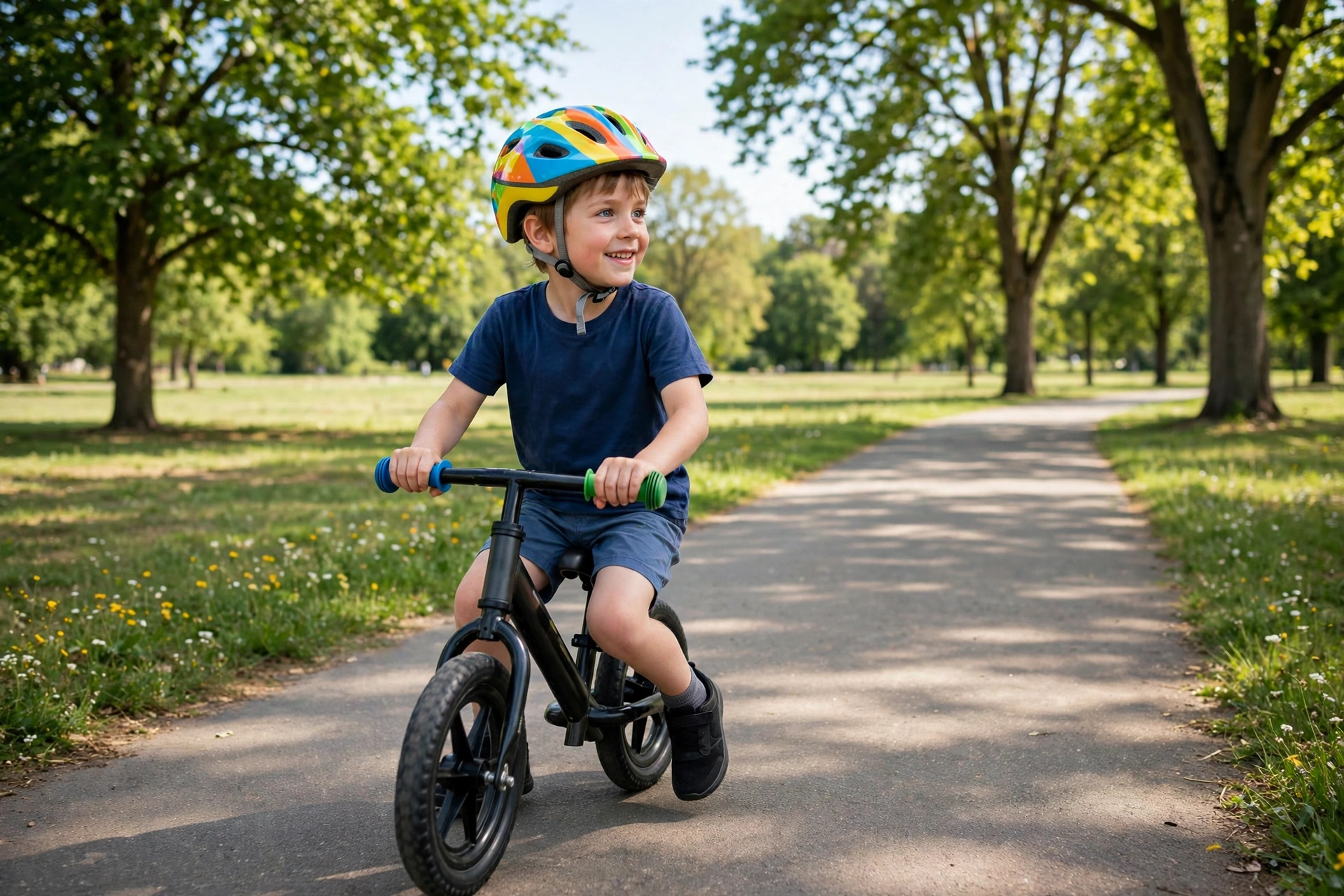
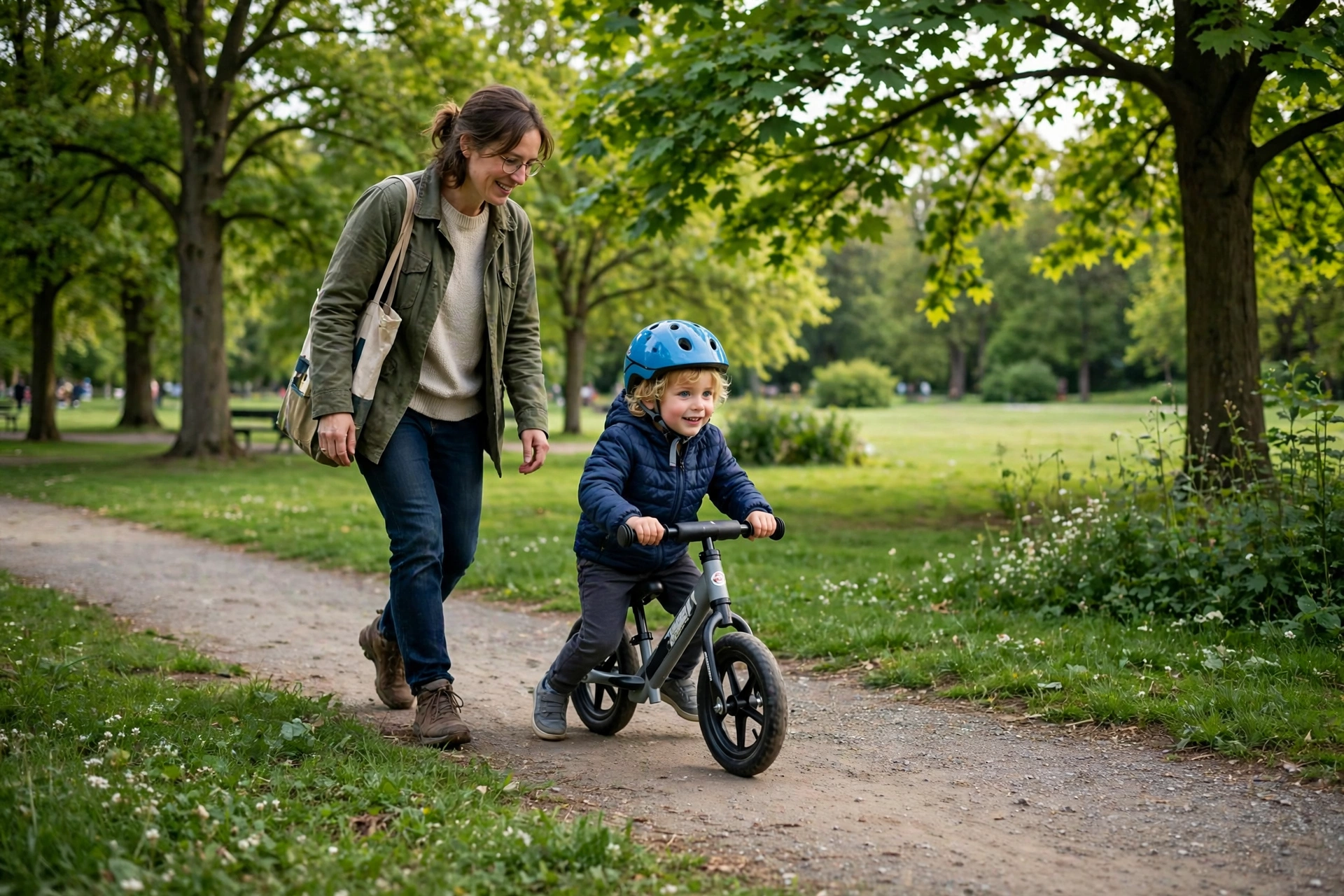
For a first balance bike ride, a child needs a light, well-fitting kids’ bike helmet that sits level on the head, with the straps snug under the chin and the buckle done up. A balance bike is often a child’s first taste of riding, and a good helmet is part of getting that first ride right from the start.
A balance bike has no pedals, so the child scoots along with their feet and learns balance and steering before they ever need to pedal. Speeds are low and the child is close to the ground, but falls still happen, especially while they are learning to steer and stop. A helmet protects the head in those early tumbles, and it also builds a habit that will stay with them as they move on to a pedal bike.
What type of helmet suits a balance bike?
A standard kids’ bike helmet is the right choice for a balance bike. Look for a helmet made for young children, with a smooth, rounded shell and good ventilation, so the child stays comfortable and cool while they ride.
Multi-sport helmets are another option, and they are made to be used for several activities, such as cycling, scooting, and skating. These can be a practical choice if the child does more than one activity, although a dedicated bike helmet often fits better for cycling.
Avoid helmets made for other sports, such as climbing or horse riding, because they are built for different kinds of impact. A bike helmet is shaped and padded for the kind of falls a child is likely to have on a bike, and that is what matters for a first balance bike ride.
How should a kids’ helmet fit?
A kids’ helmet should sit level on the head, covering the forehead down to about two finger-widths above the eyebrows. It should not tilt back, which leaves the forehead exposed, or tilt forward, which blocks the child’s view.
The helmet should feel snug but not tight. When the child shakes their head gently, the helmet should stay in place, with only a small amount of movement. If it slides around easily, it is too loose, and if it leaves red marks or the child complains that it hurts, it is too tight.
Most kids’ helmets have a dial or pads inside that let you adjust the fit. Turn the dial until the helmet sits snugly, and use the pads to fill any gaps. Check the fit every few months, because children grow quickly, and a helmet that fitted in spring may be too small by autumn.
How do you adjust the straps and buckle?
The side straps should form a neat V shape just below each ear, with the straps lying flat against the child’s face. If the V sits too far forward or too far back, slide the strap adjusters until it sits just below the ear.
The chin strap should be snug enough that only one or two fingers fit between the strap and the chin. If you can fit more fingers than that, the strap is too loose, and the helmet could come off in a fall. If the strap is so tight that the child cannot open their mouth comfortably, loosen it a little.
Always do the buckle up before the child starts riding, and check that it clicks shut properly. A helmet that is not buckled is of little use in a fall, because it can fly off on impact. Make buckling up part of the routine, every time, without exception.
How do you help a child enjoy their first ride?
Keep the first ride short and relaxed, in a flat, open space with no traffic, such as a quiet park path or a garden. Let the child scoot at their own pace, and do not rush them into going faster or further than they want to.
Stay close and walk beside them, so you can catch them if they wobble. A child should be supervised on their first balance bike ride, and an adult nearby makes the child feel safer and more confident.
Praise the child for trying, even if they fall off. Small falls are a normal part of learning, and a calm, encouraging response helps the child get back on and try again. If the child gets upset or tired, stop for the day and try again another time.
When should you replace a kids’ helmet?
Replace a kids’ helmet after any hard impact or crash, even if there is no visible damage, because the foam inside may be compressed and may not protect as well next time. A helmet that has been dropped hard onto a hard surface should also be checked carefully.
Replace the helmet when the child outgrows it. If the helmet no longer sits level, or if the dial is at its widest setting and the helmet still feels tight, it is time for a bigger size. A helmet that is too small leaves part of the head unprotected.
In general terms, a helmet that is used regularly should be replaced after a few years, because the materials age and the foam can become less effective. If the helmet has a MIPS liner, the same replacement guidance applies, and the liner should be checked for wear whenever the helmet is cleaned.
What should a child wear for a first balance bike ride?
Alongside a helmet, a child should wear comfortable clothes that allow free movement, and closed shoes that cover the whole foot. Trainers are ideal, because the child pushes along with their feet, and open sandals or loose shoes can slip off or catch on the ground.
Long sleeves and trousers give a little extra protection against scrapes if the child falls, although shorts are fine on a warm day. Avoid loose scarves or dangling drawstrings, which can catch on the handlebars or the wheels while the child is riding.
On a sunny day, put sunscreen on the child’s face, neck, and arms before the ride, and bring water to drink. A small snack in a pocket can help too, because learning to ride is tiring work, and a short break with a drink often brings back a child’s energy and enthusiasm.
Does my child need a helmet on a balance bike if they are going slowly?
Yes. Even at low speed, a child can fall and hit their head, especially while learning to steer and stop. A helmet is sensible protective gear for every ride, however short or slow.
What if my child refuses to wear a helmet?
Let them choose the colour or pattern, if you can, and wear a helmet yourself when you ride together, so it feels normal. Keep the first rides short and fun, and praise them for wearing it, rather than turning it into a battle.
Can my child wear a hat under the helmet?
It is best not to, because a hat changes the fit and can make the helmet sit too high. On cold days, use a thin balaclava made for helmets, or a helmet cover, and check the fit again with it on.

Olivia
Writer at Helmet Today, covering helmet reviews, fit and riding safety.