The right helmet for a special needs child is one that fits their head shape and size properly, feels comfortable enough to wear without distress, and can be put on and adjusted with the help of a caregiver if needed. There is no single “special needs helmet,” but there are many styles — different shell shapes, softer straps, easy buckles, and larger size ranges — so most families can find a good match with patient fitting and a few practical adaptations.
Every child deserves to ride safely, and every family’s situation is different. A child may have sensory sensitivities, a larger or smaller head size, low muscle tone, a feeding tube or hearing device, or simply a strong dislike of anything touching their head. This guide walks through fit, comfort, and caregiver-friendly options in general terms, so you can shop with a clearer picture of what to look for.
What Should You Look For First in a Helmet for a Special Needs Child?
Start with the same basics as any kids helmet: the right certification for the activity and a proper fit. For bicycling in the US, look for the CPSC label inside the helmet. Then measure your child’s head circumference with a soft tape just above the eyebrows and match it to the maker’s size chart, rather than guessing by age.
Head shape matters as much as size. Some children have heads that are rounder, longer, or less symmetrical, and helmet brands cut their shells differently. A helmet that presses on one spot while floating loose elsewhere will be rejected quickly. Trying a few brands and models, ideally in a shop with patient staff, makes a real difference.
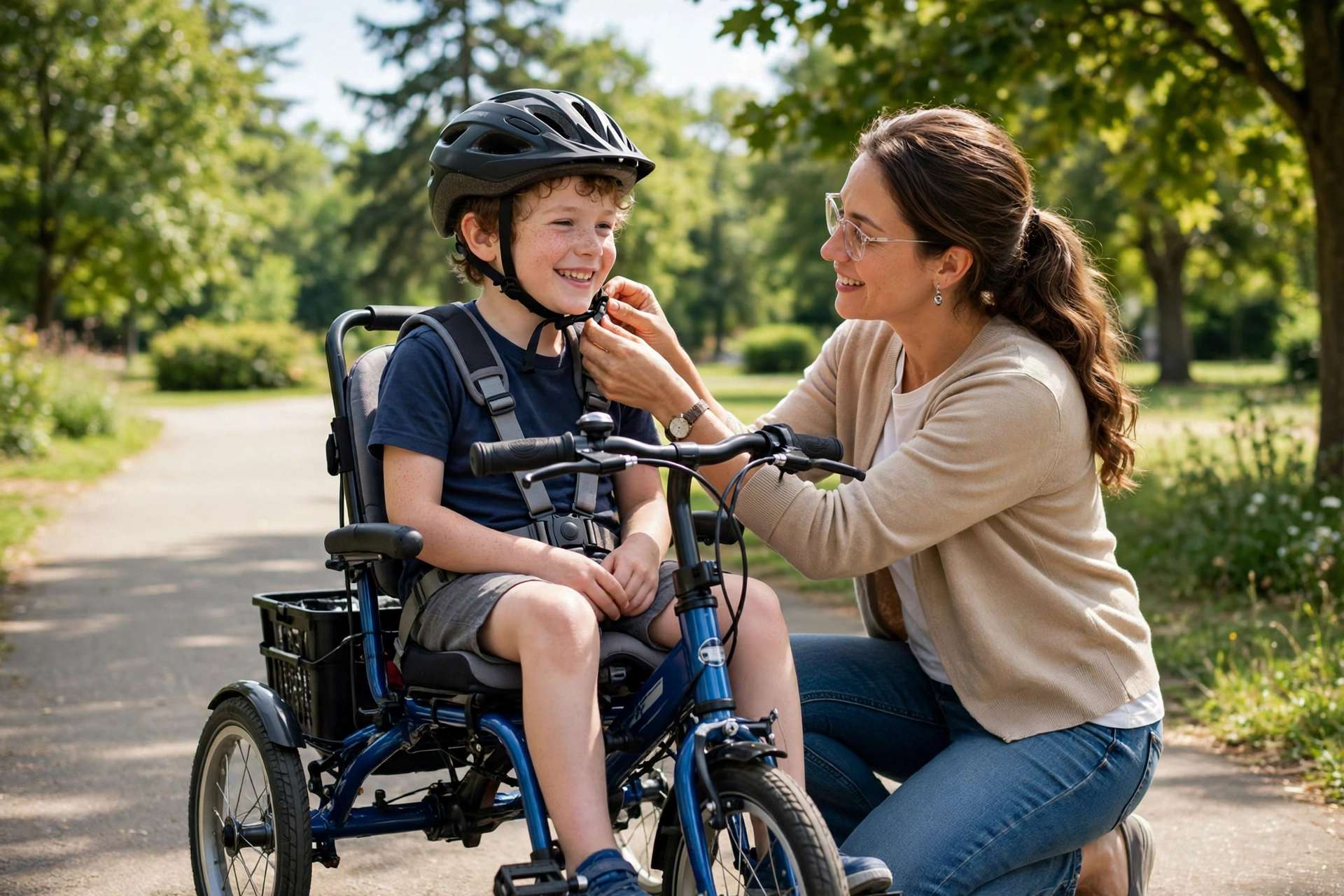
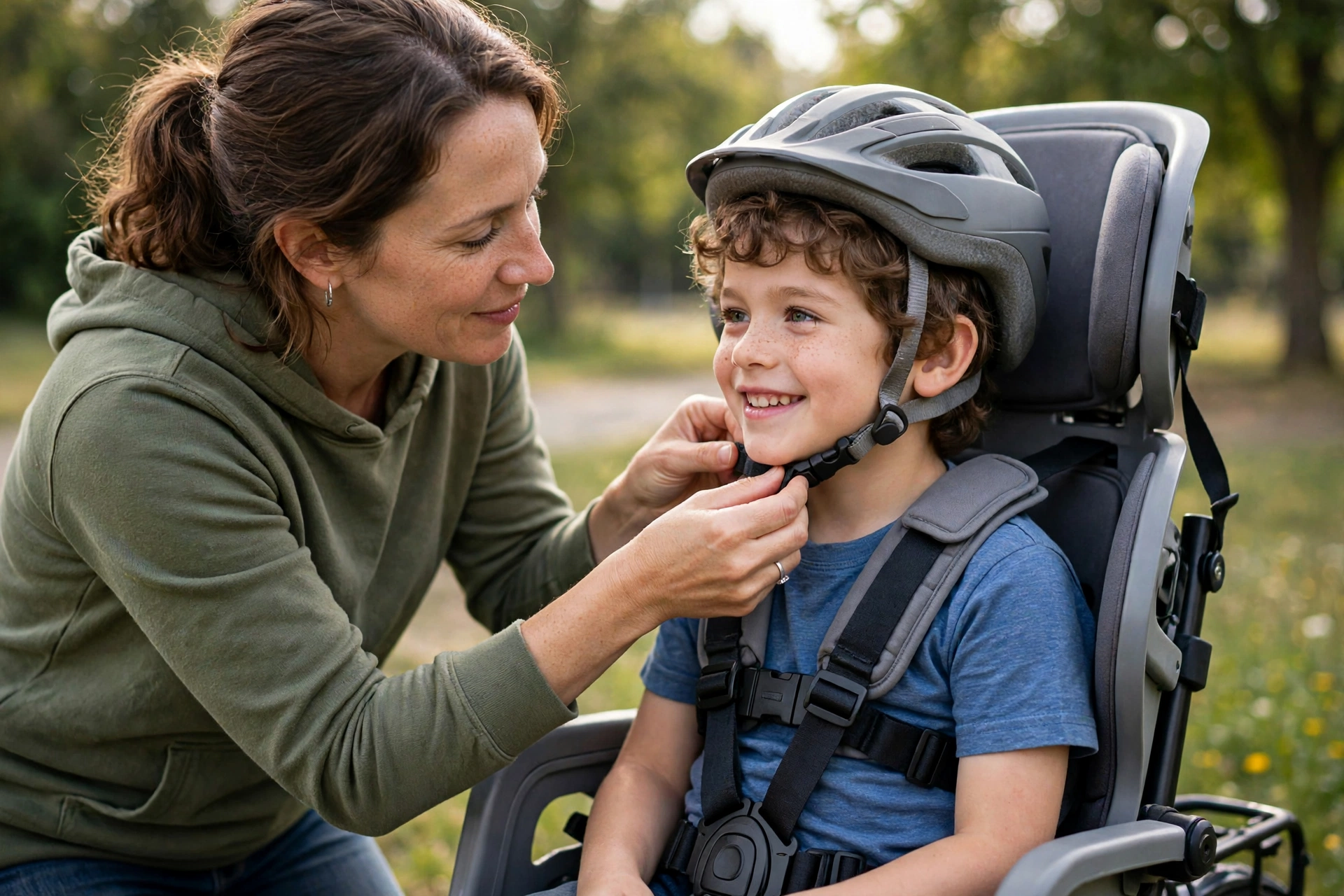
Also think about the riding setup. A child riding independently needs a helmet they can manage; a child riding in a trailer, an adaptive trike, a tag-along, or a supportive seat may need a helmet that works with headrests and harnesses. Note where straps and the back of the shell will meet the seat, because a bulky rear shell can push the head forward against some headrests. A flatter-back helmet can be more comfortable in seats with head support.
How Can You Make a Helmet More Comfortable for Sensory-Sensitive Kids?
For many children, the barrier is not safety — it is sensation. Chin straps rubbing, buckles pinching, pressure on the forehead, or the feeling of something enclosed around the head can all be genuinely distressing. Small features help: look for helmets with soft, padded chin-strap covers, pinch-guard buckles, smooth liners with no scratchy seams, and adjustment dials at the back that spread pressure evenly instead of relying on tight straps.
Weight is part of comfort too. A lighter helmet is easier for a child with low neck strength or muscle tone to hold up, and less tiring on longer rides. Ventilation matters as well, since overheating adds to sensory overload for some kids.
Then build tolerance gradually, at home, with no pressure to ride:
- Let your child hold, explore, and play with the helmet first.
- Try short sessions indoors — a minute or two — paired with a favorite activity.
- Increase wearing time slowly over days, celebrating each step.
- Let them choose the color or design whenever possible.
A helmet your child accepts calmly protects far better than a technically fancier one that causes a meltdown at the door.
What If Standard Sizes Do Not Fit Your Child?
Some children fall outside typical kids size ranges — a larger head circumference, a very small one, or a shape that off-the-shelf helmets do not match. Start by checking brands that offer extended size ranges or adult sizes in smaller shells; an adult extra-small sometimes fits an older child better than a kids model. Adjustable dial-fit systems also widen the usable range of a single helmet.
If your child wears medical equipment — hearing aids, cochlear implant processors, glasses, a cranial band, or a feeding tube — bring it all to the fitting. Straps and shells need to clear devices without pressing on them, and sometimes a different strap routing or a helmet with higher ear cutouts solves the problem.
When nothing standard works, talk to your child’s therapy team or doctor about options. In general terms, some adaptive equipment suppliers and orthotic specialists can point families toward helmets designed for higher-support needs or custom solutions. What matters most is that the final choice is still a properly certified helmet for the activity, fitted as snugly and level as your child’s needs allow.
How Can Caregivers Help With Putting On and Checking the Helmet?
A consistent routine helps. Put the helmet on the same way every time — level on the head, front edge about two finger-widths above the eyebrows, side straps forming a V under the ears, and the chin strap snug with roughly one or two fingers of room. A short picture sequence taped near the bikes can help other caregivers follow the same steps.
Choose hardware that is easy for adult hands too: magnetic buckles and large dial adjusters are simpler to manage than tiny sliders, especially when a child is wiggly or resistant. Some families keep a second, identical helmet at school or with grandparents so the routine and fit stay the same everywhere.
Check the fit regularly. Children grow, haircuts change how a helmet sits, and pads compress over time. A quick fit check every few weeks — level position, no rocking side to side, straps snug — takes under a minute. Replace the helmet after any crash or hard impact, and when your child outgrows it, even if it still looks new.
Are There Extra Protection Features Worth Considering?
Beyond certification and fit, some features suit certain riders well. Extended coverage at the back and sides protects more of the head, which can reassure families whose child has balance challenges or is more likely to fall sideways from a trike or adaptive bike. Bright colors and reflective details help drivers and caregivers spot the rider quickly.
Some helmets include rotational-impact protection systems; if you are comparing models, our explainer on what MIPS is and how it works covers the idea in plain language. Treat such features as a bonus layered on top of the essentials — certification, fit, and consistent wearing — rather than a substitute for them.
Finally, match the helmet to the actual activity. A helmet certified for bicycling suits bikes, trikes, and trailers; skating and other sports have their own standards and shapes. If your child rides with a program or school, ask what they require, so the helmet you buy is the one they will be allowed to wear.
Frequently Asked Questions
Q: My child refuses to wear any helmet. What can we do?
A: Go slowly and keep it positive: let them choose the design, practice wearing it indoors for short, fun sessions, and build up gradually. Padding, pinch-guard buckles, and a lighter model often remove the discomfort causing the refusal. Your child’s therapy team may also have desensitization ideas tailored to them.
Q: Can a helmet fit over hearing aids or a cochlear implant?
A: Often yes, with the right model. Look for helmets with generous ear cutouts and adjustable straps, and always fit the helmet with the devices in place to check nothing is pressed or dislodged. Bring the equipment to the shop fitting.
Q: Does my child need a helmet in a bike trailer or adaptive trike?
A: In general terms, yes — safety guidance treats passengers in trailers and riders of trikes the same as cyclists, and many local rules require helmets for child passengers. Choose a comfortable, flatter-back helmet that works with the seat and headrest, and check your local requirements.

Olivia
Writer at Helmet Today, covering helmet reviews, fit and riding safety.