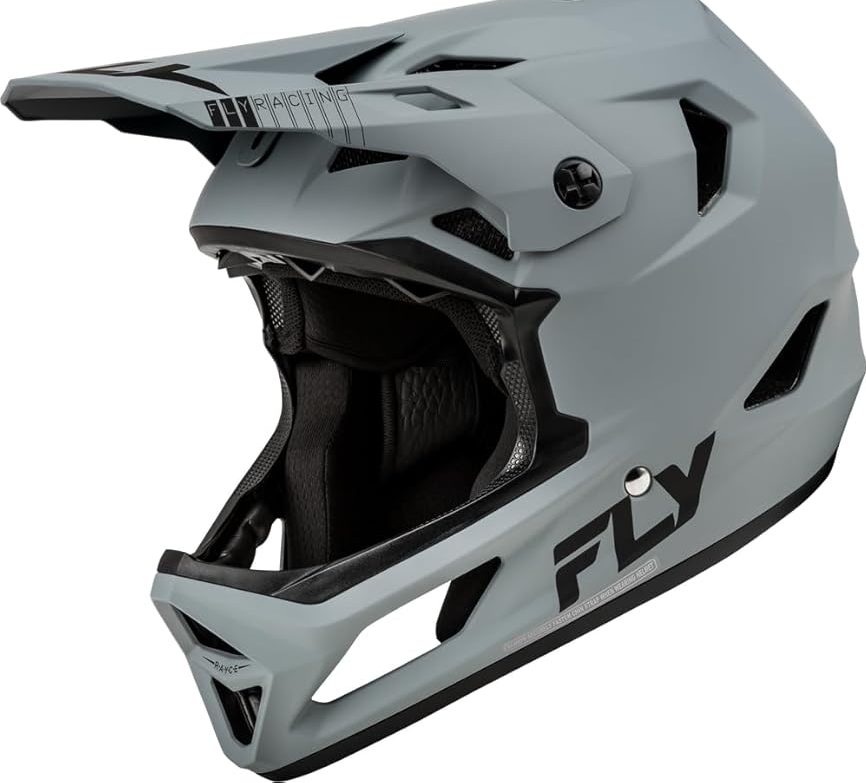

When I first looked closely at the Motorcycle Helmet vs. Car Helmet question, the biggest surprise was that a helmet made for a car is not simply a tougher motorcycle helmet. The two are built around very different crash situations, seating positions, and safety systems.
That difference matters more than looks. A motorcycle helmet has to work with an exposed rider moving through traffic, while a car racing helmet is used inside a vehicle, often with a harness, roll cage, and other safety gear. Once you see that, the differences make much more sense.
Motorcycle Helmet vs. Car Helmet: The Main Difference
The easiest way to understand both helmets is to look at what the wearer is doing during a crash. A motorcycle rider can hit the road, another vehicle, or an object directly.
A car racer is surrounded by the car itself. The helmet must work as part of a larger protection system.
| Comparison | Motorcycle Helmet | Car Racing Helmet |
|---|---|---|
| Main use | Street and motorcycle riding | Competitive auto racing |
| Typical standard | DOT, ECE, Snell M | Snell SA, FIA standards |
| Main concern | Road impact and exposure | High-energy racing impacts |
| Vehicle protection | Little surrounding protection | Cage, harness, seat, restraints |
The standards reflect those different jobs. Snell currently lists M2025D and M2025R for motorcycling, while SA2025 is its current standard for competitive automotive sports.
That does not mean one is simply “safer” in every situation. It means each is tested for the environment it is designed to serve.
Why Motorcycle Helmets Are Built Differently
A motorcycle helmet has to deal with an unusually open environment. There is no roof, windshield, door, or seat belt holding the rider in place.
That changes almost everything about the helmet design.
Motorcycle helmets need a wider view
A rider needs to see traffic approaching from many angles. Peripheral vision matters when checking cars, intersections, mirrors, and road hazards.
Snell notes that its motorcycle M standard allows a wider visual field than its SA automotive racing standard. Some SA helmets can have a narrower field and may not be street legal.
This is one reason I would not look at a small, closed racing helmet and assume it is automatically better for everyday riding.
| Motorcycle Riding Need | Why It Matters |
|---|---|
| Wide vision | Helps with traffic awareness |
| Clear face shield | Blocks wind, dust, and debris |
| Stable fit | Keeps the helmet in place |
| Road certification | Matches intended street use |
A motorcycle helmet also has to manage wind. At highway speed, airflow, noise, rain, and small road debris become daily concerns.
That is very different from sitting inside a closed race car.
What Makes a Car Racing Helmet Different?
A car racing helmet is designed around a much more controlled environment. The driver may sit low in a fixed seat and use a multi-point harness.
The helmet also needs to work with racing restraints and, in many events, a frontal head restraint system.
Car helmets are part of a larger safety setup
This is the part that is easy to miss when comparing helmets on a shelf.
A race driver may use:
- A racing seat
- A roll cage
- A multi-point harness
- A frontal head restraint
- Fire-resistant clothing
- Gloves and shoes
- A race-approved helmet
The helmet is only one piece.
FIA also maintains specific helmet standards and approval lists for motorsport equipment, including FIA 8859-2015 and FIA 8860-2018 helmets.
That is why buying a car racing helmet just because it looks stronger can be a mistake.
Motorcycle Helmet vs. Car Helmet Standards
This is where the comparison gets much more interesting. Helmet labels are not just decoration. They tell you what kind of testing the helmet was built around.
For U.S. motorcycle use, FMVSS No. 218 is the federal motorcycle helmet standard. NHTSA explains that manufacturers certify their helmets to the standard, while NHTSA performs compliance testing on selected helmets.
| Standard | Intended Use |
|---|---|
| DOT / FMVSS 218 | Motorcycle helmets for U.S. road use |
| Snell M2025 | Motorcycle use |
| Snell SA2025 | Competitive auto racing |
| FIA 8859 / 8860 | Motorsport competition |
The important lesson is simple: a racing standard is not automatically a motorcycle street standard.
A helmet can be excellent for one job and unsuitable for another.
Why the Snell letters matter
The Snell Foundation explains that M is for motorcycling, SA is for competitive auto racing, and K is for karting. SA also includes a flammability test that M does not.
That small letter can tell you a lot.
If you are buying a helmet for a motorcycle, seeing an “SA” label should not make you assume it is the right choice. Check the helmet’s actual approvals and intended use first.
Is a Car Racing Helmet Safer Than a Motorcycle Helmet?
This is probably the most common trap in the whole comparison.
A car racing helmet may pass very demanding motorsport tests. That does not automatically make it safer for riding a motorcycle.
The reason is simple: safety depends on the complete use case.
| Situation | Better-Matched Helmet |
|---|---|
| Daily motorcycle commute | Motorcycle helmet |
| Track car racing | Approved car racing helmet |
| Motorcycle track riding | Motorcycle racing helmet approved for that use |
| Kart racing | Karting helmet |
A racing helmet can have features that make sense inside a car but are less useful on a motorcycle.
Vision is one example. Snell specifically notes that SA and K helmets may have a narrower visual field than M helmets.
On a motorcycle, losing useful side vision can create a new problem.
Can You Use a Car Helmet on a Motorcycle?
Sometimes a helmet may have more than one certification or approval. But you should never assume that every car racing helmet is suitable for road riding.
The label and manufacturer’s stated use matter.
For U.S. street riding, NHTSA says to look for the DOT symbol and FMVSS No. 218 certification marking.
Check the actual certification
I have found this to be a much better habit than judging a helmet by shell shape, weight, or price.
A good checklist is:
- Check the certification label.
- Check the manufacturer’s intended use.
- Check local motorcycle helmet laws.
- Check the helmet’s fit.
- Check whether the visor and field of view suit riding.
| Warning Sign | Why It Matters |
|---|---|
| Racing-only label | May not meet street-use needs |
| No required road certification | Could be unsuitable or illegal |
| Poor peripheral vision | Makes traffic scanning harder |
| Wrong fit | Can reduce protection and comfort |
NHTSA also warns that fake DOT labels and novelty helmets exist, so a sticker alone should not be treated as proof of safety.
The Fit Difference Is Easy to Underestimate
One lesson that comes up again and again with helmets is that the right certification cannot fix a bad fit.
A helmet should feel snug without causing sharp pressure points. It should not move freely when you shake your head.
For motorcycle use, the fit also has to remain comfortable while riding for long periods.
Why comfort matters for safety
A helmet that hurts after 20 minutes can become a helmet you avoid wearing.
That sounds obvious, but it is a real-world problem.
I would rather have a properly fitted motorcycle helmet that I can wear every ride than a specialized racing helmet that feels impressive but does not suit my actual use.
| Fit Problem | Better Approach |
|---|---|
| Helmet moves around | Try a smaller or better-shaped shell |
| Forehead pressure | Try another head shape |
| Loose cheek area | Check different internal padding |
| Pain after a short ride | Recheck size and shell shape |
Do not solve a bad fit by simply tightening the strap until it becomes uncomfortable. The shell shape may be wrong for your head.
Motorcycle Helmet vs. Car Helmet for Track Days
This is where things can get confusing because “track use” covers very different activities.
A motorcycle track day still involves a motorcycle. A car track day involves a car. The helmet choice should follow the vehicle and event rules.
Motorcycle track riding
A motorcycle track helmet should provide the vision, retention, impact protection, and certification required for motorcycle use.
For serious riding, the helmet may also be designed around modern rotational-impact testing or other advanced requirements.
Snell’s current M2025 program has separate M2025D and M2025R motorcycle standards, with M2025R designed to also meet ECE R22-06 requirements.
Car track driving
A car racing helmet may need an SA or FIA approval depending on the event.
The FIA maintains approved helmet lists, including helmets meeting FIA 8860-2018.
So before a track day, I would check the organizer’s rules first. Buying the wrong helmet and discovering it at tech inspection is a frustrating way to start the day.
Common Mistakes When Comparing the Two
Most mistakes come from treating helmet safety like a simple “stronger is better” contest.
It is not.
Mistake: Choosing by appearance
A thick-looking shell can feel reassuring, but appearance tells you little about the actual certification or test program.
Mistake: Assuming expensive means safer
Price can reflect materials, design, features, and certification costs. It does not turn a motorcycle helmet into a race-car helmet.
Mistake: Ignoring vision
This is especially important for motorcycle riders. A helmet that restricts useful side vision may not be a smart street choice.
| Common Mistake | Better Thinking |
|---|---|
| “Race helmet means safer.” | Match the helmet to the activity. |
| “Heavier means stronger.” | Check the actual standard. |
| “Any full-face helmet works.” | Check certification and intended use. |
| “The sticker proves everything.” | Verify the manufacturer and markings. |
The goal is not to find the most extreme helmet. The goal is to find the helmet designed for the crash environment you actually face.
What I Would Choose for Each Situation
After breaking the comparison down by use rather than marketing claims, the choice becomes much easier.
For normal motorcycle riding, I would choose a properly fitted motorcycle helmet that meets the required road standard.
For competitive car racing, I would follow the event rules and use the required motorsport-approved helmet.
| Your Activity | Sensible Starting Point |
|---|---|
| Street motorcycle | Motorcycle helmet |
| Motorcycle touring | Full-face motorcycle helmet |
| Motorcycle racing | Approved motorcycle racing helmet |
| Car racing | Approved auto racing helmet |
| Karting | Approved karting helmet |
NHTSA recommends motorcycle riders use helmets that meet FMVSS 218 and notes that motorcycle helmets are a key form of protection against serious head injury.
Final Thoughts
The biggest lesson I took from the Motorcycle Helmet vs. Car Helmet comparison is that helmet safety is about matching the design to the job. A car racing helmet is not simply a “better motorcycle helmet,” and a motorcycle helmet is not a weaker race helmet.
If you ride a motorcycle, choose a helmet made and certified for motorcycle use. If you race a car, follow the helmet rules for that racing series. Fit, certification, vision, and intended use matter far more than simply choosing the helmet that looks the toughest.
Frequently Asked Questions
Is a car racing helmet better than a motorcycle helmet?
Not for normal motorcycle riding. Car racing helmets are built for auto racing, while motorcycle helmets are designed for motorcycle use, road vision, and rider exposure.
Can I wear a motorcycle helmet in a race car?
It depends on the racing event. Some events require specific Snell SA or FIA helmets, so check the rules before entering a race or track event.
Are motorcycle and car helmets made differently?
Yes. Their designs reflect different crash settings. Motorcycle helmets focus on open-road riding, while car helmets work with seats, harnesses, and other race safety gear.
What is the difference between Snell M and SA helmets?
Snell M is for motorcycling, while SA is for competitive auto racing. SA also has a flammability test and can allow a narrower field of view than M.
Can a helmet have both motorcycle and car ratings?
Some helmets may carry more than one approval, but you should check the exact markings and manufacturer instructions. Never assume one certification covers every use.

Olivia
Writer at Helmet Today, covering helmet reviews, fit and riding safety.