ODS in a helmet stands for Omni-Directional Suspension, a rotational-impact system developed by the helmet maker 6D that uses small rubber dampers to let the helmet’s inner liner move independently of its outer shell during an angled crash. The dampers are designed to compress and shear when the helmet is hit at an angle, absorbing some of the twisting force before it reaches the wearer’s head. In general terms, the idea is to separate the liner from the shell just enough that an angled impact is cushioned in every direction, not only in a straight line.
ODS is best known from 6D’s motorcycle and bicycle helmets, where it sits at the centre of the brand’s approach to impact protection. The system is unusual because it replaces the traditional single-piece foam liner with a two-part design: an outer liner bonded to the shell and an inner liner that sits closer to the head, joined by a set of small dampers. This guide explains what ODS is in general terms, how the dampers work, how it compares with other rotational systems, and what to consider before buying a helmet that uses it.
How Does ODS Work?
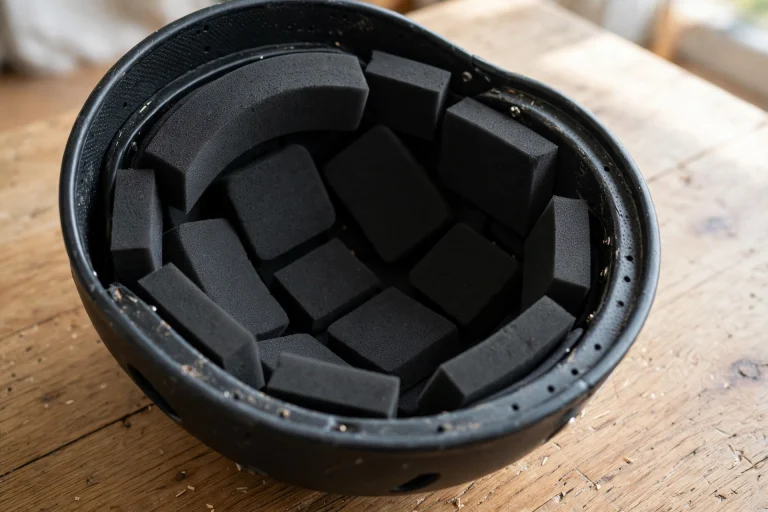
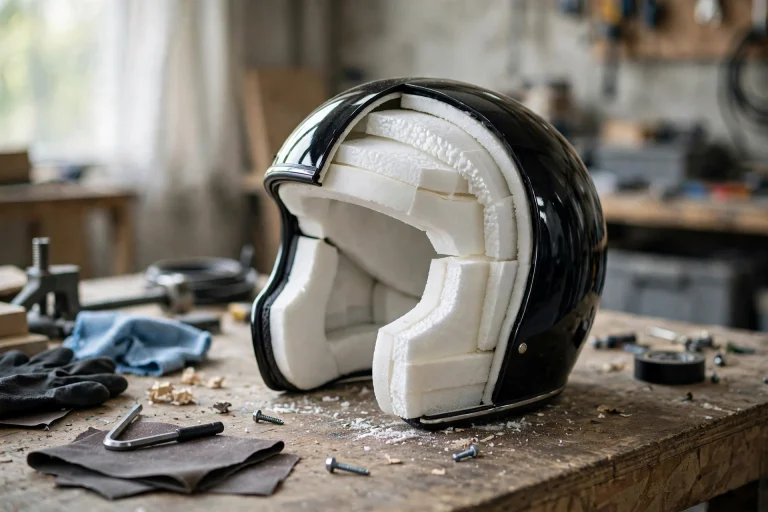
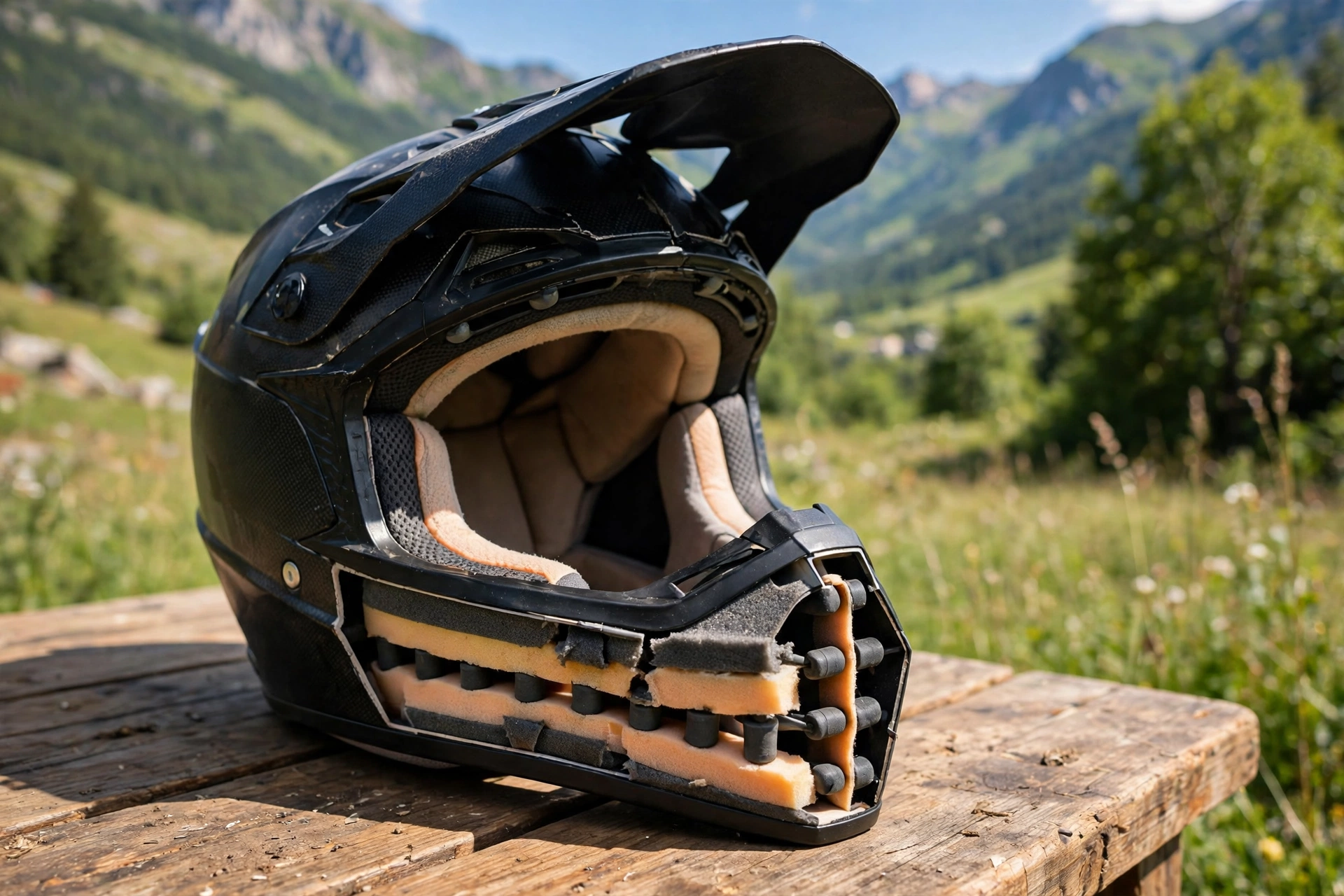
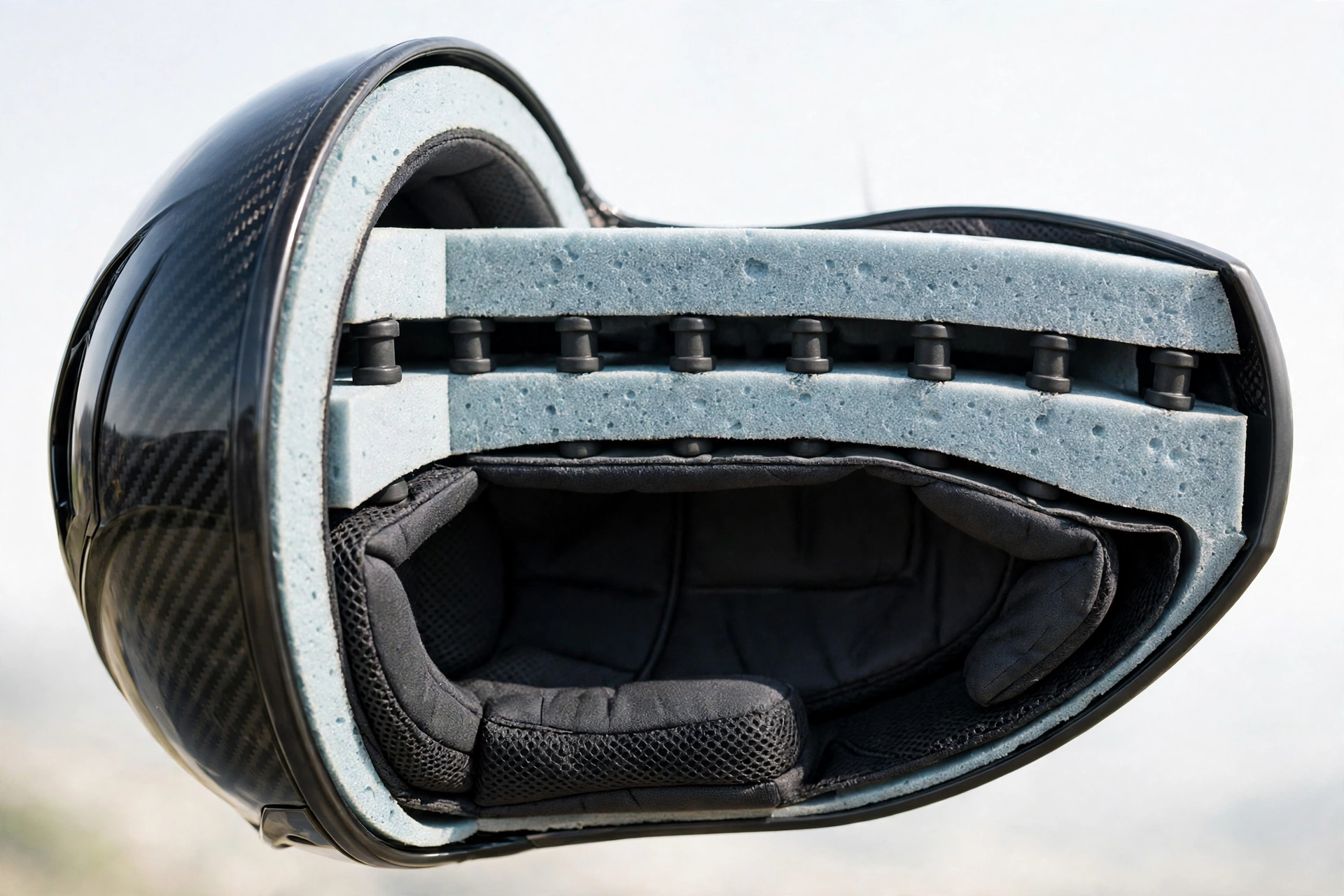
A normal helmet liner is a single piece of foam that compresses when it is hit, absorbing the direct force of the impact. ODS keeps that job but adds a second stage. The outer liner is attached to the shell, and the inner liner is held away from it by a ring of small, hourglass-shaped dampers made from a rubber-like material. When the helmet takes an angled hit, the dampers compress, stretch and shear, letting the inner liner move a small amount relative to the outer shell.
That small movement matters because it gives the rotational energy somewhere to go. In an angled crash, the shell may stop or twist suddenly while the head inside keeps moving. The dampers act as a buffer between the two, soaking up some of the twisting force in the first moments of the impact. In general terms, the system is designed to manage impacts from any direction, which is where the “omni-directional” part of the name comes from.
What Are the ODS Dampers Made Of?
The dampers are made from an elastomeric material, which is a technical way of saying a rubber-like substance that can stretch, compress and spring back. They are shaped like small hourglasses or mushrooms, with a narrow waist that is designed to flex under load. The shape is deliberate: the narrow middle gives the damper a predictable way to deform, so it absorbs energy in a controlled way rather than simply collapsing.
There are usually several dampers arranged around the inside of the helmet, positioned between the two liner layers. Because they sit inside the helmet, they add a small amount of weight and a little extra bulk compared with a single-piece liner, but the difference is modest and most riders do not notice it once the helmet is on. The comfort padding sits over the inner liner, so the inside of the helmet feels much like any other helmet.
How Is ODS Different from MIPS?
ODS and MIPS both aim to reduce the rotational forces that reach the head in an angled crash, but they use different mechanisms. MIPS, which stands for Multi-directional Impact Protection System, uses a thin, low-friction layer inside the helmet that lets the shell slide a short distance relative to the head. The sliding motion absorbs some of the rotational energy. ODS, by contrast, uses rubber dampers that compress and shear to absorb the same kind of energy.
Another difference is how much the systems change the helmet’s construction. MIPS adds a thin layer to an otherwise standard liner, so a MIPS helmet looks and feels much like a conventional helmet inside. ODS replaces the single-piece liner with a two-layer design, which is a bigger change to how the helmet is built. That difference is one reason ODS tends to appear in helmets from a single maker, while MIPS is licensed to many different brands. If you are learning about how helmets handle different kinds of impact, reading about what MIPS is for helmets can help you compare the two approaches.
What Kind of Riding Is ODS Designed For?
ODS was first developed for motocross, where riders fall often and usually at an angle on rough, uneven ground. A motocross crash can involve the helmet hitting dirt, rocks or a rut at speed, and the impact is rarely a neat, straight-on hit. The damper system was designed with exactly that kind of crash in mind, where the helmet may twist as it strikes the ground.
The system has since been used in road cycling and mountain bike helmets as well, because angled impacts are common in those sports too. A cyclist who comes off on a descent or is knocked sideways will often strike the ground at an angle. In general terms, any rider who faces a realistic chance of an angled impact can benefit from a helmet that manages rotational forces, whatever the discipline.
What Should You Check Before Buying a Helmet with ODS?
Start with the fit, as you would with any helmet. Try it on, fasten the strap, and move your head from side to side. The helmet should sit level, feel snug without pressing painfully anywhere, and should not rock or slide around. ODS helmets fit in the same way as other helmets, and the usual fitting checks still apply. If it does not fit, the damper system will not make up for it.
Next, check which safety standard the helmet meets. ODS is an additional feature, not a standard in itself, so the helmet should still carry a recognised certification for the type of riding you do. Look at the label inside the helmet or the product description, and make sure the standard matches your needs, whether that is motocross, road cycling or mountain biking.
It is also worth thinking about weight and ventilation. A two-layer liner with dampers can be slightly heavier and warmer than a single-piece liner, so try the helmet on for a few minutes and pay attention to how it feels. If you ride in hot weather or on long rides, ventilation may matter more to you than the damper system, and a helmet that is comfortable enough to wear every time is safer than one that sits on a shelf.
Frequently Asked Questions
Q: What does ODS stand for in a helmet?
A: ODS stands for Omni-Directional Suspension. It is a system developed by 6D that uses small rubber dampers between two liner layers to absorb rotational forces in an angled impact.
Q: Is ODS the same as MIPS?
A: No. Both systems aim to reduce rotational forces, but MIPS uses a low-friction layer that lets the shell slide slightly, while ODS uses rubber dampers that compress and shear. They are different approaches to the same problem.
Q: Do I need a helmet with ODS?
A: Not necessarily. It is a useful extra feature, especially for motocross and off-road riding where angled impacts are common, but fit, comfort and a recognised safety standard matter more. Choose a helmet that fits well first, and treat ODS as a bonus.

Olivia
Writer at Helmet Today, covering helmet reviews, fit and riding safety.