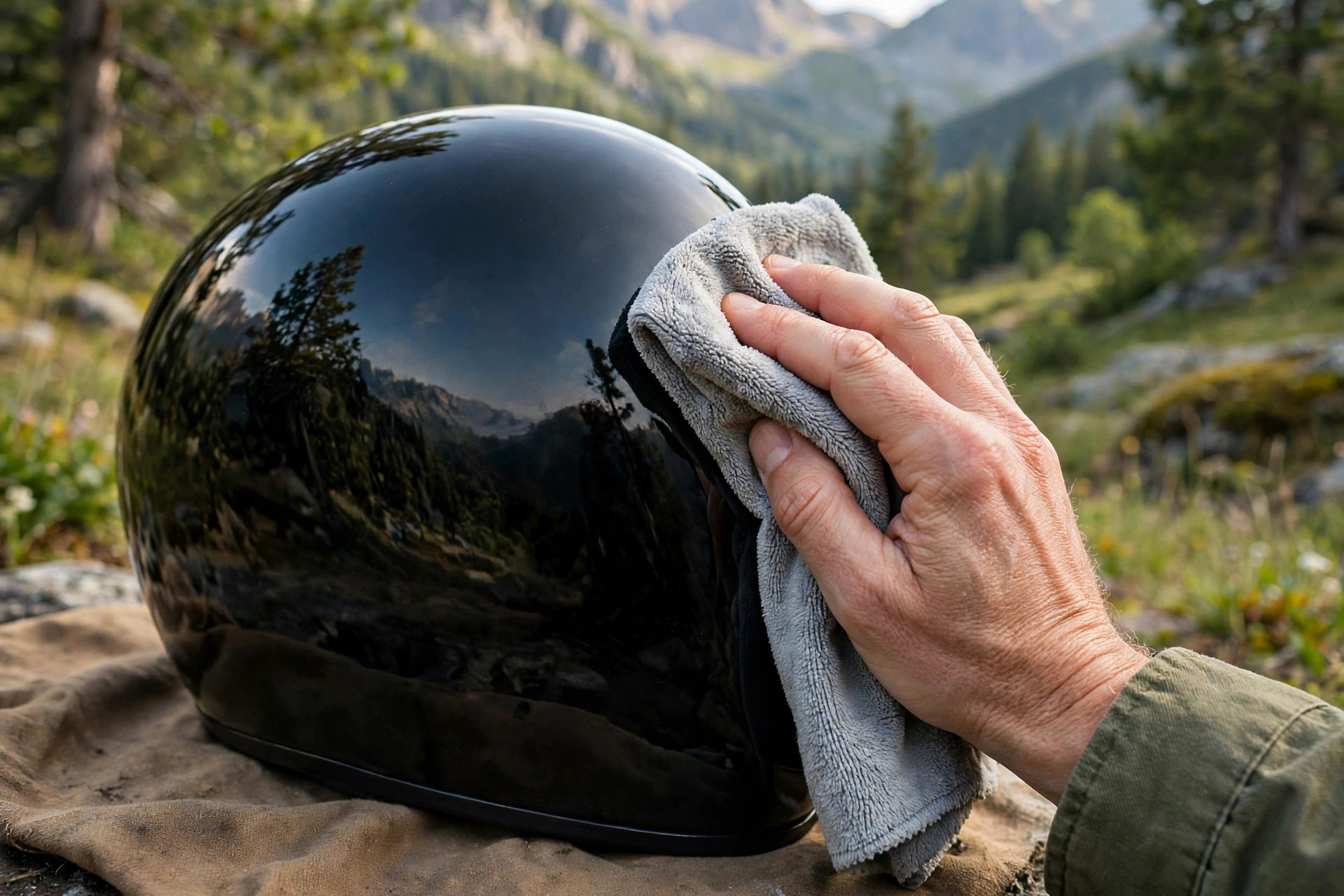
To polish a glossy helmet shell, wash it first with mild soap and water, dry it fully, then work a small amount of helmet-safe, non-abrasive polish over the paint with a clean microfiber cloth in light circles — and buff with a second cloth. The wash matters more than the polish: most dull shells are just dirty. Never use solvents, abrasive compounds, household polishes or anything the helmet maker does not approve, because chemicals that are fine on a car can attack helmet finishes, visor coatings and even the foam beneath.
Here is the full method — cleaning, polishing, protecting the visor and stickers — and the list of products that should never touch a helmet.
Why Should You Wash Before You Polish?
Polish over dirt and you simply grind that dirt across the paint, adding the very swirl marks you are trying to remove. Bugs, road film and dried sweat also block polish from bonding evenly, leaving a patchy shine. So the first stage is always a proper wash: lukewarm water, a drop of mild soap, a soft cloth, and patience on bug spots — lay a wet cloth over them for a few minutes to soften them rather than scrubbing.
Rinse with a clean damp cloth so no soap residue remains, then dry the shell completely with a soft towel. Check the finish in good light before you reach for polish. Many helmets, especially lighter colors, come back to a satisfying gloss with washing alone, and every polish session you skip is wear you do not add to the clear coat.
Note what you are looking at while you wash: chips, deep scratches and any crack. Polish improves shine; it does not repair damage. A crack in the shell is a retirement decision, not a detailing project.
What Polish and Cloths Are Safe to Use?
Choose products made or approved for helmets and motorcycle gear, or a mild, non-abrasive car-detailing polish that the helmet manufacturer permits — and when in doubt, check the helmet maker’s care instructions, which override any general advice. In general terms, safe polish is liquid or paste, fine-grained, free of solvents and petroleum distillates, and applied thinly. If a product smells like paint thinner or warns about plastics, keep it away from your helmet.
Cloths matter as much as chemicals. Use clean microfiber — one for applying, one for buffing — and wash or replace them when they pick up grit. Paper towels, bath towels and workshop rags can all carry abrasive particles or rough fibers that haze a glossy finish. Work in the shade on a cool shell; polish dries too fast and streaks in direct sun.
Keep polish off everything that is not painted shell: matte sections, rubber trim, vents, strap webbing and especially the visor. Masking tape over trim edges is a detailer’s trick worth borrowing for an expensive lid. And nothing liquid should be flooded into vents, where it can reach the EPS foam — dampen the cloth, never the helmet.
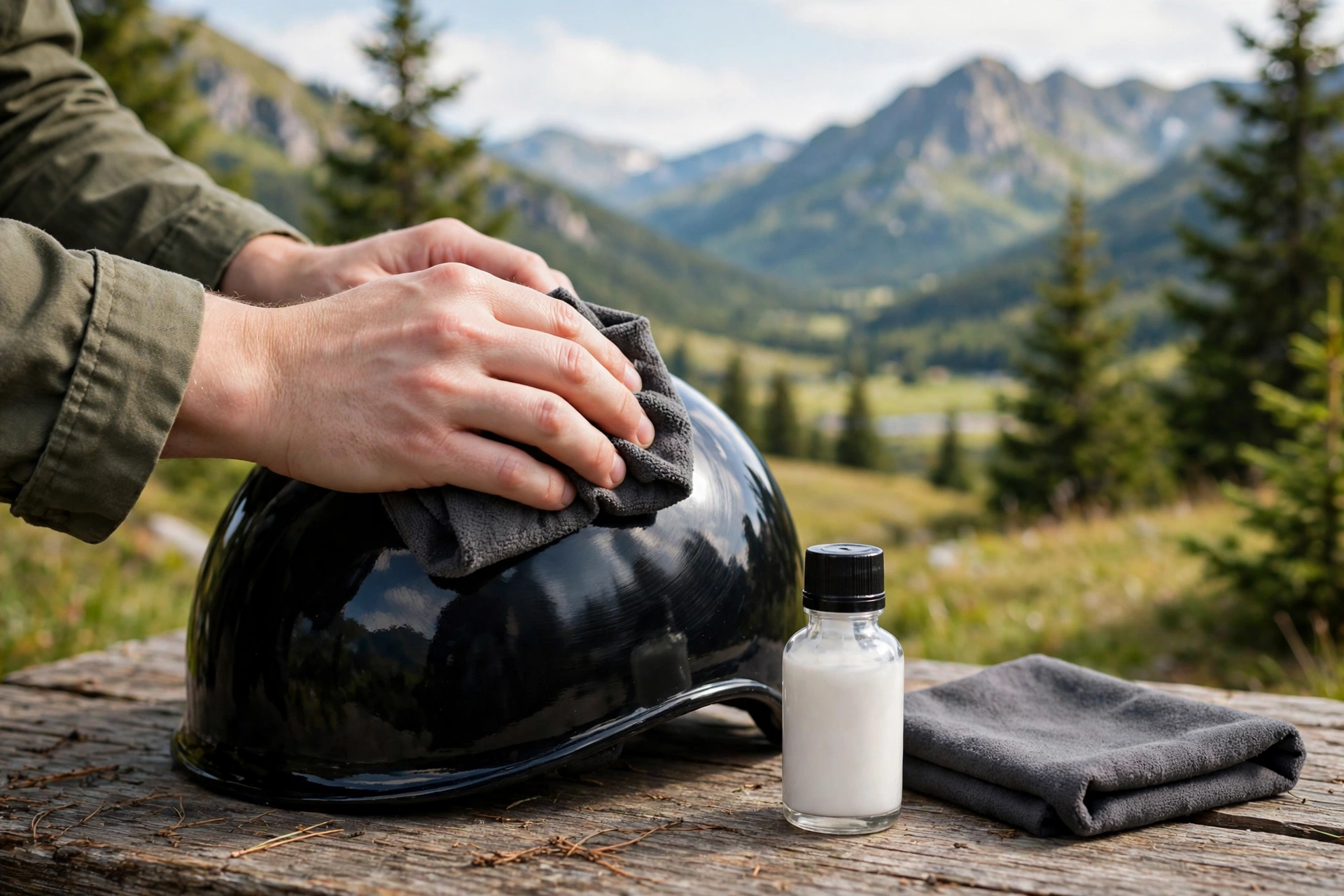
How Do You Polish Step by Step?
- Wash and dry the helmet as described above, and remove the visor if it comes off easily, so polish stays away from its coating.
- Apply a pea-sized amount of polish to the applicator cloth — less than you think. Work one panel at a time.
- Use small, light circles with almost no pressure. Let the product do the work; pressing harder adds scratches, not shine.
- Let it haze for the time the product suggests, usually a minute or two.
- Buff with the second clean microfiber, turning it to a fresh face as it loads up, until the panel is clear and glossy.
- Inspect under light and repeat lightly on dull patches rather than polishing the whole helmet twice.
Refit the visor with clean hands or gloves, and give the whole helmet a final once-over: straps, buckle and fit system working, pads back in place. A polishing session is a natural moment for the regular safety check — and remember the internal tech too: liners in helmets with systems like MIPS rotational protection should still sit and move as the maker intended after any cleaning.
What Should Never Touch a Helmet?
Keep this list off your helmet entirely: solvents and thinners of any kind, gasoline or kerosene, abrasive polishing compounds and rubbing compounds, bleach, ammonia-based glass cleaners on the shell, and general household polishes or furniture sprays, which can contain silicones and solvents never tested against helmet finishes — and which make surfaces slippery where you grip them.
Visors and face shields need even more care. Their anti-scratch and anti-fog coatings are delicate: clean them with water and a fresh microfiber only (or a maker-approved visor cleaner), never polish them, and never use paper products, which scratch coatings. If a visor is already scratched or its coating is peeling, replace the visor — a common, inexpensive spare — rather than trying to polish the damage out.
The same caution applies to stickers and pinstripes under the clear coat versus on it. Polish gently over surface decals, and stop if an edge starts to lift; aggressive buffing peels graphics that washing would have left alone.
How Do You Keep the Shine Between Polishes?
Mostly by slowing down how fast the shell gets dull. Rinse or wipe the helmet after bug-heavy or wet rides instead of letting grime bake on. Store it in its breathable bag, indoors and out of sunlight — UV is the chief enemy of gloss, fading and chalking a finish that polish then has to rescue.
Handle the helmet by its shell with clean hands where you can, and keep it off rough surfaces: a helmet set down on concrete or gravel collects the scratches that make gloss look tired. A soft mat or the helmet bag on the garage shelf prevents most of them.
Polish sparingly — a few times a season at most. Every session removes a microscopic amount of finish, and a well-kept helmet needs little more than washing to stay glossy. Polish is the finishing touch, not the routine.
Frequently Asked Questions
Q: Can I use car wax or car polish on my helmet?
A: Only a mild, non-abrasive product, and only if your helmet maker does not prohibit it — check their care instructions first. Never use cutting or rubbing compounds, and keep any product away from the visor, vents, matte trim and straps.
Q: Can I polish scratches out of the shell or visor?
A: Polish can lift light surface haze from a painted shell, but it cannot repair chips, deep scratches or cracks — and a cracked shell means the helmet is retired. Never polish a visor; its coatings scratch easily, and a damaged visor should be replaced.
Q: How often should you polish a helmet?
A: A few times a season is plenty. Washing with mild soap and water restores most of the gloss, and over-polishing gradually wears the finish. Store the helmet in its bag out of sunlight to keep the shine longer between sessions.

Olivia
Writer at Helmet Today, covering helmet reviews, fit and riding safety.