Yes, you can usually replace helmet padding instead of buying a whole new helmet, as long as the outer shell and the inner foam liner are still in good condition. The soft comfort padding inside a helmet — the cheek pads, crown pads, and liner fabric — wears out faster than the rest of the helmet, and on many helmets it is designed to be removed and replaced. If the padding is flat, torn, smelly, or no longer holds the helmet snugly on your head, a fresh set of pads can make the helmet feel almost new again.
This is a sensible repair for riders who want to save money and waste less. A helmet is a safety item, though, so padding replacement is only the right choice when the helmet itself is still safe to use. If the helmet has been in a crash, has a cracked shell, or has a damaged foam liner, new padding will not fix it, and the helmet should be replaced. This guide explains, in general terms, when padding replacement makes sense, how to find the right pads, how to fit them, and when to stop repairing and buy a new helmet instead.
When Is Replacing the Padding the Right Choice?
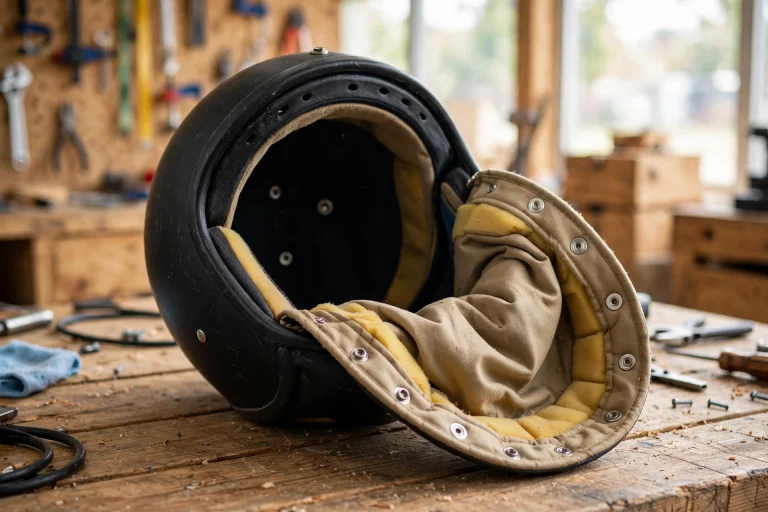
Padding replacement is the right choice when the problem is comfort, fit, or freshness rather than safety. Over time, the soft foam inside the pads compresses, the fabric thins, and sweat and grime build up. The helmet may start to feel loose, shift around on your head, or develop a smell that washing cannot remove. These are all signs that the padding has reached the end of its useful life, while the shell and the protective foam underneath may still be perfectly sound.
Padding replacement is not the right choice when the helmet has taken a serious impact. The hard foam liner that absorbs crash energy is hidden under the comfort padding, and it can be damaged even when the outside of the helmet looks fine. If the helmet has been in a crash, has been dropped hard onto a hard surface, or shows cracks, dents, or a loose shell, the safety of the helmet is in doubt. In general terms, a helmet that has absorbed an impact should be retired, and no amount of fresh padding will make it safe again.
How Do You Find the Right Replacement Padding?
The first step is to find out whether your helmet model has replacement padding available. Many helmet makers sell spare pad sets for their popular models, and these are usually listed as accessories or spare parts on the maker’s website or through a dealer. You will need to know the exact model name and size of your helmet, because padding is shaped to fit a particular shell and a particular size. Pads from a different model, or even a different size of the same model, may not fit properly.
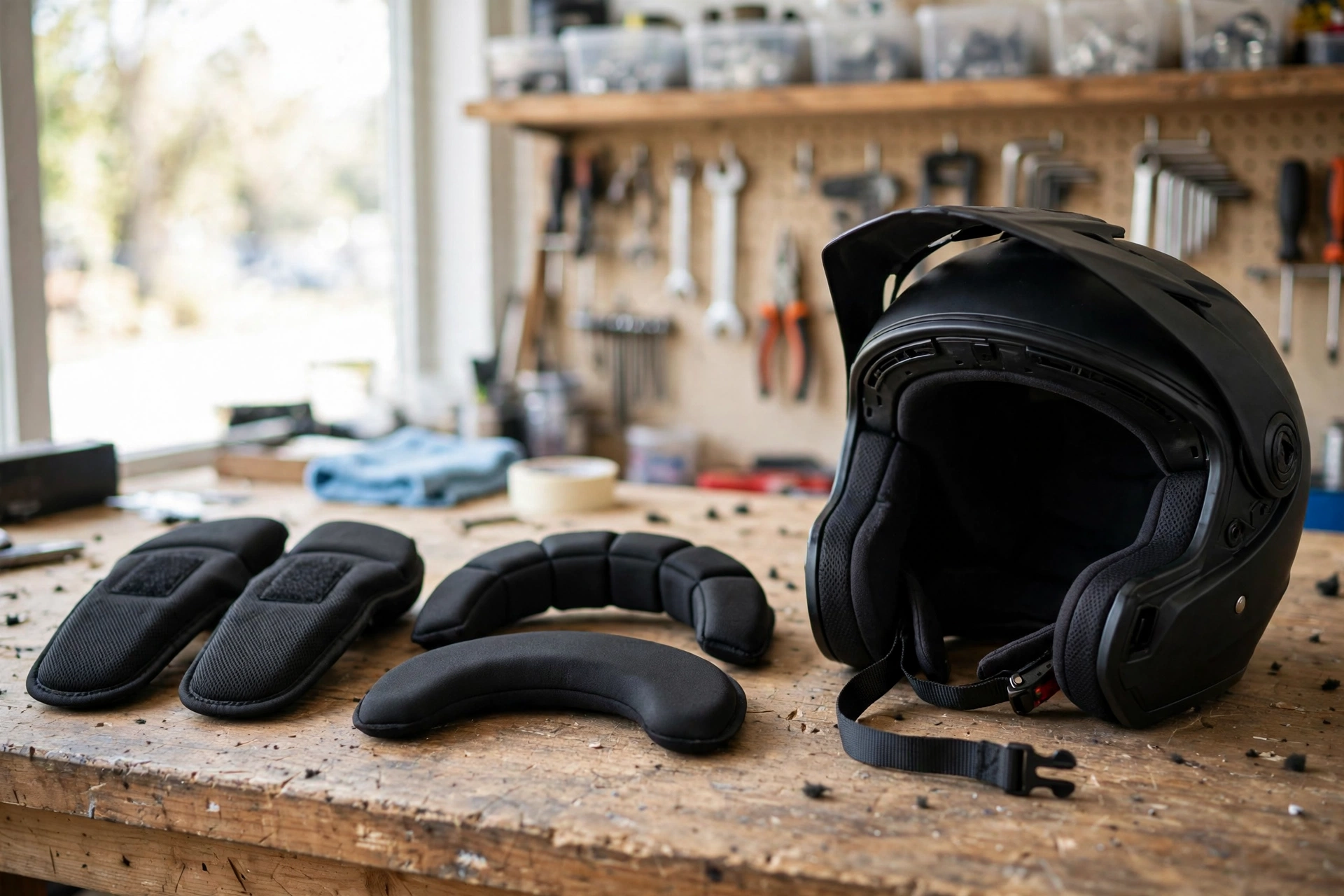
When you order, check what is included in the set. A full pad set usually covers the crown pads, the cheek pads, and sometimes the chin curtain or neck roll. Some sets are sold in different thicknesses, which can be useful if you want to fine-tune the fit — for example, slightly thicker cheek pads if the helmet feels a little loose. If you are learning about how helmets handle different kinds of impact, reading about what MIPS is for helmets can help you understand one of the technologies used in modern helmet design.
How Do You Remove the Old Padding?
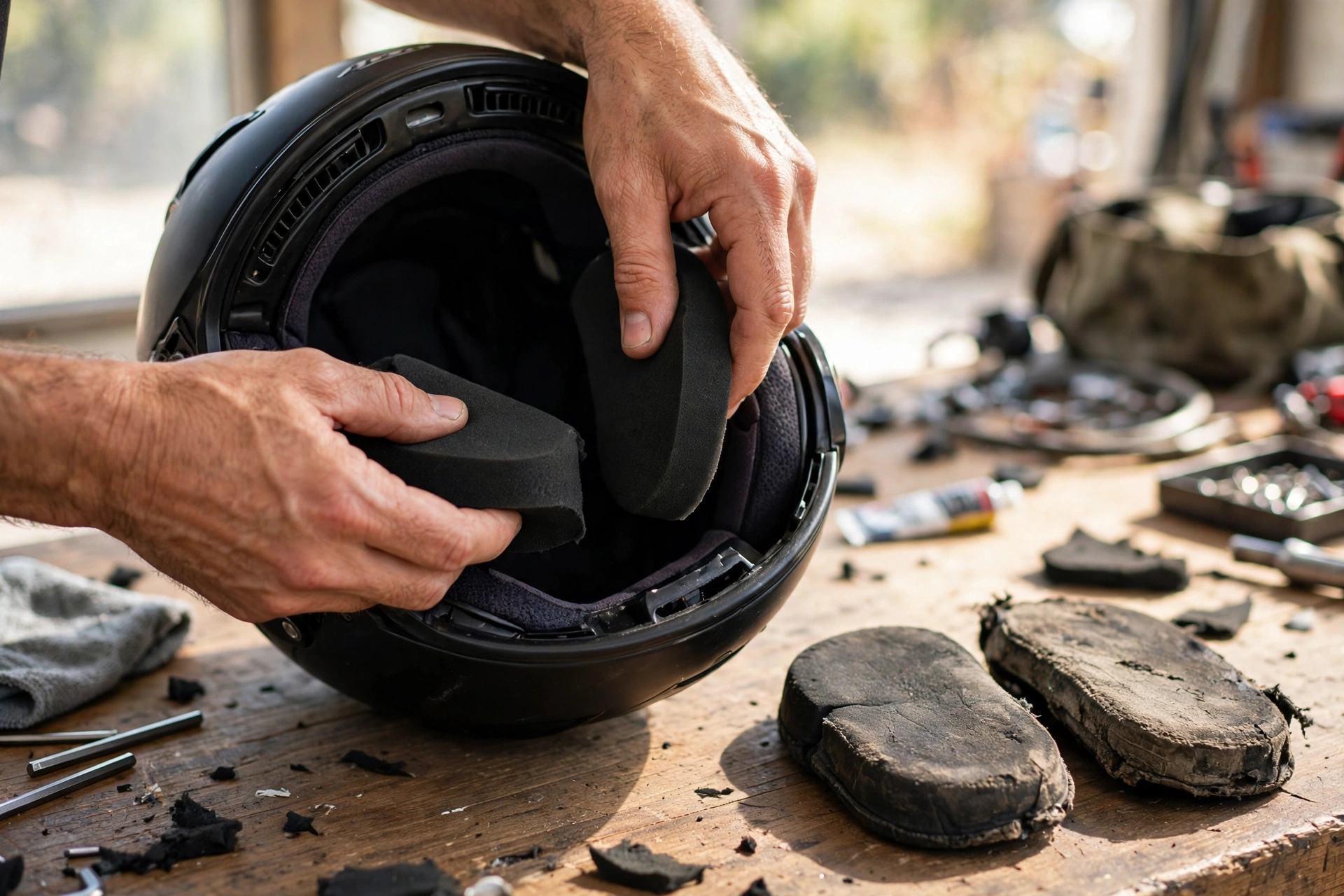
Removing the old padding is usually straightforward, because most comfort padding is held in place with press studs, small plastic clips, or hook-and-loop fasteners. Start by working gently and taking your time. Pull one pad at a time, feeling for the fasteners as you go, and note where each pad sits before you take it out. It can help to take a photo with your phone before you start, so you have a reference when you fit the new pads.
Be careful not to pull hard on anything that seems fixed in place. Some parts of the lining are glued or stitched to the foam liner underneath, and these are not meant to be removed. If a section does not come away easily, leave it alone. Forcing it could damage the protective foam beneath, and that would turn a simple pad swap into a safety problem. The removable pads are the ones with visible studs, clips, or hook-and-loop patches.
Once the old pads are out, take the chance to clean the inside of the helmet. Wipe the foam liner gently with a damp cloth and let it dry fully in the open air, away from direct heat. Check the liner carefully as you clean it: look for cracks, crumbling foam, or areas where the foam feels soft or compressed. If you find any of these, the helmet itself may need replacing rather than just new padding.
How Do You Fit the New Padding Correctly?
Fitting the new padding is mostly a matter of reversing the removal steps. Line each pad up with its fasteners and press it firmly into place, starting with the crown pads and then the cheek pads. Each stud or clip should click or sit flat; if a pad feels loose or will not stay put, it may be the wrong size or the wrong pad for that position. Do not be tempted to glue a pad in place — glue can damage the foam and may make the pad impossible to remove later.
Once all the pads are in, put the helmet on and check the fit. It should feel snug all round, without painful pressure points, and it should not rock or slide when you shake your head gently. The cheek pads should press lightly against your cheeks, and the helmet should not lift when you try to roll it forward off your head. If the fit feels different from before, wear the helmet around the house for a short while to see whether it settles; new pads are often slightly firmer than old ones and soften a little with use.
When Should You Replace the Helmet Instead?
There are clear signs that padding replacement is not enough. A helmet that has been in a crash should be replaced, even if the damage is not visible. The same applies to a helmet with a cracked or deeply scratched shell, a foam liner that is cracked, dented, or crumbling, or straps and buckles that no longer hold securely. These are safety issues, and fresh padding cannot fix them.
Frequently Asked Questions
Q: Can I replace the padding in any helmet?
A: Not in every helmet. Many helmets have removable, replaceable padding, but some have lining that is glued or stitched in place and is not meant to be swapped. Check with the maker or a dealer to see whether spare pads are available for your model.
Q: Will new padding make a loose helmet safe again?
A: New padding can restore a snug fit if the shell and foam liner are still sound. If the helmet is loose because the shell is the wrong size, or because the foam liner is damaged, new padding will not fix the problem and the helmet should be replaced.
Q: How do I know if my helmet needs new pads or a new helmet?
A: If the only problems are flat, torn, or smelly padding and the shell, foam liner, and straps are all in good condition, new pads are usually enough. If the helmet has crash damage, a cracked shell, or a damaged foam liner, replace the whole helmet.

Olivia
Writer at Helmet Today, covering helmet reviews, fit and riding safety.