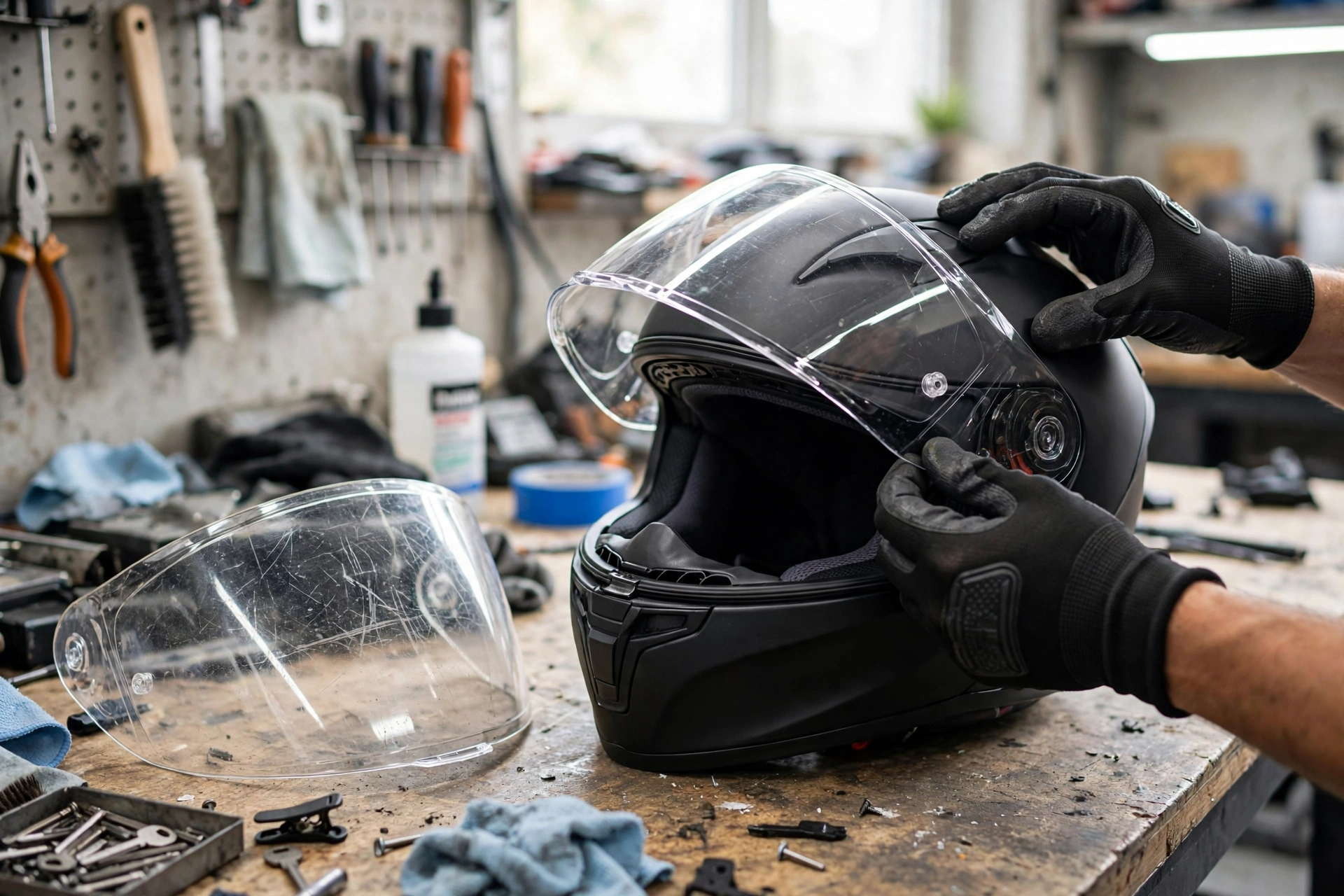
Yes, in most cases you can replace a helmet visor instead of the whole helmet — a scratched, cloudy, or cracked visor is usually a replaceable part, and swapping it is cheaper and less wasteful than buying a new helmet. Most full-face and modular helmets are designed with visors that unclip or unscrew, and a matching replacement visor can restore clear vision in a few minutes. The key is to buy the right visor for your exact helmet model and to fit it carefully so it seals and locks properly.
A visor takes a lot of punishment: stone chips, insects, rain, sun, and cleaning all wear it down over time. When scratches start to catch the light or the visor no longer seals against the rain, many riders assume the helmet is finished. In most cases it is not — the shell and liner may have years of life left, and a new visor is all it needs. This guide explains how to tell when a visor needs replacing, how to choose the right one, and how to fit it.
When Does a Visor Need Replacing?
The clearest sign is vision. If scratches, chips, or a cloudy haze make it hard to see clearly, especially at night or in low sun, the visor should be replaced. Scratches scatter light and create glare, and a visor that has gone cloudy from sun or cleaning chemicals will not get clear again no matter how much you polish it. Your vision is not something to compromise on, so a visor that interferes with it has reached the end of its life.
A cracked visor should also be replaced straight away, even if the crack looks small. A crack can spread suddenly, let in wind and rain, and weaken the visor if something hits it. The same applies to a visor that no longer seals properly against the helmet: if rain leaks in around the edges or wind whistles through a gap that was not there before, the seal or the visor itself may be worn out.
How Do You Choose the Right Replacement Visor?
The most important rule is to match the visor to your exact helmet model. Visors are not universal: the shape, the pivot points, and the locking mechanism differ between models, and even between versions of the same model. Check the model name on the label inside your helmet, then look for a visor listed for that exact model.
Next, think about the type of visor you want. A clear visor is the standard choice and the safest for riding at night, while a tinted or smoked visor cuts glare in bright sun but should not be used after dark. Some riders use a photochromic visor that darkens in sunlight and clears in the shade. Anti-fog coatings and pinlock inserts are also worth considering, because they help keep the visor clear in cold or wet weather.
Finally, buy from a reliable source and check that the visor is genuine or made for your model by a reputable maker. A cheap visor that does not fit properly can leak, rattle, or distort your vision. If you are unsure, ask the shop to confirm the fit before you buy. If you want to understand how the visor and other parts of a helmet work together, reading about what MIPS is for helmets can help you see how modern helmet design fits together.
How Do You Remove the Old Visor?
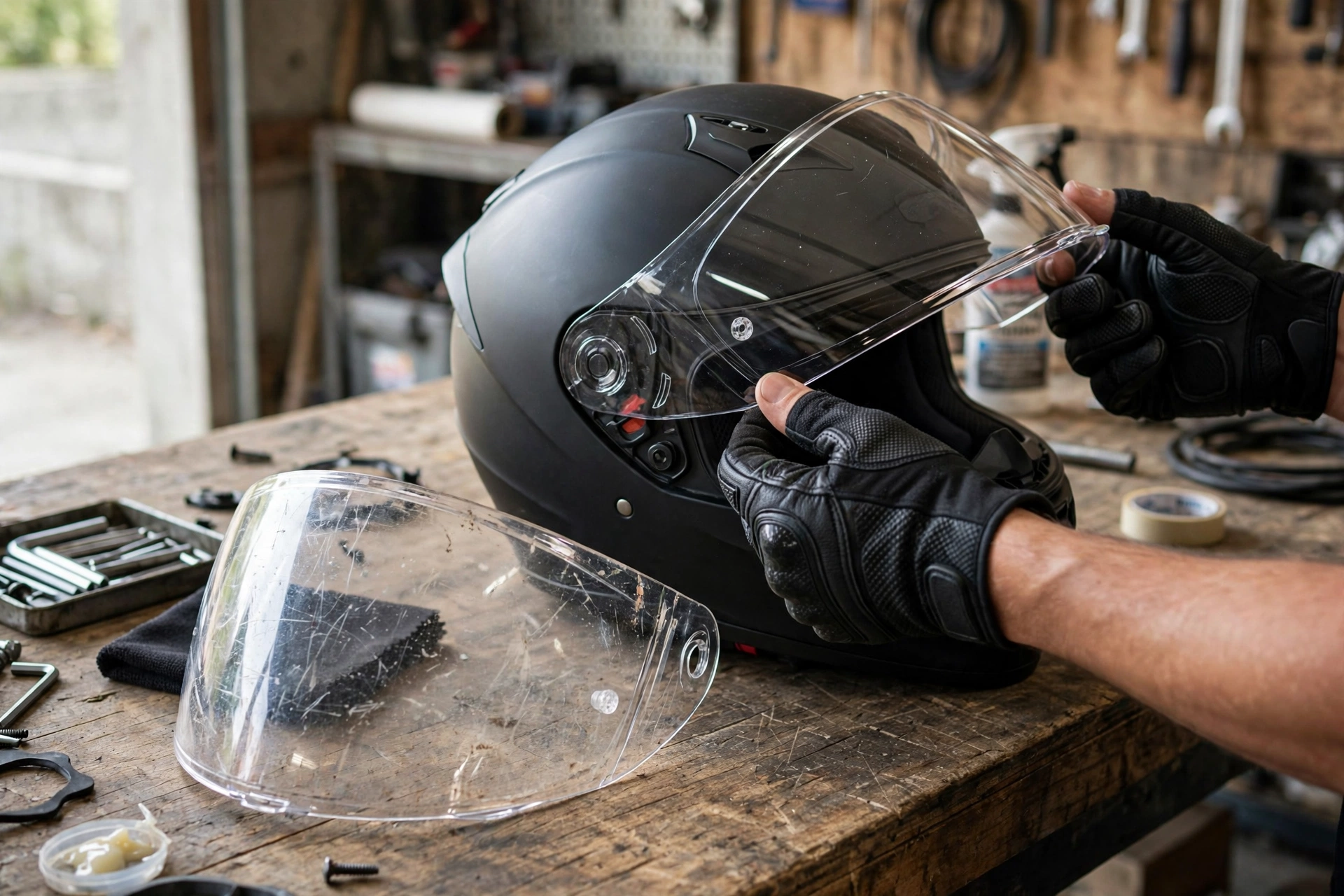
Start by reading the manual for your helmet, because the removal method differs between models. Most visors come off by opening the visor fully, then pressing a release button, lifting a small lever, or turning a pivot cover on each side. Some pull straight off once the visor is in the right position, while others need a small screwdriver to loosen the pivot screws.
Remove one side at a time, and keep the small parts together. Note how the visor sits in the mechanism before you take it off — a quick photo with your phone is a useful reminder when you fit the new one. If the visor is stiff, do not force it; check the manual again or look for a hidden release. Forcing a visor can break the pivot.
Once the old visor is off, clean the pivot area and the seal around the visor opening. Wipe away dust and old grease with a soft cloth, and check the rubber seal for cracks or wear. A clean, sound seal helps the new visor fit properly and keeps rain and wind out.
How Do You Fit the New Visor?
Fitting is usually the reverse of removal, but it needs care. Line the new visor up with the pivot points on each side, making sure it sits in the same position as the old one, then press or clip it into place until it clicks. If your helmet uses screws, tighten them gently and evenly — snug, not forced — so the visor can still move smoothly. Test the visor by opening and closing it several times before you ride.
Check the seal once the visor is fitted. Close the visor fully and look for an even gap all the way around, with the rubber seal touching the visor along its whole edge. If one side sits high or there is a gap, take the visor off and refit it.
Finally, check the locking positions. Most visors have a first open position for ventilation and a fully closed position that should lock. Make sure the visor stays where you put it and does not drop on its own. If it moves too freely or too stiffly, the pivot tension may need adjusting — your manual should explain how.
When Is a New Helmet the Better Choice Instead?
Sometimes a new visor is not enough, and a new helmet is the better choice. If the helmet has been in a crash, has a cracked shell, or is past the age the maker recommends, no new visor will make it safe again. The shell and liner do the protective work, and if they are damaged or worn out, the helmet should be retired and replaced, not repaired with a new visor.
The same applies if the visor mechanism itself is badly worn or broken and replacement parts are no longer available. If you cannot find a visor for your model anywhere, the helmet may simply be too old to support.
In general terms, though, a visor replacement is the right call whenever the shell, liner, and mechanism are still sound. It costs less than a new helmet, keeps a good helmet in service, and avoids the waste of throwing away a helmet that still has years of life in it. That is a good result for your wallet and for the environment at the same time.
Frequently Asked Questions
Q: Are helmet visors universal, or do I need a specific one?
A: You need a visor made for your exact helmet model. Visors differ in shape, pivot points, and locking mechanisms, so a visor for another model will usually not fit properly. Check the model name inside your helmet before you buy.
Q: Can I ride with a tinted visor at night?
A: No, a tinted or smoked visor should not be used after dark because it reduces the light reaching your eyes. Keep a clear visor for night riding, or use a photochromic visor that clears in low light.
Q: Is it worth replacing a visor on an old helmet?
A: Yes, if the shell, liner, and mechanism are still sound. A new visor is much cheaper than a new helmet. If the helmet is crashed, cracked, or past its recommended age, replace the whole helmet instead.

Olivia
Writer at Helmet Today, covering helmet reviews, fit and riding safety.