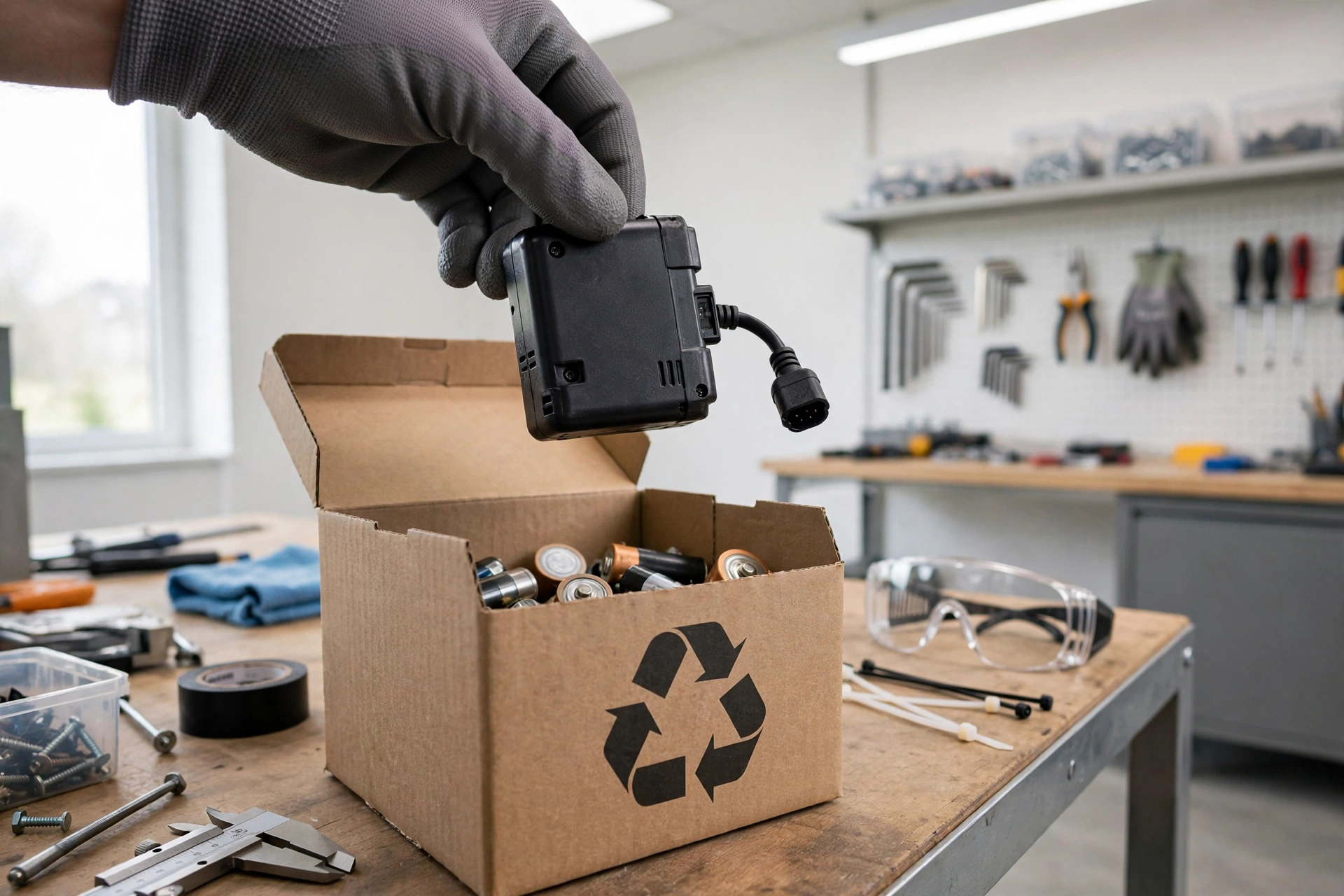
In general terms, a helmet battery should never go into a household bin, a recycling bin, or landfill — it should be taken, intact and undamaged, to a battery collection point or a household hazardous waste facility. Most helmet batteries are small rechargeable lithium batteries, and they can catch fire if they are crushed, punctured, or short-circuited in waste handling. Keeping them out of general waste and getting them to the right collection point is the single most important step.
Helmet batteries are easy to overlook because they are small and often hidden inside a Bluetooth unit, a light, or a camera. But their size does not make them harmless: the same chemistry that stores energy for your rides can release it as heat if the battery is damaged. This guide explains how to identify a helmet battery, remove it safely, store it, and dispose of it through the right route.
What Kind of Battery Is in a Helmet?
Most modern helmet batteries are rechargeable lithium-ion or lithium-polymer batteries. You will find them in Bluetooth communicators, helmet cameras, rechargeable lights, and some heated visors. They are usually small, flat, or rectangular, and they may be built into the electronic unit rather than sitting in a separate battery compartment.
Older or simpler helmet accessories may use small disposable batteries instead, such as coin cells or AA and AAA batteries in a light or a basic communicator. These are easier to remove, because they usually sit in a compartment with a cover that slides or unscrews open. The disposal route is still the same — a battery collection point — but the handling is simpler and the fire risk is lower.
If you are not sure what kind of battery your helmet has, check the manual or the maker’s website. It will usually say whether the battery is rechargeable and removable, and what type it is. Without a manual, look for a label on the unit itself, which often carries a battery symbol or a model number you can look up.
How Do You Remove a Helmet Battery Safely?
Start by switching the device off and unplugging it from any charger. Work on a clear, stable surface in a well-lit room, and take your time. If the battery sits in a compartment, open the cover and lift the battery out gently, noting which way round it was fitted. If it is held by a connector, unplug the connector rather than pulling on the wires.
For batteries built into a Bluetooth unit or a camera, the unit itself may need to be opened with a small screwdriver. Only do this if the manual says the battery is user-removable. Work slowly, keep the screws together, and stop if you meet resistance or if the battery looks swollen or misshapen. A battery that has changed shape is a warning sign, and forcing it out could damage it further.
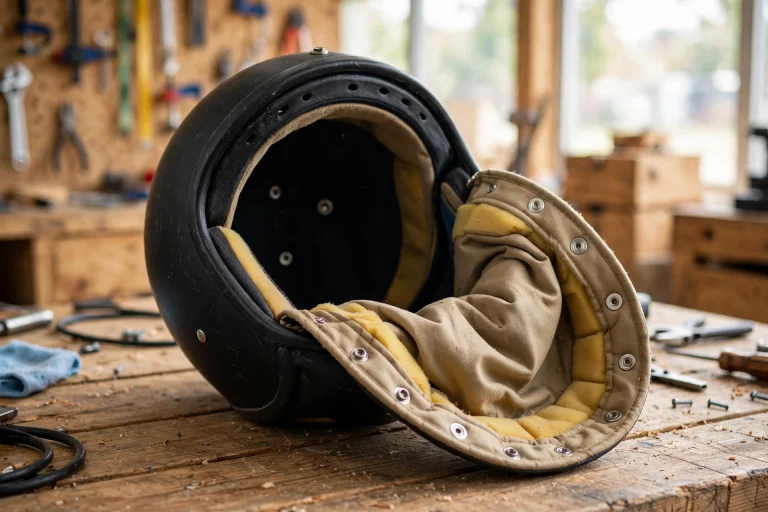
If the battery is sealed inside the unit and the manual says it is not removable, do not try to pry the unit apart. Take the whole unit, with the battery inside, to a battery or electronics collection point and let the staff there deal with it. That is safer than forcing a sealed battery out with tools, and it is what the collection points are set up for. If you want to understand how the parts of a helmet fit together before you start, reading about what MIPS is for helmets can help you see how the layers and components are arranged.
How Should You Store a Battery Before Disposal?
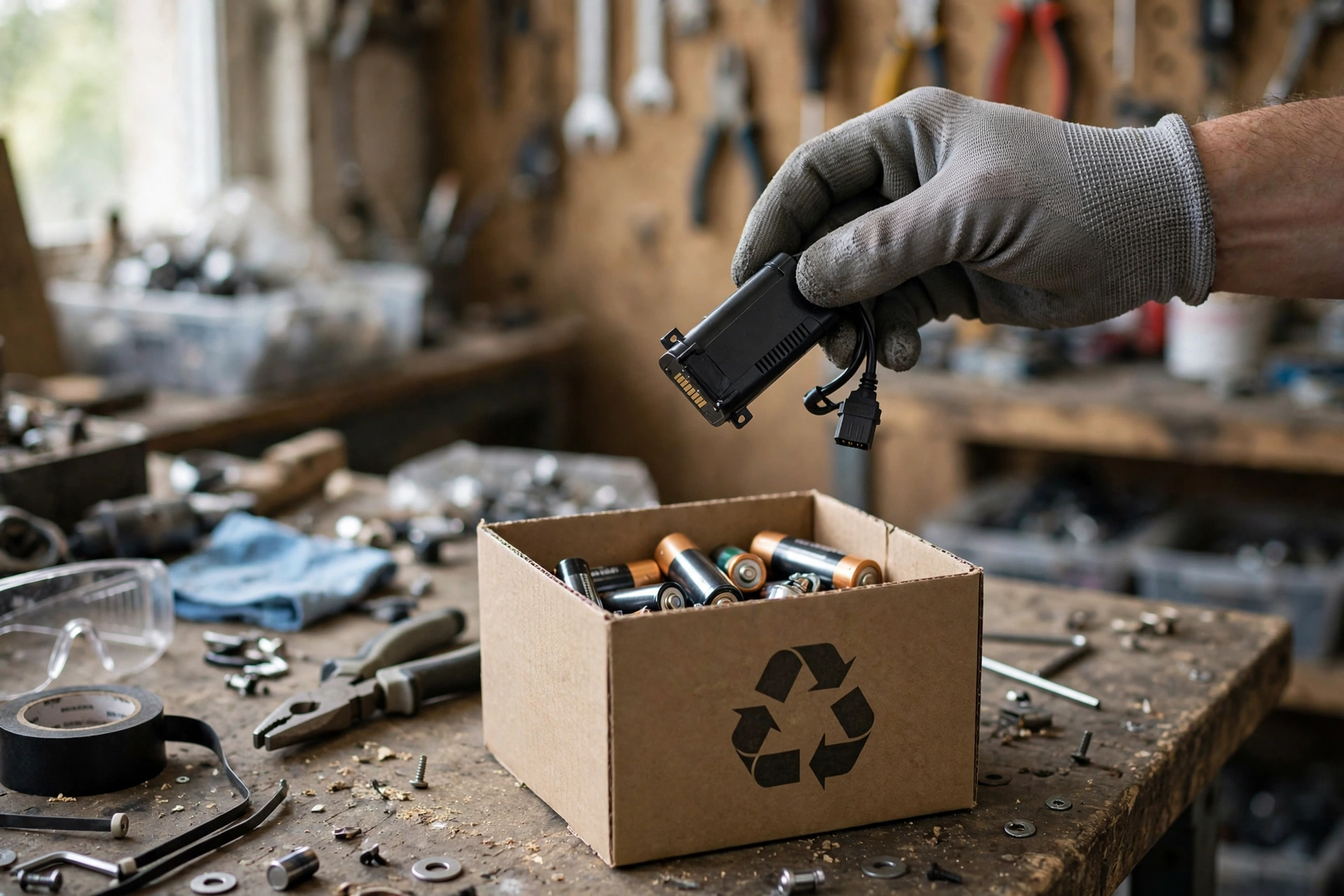
Once a battery is out, store it safely until you can take it to a collection point. Keep it in a cool, dry place, away from direct sunlight, heat, and anything flammable. A small plastic bag or a small box works well, and keeping each battery separate stops the terminals from touching each other or touching metal objects, which could cause a short circuit.
Taping the terminals is a common safety step, and some collection services recommend it. A small piece of ordinary tape over the metal contacts keeps them covered and reduces the risk of a short circuit during storage and transport. If your local service gives different advice, follow theirs — local guidance is the final word.
Do not store a damaged battery with good ones. A swollen, leaking, hot, or cracked battery should be kept apart, on a non-flammable surface such as a ceramic plate or a metal tray, and away from anything that can burn. Contact your local waste service promptly for advice on a damaged battery rather than keeping it at home for a long time.
What Should You Never Do With a Helmet Battery?
Never throw a helmet battery into a household bin, a recycling bin, or a compost heap. Batteries in household waste are a known cause of fires in bin lorries and sorting plants, because they can be crushed or punctured during collection and processing. The fire risk applies to small batteries as well as large ones, so size is no excuse for binning them.
Never puncture, crush, bend, or burn a battery, and never try to open a sealed battery pack yourself. A damaged lithium battery can heat up very quickly, release smoke, and in some cases catch fire. The same goes for dropping a battery hard onto a concrete floor or stepping on it — a sharp impact can damage the inside of the battery even if the outside looks fine.
Never put a battery in water, and never try to charge a battery that is swollen, leaking, or damaged. If a battery has been in water or looks damaged in any way, treat it as damaged and contact your local waste service for advice.
Where Do You Take a Helmet Battery?
The right destination is a battery collection point or a household hazardous waste facility. Many recycling centres have a battery collection bin, and shops that sell batteries or electronics often have a small collection box near the till or the entrance. Community collection events and some council offices also take small batteries.
It is worth checking what your local collection point accepts before you travel. Most take the small rechargeable batteries found in helmets, but some have limits on size or type, and a few may ask you to tape the terminals first. A quick check online or a phone call can confirm the details and save a wasted journey.
If you cannot find a collection point nearby, ask your local council or waste service where the nearest one is. Many areas have more collection points than people realise, and the waste service can usually point you to the closest one. Keeping a small box at home for used batteries, and taking them in together every few months, makes the habit easy to keep.
Frequently Asked Questions
Q: Can I put a small helmet battery in the household bin?
A: No. Even small helmet batteries should go to a battery collection point. Batteries in household waste can be crushed during collection and cause fires in bin lorries and sorting plants.
Q: What should I do with a swollen helmet battery?
A: Stop handling it, place it on a non-flammable surface away from anything that can burn, keep it apart from other batteries, and contact your local waste service promptly for advice. Never puncture, crush, or charge it.
Q: What if the battery is sealed inside the helmet unit and cannot be removed?
A: Do not force it out. Take the whole unit, with the battery inside, to a battery or electronics collection point and let the staff there handle it safely.

Olivia
Writer at Helmet Today, covering helmet reviews, fit and riding safety.