In general terms, a helmet with electronics should be taken apart carefully and its electronic parts handled separately from the shell — never crushed, burned, or thrown into general waste with batteries still inside. Modern helmets can contain Bluetooth communicators, cameras, lights, heated visors, and small batteries, and each of these needs a different disposal route. The safest approach is to remove what you can, keep batteries and circuit boards out of household bins, and use a local electronics or battery collection point for the parts.
More helmets now come with built-in technology than ever before, from simple LED lights to full communication systems. That is convenient while the helmet is in use, but it makes disposal trickier than for a plain helmet, because electronics and batteries can be a fire risk if they end up in landfill. This guide explains how to take a helmet with electronics apart safely and what to do with each part.
What Electronics Can a Helmet Contain?
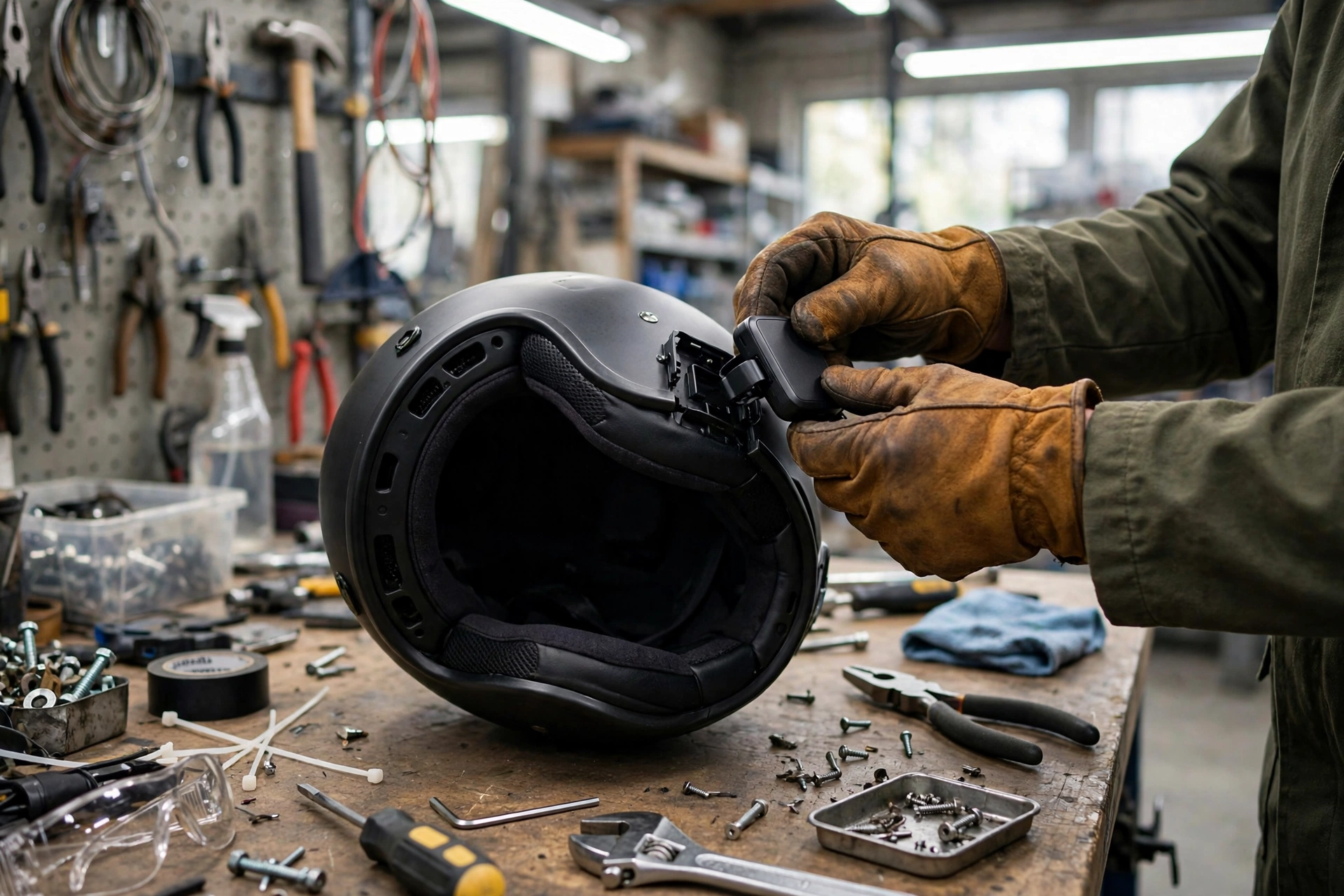
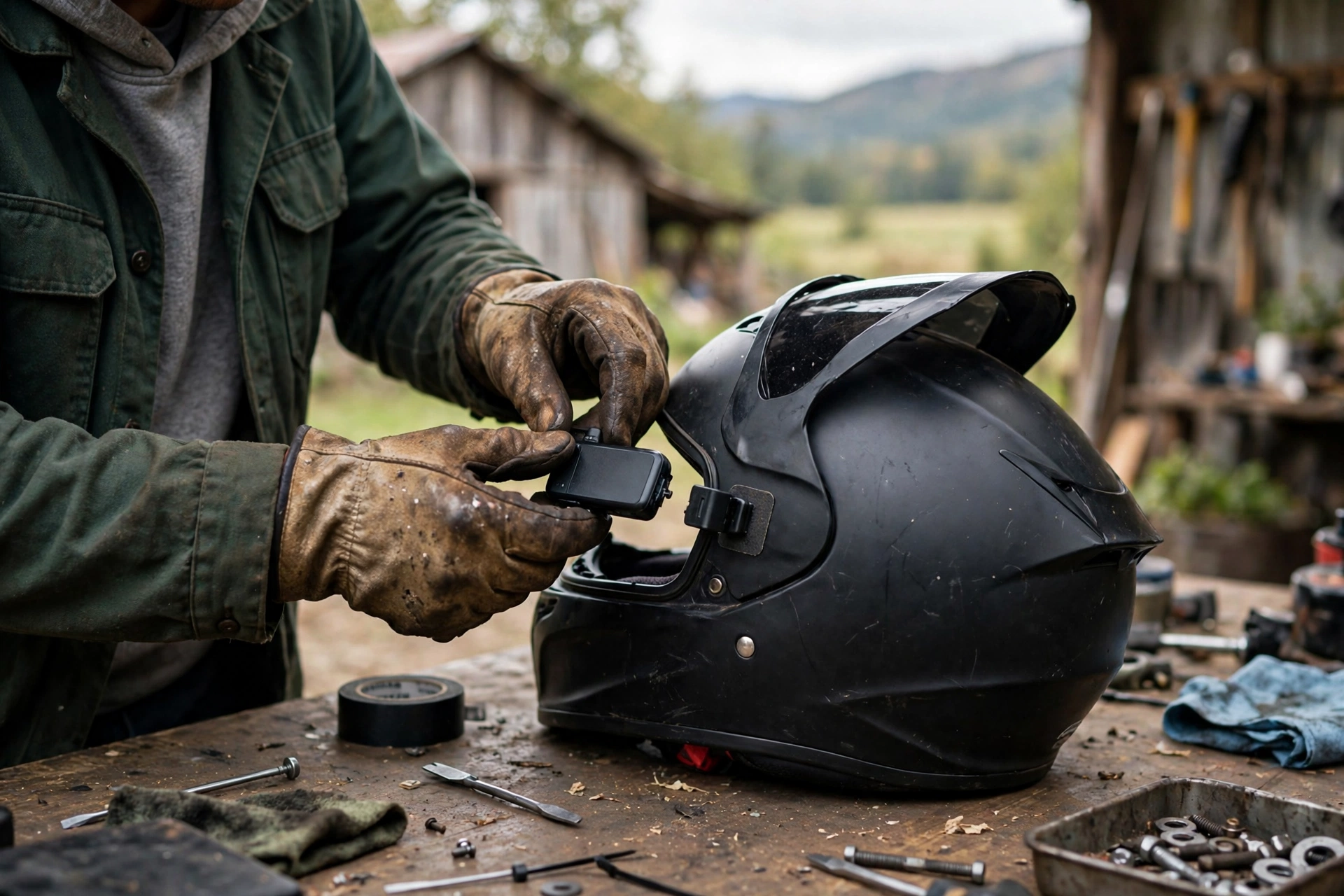
The most common electronics in helmets are Bluetooth communication units, which let riders talk to each other and listen to directions or music. These usually sit in a small pod clipped to the side of the helmet, with speakers inside the ear pockets and a microphone near the chin. They are often removable, which makes disposal much easier, because you can take the whole unit off before dealing with the shell.
Other helmets carry small cameras, either built into the shell or mounted on it, and some have lights, indicators, or heated visors. A camera or light may have its own small battery, sometimes built in and not meant to be removed by the user. Heated visors and smart helmets may have wiring running through the liner, which can be harder to reach and should be handled gently rather than pulled out forcefully.
It helps to know what you are dealing with before you start. Check the helmet’s manual or the maker’s website for a guide to removing the electronics, and look for screws, clips, or covers that hold the units in place. If the electronics are built in and cannot be removed without breaking the helmet apart, that changes how you should dispose of the whole helmet.
How Do You Remove the Electronics Safely?
Start by switching everything off and, if possible, removing the battery or the battery pack. Work in a well-lit space on a stable table. Remove any clip-on units first: unclip the Bluetooth pod, slide out the speakers, and unplug the microphone if it detaches. Keep the small screws and parts together in a bag.
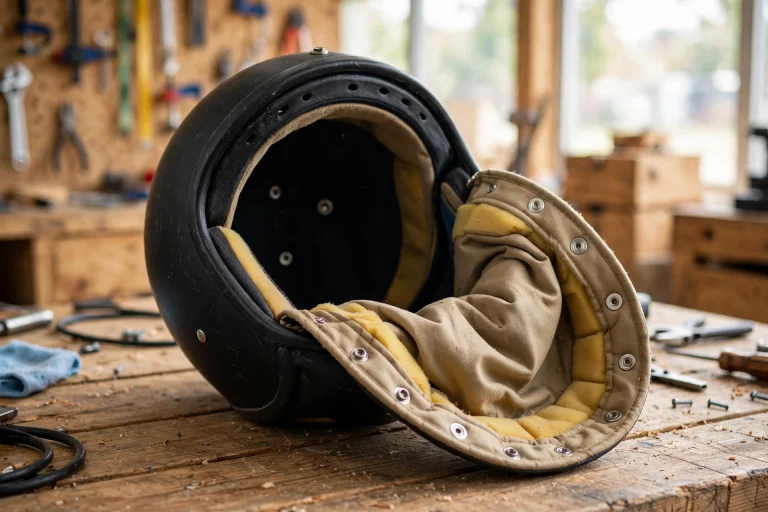
For wiring hidden inside the liner, pull the liner out gently if it is removable and follow the wires to their connectors. Unplug connectors rather than cutting wires where you can, because cut wires leave sharp ends and exposed metal. If a wire is glued in place, leave it and take the whole part to an electronics collection point rather than forcing it out.
Never use force on a battery. If a battery is swollen, hot, leaking, or smells strange, stop handling it, place it on a non-flammable surface away from anything that can burn, and contact your local waste service for advice. Do not puncture, crush, or bend a battery, and never put a damaged battery in a bin or a bag where it could be squeezed. In general terms, a damaged battery is the one part of the job that should always be handled by a professional.
Where Do the Electronic Parts Go?
Once the electronics are out, they should go to an electronics recycling point, not into general household waste. Many towns and cities have collection points for small electronics at recycling centres, shops that sell electronics, or community collection events. Circuit boards, speakers, microphones, cameras, and lights all belong in this stream, where the metals and other materials can be recovered safely.
Batteries have their own route. Rechargeable batteries, including the lithium batteries found in most helmet electronics, should go to a battery collection point, which you will often find at the same recycling centre or at shops that sell batteries. Keep each battery in its original packaging or in a small bag, and tape over the terminals if you are advised to do so by your local service, to reduce the risk of a short circuit.
The shell and liner, once the electronics and batteries are removed, can usually be handled like a normal retired helmet. That means checking whether a helmet recycling or take-back scheme will accept it, or disposing of it through general waste where no scheme exists. If the electronics cannot be removed at all, the whole helmet may need to go to an electronics collection point instead — ask your local service before you decide.
What Should You Never Do With a Helmet With Electronics?
There are a few things you should never do. Do not burn a helmet with electronics, and do not throw it on a bonfire or into a fireplace, because batteries can catch fire or explode when heated, and burning plastics and circuit boards releases harmful fumes. Do not crush the helmet in a compactor or under a heavy weight while the battery is still inside, for the same reason.
Do not put batteries or circuit boards into a general household bin, a recycling bin for paper and packaging, or a compost heap. Batteries in household waste are a known cause of fires in bin lorries and sorting plants. Keeping them out of the wrong bin is one of the simplest and most useful things you can do.
Do not try to open a sealed battery pack or a built-in battery yourself. Sealed batteries can be damaged easily, and a damaged lithium battery can heat up quickly. If the battery is built in and you cannot remove it safely, take the whole helmet or unit to a collection point and let the staff there deal with it. If you want to understand the helmet’s construction before you start, reading about what MIPS is for helmets can help you see how the layers and parts fit together.
How Do Local Rules Affect Disposal?
Disposal rules for electronics and batteries vary from place to place, so local guidance is the final word. Some areas have clear rules requiring electronics and batteries to be separated from general waste, while others rely on voluntary collection schemes. Your local council, waste service, or recycling centre can tell you where the nearest collection points are and what they accept.
It is worth checking before you make a trip, because not every collection point takes every type of item. A quick check online or a phone call can save a wasted journey and make sure each part ends up in the right stream.
Frequently Asked Questions
Q: Can I throw a helmet with a Bluetooth unit in the household bin?
A: In general terms, no. The Bluetooth unit and its battery should be removed and taken to an electronics or battery collection point. The shell can usually be handled like a normal retired helmet once the electronics and battery are out.
Q: What if the battery is built in and I cannot remove it?
A: Do not try to force it out or open the sealed unit. Take the whole helmet or the whole electronic part to an electronics collection point and let the staff there handle it safely.
Q: Is a swollen or leaking battery dangerous?
A: Yes, it can be. Stop handling it, place it on a non-flammable surface away from anything that can burn, and contact your local waste service for advice. Never puncture, crush, or put a damaged battery in a bin.

Olivia
Writer at Helmet Today, covering helmet reviews, fit and riding safety.