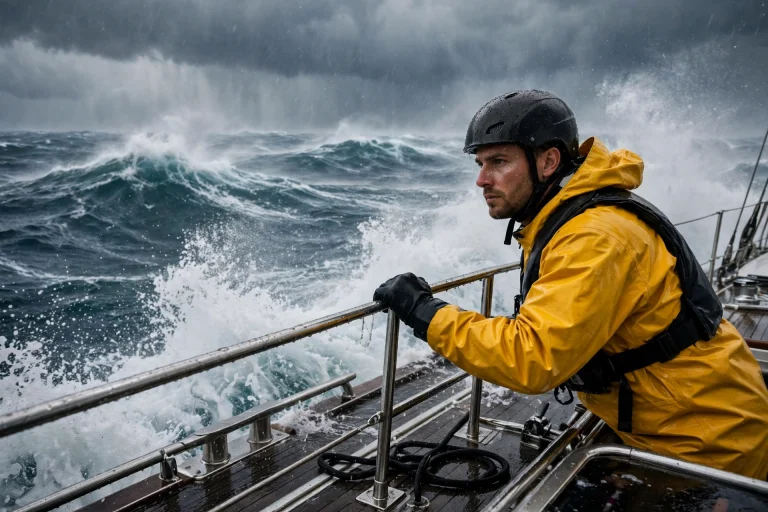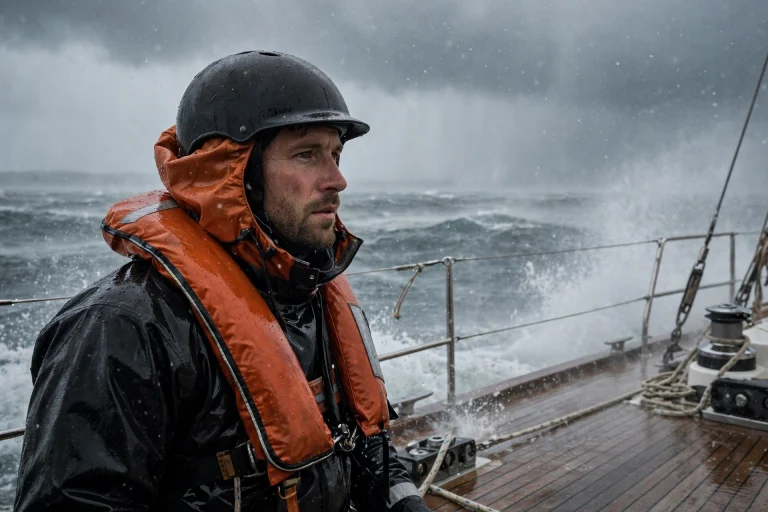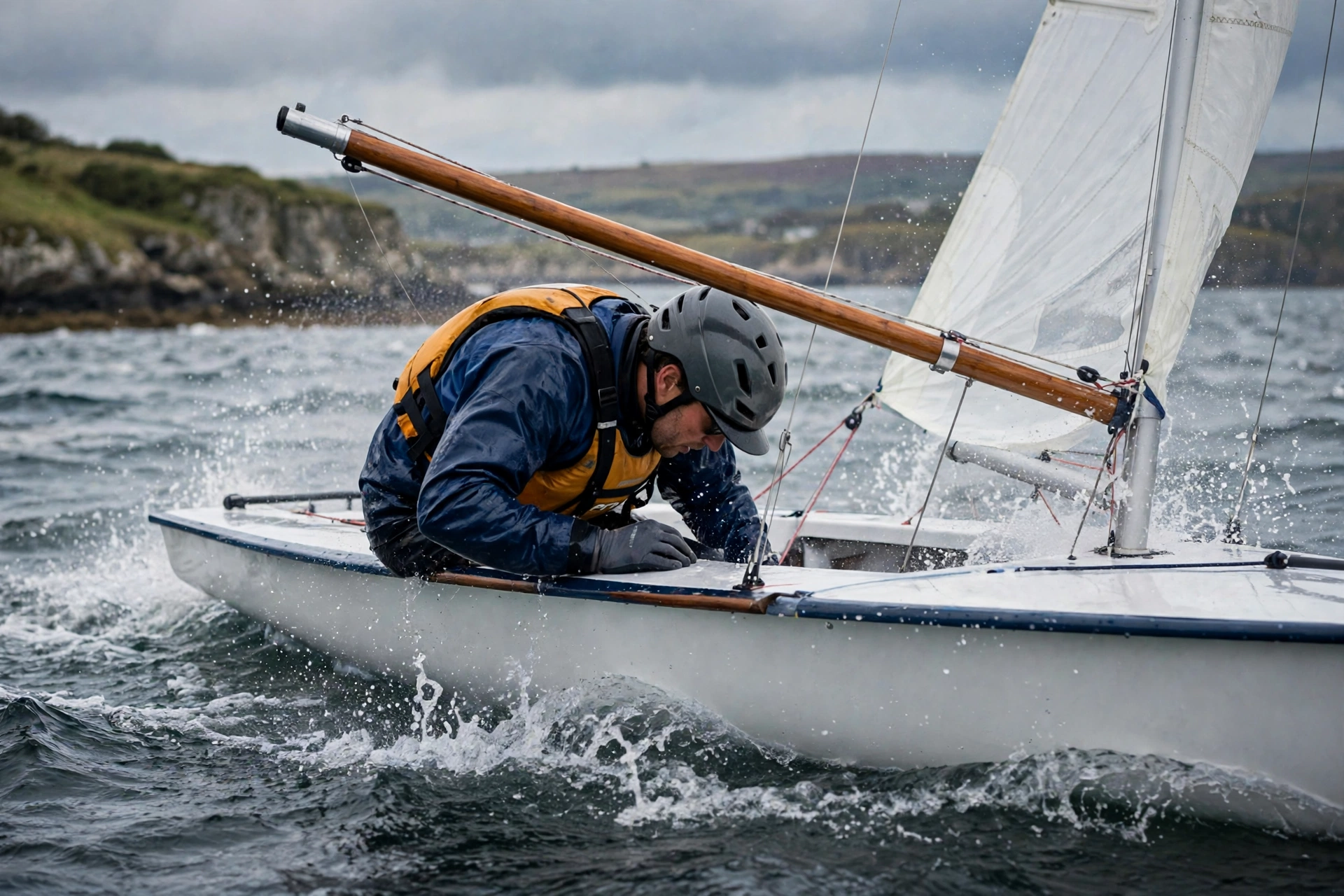
Yes, some sailors wear helmets — it depends on the boat and the conditions, and in general terms, helmets are most common in fast dinghy racing, foiling, and offshore racing, where the boom, the rig, and the water itself can all strike the head. Most cruising sailors do not wear a helmet, and there is no universal rule that says sailors must wear one. But in the faster and rougher corners of the sport, a helmet is now a normal part of the kit.
Sailing is unusual among sports because the need for a helmet varies so much with the boat. A slow cruising yacht and a foiling dinghy are both sailing, but the risks to the head are very different. This guide explains which sailors wear helmets, why they do, and what kind of helmet they choose.
Which Sailors Wear Helmets?
Dinghy racers are the most likely sailors to wear a helmet. In a small, fast dinghy, the boom swings across the boat at head height during every tack and gybe, and a moment of inattention can mean a hard knock. Capsizes are common too, and a sailor can strike their head on the centreboard, the mast, or the hull as the boat goes over.
Foiling sailors almost always wear helmets. Foiling boats lift clear of the water and travel much faster than a conventional dinghy, and a fall at foiling speed can throw a sailor onto a hard wing or foil. Offshore racers wear them too, especially on fast boats in rough seas, where the motion below deck and the gear on deck both pose a risk.
Cruising sailors, by contrast, rarely wear helmets. The speeds are lower, the boom is usually higher, and the risk of a head strike is smaller. Some cruising sailors do wear a helmet when working on deck in heavy weather or when going up the mast, but for most of the time a helmet is not part of cruising kit.
Why Would a Sailor Need a Helmet?
The boom is the classic sailing head hazard. When a boat tacks or gybes, the boom sweeps across the cockpit, and anyone whose head is in its path can be struck hard. Experienced sailors duck by habit, but in a race, with attention on the sails and the competition, a mistimed duck is easy. A helmet turns a blow that could cause a serious injury into a bump that ends the race at worst.
The rig itself is another hazard. Masts, spreaders, and rigging wires are all hard, and a sailor moving quickly on a heeling deck can walk into them. On a foiling boat, the foils and wings are rigid structures at head height when the boat is out of the water, and a fall onto one of them is a hard impact.
Below deck, an offshore racer can be thrown against a bulkhead or a bunk in rough seas. The boat’s motion is violent in a storm, and a sailor trying to rest or to move around the cabin can be tossed across the space. A helmet helps in these situations too, which is why some offshore crews wear them below deck as well as on it.
What Kind of Helmet Do Sailors Wear?
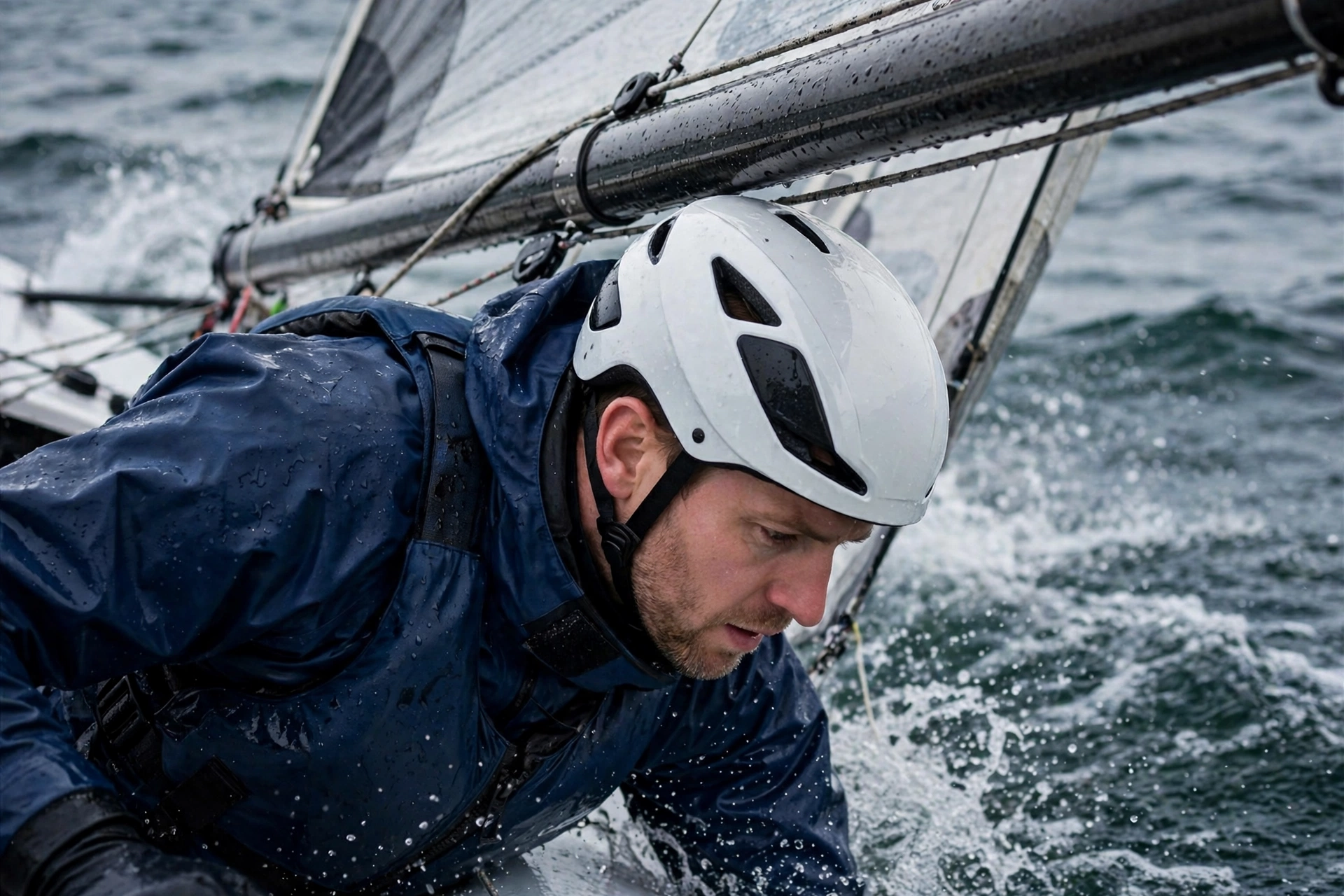
Sailing helmets are lightweight, low-profile helmets, often based on watersports or climbing helmet designs. They need to be light, because a heavy helmet is tiring on a long race, and they need to drain water quickly, because a sailor will be soaked repeatedly. Vents that let water out, a quick-drying liner, and a shell that does not absorb water are all important.
The helmet should fit snugly and have a secure chin strap, because a helmet that comes off in a capsize is useless, and a loose helmet can slip over the eyes at the worst moment. Many sailing helmets are designed to be worn over a thin neoprene hood or cap in cold weather, so check the fit with the layers you will actually wear.
Ear coverage matters too. Some sailing helmets cover the ears, which protects them from the boom and from cold water, but it can also muffle hearing, and hearing the crew’s calls matters in a race. Other helmets leave the ears open for better hearing. Which one suits you depends on the boat, the conditions, and how much you need to hear your crew.
Do Racing Rules Require Sailing Helmets?
Some classes and events require helmets, and some do not. Foiling classes and high-performance dinghy classes are the most likely to have a helmet rule, and some offshore races require them for certain legs or in certain conditions. The rule, where it exists, is usually set by the class association or the event organiser, so check the sailing instructions for your event before you race.
Even where helmets are not required, many sailors choose to wear one. The decision is often personal: a sailor who has been hit by a boom once rarely needs a rule to persuade them. Coaches and sailing schools also encourage helmets for young sailors and beginners, who are still learning to read the boat’s movements.
If you race in a class that requires a helmet, make sure yours meets the standard the class asks for, if one is named. If no standard is named, choose a helmet made for watersports, with a secure fit and a chin strap. If you are learning how helmets handle different kinds of impact, reading about what MIPS is for helmets can help you understand one of the technologies used in modern helmet design.
What Should You Look for When Choosing a Sailing Helmet?
Fit comes first. A sailing helmet should sit level, feel snug all round, and stay put when you shake your head or are dunked in water. It should not press on the forehead or temples, and the chin strap should be easy to adjust with wet, cold hands. Try it on with your lifejacket, because the two need to work together without pushing each other out of place.
Next, think about water. A helmet that holds water becomes heavy and cold, so look for drainage holes and a liner that dries quickly. The shell should be made of a material that does not soak up water, and the straps should not stretch when wet. Rinse the helmet in fresh water after sailing in the sea, and let it dry in the shade.
Finally, consider visibility and comfort. A brightly coloured helmet is easier for a rescue boat to spot in the water, and a light shell is more comfortable over a long day. Check that the helmet does not interfere with your sunglasses or your lifejacket hood, and that you can hear your crew clearly while wearing it.
Frequently Asked Questions
Q: Do all sailors need to wear a helmet?
A: No. Cruising sailors rarely wear one, while dinghy racers, foiling sailors, and offshore racers often do. The need depends on the boat, the speed, and the conditions.
Q: Will a sailing helmet keep me safe if I fall overboard?
A: A helmet protects your head if you strike the boat or the water hard, but it is not a lifejacket. Always wear a lifejacket as well, and make sure the two fit together properly.
Q: Can I use a bike helmet for sailing?
A: In general terms, no. Bike helmets are not designed for water, and they absorb water and become heavy. A watersports helmet is the right choice for sailing.

Olivia
Writer at Helmet Today, covering helmet reviews, fit and riding safety.