To stop a BMX helmet slipping during tricks, start by making the helmet sit level and snug, then tighten the fit system and pads, set the side straps just below your ears, and fasten the chin strap snugly. If the helmet still moves when you shake your head, adjust one thing at a time and retest until it moves with your head instead of sliding on its own.
Slipping is frustrating, especially when you are learning tricks. A helmet that slides forward over your eyes or tips back as you land can break your focus at exactly the wrong moment, and in general terms a helmet that moves out of position is less likely to be where it needs to be if you fall. Most slipping has a simple cause: fit, straps, worn pads or a size that no longer suits you.
Why does a BMX helmet slip during tricks?
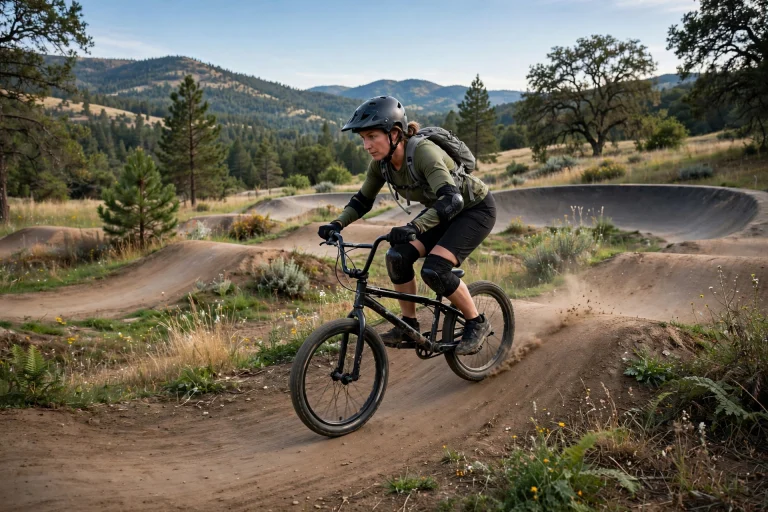
Tricks put extra demands on helmet fit. Jumps, landings, quick head movements and changes of direction can shift a helmet that is only loosely fitted. Sweat can also play a part, making pads and straps feel different after a warm session than they did at the start. In general terms, a helmet that is slightly loose for cruising may feel much looser once you add the movement and impact of tricks.
Size is often the underlying issue. A helmet that is a little too large will tend to rock or slide no matter how carefully you adjust the straps, because the shell itself has room to move. Similarly, pads that have worn thin can leave extra space inside, so a fit that once felt snug gradually becomes loose. Checking size and pad condition is therefore a useful first step before spending a long time tweaking straps.
How can you tell whether the problem is fit, straps or size?
Start with a simple head-shake test. Put the helmet on, fasten it as you normally would, and shake your head gently from side to side and up and down. The helmet should move with your head, not slide independently. If it slides in every direction, the overall fit is probably too loose. If it only tips forward or back, position or strap balance may be at fault.
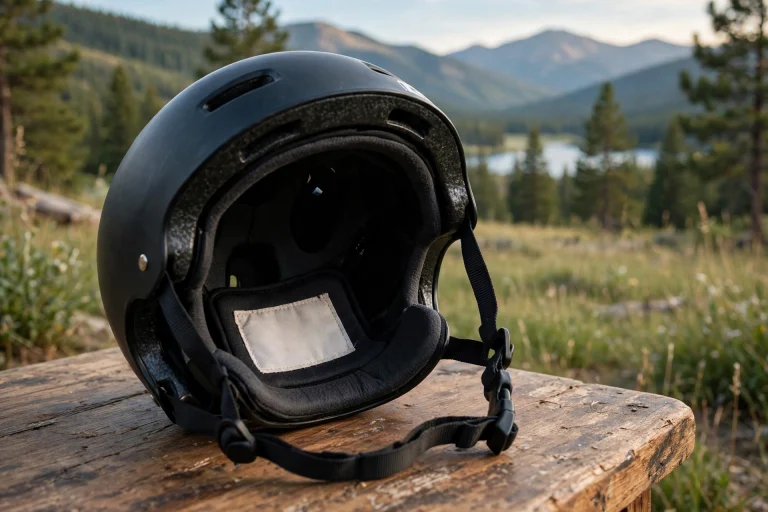
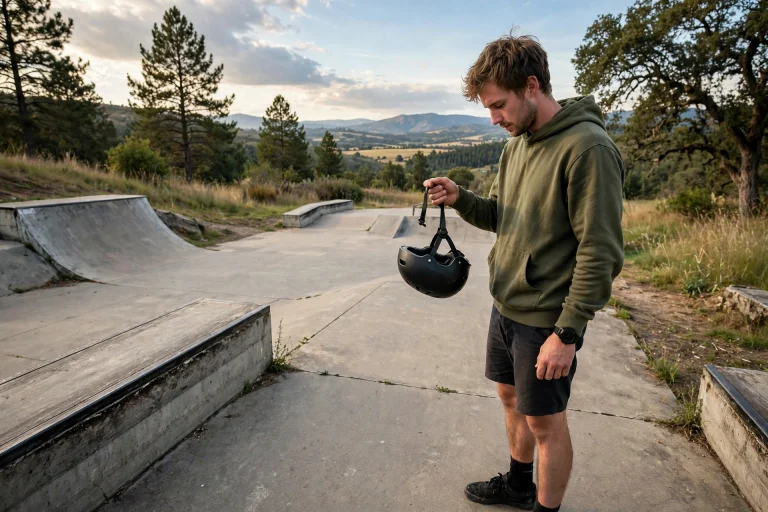
Next, check the fit with the straps unfastened, safely at home. The helmet should feel snug around your head on its own, since straps are meant to secure a good fit, not force a loose helmet into place. If it feels roomy even unfastened, try thicker pads or a different size. Also inspect pads for flat or loose areas, and straps for stretching or fraying, which can stop them holding their adjustment.
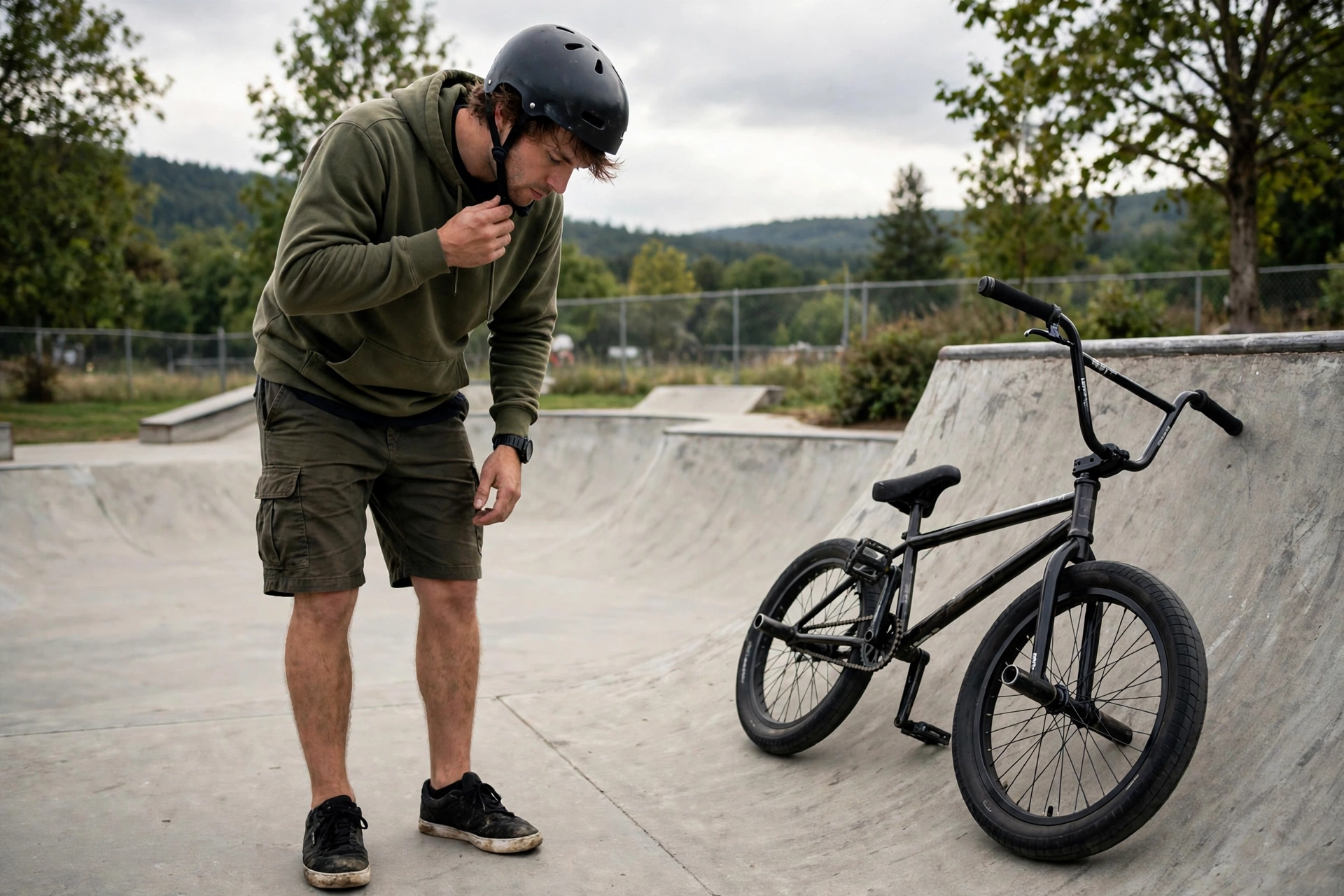
What adjustments stop a BMX helmet from slipping?
Begin with position. Set the helmet level so it covers your forehead evenly, then adjust the fit system or pads until the pressure feels even all the way around. In general terms, it should feel snug without causing a headache. Make small changes, one at a time, and repeat the head-shake test after each one, so you can tell which change actually helped.
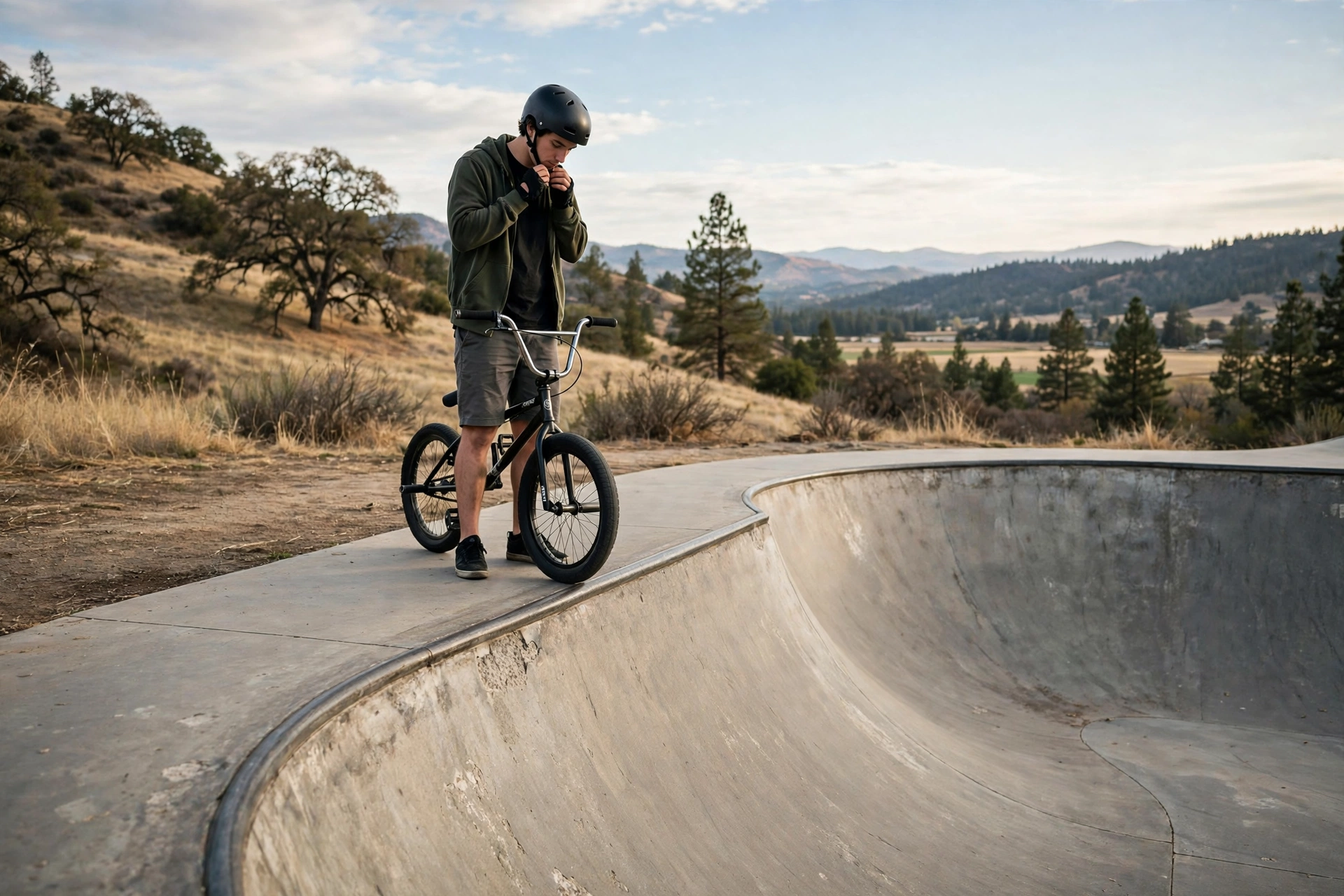
Then set the straps. Side-strap adjusters should sit just below each ear, and the chin strap should feel snug, with room for about one or two fingers between strap and chin, and no twisting. Secure loose strap ends so they do not flap or pull the fit out of balance. Some helmets also include rotational-impact technology, so learning what MIPS does in general terms can clarify how the inner parts of some helmets are meant to move, and help you avoid mistaking normal design movement for a poor fit.
- Set the helmet level, covering your forehead evenly.
- Adjust pads or the fit system in small steps, retesting after each change.
- Place side-strap adjusters just below each ear.
- Fasten the chin strap snugly, with room for about one or two fingers.
- Secure loose strap ends and check that the buckle stays closed.
How do you keep a helmet in place mid-session?
Build mid-session checks into your routine. Between runs, check that the helmet still sits level and that the straps have not loosened. Sweat, movement and repeated landings can all change the fit over a session, and a quick adjustment early on is easier than fixing a helmet that has been sliding for a while. If you notice slipping, stop and adjust rather than pushing through.
Pay attention to how the helmet feels as you ride. A helmet that starts to press in one spot, lift at the front or rock sideways is telling you something has changed: a strap may have slipped, a pad may have shifted, or the fit may need tightening after pads have compressed. Keep straps and pads clean according to the maker’s guidance, and store the helmet somewhere cool and dry, since heat and rough handling wear them faster.
When should you replace pads or the helmet itself?
Replace pads when they are thin, torn, flattened or no longer stay in place, especially if fresh pads restore a snug fit. Use pads made for your model where possible, because pads from another model may sit incorrectly and create uneven pressure. After fitting new pads, repeat the full fit check, including position, straps and the head-shake test, before your next session.
Consider replacing the helmet itself if it still slips after correct adjustment and new pads, if the shell is cracked or dented, or if the straps or buckle no longer hold securely. In general terms, a helmet that has taken a significant impact should also be replaced, even if damage is not obvious. When choosing a replacement, note which size and pad setup worked best, and try it on before committing, so you fix a size problem properly rather than repeating it.
A helmet that stays put lets you focus on the trick, not on your gear. Work through fit, pads and straps in order, check the fit mid-session, and replace worn parts promptly, and slipping should become a rare annoyance rather than a regular distraction.
Frequently Asked Questions
Q: Why does my BMX helmet slip only when I land tricks?
A: Landings add sudden movement that can expose a fit that felt fine while standing still. In general terms, check that the helmet is level and snug, that the chin strap is fastened correctly, and that worn pads are not leaving extra room inside.
Q: Should I tighten the chin strap as much as possible to stop slipping?
A: No. An over-tight strap can be uncomfortable and may pull the helmet out of position. Aim for snug, with room for about one or two fingers, and fix the underlying fit with pads or the fit system if it still moves.
Q: Will a new helmet stop slipping if adjustments have not worked?
A: It may help, especially if the current helmet is the wrong size or worn out, but only if the new helmet fits correctly. Measure your head, try it on, and repeat the position, strap and head-shake checks before your first session in it.

Olivia
Writer at Helmet Today, covering helmet reviews, fit and riding safety.