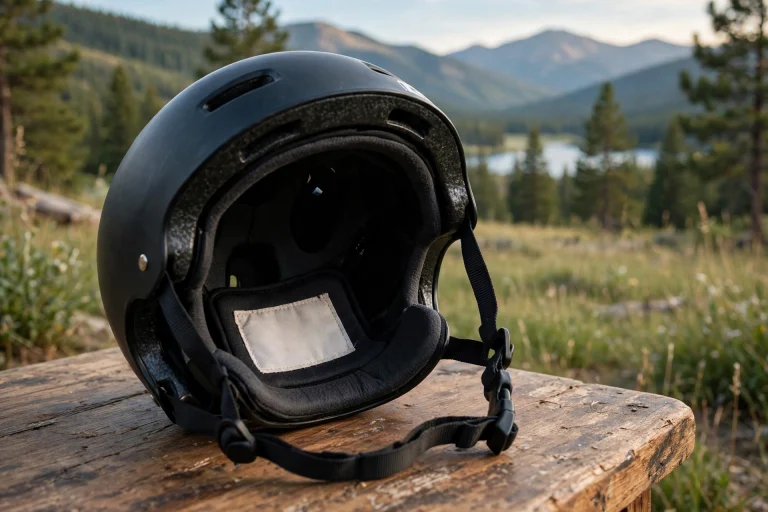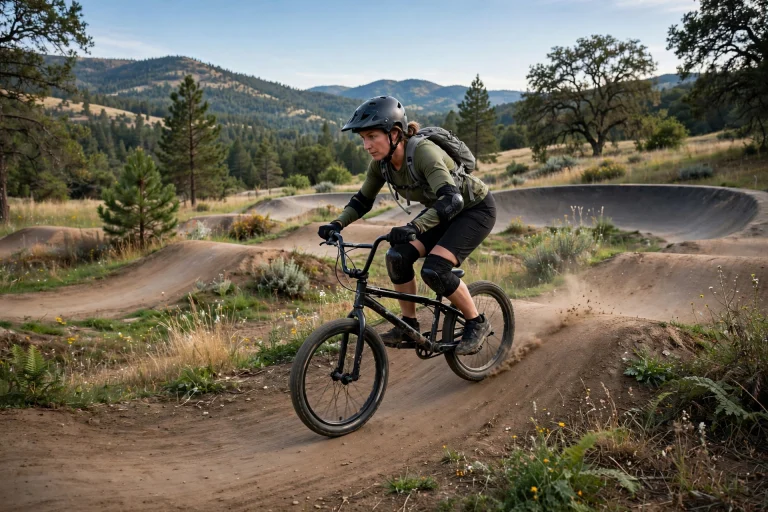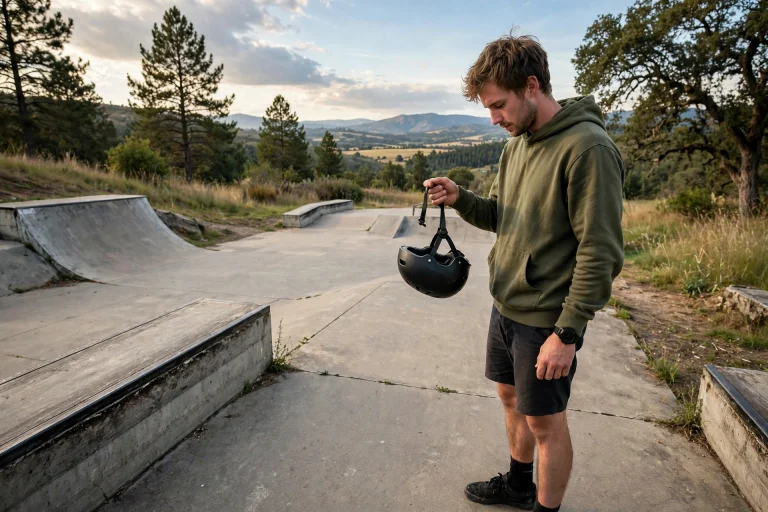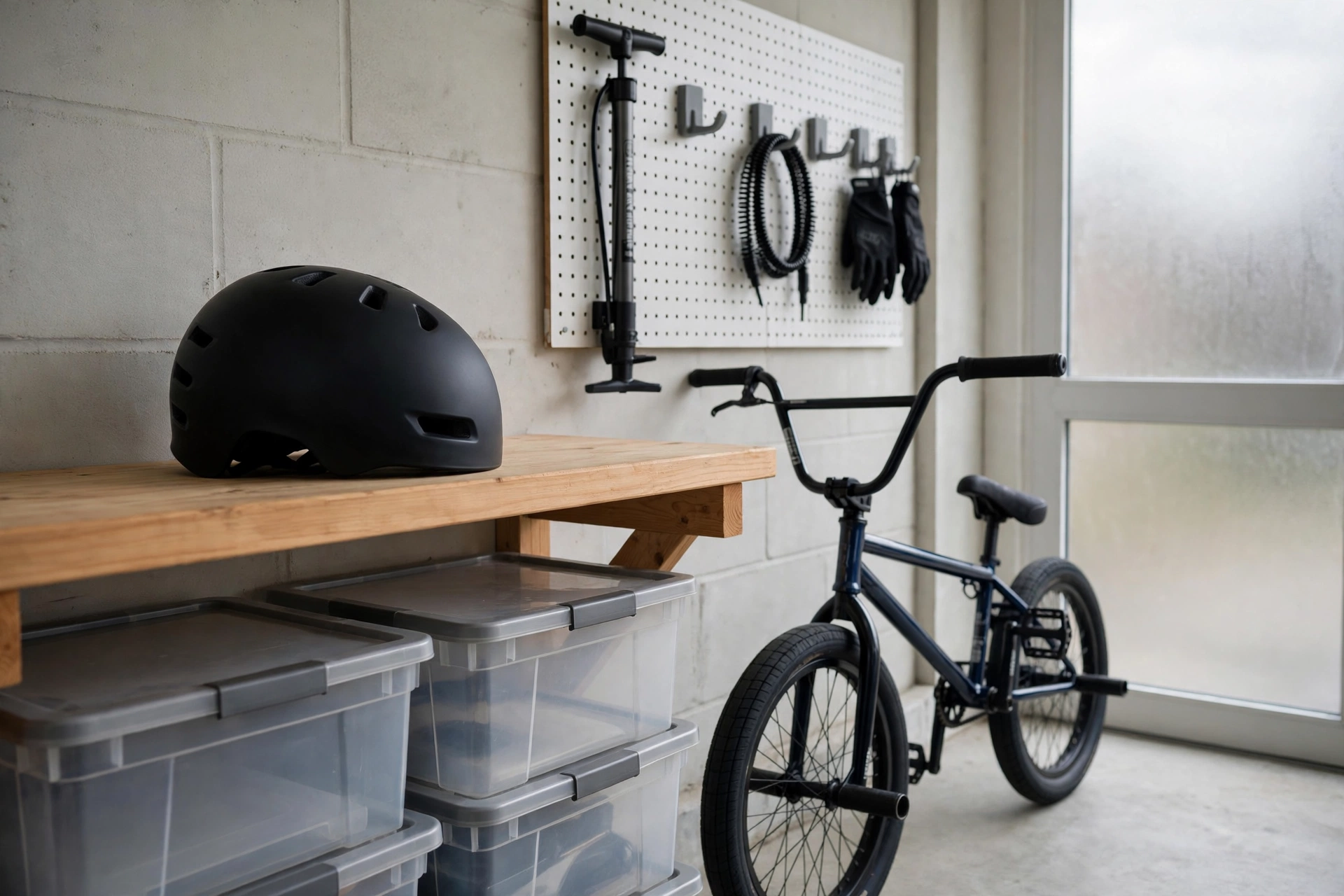
Store a BMX helmet in a cool, dry place indoors, away from direct sunlight, heat, and heavy objects resting on top of it. In general terms, a shelf in a garage or a room inside the house works well, as long as the spot stays dry, is not too hot, and lets air move around the helmet.
Good storage is simple, but it matters: how a helmet is treated between race days affects its comfort and condition.
Where Is the Best Place to Store a BMX Helmet?
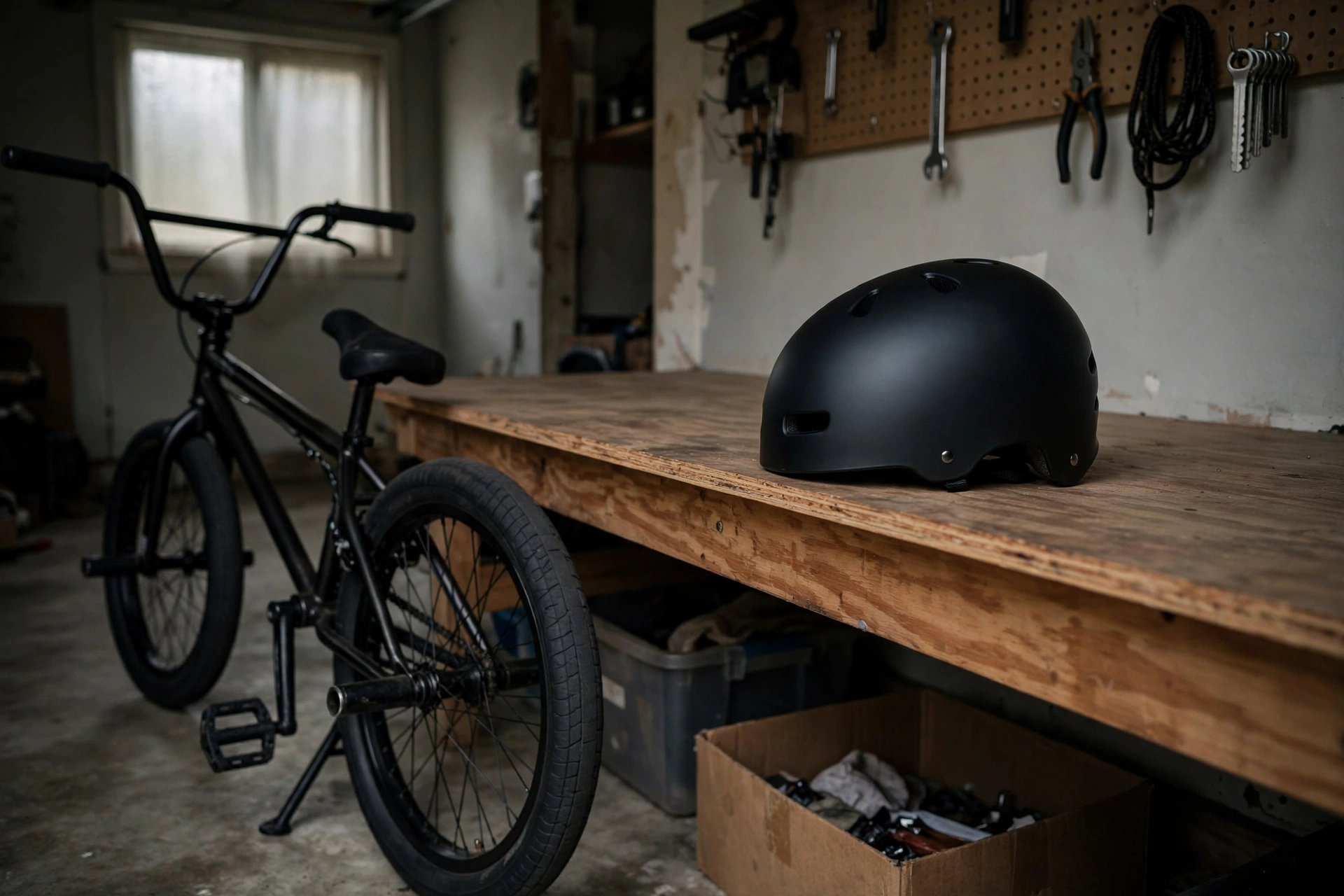
A shelf is usually the best choice for a BMX helmet. It keeps the helmet off the floor, away from feet, bike wheels, and tools that could knock it over or scratch it. Choose a shelf that is easy to reach, so you are not tempted to toss the helmet on the ground when you come home tired from a race day. The shelf should be in a spot that stays fairly steady in temperature, rather than somewhere that heats up sharply during the day.
A garage can work well, provided it is not damp and does not get very hot. If your garage has a window that lets strong sun fall on the shelf, move the helmet to a shaded part of the same shelf or to another spot. Sunlight and heat, in general terms, are not kind to helmet materials over time, so shade is worth the small effort. A cupboard or a hook inside the house is also a good option if your garage is damp, dusty, or shared with chemicals and paint.
Keep the helmet away from solvents, fuel, and strong chemicals, and avoid leaving it in a hot car boot, where heat and knocks from other gear can damage it.
How Should You Clean a BMX Helmet Before Storing It?
Cleaning a helmet before storage is worth doing, especially after a dusty or muddy race day. Start by removing loose dirt with a soft, dry cloth or a soft brush. For the outer shell, a cloth lightly dampened with plain water is usually enough. Wipe gently, and dry the helmet with a clean towel afterwards. Avoid harsh cleaners, bleach, and strong solvents, because these can harm the shell finish and the padding in ways that are hard to see.
For the inside, follow your helmet’s guidance. In general terms, removable pads can often be washed by hand in mild soapy water and air-dried fully. If pads are not removable, wipe them gently and let the helmet air out. Avoid high heat from a hair dryer or heater.
Make sure the helmet is fully dry before you put it away. Storing a damp helmet in a closed bag or box can lead to odours and, over time, to padding that feels less fresh. If you have just come back from a wet or sweaty session, give the helmet a few hours in the open air first. Once it feels dry to the touch, inside and out, it is ready for the shelf.
Should You Hang a BMX Helmet or Put It on a Shelf?
Both hanging and shelving can work, but a shelf is usually the safer choice for a BMX helmet. On a shelf, the helmet sits in its natural shape, with nothing pulling on the straps or pressing on one side of the padding. That even resting position helps the helmet keep its fit, which matters when you put it on again on race day.
Hanging a helmet by its strap is common, yet it is not ideal as a long-term habit. The strap can stretch slightly over time if it carries the full weight of the helmet day after day, and the helmet may also swing and bump into a wall. If hanging is your only option, use a wide hook or a helmet hanger that supports the helmet itself, rather than a narrow hook that only catches the strap. Keep the helmet away from the wall edge so it does not get knocked when you move other gear.
Do not squeeze the helmet: avoid stacking heavy bags or tools on top of it, and leave a little space around it so padding does not flatten in one spot.
What Damages a BMX Helmet in Storage?
Several everyday storage mistakes can shorten the useful life of a BMX helmet. The most common are heat, sunlight, dampness, chemicals, and knocks. A helmet left on a sunny windowsill, in a hot attic, or beside a heater faces repeated heat exposure, and in general terms, that is not good for its materials. Damp storage, such as a leaking garage corner or a sealed plastic bag holding a wet helmet, can lead to smells and worn padding.
Knocks are another risk. A helmet that falls from a high shelf onto concrete, or that is regularly hit by a bike wheel or a toolbox, may look fine on the outside while still deserving a closer check. If a helmet takes a hard impact, even in storage, it is wise to inspect it carefully and, when in doubt, seek advice from the maker or replace it. Safety gear is not something to guess about.
It also helps to understand the parts of your helmet, including any rotation-management system it may have. Learning what MIPS does can help you see why the inner liner and padding deserve gentle handling, rather than being pulled, twisted, or forced into a tight space. Keep straps buckled loosely, not pulled tight, so they are not under tension while the helmet sits unused.
How Do You Check a BMX Helmet Before the Next Race Day?
Before race day, give your stored helmet a quick check. Look over the shell for cracks, deep scratches, or dents, and check the straps for fraying, stiffness, or a buckle that no longer clicks firmly. Press the padding gently: it should feel even and spring back, not flat in one place or loose in another. If anything looks or feels wrong, do not ignore it.
Try the helmet on: it should sit level, feel snug without pressing painfully, and stay in place when you move your head gently. Adjust the straps so it does not slide forward over your eyes.
Finally, consider the helmet’s history. If it has been in a crash or dropped hard, that matters more than how new it looks. When you are unsure, replacing it is the safer choice.
Frequently Asked Questions
Q: Can I store a BMX helmet in a bag between race days?
A: Yes, a breathable helmet bag or a soft cloth bag can work, as long as the helmet is clean and fully dry first. Avoid sealed plastic bags for long storage, because trapped moisture can cause odours and wear on the padding.
Q: Is it okay to leave a BMX helmet in the garage all winter?
A: In general terms, yes, if the garage stays dry, cool, and out of direct sunlight. If the garage is damp, very hot in summer, or exposed to chemicals, an indoor cupboard or shelf is a better choice for long breaks between race days.
Q: How often should I check a stored BMX helmet?
A: Give it a quick look and a fit check before each race day, and a closer inspection after any fall, knock, or long period in storage. Regular checks help you spot worn straps, flattened padding, or shell damage early.

Olivia
Writer at Helmet Today, covering helmet reviews, fit and riding safety.