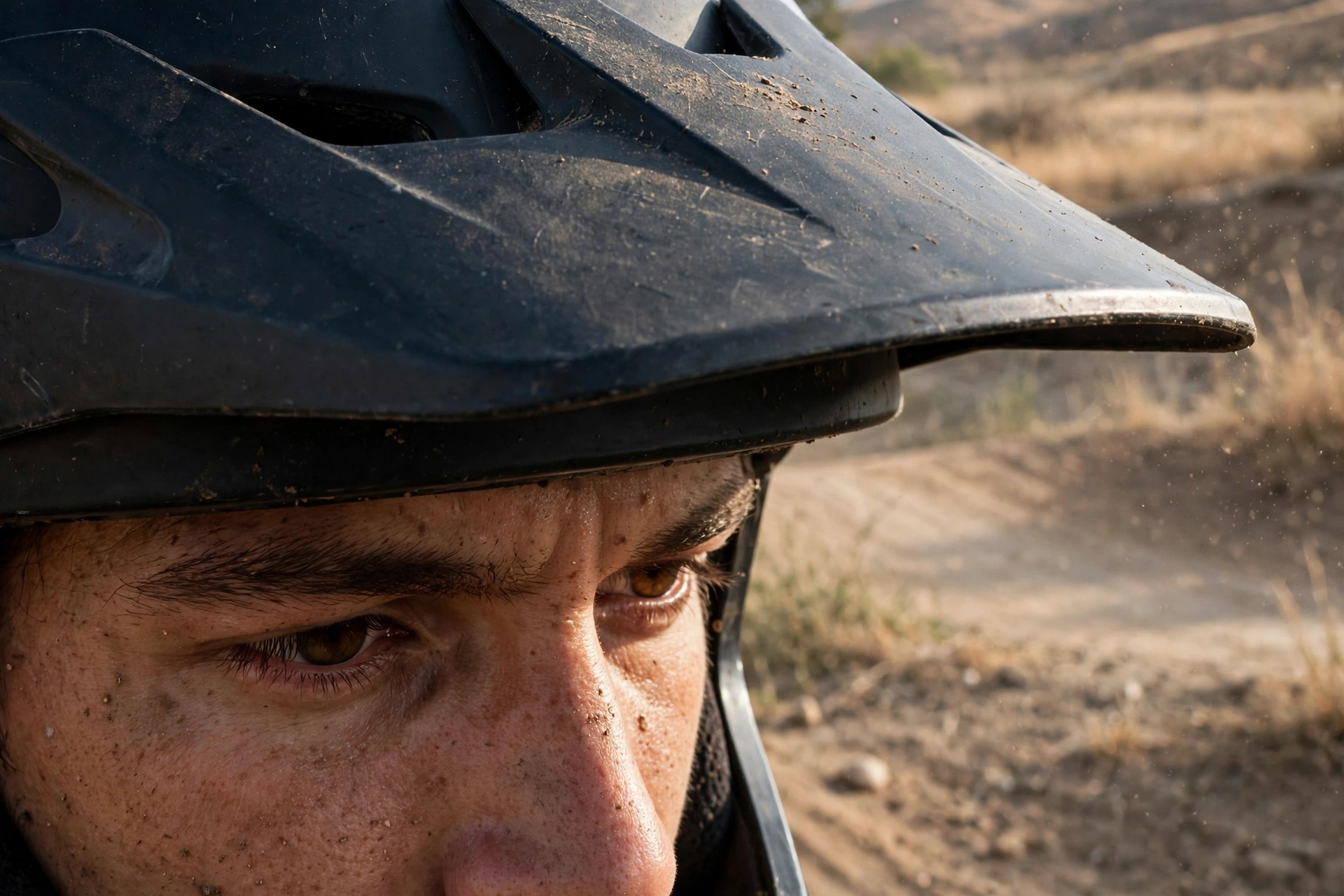
Yes, in general terms, a BMX helmet peak visor can help on dirt tracks by shading your eyes from sun and by cutting down glare and dust coming from above and ahead. It is not a cure for every visibility problem, but a well-fitted visor can make bright, dusty laps feel easier on the eyes.
A peak visor is the small brim above the front of some BMX helmets. Whether it helps depends on the track, the light, your riding position, and how it is set up.
What Does a BMX Helmet Peak Visor Actually Do?
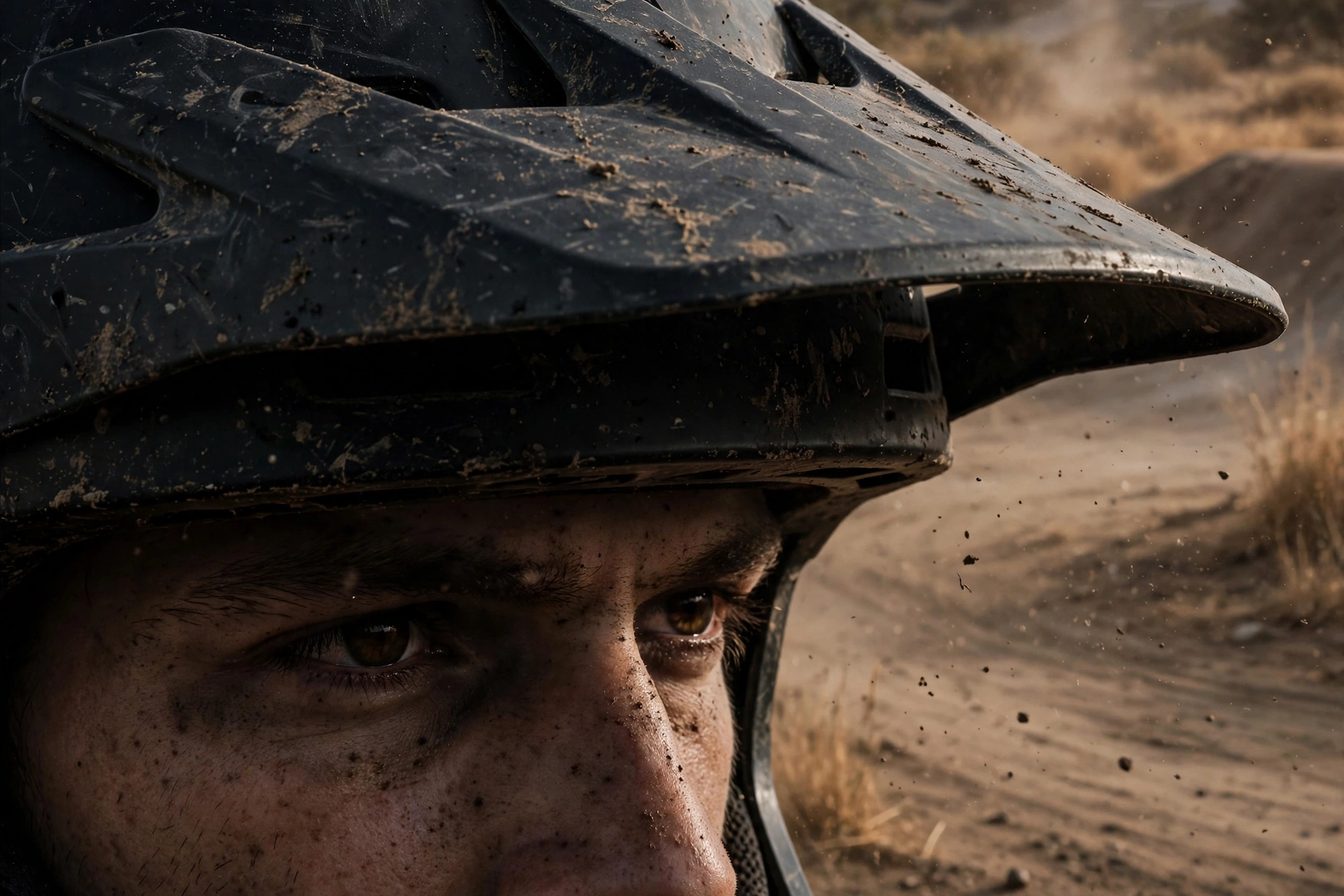
A peak visor works a little like the brim of a cap. It blocks light coming from above, so your eyes do not have to work as hard in bright conditions. On a dirt track, that can matter a lot: the surface is often pale, dusty, and open to the sky, with little shade, so glare can bounce up as well as come down. A visor helps cut the light from above, which can make it easier to read ruts, jumps, and turns ahead.
The visor can also act as a small shield against loose material. When you follow another rider, or when your own front wheel kicks up dust, some of that material comes from a low angle, and goggles or glasses do most of the work there. A visor, however, can help with dust and spray falling from above, and it can keep a little rain or sun off the top of your eyewear. It is a helper, not a replacement for eye protection, and it should always be used together with proper goggles or glasses on a dirt track.
The practical test is simple: does it help you see the track better without blocking your view? If not, it may need adjusting, or it may not suit that track or helmet.
Does a Peak Visor Help With Sun and Dust on Dirt Tracks?
On a sunny dirt track, a peak visor often helps the most when the sun is in front of you or high overhead. It shades the top of your vision, which can reduce squinting and make it easier to keep your eyes open and relaxed through a lap. Riders who race in the late afternoon, when the sun sits low, may notice the benefit even more, because low sun can shine straight under a helmet shell and into the eyes.
For dust, the help is more modest and depends on conditions. In dry, loose dirt, dust hangs in the air and drifts from every direction, so a visor alone will not keep your eyes clear. Good goggles with a snug seal matter far more for dust. Still, a visor can cut the amount of dust and sunlight hitting the top edge of your goggles, and it can reduce the glare that makes dusty air look even brighter. In that sense, it supports your eyewear rather than replacing it.
Track layout matters too. On a wide-open track, a visor has a clear job all lap long. On a shaded track, where light changes quickly, it may feel less useful. Try the same track with the visor in different positions to judge.
Can a Peak Visor Get in the Way While Riding?
Yes, a peak visor can get in the way if it is set too low, too long, or too loose. A visor that drops too far can block the top of your view when you look ahead on a jump or a steep section, forcing you to tilt your head back to see the landing. That extra head movement can be distracting, especially at speed, and it can break your focus on the track.
A loose visor is another problem. If it rattles, wobbles, or shifts during a lap, it draws attention away from riding and may move into your line of sight at the wrong moment. Before a session, check that the visor is fixed firmly and that its screws or clips are snug, without over-tightening them. If a visor is cracked or bent, it may sit at an odd angle, and replacing it is usually better than riding with a damaged one.
Wind can also catch a large peak at higher speeds, creating a slight lifting feeling. If you feel the helmet pulling, try a shorter visor position or a smaller peak.
Should You Remove the Visor for Racing or Practice?
There is no single rule, and many riders keep the visor on for both practice and racing. If the visor helps you see clearly and stays out of your way, there is little reason to remove it. Practice is a good time to test it: ride the same sections with the visor up, down, and removed, and notice which setup lets you spot the track features earliest and ride most comfortably.
Some riders remove the visor for very fast or shaded tracks, or with a full-face helmet and large goggles. Others keep it on because it is part of their riding feel. Avoid a big change for the first time on race day — practise with what you plan to race with.
If you do remove a visor, store its screws safely where it will not bend or crack. Check whether your helmet maker intends the visor to be removable: forcing off a fixed visor could damage the shell or mounts.
How Do You Choose and Adjust a Peak Visor?
Choosing a visor starts with fit, not looks alone. It should match your helmet model or be made to fit it, so that it sits evenly and fastens securely. A visor that is too wide, too long, or made for a different helmet may sit at the wrong angle or leave gaps at the sides. When in doubt, use the visor made for your helmet, or check with the maker before buying a replacement.
Adjustment is usually simple: loosen the mounts, move the peak, and tighten them again. Start in the middle, ride a few laps, and adjust in small steps — down slightly if sun gets under it, up if it blocks your view on jumps.
Understanding your helmet as a whole also helps. Learning what MIPS does is a useful reminder that a helmet is a system: shell, liner, padding, straps, and visor all work together, and a visor should never be forced, glued, or drilled into place in a way that could harm that system. Keep the visor clean, check its mounts regularly, and replace it if it is cracked, warped, or no longer holds its position.
Frequently Asked Questions
Q: Does a BMX peak visor replace goggles on a dirt track?
A: No. A visor shades your eyes and helps with glare from above, but it does not seal out dust the way goggles do. On a dirt track, always pair a visor with proper goggles or glasses for eye protection.
Q: Is a peak visor better for sunny or shaded dirt tracks?
A: In general terms, it helps most on sunny, open tracks, especially when the sun is low or high overhead. On heavily shaded tracks, the benefit is smaller, and some riders prefer a shorter peak or no visor at all.
Q: Can I adjust a peak visor myself?
A: Yes, most visors can be tilted up or down by loosening their mounts, moving the peak a small amount, and tightening them again. Make small adjustments, test the position on a practice lap, and check that the visor stays firm before racing.

Olivia
Writer at Helmet Today, covering helmet reviews, fit and riding safety.