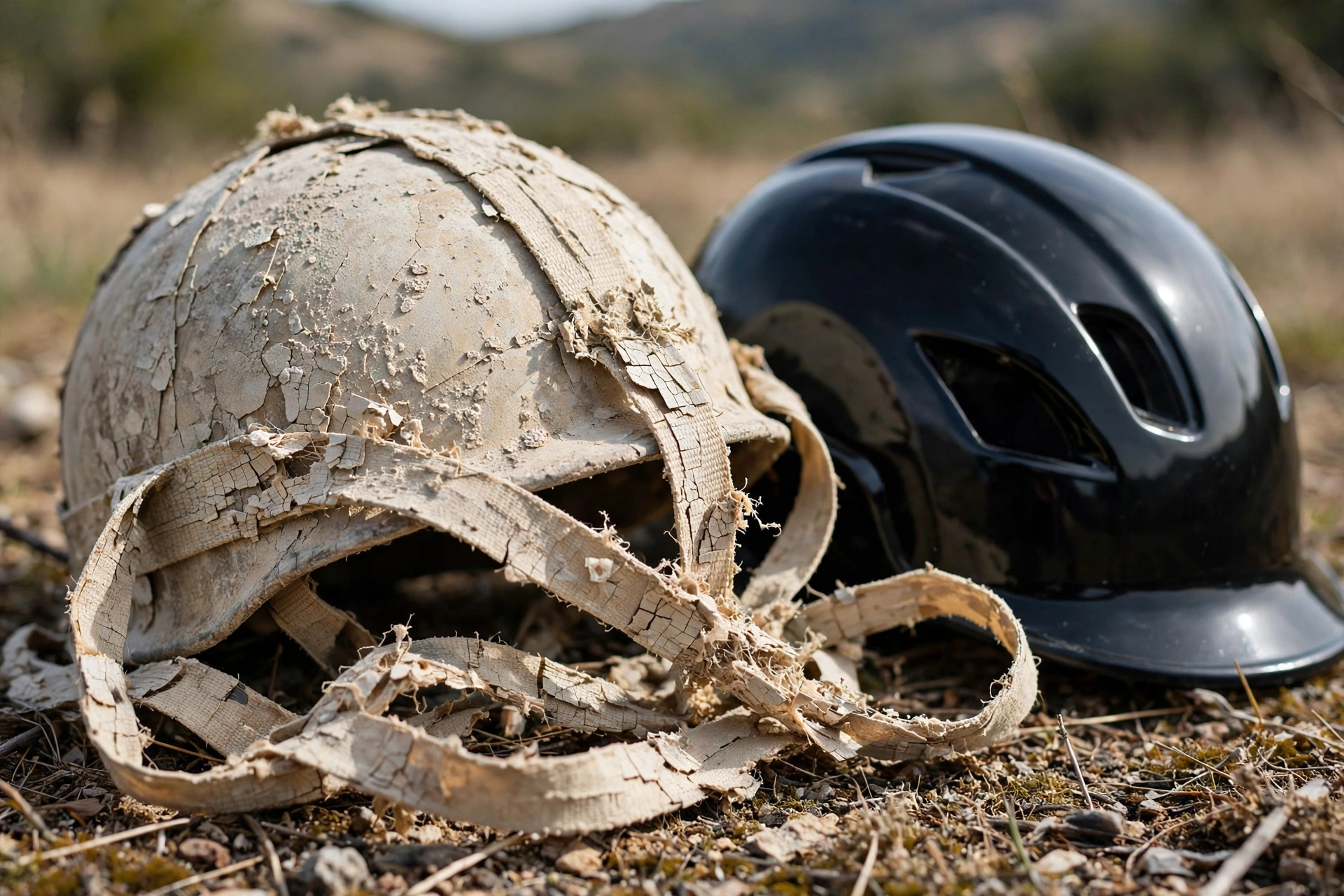
Sun damage on a helmet shows up as a faded or chalky shell, colors that have lightened unevenly, straps that feel stiff and dry, and plastic parts that crack or snap instead of flexing. Ultraviolet light slowly breaks down the plastics in the shell, straps and buckles, in general terms weakening them over seasons of exposure. The good news: the signs are easy to spot once you know them, and simple storage habits prevent most of it.
Here is how to inspect a helmet for UV aging — shell, straps, buckles and foam — and how to judge whether what you find means cleaning and care, or replacement.
What Does Sun Damage Look Like on the Shell?
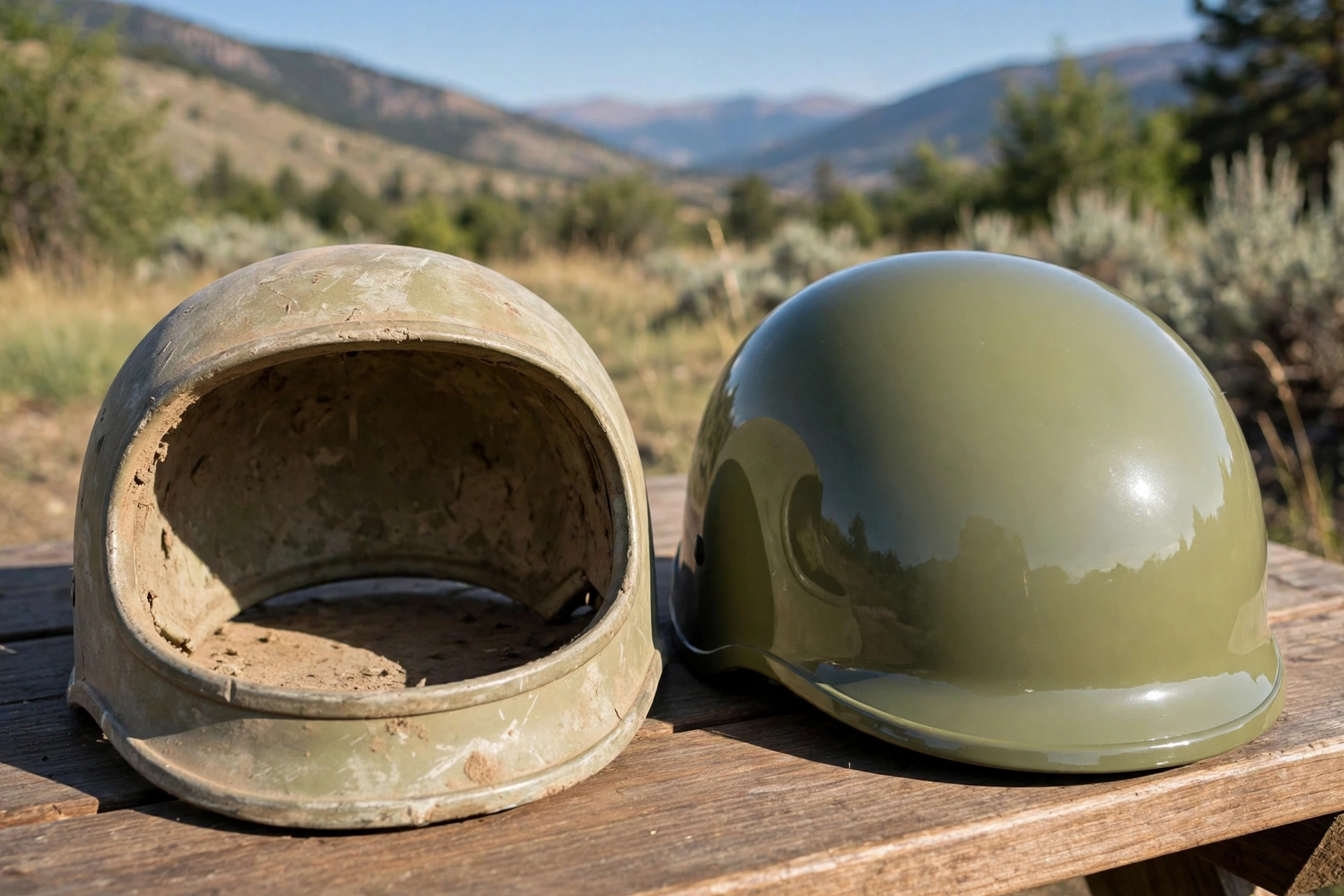
Start with color. A sun-aged shell fades, usually unevenly: the top and the side that faced the window or hung facing the sun will be lighter than the protected areas under the visor or around the rim. Compare the outside with a patch that stays covered, such as under a removable peak or inside the shell edge — a clear difference tells you UV has been at work.
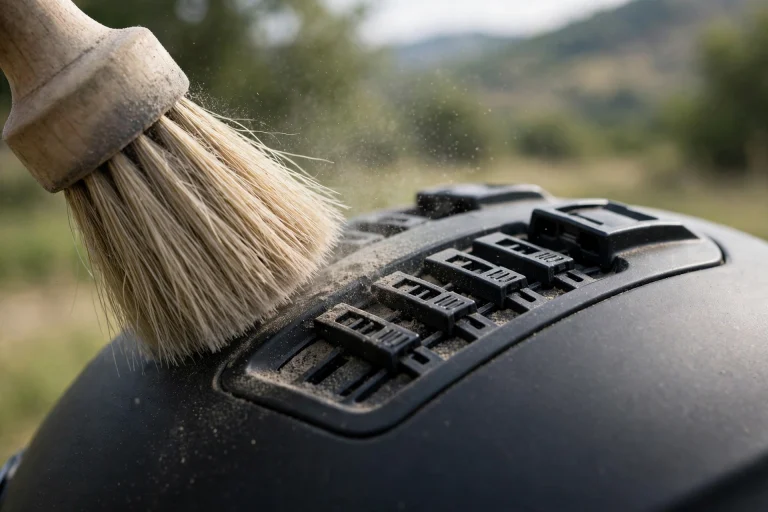
Next, touch. A healthy glossy shell feels smooth and slick. A UV-aged one often feels dry, rough or chalky, and may leave a faint powdery residue on your fingers. Fine surface crazing — a network of hairline cracks in the clear coat or paint — is another classic sign. Deep cracks are different and more serious: any crack that goes into the shell structure itself means the helmet is finished, sun or no sun.
Stickers and graphics help you read the history too. Peeling, curled or bleached decals suggest the helmet has spent a lot of its life in strong light. None of this proves the foam is harmed — the shell takes the UV first — but it tells you the helmet has been aging faster than its birthday suggests.
How Do Straps and Buckles Show UV Damage?
Straps are where sun damage matters most, because the retention system is what keeps the helmet on your head in a fall. Healthy webbing is supple and slightly springy. Sun-damaged webbing feels stiff, dry and papery, fades to a washed-out version of its original color, and may fray at the edges or around stitching holes.
Test the buckle and sliders too. Plastic that has gone brittle clicks less positively, flexes with a creak instead of a bend, or shows whitening at stress points — the pale stress marks you see on old plastic when it is about to crack. A buckle that snaps shut weakly or a slider that has cracked is a replace-the-part-or-the-helmet problem: if the maker sells the strap assembly for your model, fit the genuine part; if not, retire the helmet.
Adjustment dials and visor pivots suffer the same way. A dial that crumbles or a visor mount that snaps during normal handling is UV and heat telling you the helmet’s plastics are at the end of their life, even if the shell still looks presentable.
Can the Sun Damage the Foam Inside?
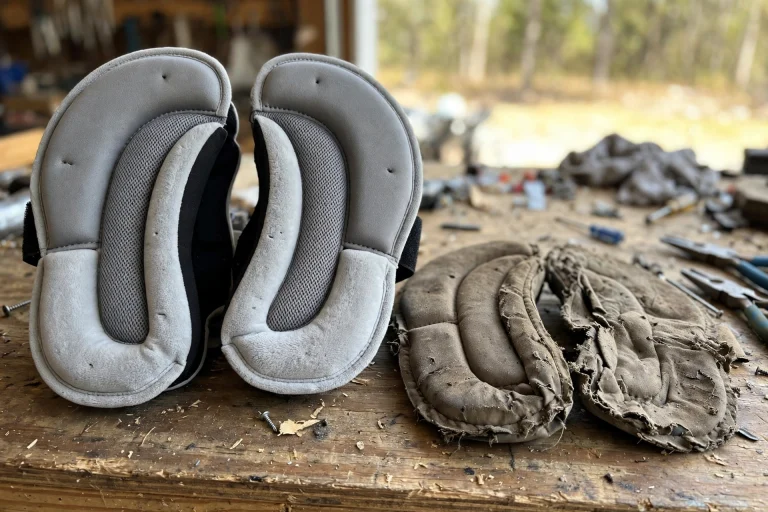
Usually the foam is the best-protected part: the shell shades it, and EPS does its aging mostly through heat, sweat and time rather than direct light. But the foam you can see — at the rim, around vents, and under the comfort pads — does get UV exposure, and on an old, sun-lived helmet it may look yellowed, dry or crumbly at those edges.
Check what you can see. Press the exposed foam gently with a fingertip: it should feel firm and spring back. Foam that crumbles, flakes, or feels soft and dead in patches has degraded, and degraded foam is the one thing no cleaning can fix — the helmet should be replaced. Also look at the bonding: pads that have fallen off because the adhesive gave up, or a liner that has separated from the shell, point to a helmet that has aged out.
Technology inside the helmet, such as the sliding layer in a MIPS-equipped helmet, should still move freely as designed; a liner plate that is warped or stuck after years of heat and sun is another sign the helmet has had its life.
How Do You Prevent Sun Damage?
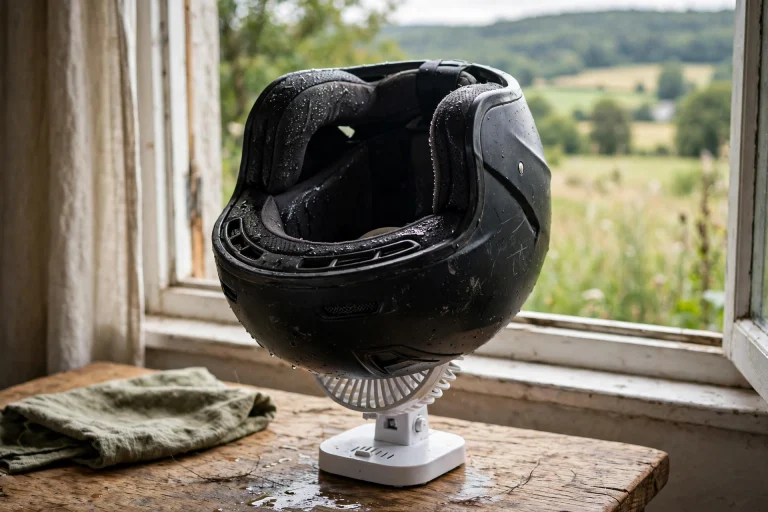
Prevention is mostly storage. Keep the helmet indoors, out of direct sunlight, when it is not on your head — a closet shelf, a hook inside the door, or its breathable bag on a shelf. The three worst homes are a sunny windowsill, the rear shelf of a parked car, and a hook on a sun-facing wall or balcony; all three can age a helmet in a single summer.
During the day, small habits help. If the helmet comes off at a café or the office, set it in the shade rather than on a sunlit table. Riders who lock a helmet to a bike parked in the sun all day should accept that the helmet is aging at an accelerated rate and plan replacements accordingly.
There is no sunscreen for helmets, and coatings or sprays not approved by the maker should stay off the shell — solvents and unknown chemicals risk attacking the finish and, if they reach it, the foam. Shade, a bag, and an indoor shelf beat any product.
When Does Sun Damage Mean Replacing the Helmet?
Use the shell as a warning light and the working parts as the verdict. Fading alone, with everything else sound — supple straps, positive buckle, firm foam, snug fit — means the helmet has aged and deserves closer watching and better storage, not automatic retirement.
Replace the helmet when sun damage reaches function: straps that are stiff, frayed or faded to weakness; a buckle or dial that has cracked or feels brittle; foam that crumbles or has gone soft; or a shell with structural cracks or heavy crazing. Combine those findings with age — a helmet that is both old and sun-baked has spent its safety margin twice over.
And the standing rules never change: any helmet that has been in a crash gets replaced regardless of condition, and any helmet you cannot bring yourself to trust should be replaced too. Confidence in the gear is part of wearing it every ride.
Frequently Asked Questions
Q: Does a faded helmet shell mean the helmet is unsafe?
A: Not by itself. Fading shows the shell has absorbed a lot of UV, which ages plastics over time, but safety depends on the working parts. Check the straps, buckle and foam carefully — if those are sound, store the helmet out of the sun and keep inspecting it.
Q: Can you restore a sun-damaged helmet?
A: You can clean it and improve its looks, but you cannot reverse UV damage inside plastics and webbing. Brittle straps, cracked buckles or crumbling foam cannot be restored — those mean replacement parts from the maker, if available, or a new helmet.
Q: How long can a helmet sit in the sun before it is damaged?
A: There is no fixed hour count; damage is cumulative. Occasional sunny rides do no meaningful harm, but daily storage in direct sun — a car shelf or windowsill — can age a helmet noticeably within a single season. Store it in the shade indoors.

Olivia
Writer at Helmet Today, covering helmet reviews, fit and riding safety.