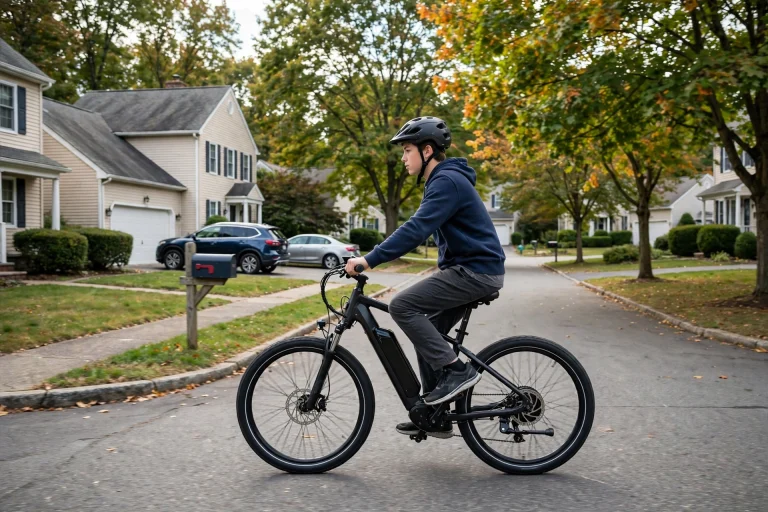
I looked into UK cycling helmet law because the wording around helmets can be confusing. You may see the Highway Code say cyclists “should” wear a helmet, while other road rules use “MUST.” That small word makes a big legal difference.
The simple answer is that ordinary cyclists do not have a general legal duty to wear a cycle helmet on UK roads. The Highway Code recommends one, but that is not the same as a law that makes riding without one an offence.
Is a Cycle Helmet Required by UK Law?
No. For normal cycling, wearing a cycle helmet is not a general legal requirement in the UK.
This is the first thing I would clear up if a new cyclist asked me about the rules. You can ride a normal bicycle without a helmet and still comply with the basic road laws.
The confusion comes from the Highway Code. Rule 59 says cyclists should wear a cycle helmet that meets current regulations, fits correctly, and is securely fastened. It does not say cyclists must wear one.
| Wording | What it means |
|---|---|
| Should | Strong advice or guidance |
| MUST | A legal requirement |
| Should not | Advice against an action |
That distinction matters. The Highway Code uses “MUST” when a rule is backed by a law or regulation. Its wording about cycle helmets is different.
What Does Rule 59 Say About Helmets?
Rule 59 recommends a properly fitted cycle helmet. It also says evidence suggests that a correctly fitted helmet can reduce the risk of head injury in certain situations.
So the message is not “helmets do nothing.” Far from it.
The point is that the UK government recommends helmet use without making it a blanket legal condition for riding a bicycle.
UK Cycling Helmet Law vs Highway Code Advice
This was one of the easiest points for me to misunderstand when looking through the rules. A Highway Code recommendation and a legal requirement are not always the same thing.
For cyclists, Rule 59 uses “should.” Other cycle rules use “MUST” where the law applies.
| Cycling rule | Legal status |
|---|---|
| Wear a cycle helmet | Recommended |
| Keep brakes efficient | MUST |
| Use required lights at night | MUST |
| Follow applicable road signs | MUST where stated |
The Highway Code says cyclists must have efficient brakes and must use white front and red rear lights when cycling at night. Those requirements are backed by road traffic regulations.
That is a useful way to read the Code: do not treat every “should” as though it were a criminal offence.
Why Does the Wording Matter?
It matters because a cyclist who skips a helmet is not automatically breaking a helmet law.
A cyclist can still break other road rules. Dangerous or careless cycling can lead to legal consequences, but those offences are separate from helmet use. The 2026 Crime and Policing Act also introduced new offences concerning dangerous cycling that causes death or serious injury.
What Are the Rules in England, Scotland, Wales and Northern Ireland?
The basic position on ordinary cycle helmet use is similar across the UK: there is no general law that says every bicycle rider must wear a helmet.
Northern Ireland’s Highway Code also says cyclists should wear a correctly sized and securely fastened helmet.
That means a person searching for “UK cycling helmet law” does not normally need to worry about suddenly facing a nationwide helmet fine simply because they crossed a border.
Still, local policies and private rules can differ.
| Situation | Helmet position |
|---|---|
| Normal road cycling | Not generally required by law |
| Cycling club | Club may set its own rule |
| School activity | School may require one |
| Private venue or event | Venue or organiser may require one |
This is an important real-world detail. National road law is only part of the picture. A school, club, race, or private site can set its own safety rules.
What Kind of Cycle Helmet Should You Wear?
If you choose to wear one, fit matters more than simply having a helmet on your head.
Rule 59 recommends a helmet that conforms to current regulations, is the right size, and is securely fastened.
I think this is where practical use matters. A helmet that sits too far back, moves when you shake your head, or has loose straps is not doing you any favours.
Check the Fit Before Every Ride
A quick fit check takes less than a minute.
| Check | What to look for |
|---|---|
| Size | Helmet feels snug without pain |
| Position | Sits level on your head |
| Strap | Secure under your chin |
| Movement | Does not slide around easily |
Do not buy a helmet just because the size printed on the box looks right. Head shapes vary, so two helmets with the same stated size can feel quite different.
Common Mistakes Cyclists Make About Helmet Law
A few mistakes come up again and again when people talk about the UK cycling helmet law.
The biggest one is assuming that the Highway Code recommendation creates a legal requirement. It does not.
| Mistake | Better approach |
|---|---|
| “The Highway Code says I must wear one.” | Check whether it says “should” or “MUST.” |
| “No helmet means illegal cycling.” | Helmet use is not a general legal requirement. |
| “Any helmet is fine if it fits.” | Choose one that meets the relevant standard. |
| “Helmet safety is all I need.” | Also focus on lights, brakes and road position. |
Another mistake is treating a helmet as a replacement for good riding habits.
A helmet is one part of cycling safety. Good road awareness, working brakes, visible lights, safe positioning, and avoiding dangerous situations matter too.
Does the Law Require Children to Wear Cycle Helmets?
There is no general UK road law that makes every child wear a cycle helmet simply because they are riding a bicycle.
Parents can still set their own rules. Schools, clubs, training schemes and organised activities may also have their own helmet policies.
For a child, I would focus less on the legal minimum and more on making helmet use a normal part of getting on the bike.
The key is comfort. If the helmet is hot, painful, loose, or constantly slipping, a child may fight wearing it every time.
Are E-Bike Riders Covered by the Same Helmet Rules?
For a normal electrically assisted pedal cycle that meets UK e-bike rules, there is no general legal requirement to wear a cycle helmet.
The London Fire Brigade also notes that there is no legal requirement to wear a helmet on an e-bike that meets UK EAPC rules, although it strongly recommends helmet use.
This is worth checking because not every electrically powered two-wheeler is legally treated as an ordinary bicycle.
A compliant e-bike is different from a motorcycle or some other powered vehicle.
Do Not Confuse E-Bikes With Motorcycles
This is where the rules change sharply.
Motorcycle and moped riders must wear an approved protective helmet on UK roads. The Highway Code’s Rule 83 uses “MUST,” and the government lists specific helmet standards for motorcycle helmets.
| Vehicle | General helmet position |
|---|---|
| Bicycle | Not generally required |
| Compliant e-bike | Not generally required |
| Motorcycle | Required |
| Moped | Required |
So if someone tells you “UK law says everyone on two wheels needs a helmet,” that is simply too broad.
What About Cycling at Night?
Helmet use and night-time equipment are separate issues.
You may choose to wear a helmet during a daytime ride, but that does not replace the lighting rules that apply after dark.
The Highway Code says cyclists MUST have white front and red rear lights lit when cycling at night.
This is one of those practical points that is easy to overlook. A helmet can protect your head in a crash, but it cannot make you visible to a driver who cannot see you.
For night rides, I would treat lights and visibility as essential rather than optional extras.
What I Learned From Looking Closely at the Rules
The biggest lesson from researching the UK cycling helmet law is simple: recommended does not mean legally required.
The Highway Code recommends a properly fitted helmet. It also sets out other rules that cyclists must follow. Keeping those two categories separate makes the whole subject much easier to understand.
There is also a practical lesson here. Wearing a helmet can be a sensible safety choice even when the law does not force you to wear one.
A Helmet Is Not Your Whole Safety Plan
It is easy to focus on the thing sitting on your head and forget the rest of the bike.
Before a ride, I would rather spend a minute checking the brakes, tyres, lights and helmet fit than assume one piece of safety gear solves everything.
The government’s Highway Code guidance takes this wider view too. Cyclists are expected to keep their bikes in safe working order and follow the road rules that apply to them.
UK Cycling Helmet Law: Quick Answers
The short version is useful if you just came here for the answer.
| Question | Short answer |
|---|---|
| Is a cycle helmet legally required? | No, not generally |
| Does the Highway Code recommend one? | Yes |
| Can you cycle without one? | Yes, on ordinary roads |
| Are motorcycle helmets different? | Yes, motorcycle riders have a legal helmet duty |
Frequently Asked Questions
Is it illegal to cycle without a helmet in the UK?
No. There is no general law that makes ordinary cycling without a helmet illegal. The Highway Code says cyclists should wear one, but it does not say they must.
Do cyclists have to wear helmets in England?
No. A cycle helmet is not generally required by law in England. The Highway Code recommends a correct, secure helmet, but the advice is not a blanket legal duty.
Is wearing a bike helmet a legal requirement in the UK?
No. UK cycling helmet law does not generally require bicycle riders to wear helmets. Helmet use is recommended, while other cycle safety rules can be legal duties.
Can you get fined for not wearing a cycle helmet?
Not simply for riding a normal bicycle without a helmet. Other offences, such as dangerous or careless cycling, are separate matters and can carry penalties.
Do you have to wear a helmet on an e-bike in the UK?
No, not if the e-bike meets the rules for an electrically assisted pedal cycle. A helmet is strongly recommended, but it is not generally a legal requirement.
Final Thoughts
After digging through the current rules, the answer to UK cycling helmet law is much simpler than it first appears. You generally do not have to wear a helmet on an ordinary bicycle, but the Highway Code strongly recommends doing so.
My practical takeaway is simple: know the difference between advice and law, then make a sensible safety choice. If you wear a helmet, make sure it fits well. And do not forget the basics that really are legal duties, such as working brakes and the required night lights.

Olivia
Writer at Helmet Today, covering helmet reviews, fit and riding safety.