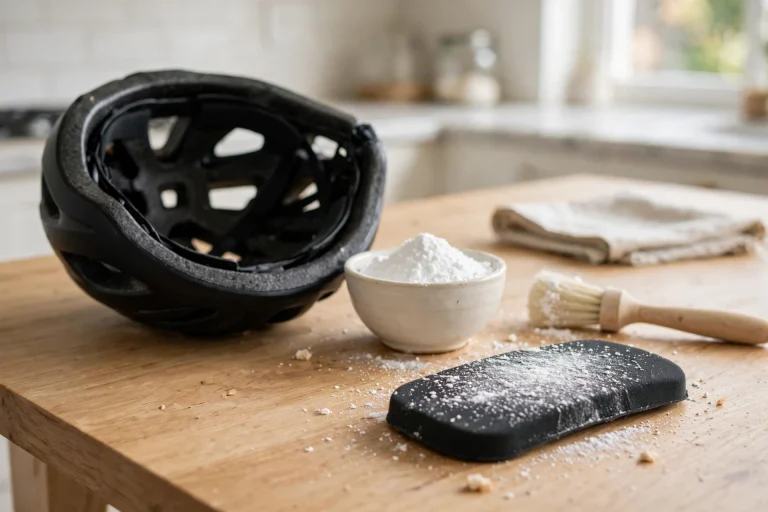
To unblock a helmet vent, first remove any loose dirt with a soft brush or compressed air, then clean the vent with warm soapy water and a soft cloth or cotton bud, and let the helmet air dry, because that clears the blockage without damaging the vent or the liner inside. Helmet vents are the small openings that let air flow through the helmet to keep your head cool, and they can become blocked by mud, dust, insects, leaves, or dried sweat. A blocked vent means less airflow, a hotter head, and a less comfortable ride, so clearing it is a simple job worth doing regularly.
Why Do Helmet Vents Get Blocked?
Helmet vents get blocked because they are open to everything the rider rides through. On a muddy trail, mud and grit are flicked up by the wheels and can lodge in the vents. On a dusty road, fine dust works its way in and builds up over time. Insects can fly into a vent and become stuck, leaves can blow in on an autumn ride, and sweat and skin oils can leave a sticky residue that traps dirt inside the vent channels.
The design of the vent matters too. Large, open vents on a cycling helmet are easy to block but also easy to clean, while small, narrow vents on a motorcycle helmet are harder to block but also harder to clear once they are. In general terms, a vent that is used often and ridden in dirty conditions will block sooner, and a helmet that is stored in a dusty garage or shed can also pick up blockages while it is sitting on the shelf.
How Can You Tell If a Helmet Vent Is Blocked?
The most obvious sign of a blocked vent is that the helmet feels hotter than usual, even on a ride where it was comfortable before. You may notice less air flowing over your head, more sweat building up, or fogging on a visor or goggles that did not fog before. If you can see into the vent, you may spot mud, dust, or an insect lodged in the opening, or a dark, clogged channel where the air should flow through.
Another sign is a smell: a vent that has been blocked for a while can trap sweat and moisture inside the helmet, leading to a musty smell that does not go away. In general terms, if the helmet feels hotter, smells worse, or looks dirty around the vents, it is time to check them. A quick look after a muddy or dusty ride will usually tell you whether the vents need cleaning.
What Tools Do You Need to Unblock a Helmet Vent?
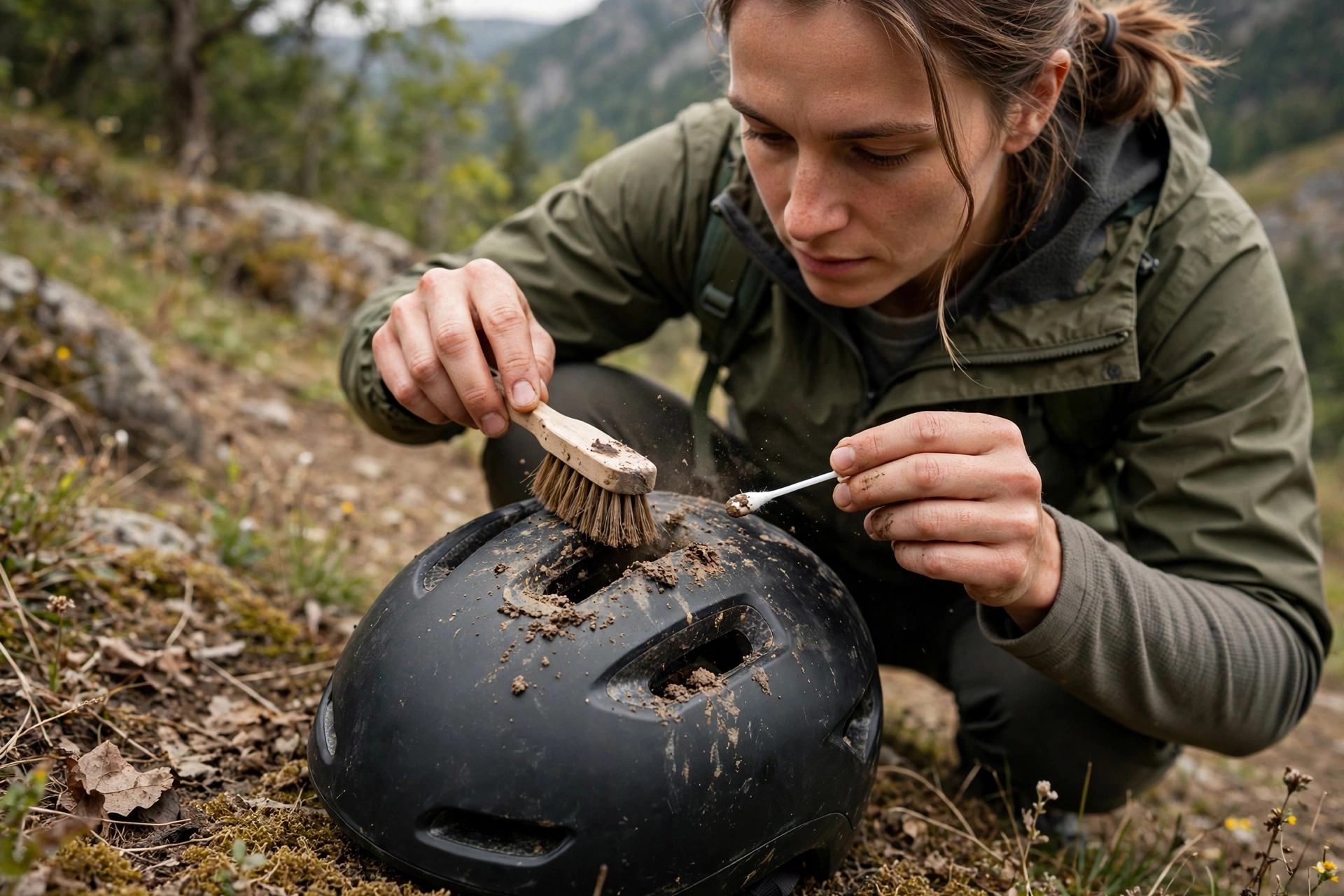
You do not need special tools to unblock a helmet vent, and the best tools are gentle ones. A soft brush, such as an old toothbrush or a small paintbrush, is ideal for sweeping loose dirt out of the vent without scratching the shell. A can of compressed air, used in short bursts from a sensible distance, can blow out dust and grit from inside the vent channels, though you should keep the can upright and avoid spraying liquid onto the liner.
For stubborn dirt, a cotton bud dampened with warm soapy water can reach into the vent and wipe the inside clean, and a soft cloth is useful for cleaning the area around the vent opening. Avoid sharp objects, such as knives, screwdrivers, or wire, because these can scratch the shell, damage the vent mechanism, or push dirt further inside. If you want to learn about a safety system used in modern helmets, reading about what MIPS is for helmets is a good place to start, though vents themselves have nothing to do with that system.
How Do You Clean a Blocked Helmet Vent Step by Step?
Start by removing any loose dirt from the outside of the vent with a soft brush, working gently so that you do not push dirt further in. Then use short bursts of compressed air to blow out dust and grit from inside the vent channel, holding the helmet so that the dirt can fall out rather than being blown deeper inside. If the vent has a slider or a cover, move it back and forth to check that it still works smoothly.
Next, dampen a cotton bud or a soft cloth with warm soapy water and wipe inside the vent and around the opening, removing any sticky residue or dried mud. For a badly blocked vent, let the soapy water sit for a few minutes to soften the dirt before you wipe it. Rinse the cloth and wipe again with clean water to remove the soap, then let the helmet air dry completely away from direct heat. In general terms, gentle cleaning and patience will clear most blockages without damaging the helmet.
How Can You Stop Helmet Vents Getting Blocked Again?
The best way to stop vents getting blocked is to clean them regularly, before the dirt has a chance to build up. A quick brush after a muddy or dusty ride takes only a minute and stops mud from drying hard inside the vent, which is much harder to remove later. Storing the helmet in a clean, dry place, such as a cupboard or a helmet bag, also helps, because it keeps dust, leaves, and insects out of the vents while the helmet is not in use.
Some riders fit fine mesh over the larger vents to keep insects and leaves out, though you should check that this does not block airflow too much. A thin skull cap or bandana worn under the helmet can also reduce the amount of sweat and skin oil that reaches the vents from the inside. In general terms, regular light cleaning and sensible storage are the best prevention, and they will keep the vents working well for the life of the helmet.
When Should You Seek Help With a Blocked Vent?
Most blocked vents can be cleared at home with the simple steps above, but there are times when it is worth seeking help. If the vent slider or cover is stuck, broken, or will not move, forcing it can break the mechanism, and a bike shop or the helmet maker may be able to repair or replace the part. If the blockage is deep inside the helmet and cannot be reached with a brush or a cotton bud, a professional clean may be needed.
You should also seek advice if the vent is damaged: a cracked vent surround, a broken slider, or a vent that has been pushed in can affect the structure of the helmet, and in that case the helmet may need to be replaced rather than repaired. In general terms, a blocked vent is a maintenance job, not a safety emergency, but a damaged vent is a different matter, and it is worth getting it checked rather than riding with a helmet that may not be protecting you properly.
How do I unblock a helmet vent?
Remove loose dirt with a soft brush, blow out dust with short bursts of compressed air, then clean inside the vent with a cotton bud dampened in warm soapy water, and let the helmet air dry completely.
Can I use a sharp object to clear a blocked vent?
No, sharp objects can scratch the shell, damage the vent mechanism, or push dirt further inside, so use a soft brush, compressed air, or a cotton bud instead.
How can I stop my helmet vents getting blocked?
Clean them regularly after muddy or dusty rides, store the helmet in a clean dry place or a helmet bag, and consider fine mesh over large vents to keep insects and leaves out.

Olivia
Writer at Helmet Today, covering helmet reviews, fit and riding safety.