To store a helmet in a garage without damp, keep it off the floor on a high shelf or hook in the driest part of the garage, inside a breathable helmet bag, with good airflow around it and away from walls, windows, and wet floors. Garages are often the dampest room in a house, and a helmet left in a damp corner can pick up mould, smells, and damage to its liner and straps over time. With the right spot and a few simple habits, a garage can still be a perfectly good home for a helmet.
Why Is Damp a Problem for a Helmet?
Damp is a problem for a helmet because moisture works its way into the parts you cannot see. The comfort liner and pads inside a helmet are made to absorb sweat, and they absorb damp air just as easily. Once they stay wet for days, they can start to smell, and in a cold, still garage they may even grow mould or mildew. That is unpleasant to wear, and it can also weaken the fabric and stitching of the pads over time.
The straps and buckles suffer too. Damp air can encourage corrosion on metal parts, and it can make webbing straps feel stiff or musty. The shell itself is usually the most resistant part, but the foam liner underneath can hold moisture for a long time if the helmet never gets a chance to dry out. A helmet stored in damp conditions may also attract dust and insects, which settle in vents and crevices. In general terms, a helmet that is stored dry will last longer, smell better, and feel more comfortable than one left in a damp corner.
Where Is the Best Place to Store a Helmet in a Garage?
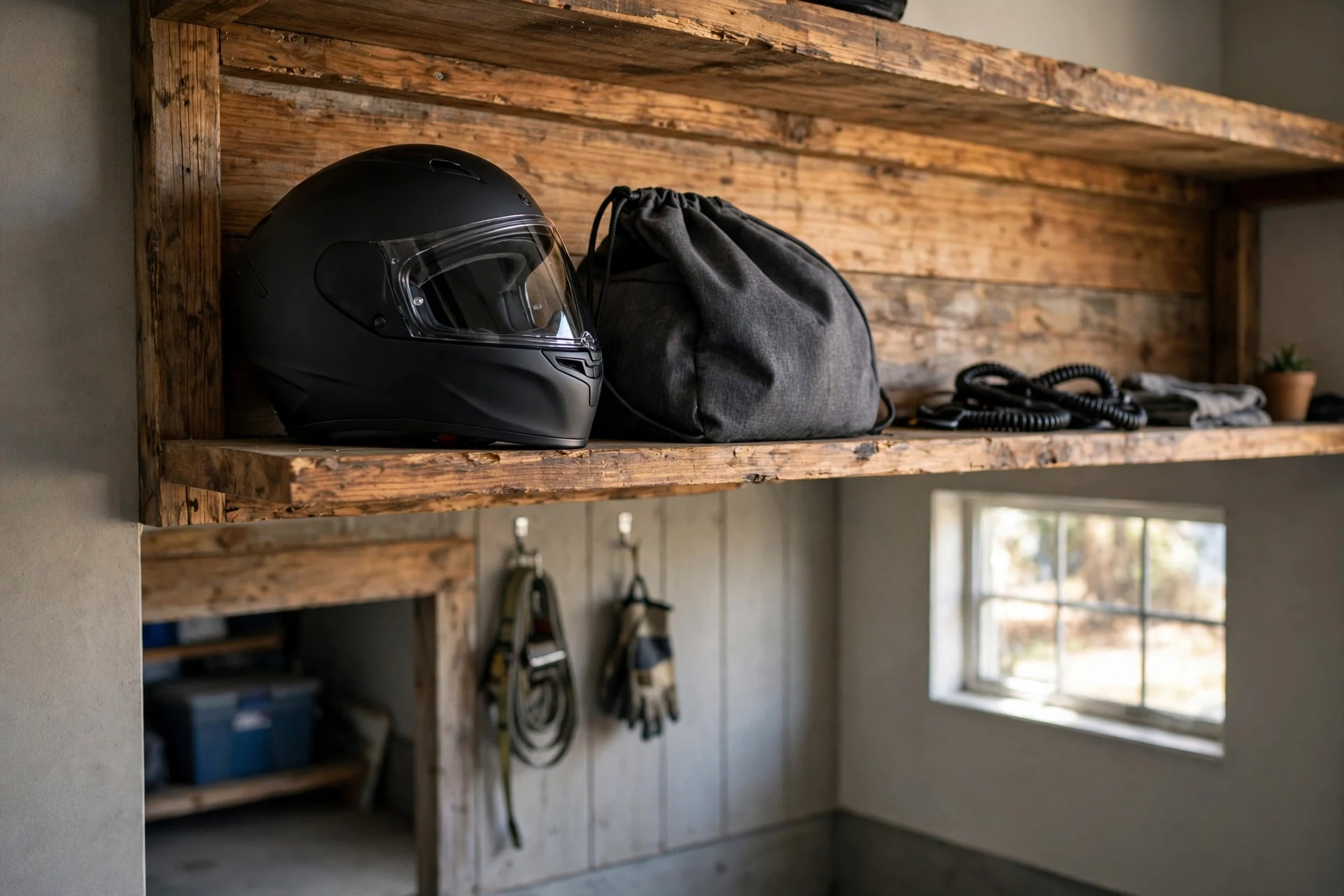
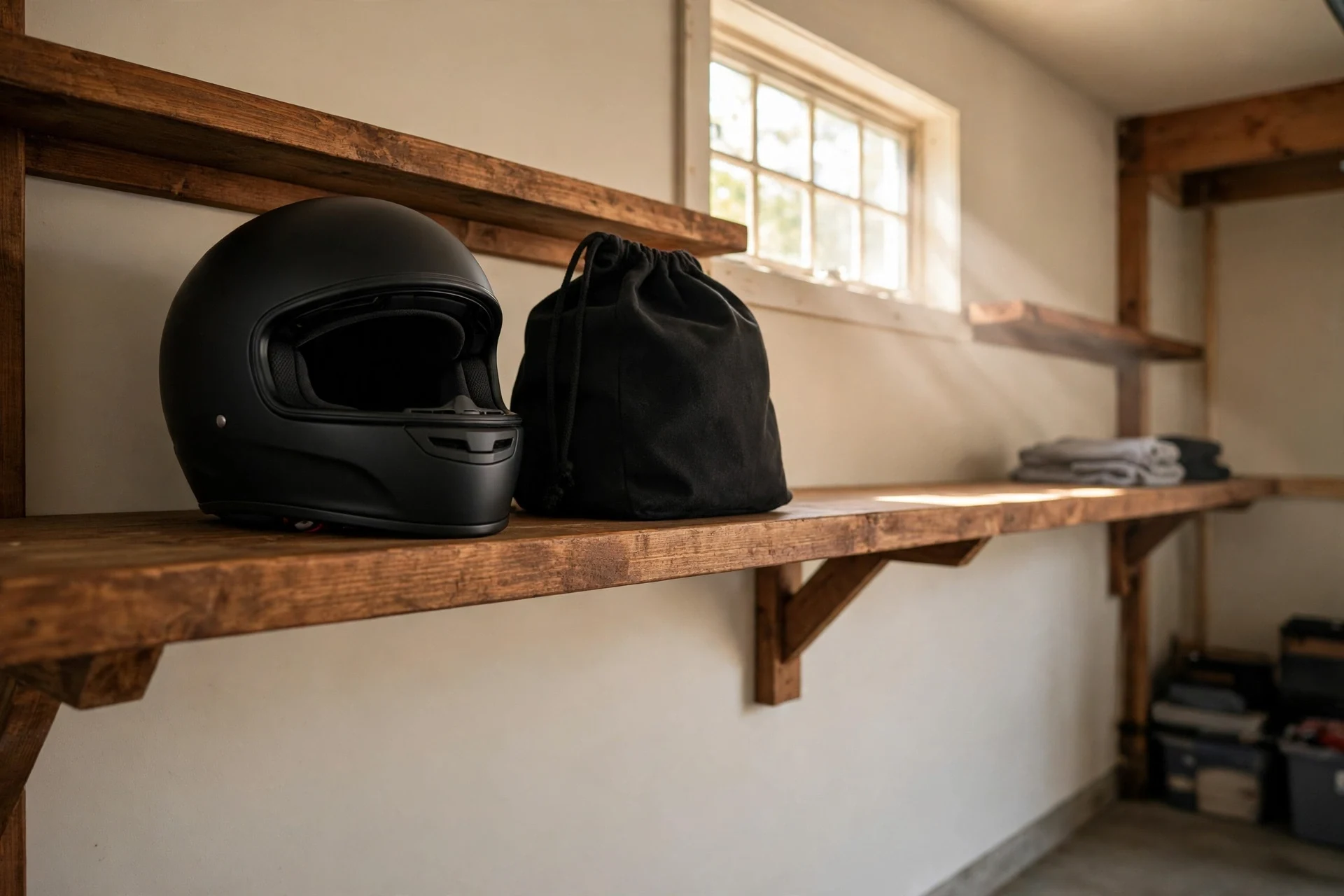
The best place to store a helmet in a garage is up high, on a shelf or a wall hook, in the driest and best-ventilated part of the room. Heat rises and moisture settles low, so a shelf at chest height or above is usually drier than the floor. Choose a spot away from the garage door, where rain can blow in, and away from outside walls that feel cold or damp to the touch.
Look for a place with some air movement. A spot near a vent, a window that can be opened, or a draught is better than a sealed cupboard, because moving air helps moisture escape. Avoid putting the helmet directly against a concrete or brick wall, since walls can draw damp through from outside and pass it on to anything touching them. A small gap of a few centimetres between the helmet and the wall is enough to help.
How Do You Keep a Helmet Dry in a Garage?
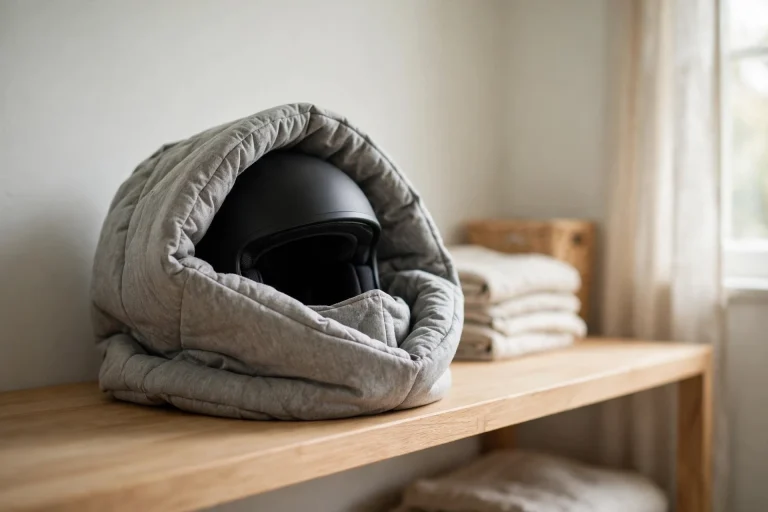
Keeping a helmet dry in a garage starts with airflow. Open a window or vent when the weather allows, and avoid sealing the helmet inside a plastic bag or an airtight box, which traps moisture inside instead of letting it escape. A breathable helmet bag made of soft fabric is a much better choice: it keeps dust off while still letting air circulate around the helmet.
If your garage is very damp, a small dehumidifier can make a real difference, and in general terms it is one of the most reliable ways to protect everything stored in the room, not just the helmet. Even a simple moisture absorber, the kind sold as a tub of crystals that collects water from the air, can help in a small garage. Silica gel sachets tucked near the helmet, though not inside it, can also soak up some moisture, and they are cheap and easy to replace.
What Kind of Storage Container Works Best?
The best storage container for a helmet in a garage is a breathable helmet bag or a padded helmet case with ventilation. A soft fabric bag protects the shell from scratches and dust while letting air move through, which is exactly what you want in a damp space. Many helmets come with a bag included, and if yours did not, a generic helmet bag is easy to find and inexpensive.
A hard helmet case can also work, but only if it has vents or if you leave it slightly open so air can circulate. A sealed hard case in a damp garage can act like a small greenhouse, trapping humid air inside and making the problem worse. If you do use a hard case, open it from time to time and let it air out, especially after a wet ride.
How Should You Store the Liner and Pads?
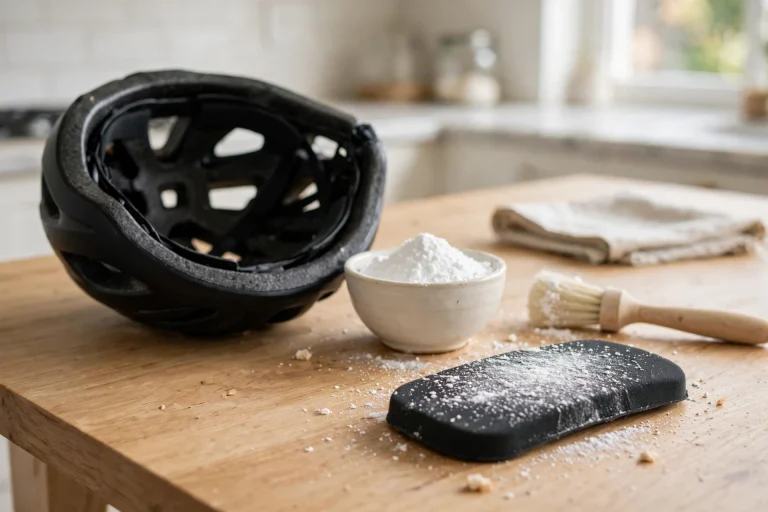
The liner and pads are the parts of a helmet most affected by damp, so they deserve a little extra attention. If your helmet has removable pads, take them out after a wet or sweaty ride and let them dry separately before putting them back. They dry faster outside the helmet, where air can reach both sides, and they are less likely to develop a smell.
It is also sensible to check the pads from time to time. Press them gently and sniff them: if they feel damp or smell musty, take them out and wash them with mild soap and lukewarm water, then let them air dry completely before refitting. Never use harsh solvents or strong cleaners on helmet pads, and never dry them with direct heat. If you want to learn more about the safety features inside a modern helmet, reading about what MIPS is for helmets is a useful starting point, since the liner works alongside those systems to protect your head.
How Do You Check a Helmet Before Using It After Storage?
Before you use a helmet that has been stored in a garage, give it a quick check. Look inside for any sign of mould, mildew, or a musty smell, and check the pads for dampness. Run your fingers over the straps and buckles to make sure they are not stiff, corroded, or frayed. Look at the shell for cracks or marks, and check that the vents are clear of dust, cobwebs, or insects that may have settled there during storage.
Making this check a habit is worth it. A helmet that has sat in a garage for weeks or months over winter can look fine at a glance while still holding moisture inside. A minute of checking before a ride is a small price to pay for a helmet that feels fresh and works as it should. With a good spot, a breathable bag, and a little airflow, a garage can keep your helmet safe and dry all year round.
Can I store a helmet in a garage at all?
Yes, in general terms you can store a helmet in a garage, as long as you keep it off the floor, away from damp walls, and inside a breathable bag with good airflow around it.
Should I use a dehumidifier in my garage for my helmet?
A small dehumidifier or a moisture absorber can help a lot in a damp garage, and it protects other stored items too. It is not essential if the garage is already dry and well ventilated.
Is it okay to store a helmet in a plastic bag in the garage?
No, a sealed plastic bag traps moisture inside and can make a helmet smell musty or grow mould. A breathable fabric helmet bag is a much better choice.

Olivia
Writer at Helmet Today, covering helmet reviews, fit and riding safety.