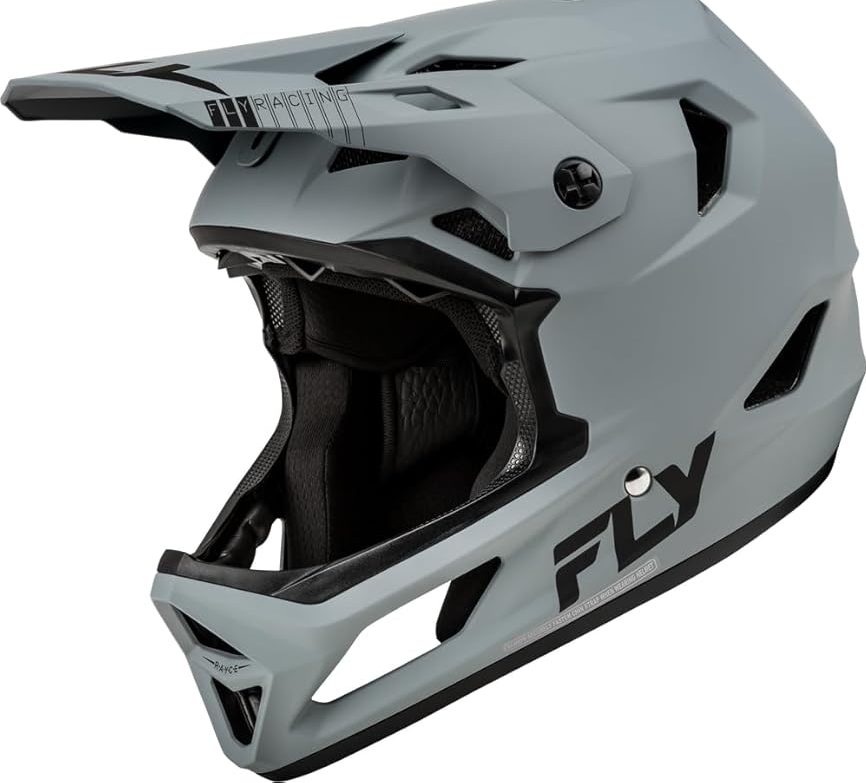

I used to think a universal helmet law simply meant “wear a helmet.” The more I looked into motorcycle laws, the more I saw why the word universal matters. It changes who must wear one, and it can make a big difference when you cross a state line.
In this guide, I’ll explain what a universal helmet law means, which states have one in 2026, how it differs from a partial law, and why these laws matter in real riding. I’ll also cover a few details that are easy to miss, such as passengers, helmet standards, and state-specific exceptions.
What Is a Universal Helmet Law?
A universal helmet law requires all motorcycle riders and passengers to wear a helmet, rather than limiting the rule to young riders or new riders.
That is the key difference. A partial law may let some adults ride without a helmet. A universal law does not make that age-based split.
| Law type | Who must wear a helmet? |
|---|---|
| Universal | All riders and passengers |
| Partial | Certain riders or passengers |
| No law | No state motorcycle helmet requirement |
The National Highway Traffic Safety Administration (NHTSA) defines universal coverage in much the same way: all motorcycle riders and passengers must wear helmets.
One thing I learned while researching this is that “universal” does not always mean every type of small motorized vehicle is covered. State definitions can still create exceptions.
Which States Have a Universal Helmet Law in 2026?
As of August 2026, 17 states and Washington, D.C. have laws requiring all motorcycle riders to wear helmets. The current IIHS state table lists these jurisdictions as having all-rider requirements.
The 17 States With Universal Helmet Laws
Here is the current list:
| State | Universal helmet rule |
|---|---|
| Alabama | All motorcycle riders |
| California | All motorcycle riders |
| Georgia | All motorcycle riders |
| Louisiana | All motorcycle riders |
| Maryland | All motorcycle riders |
| Massachusetts | All motorcycle riders |
| Mississippi | All motorcycle riders |
| Nevada | All motorcycle riders |
| New Jersey | All motorcycle riders |
| New York | All motorcycle riders |
| North Carolina | All motorcycle riders |
| Oregon | All motorcycle riders |
| Tennessee | All motorcycle riders |
| Vermont | All motorcycle riders |
| Virginia | All motorcycle riders |
| Washington | All motorcycle riders |
| West Virginia | All motorcycle riders |
Washington, D.C. also has a universal motorcycle helmet requirement.
This list is useful, but I would not treat it as a substitute for checking the actual state law before a trip. IIHS itself says its state-law information should be independently verified because laws can change.
Why Does a Universal Helmet Law Matter?
The biggest practical benefit is simple: more riders wear helmets.
IIHS reports that in 2023, about 94% of observed motorcyclists in states with universal helmet laws were wearing helmets, compared with 72% in states without universal laws.
That difference is hard to ignore.
Universal Helmet Law vs. Partial Helmet Law
A partial law may require helmets for riders below a certain age. It can also cover new riders, permit holders, or passengers.
| Factor | Universal law | Partial law |
|---|---|---|
| Adult rider | Helmet required | May be optional |
| Young rider | Helmet required | Usually required |
| Passenger | Generally required | Depends on state |
| New rider | Helmet required | May have extra rules |
The confusing part is that partial laws are not all alike. Ohio, for example, has rules that cover all operators during their first year of licensure, while Pennsylvania has a two-year rule unless the rider completes an approved safety course.
So I would never assume that a neighboring state has the same rule.
Do Universal Helmet Laws Reduce Motorcycle Deaths?
Research strongly links universal helmet laws with lower motorcycle deaths and injuries.
NHTSA cites research showing that motorcycle helmets reduce rider fatalities by roughly 22% to 42% and brain injuries by 41% to 69%.
A broader review cited by NHTSA found that states with universal helmet laws had 29% fewer motorcycle fatalities than states with partial or no helmet coverage.
| Research finding | What it means |
|---|---|
| Higher helmet use | More riders wear protection |
| Fewer fatalities | Universal laws are linked with fewer deaths |
| Fewer brain injuries | Helmets help protect the head |
There is also newer research from IIHS. A 2025 study estimated that 22,058 motorcyclists would not have died between 1976 and 2022 if every state had maintained all-rider helmet laws.
That does not mean a helmet makes a crash harmless. It means the evidence gives strong support to helmet use.
What Makes a Helmet Legal Under a Universal Law?
This is where things get slightly more technical.
Many states require helmets that meet FMVSS 218, the federal motorcycle helmet safety standard. NHTSA says motorcycle helmets sold in the United States are required to meet or exceed that standard.
Look for a Properly Compliant Helmet
I have found that people often focus on the sticker and forget the helmet itself. That is not a great habit.
A good helmet should fit well, be made for motorcycle use, and meet the required safety standard for the place where you ride.
| Helmet check | Why it matters |
|---|---|
| Proper fit | A loose helmet can move during a crash |
| DOT compliance | Helps meet federal safety requirements |
| Good condition | Damage can reduce protection |
| Correct motorcycle type | Different helmets serve different uses |
NHTSA also warns about counterfeit DOT labels. A fake sticker does not turn a poor helmet into a compliant one.
Does a Universal Helmet Law Cover Passengers?
Yes, the basic idea of a universal law is that passengers must wear helmets too.
That is one reason the term “all-rider” can be useful. It avoids the common mistake of thinking the law applies only to the person controlling the motorcycle.
Still, state vehicle definitions can create exceptions for certain low-powered vehicles. IIHS lists several states where particular mopeds or other motorcycle-type vehicles are treated differently.
Why Vehicle Type Can Still Matter
This caught my attention because “motorcycle” sounds straightforward until you read state definitions.
Some states exclude certain mopeds or limited-use vehicles. The exact definition can involve engine size, power, pedals, or top speed.
| Vehicle question | Why check it? |
|---|---|
| Is it legally a motorcycle? | State definitions vary |
| Is it a moped? | Some states create exemptions |
| What is its engine size? | Some exemptions use engine size |
| What is its top speed? | Some laws use speed limits |
So if you ride a scooter, moped, or small electric vehicle, do not assume a motorcycle helmet law applies in exactly the same way.
How Are Universal Helmet Laws Different From No-Law States?
The contrast becomes clearer when you look at the three states that have no state motorcycle helmet requirement.
As of the current IIHS data, Illinois, Iowa, and New Hampshire have no motorcycle helmet law.
| Category | Example | State requirement |
|---|---|---|
| Universal | California | All riders |
| Partial | Texas | Certain riders are covered |
| No law | Iowa | No state helmet requirement |
This does not mean riding without a helmet is safe in a no-law state.
It only means the state does not impose a general motorcycle helmet requirement.
That distinction is worth keeping clear.
What Are the Common Misunderstandings?
The most common mistake I see in discussions about helmet laws is treating the legal minimum as the safety minimum.
Those are two different things.
Myth: Universal Means Every Helmet Is Legal
Not quite.
A state can require motorcycle helmets while also setting standards for what counts as an approved helmet.
Myth: Partial Means Helmets Are Optional for Everyone
No. A partial law still requires helmets for certain riders.
Myth: A Helmet Law Is the Same in Every State
Definitely not.
Age limits, learner rules, passenger rules, and vehicle exemptions can vary widely.
| Common mistake | Better habit |
|---|---|
| Checking only the state | Check the exact state rule |
| Assuming every helmet qualifies | Check helmet standards |
| Ignoring passengers | Check passenger requirements |
| Trusting an old article | Verify current law |
The IIHS table is especially useful here because it shows how different the rules can be from one state to another.
What Should You Do When Riding Across States?
This is probably the most useful part for regular riders.
If I were planning a multi-state motorcycle trip, I would check every state on the route before leaving. I would not rely on the rule from my home state.
My Simple Interstate Helmet Check
Start with these four questions:
- Does every rider need a helmet?
- Are passengers covered?
- Does the state require a particular helmet standard?
- Does the vehicle qualify as a motorcycle under that state’s law?
That quick check can prevent a lot of confusion.
It also makes sense to wear a properly fitting motorcycle helmet even when the law allows an adult rider to go without one. The legal exception does not remove the physical risk of a crash.
What Is the Main Lesson From Universal Helmet Laws?
After comparing the current laws, the biggest lesson for me is that the word universal really matters.
A universal helmet law removes much of the guesswork. You do not have to work out whether your age, license history, or passenger status creates an exemption. If you are riding a covered motorcycle, the helmet requirement applies.
The legal picture is still more complex than it first appears because states define motorcycles and certain low-powered vehicles differently. That is why checking the current law is smart, especially before crossing state lines.
Final Thoughts
A universal helmet law requires motorcycle riders and passengers to wear helmets, and 17 states plus Washington, D.C. currently have all-rider laws. Research also shows that universal laws are linked with higher helmet use and fewer motorcycle deaths.
My practical takeaway is simple: do not stop at “Is a helmet required?” Check whether your helmet meets the required standard and whether your vehicle falls under the law. Even where the law gives an adult rider a choice, wearing a quality helmet remains the safer choice.
FAQs About Universal Helmet Laws
What is a universal helmet law?
A universal helmet law requires all motorcycle riders and passengers to wear helmets. It does not limit the rule to young or new riders.
How many states have universal helmet laws?
As of August 2026, 17 states and Washington, D.C. have laws that require all motorcycle riders to wear helmets.
Which states have universal helmet laws?
The 17 states are Alabama, California, Georgia, Louisiana, Maryland, Massachusetts, Mississippi, Nevada, New Jersey, New York, North Carolina, Oregon, Tennessee, Vermont, Virginia, Washington, and West Virginia.
Are universal helmet laws safer?
Research links universal helmet laws with higher helmet use, fewer motorcycle deaths, and fewer serious head injuries after motorcycle crashes.
Do universal helmet laws cover motorcycle passengers?
Yes. Universal laws generally require both motorcycle operators and passengers to wear helmets, though vehicle definitions can create limited state exceptions.

Olivia
Writer at Helmet Today, covering helmet reviews, fit and riding safety.