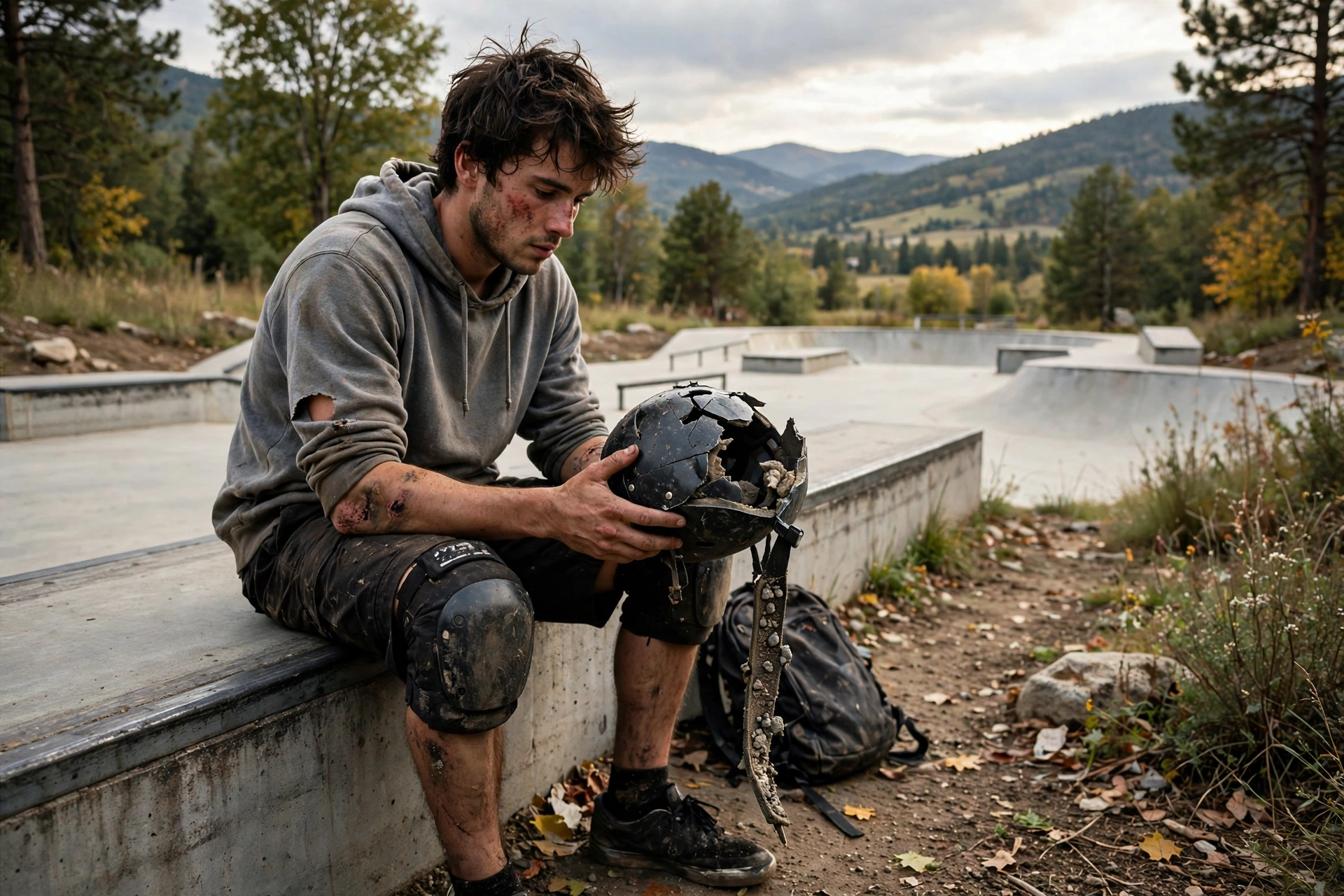
If your skateboard helmet took a real impact in a crash, replace it. Any fall where your head or helmet hits concrete, a ramp, a curb, a rail, or another hard surface can crush the protective foam, even when the outside still looks fine.
The hard part is that helmet damage is often hidden. A helmet is designed to absorb energy by deforming, and once that foam has compressed, it cannot be trusted to do the same job in the next fall.
Why does any real impact mean you should replace the helmet?
Most skateboard helmets use EPS foam or similar energy-absorbing material under a shell. During an impact, that foam crushes to slow the head down. The crush can be local and hard to see: a small area near the temple, forehead, or back of the head may be compressed while the shell springs back into shape.
That is why “it looks okay” is not a safe test after a genuine crash. If you were dizzy, saw stars, hit hard enough to remember the impact, damaged the shell, or fell from height or speed, treat the helmet as done. It did its job once.
Seek medical care first if there are signs of head injury, such as headache, confusion, vomiting, vision changes, drowsiness, or loss of consciousness. Replacing gear matters, but checking the person always comes before checking the helmet.
A light bump is different from an impact. Brushing a doorway while carrying the helmet or dropping it from waist height onto carpet is not the same as your head hitting pavement. Still, inspect carefully after any drop onto a hard floor, and replace the helmet if you find cracks, dents, or foam damage.
What hidden damage should you inspect after a fall?
Start with the shell. Look for cracks, deep scratches, dents, soft spots, and areas where the shell has separated from the foam. Run your fingers gently over the surface and compare both sides. A shell that flexes more in one spot may be hiding crushed foam underneath.
Next, remove pads if they come out and inspect the foam. Look for cracks, flaking, dents, thinning, shiny compressed patches, or foam that feels harder in one area than the surrounding foam. Check around vents and edges, where damage is easier to miss.
Inspect the straps, buckle, and fit system as well. A crash can stretch webbing, crack a buckle, bend hardware, or break the rear adjuster. If the helmet no longer stays level and snug, it should not be used. Modern helmet safety features are helpful only when the helmet remains correctly positioned, which is why fit guidance such as this explanation of how MIPS helmets are designed to work always assumes the helmet itself is undamaged.
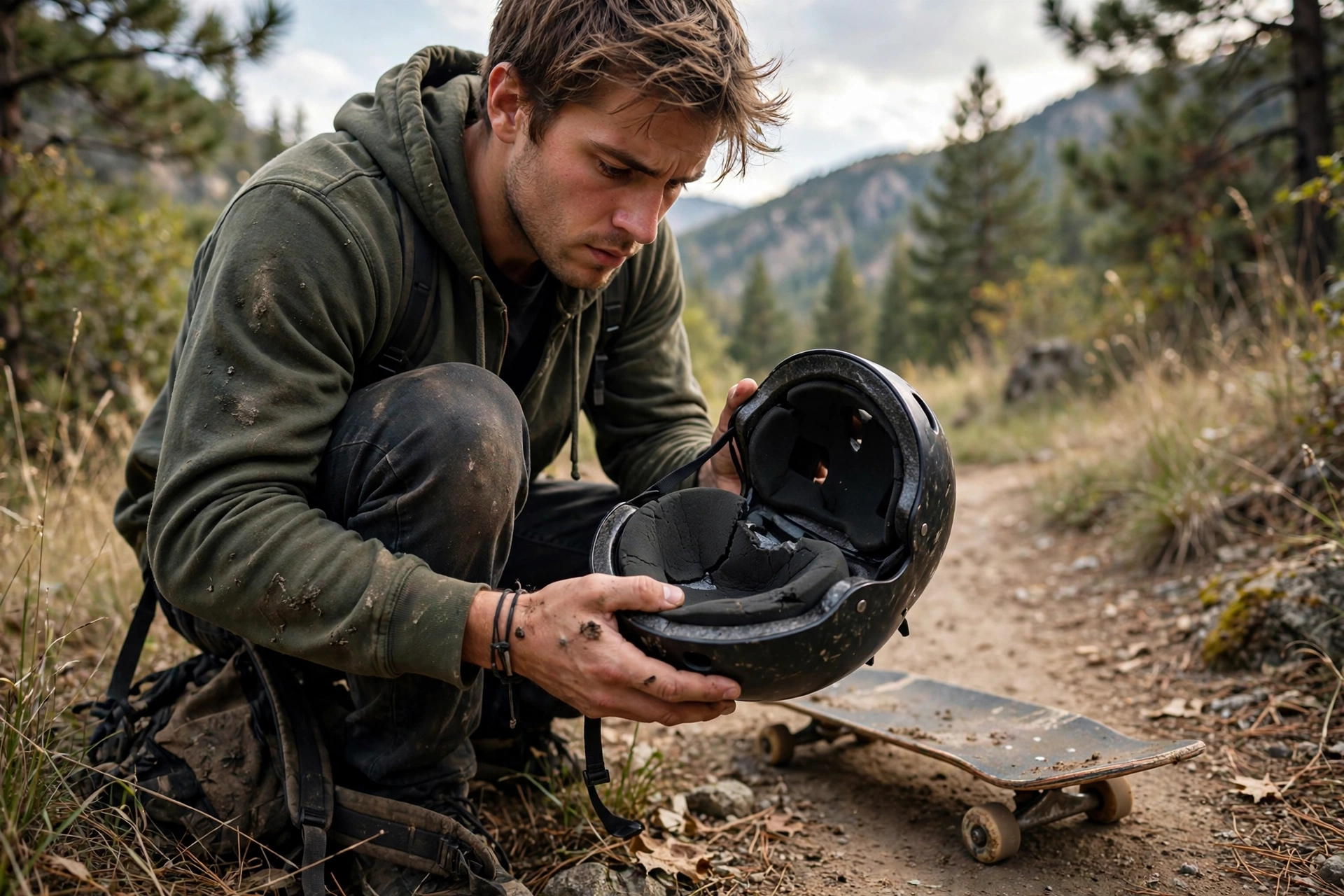
Are multi-impact skate helmets different from single-impact helmets?
Yes, but the difference is often misunderstood. Traditional bicycle-style helmets are normally single-impact: after one crash, the EPS crushes and the helmet should be replaced. Many skate-style helmets are certified for multiple lower-force impacts under the skate standard, and some use foams that recover better from small bumps.
“Multi-impact” does not mean “crash-proof forever.” It usually means the helmet can handle repeated minor impacts typical of skating falls better than a standard bike helmet. A hard head impact, a cracked shell, compressed foam, or any symptom of injury still means replacement.
Read your helmet’s standard and maker guidance. If it is certified for skateboarding, it may tolerate the kind of repeated small falls common at a skate park, but you still need to inspect it after falls and retire it when damage appears. If you cannot tell whether the impact was minor or serious, choose the safer answer and replace it.
Soft or dual-density foams add another nuance. Some skate helmets use foams that feel softer and rebound from light knocks. They can be comfortable and durable for everyday skating, but they do not erase the rule: a real head impact against a hard surface is the end of that helmet’s reliable life.
When do age, sun, and wear mean replacement even without a crash?
Helmets wear out even if you never crash. Sweat, heat, sunlight, sunscreen, cleaning mistakes, and daily handling slowly age foam, straps, pads, and shell materials. Many makers suggest replacing a helmet after several years of use, so follow the guidance for your model and inspect older helmets more often.
Replace a helmet sooner if the foam is crumbling, the shell is faded and brittle, straps are frayed, pads no longer hold the helmet steady, or the buckle does not close securely. A loose helmet can shift during a fall and leave part of the head exposed.
Storage matters too. A helmet left in a hot car, near solvents, or under heavy gear ages faster than one stored indoors at room temperature. If a helmet has an unknown history, such as a second-hand helmet with no clear age or crash record, do not rely on it for skating.
What should you do with a crashed skateboard helmet?
Take it out of use immediately so you or someone else does not grab it by habit. Mark it clearly as crashed if you keep it briefly for photos, insurance, or warranty questions. Some makers and retailers have crash replacement programs, so check the paperwork or website for your model, but do not keep skating in the helmet while you wait for an answer.
When you dispose of it, cut the straps or otherwise make it unwearable. That prevents another skater from picking up a damaged helmet and trusting it. Do not donate a crashed helmet.
Buy the replacement with the same care as the first purchase: certified for skateboarding, correct size, good rear coverage, and comfortable enough for regular use. Try it on, adjust the straps, and check that it stays level. After a crash replacement, also review what happened in the fall. Slower practice, pads, lessons, or a safer spot to learn a trick may reduce the chance of the next hard impact.
Frequently Asked Questions
Can I keep using a skate helmet after dropping it on concrete?
A simple drop of an empty helmet is not always the same as a crash, but inspect it closely. If there is any crack, dent, or crushed foam, replace it.
What if the shell has no visible damage after a crash?
Replace it anyway after a real head impact. Foam under the shell can be compressed without obvious outside damage.
How often should a skateboard helmet be replaced if I never crash?
Follow the maker’s guidance, often after several years, and replace sooner for crumbling foam, worn straps, poor fit, sun damage, or heavy daily use.

Olivia
Writer at Helmet Today, covering helmet reviews, fit and riding safety.