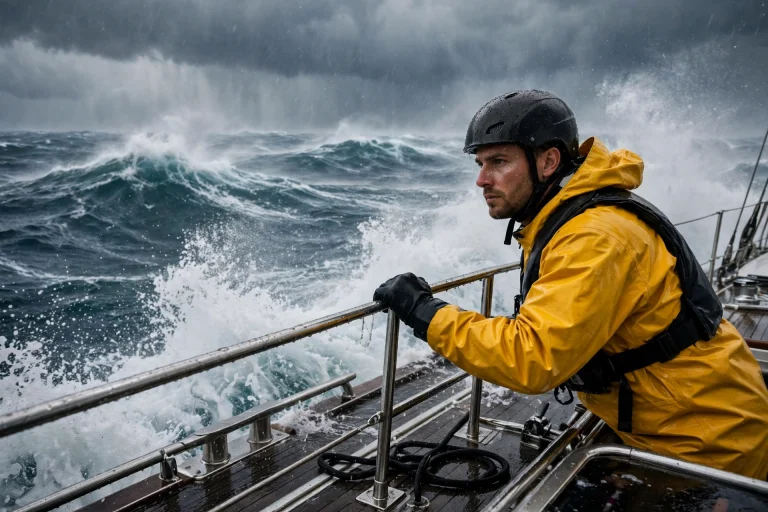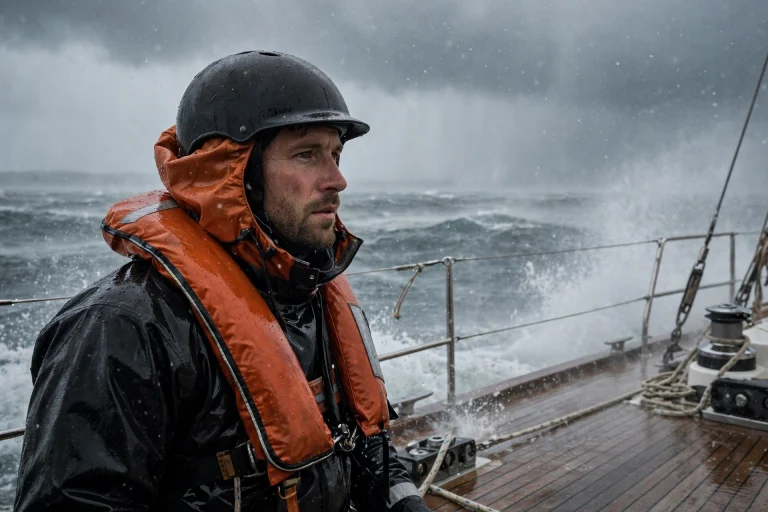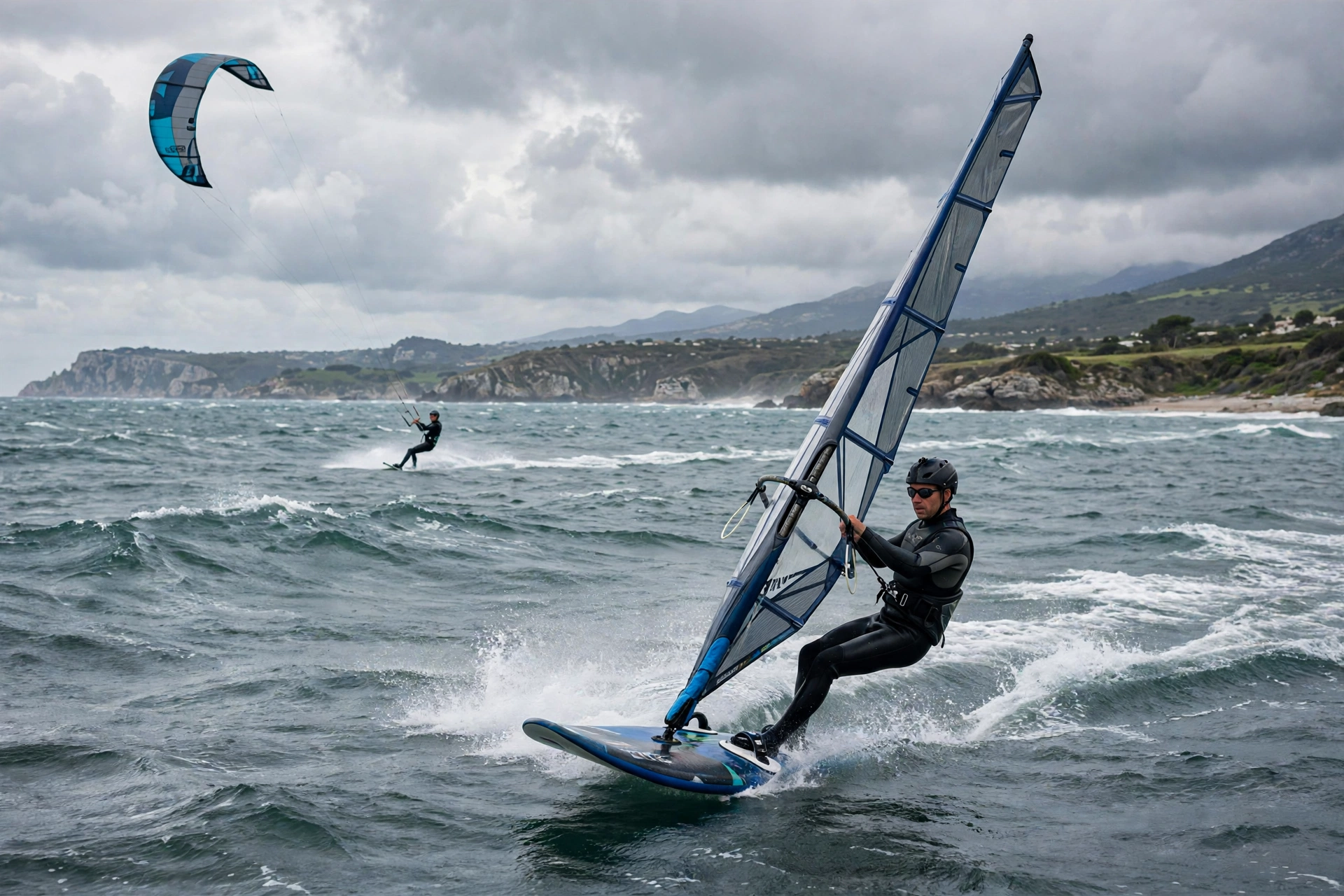
The main difference between a windsurfing helmet and a kiteboarding helmet is the kind of impact each sport produces: windsurfers mainly need protection from the board, mast and boom at close range, while kiteboarders also need protection from high-speed falls and hard landings after jumps. Both are lightweight water sports helmets, but kiteboarding helmets often have more coverage and a firmer fit, because the rider can be lifted higher and dropped harder. Choosing the right one means matching the helmet to the falls your sport actually produces.
Windsurfing and kiteboarding look similar from the shore — a rider on a board, powered by the wind — but the way the rider falls is very different. A windsurfer stays attached to the rig and usually falls close to the board, while a kiteboarder can be dragged or launched by the kite and land some distance away. This guide explains how the two helmets differ, where they overlap, and what to look for in each.
How Do Falls Differ in Windsurfing and Kiteboarding?
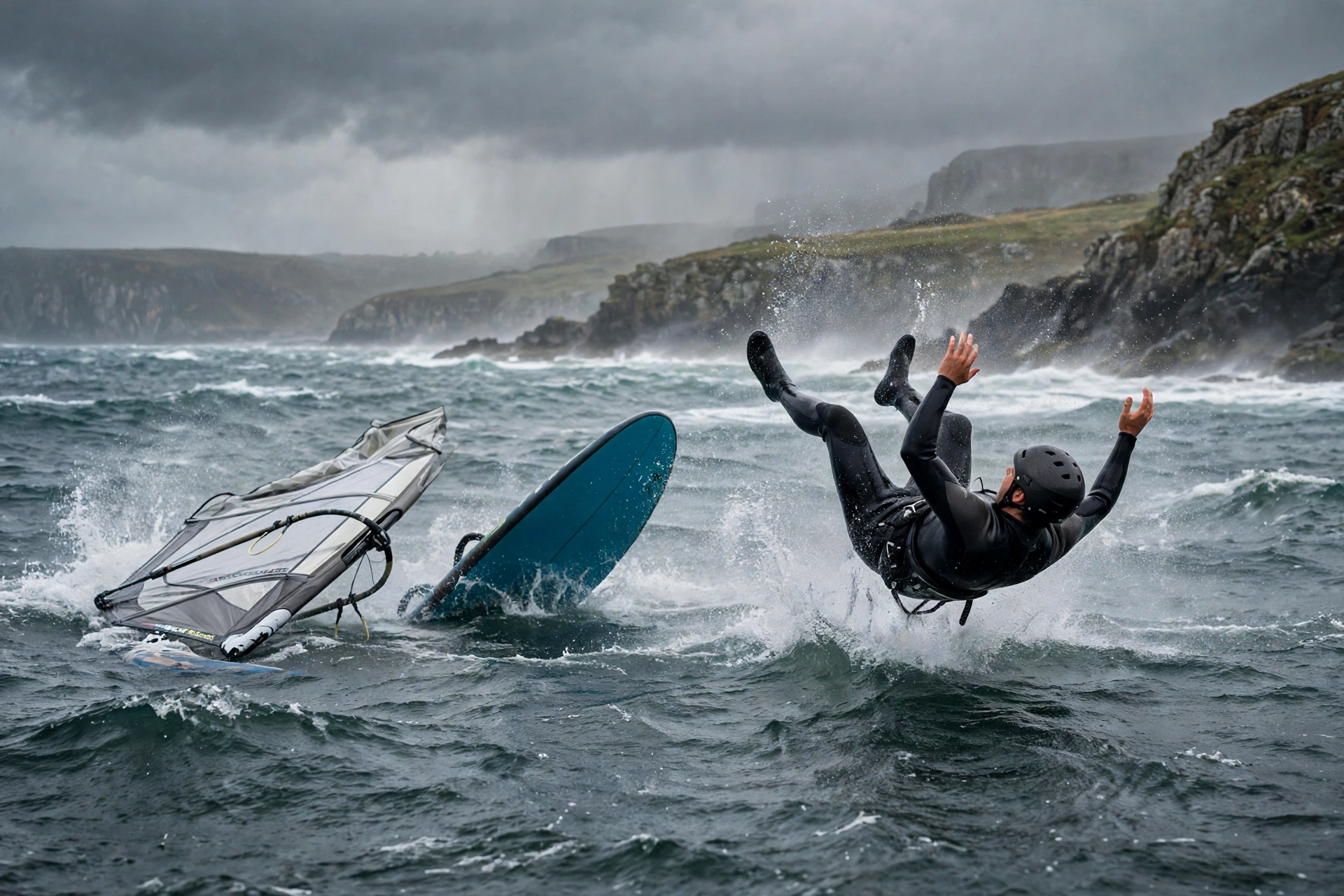
In windsurfing, the rider holds the boom and stands on the board, with the sail rig directly in front. Most falls happen when the rider loses balance or the sail catches a gust: the rider goes into the water near the board, and the head can strike the mast, the boom or the edge of the board.
In kiteboarding, the rider is pulled by a kite on long lines, with no rigid rig in front. Falls can be faster and less predictable: a gust can lift the rider into the air, a jump can end in a hard landing, and a loss of control can drag the rider across the water at speed. The head can strike the board, the water surface itself, or an obstacle downwind. In general terms, kiteboarding falls carry more energy and cover more distance than windsurfing falls.
That difference shapes the helmets. A windsurfing helmet is built for frequent small knocks from hard kit at close range, while a kiteboarding helmet is built to cope with harder, faster impacts as well. Both need to drain water and dry quickly, but the kiteboarding helmet is often the tougher of the two.
What Does a Windsurfing Helmet Need to Do?
A windsurfing helmet needs to protect the head from the mast, boom and board without blocking hearing or vision. The rider must hear the wind and feel the sail’s pull, and must be able to look up at the sail and ahead at the water. A helmet that covers the ears completely can muffle the wind and make it harder to judge gusts, so many windsurfing helmets have ear holes or thinner ear coverage.
Ventilation and drainage matter a lot, because a windsurfer falls in often and the helmet will be soaked many times in a session. Vents should let water out quickly and let air in when the rider is back on the board. The shell should be smooth, with no snag points that could catch on the sail’s ropes or the harness lines.
The fit should be snug but not tight, so the helmet stays put during a fall but does not press on the forehead during a long session. A helmet that shifts forward over the eyes after a dunk is a nuisance, and one that presses hard will give the rider a headache before the wind drops. If you are learning how helmets handle different kinds of impact, reading about what MIPS is for helmets can help you understand one of the technologies used in modern helmet design.
What Does a Kiteboarding Helmet Need to Do?
A kiteboarding helmet needs to cope with harder impacts, so it often has more coverage around the sides and back of the head than a windsurfing helmet. The rider can be lifted and dropped by the kite, and landings after jumps can be awkward, with the board or the water surface striking the head at speed. Extra coverage in those areas gives more protection where it is most needed.
The fit must be firmer too. A kiteboarder can be dragged through the water or spun by the kite, and a loose helmet can be pulled off or shifted over the eyes at the worst moment. The chin strap should fasten securely and hold the helmet firmly, and the fit system should be easy to adjust with wet hands.
Ear protection is also more important in kiteboarding, because the ears can be hit by the board or by the water at speed. Many kiteboarding helmets have fuller ear coverage, and some riders wear ear plugs as well. The trade-off is that fuller coverage can muffle sound, so riders should test hearing before committing to a helmet for a full session.
Can One Helmet Serve for Both Sports?
In general terms, yes — many water sports helmets are sold as suitable for both windsurfing and kiteboarding, and a good general water helmet will cover the needs of both sports for most riders. If you only do one sport occasionally and the other rarely, a single well fitting helmet is a sensible choice, and it is better than owning two helmets that fit badly.
The key is to choose for the harder sport. If you kiteboard regularly and windsurf sometimes, pick a helmet with the coverage and firm fit that kiteboarding needs, and it will also serve for windsurfing. If you only windsurf and never kiteboard, a lighter windsurfing helmet with better hearing may suit you better.
Check the helmet’s own guidance before you buy, because some helmets are tested and labelled for specific water sports. A helmet that is made for one sport may still be fine for the other, but the maker’s guidance is the best starting point. When in doubt, ask a shop that sells both sports, and try the helmet on with the kit you will wear.
How Do You Choose Between the Two?
Start with the sport you do most. If that is windsurfing, look for a light helmet with good hearing, good drainage and a snug fit. If it is kiteboarding, look for more coverage, a firmer fit and stronger ear protection. The helmet should sit level, cover the forehead, and stay put when you shake your head.
Next, think about the conditions you ride in. Strong winds, big jumps and crowded water all raise the chance of a hard fall, and they push the choice towards the tougher helmet. Calm water, gentle winds and short sessions push it the other way. There is no single right answer — the best helmet is the one that fits your sport, your conditions and your head.
Finally, try before you buy if you can. A helmet that looks right on a shelf may press in the wrong place after twenty minutes on the water. Wear it for a while, check the strap, and make sure you can hear and see clearly. A comfortable helmet is one you will actually wear, and that matters more than any feature list.
Frequently Asked Questions
Q: Can I use a windsurfing helmet for kiteboarding?
A: In general terms, yes for gentle kiteboarding, but a dedicated kiteboarding helmet offers more coverage and a firmer fit for jumps and hard falls.
Q: Do kiteboarding helmets block hearing more than windsurfing helmets?
A: Often, yes, because they have fuller ear coverage. Test hearing before you buy, and look for a design that balances protection with sound.
Q: Is a bike helmet a substitute for either?
A: In general terms, no. Bike helmets are not made to drain water or cope with being soaked, and they are not shaped for water sports falls.

Olivia
Writer at Helmet Today, covering helmet reviews, fit and riding safety.