
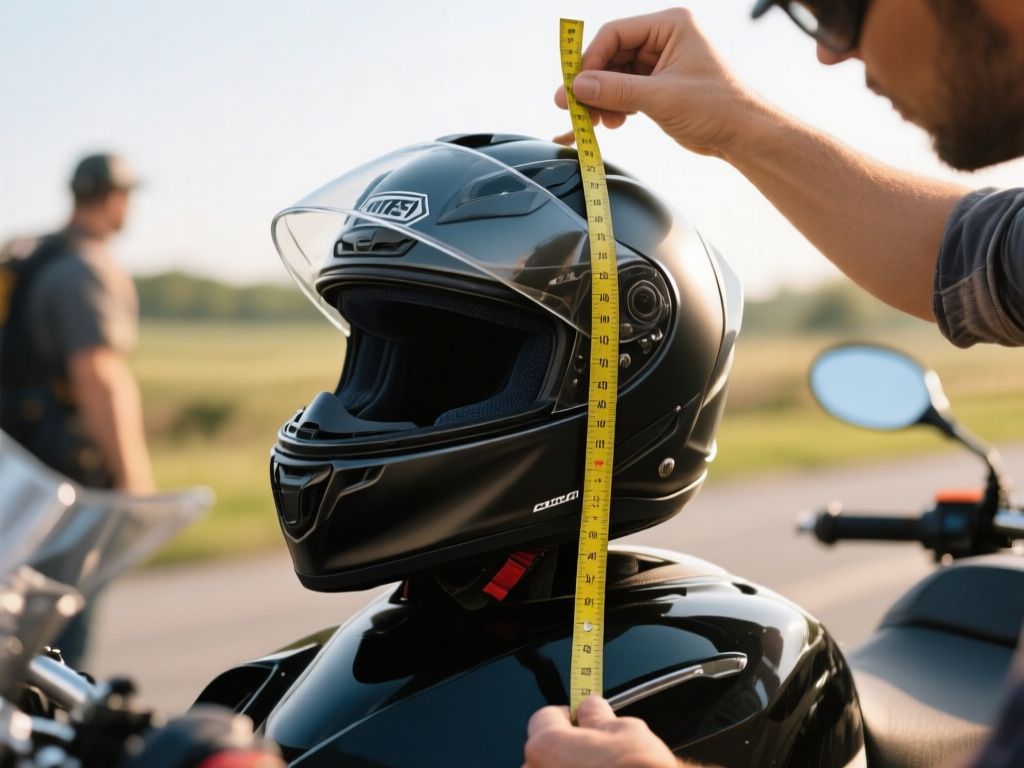
To measure for a motorbike helmet, wrap a soft tape around the widest part of your head, about 2–3 centimetres above your eyebrows and just above your ears. Record the measurement in centimetres, then compare it with the helmet manufacturer’s size chart. A correct fit should feel snug all around without causing sharp pressure or movement.
What do you need to measure for a motorbike helmet?
The main measurement is head circumference, which is the distance around the widest part of the head. Most helmet makers use centimetres because helmet sizes are based on a numerical range, such as 57–58 cm for a medium size.
You need only a few simple items:
- A flexible fabric measuring tape, like a sewing tape
- A mirror, or another person to help position the tape
- A pen and paper or a phone to record the measurement
- The manufacturer’s helmet size chart
A piece of string can work if a tape is unavailable. Wrap the string around your head, mark where the ends meet, and measure that length against a ruler. Do not use a rigid metal tape measure, because it may not follow the shape of your head accurately.
Where should the tape sit on your head?
Position the tape around the largest part of your head, usually across the middle of your forehead, above your eyebrows, over the tops of your ears, and around the widest point at the back of your skull. The tape should form a level ring rather than slope sharply upward or downward.
For many riders, the widest point is not exactly where they first expect it to be. Hair, glasses, or a low forehead position can also produce a misleading number. Use the mirror to check that the tape passes over the same height on both sides of the head.
The tape should touch the head without pressing into the skin. If it is loose, the measurement will be too large. If it is pulled tightly, the result may be too small and can lead to a helmet that feels uncomfortably restrictive.
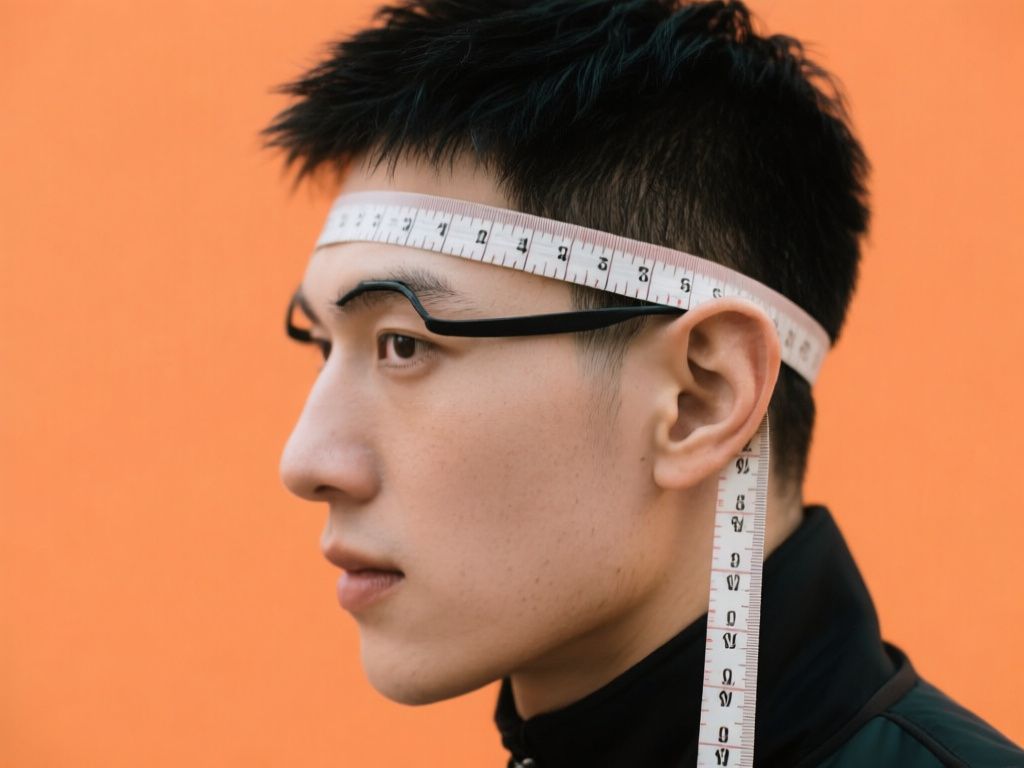
How do you measure your head for a motorcycle helmet?
- Remove anything that changes your head shape. Take off hats, thick headbands, headphones, and bulky hair accessories. Flatten long hair as naturally as possible rather than compressing it with a tight band.
- Stand in a normal position. Keep your head upright and look straight ahead. Tilting your chin or leaning forward can shift the tape.
- Place the tape above your eyebrows. Start at the front of the forehead, roughly 2–3 centimetres above the eyebrows, then guide the tape above both ears.
- Wrap around the back of the head. Bring the tape around the widest part of the skull. It should remain level with the section across the forehead.
- Take the reading in centimetres. Record the number where the tape meets. If the mark falls between two measurements, write down the exact figure rather than rounding immediately.
- Measure two or three times. Slight differences are normal. Repeat the process and use the most consistent result.
- Compare the result with the exact brand and model chart. A medium in one brand may not match a medium in another. Use the chart supplied for that particular helmet, not a general size guide found elsewhere.
For example, a head measuring 58 centimetres might fit a medium in one model and a large in another. Helmet sizing is not fully standardised, so the printed chart is only the starting point rather than a universal rule.
What helmet size should you choose?
Choose the helmet size whose stated range includes your head circumference, then judge the fit on your head. If a chart lists 57–58 centimetres as medium and 59–60 centimetres as large, a 58-centimetre measurement normally points toward medium. The helmet must still fit the rider’s head shape and feel secure.
| Head circumference | Common helmet label | What to do |
|---|---|---|
| 53–54 cm | Small or extra-small | Check the model’s smallest available shell and size range |
| 55–56 cm | Small | Compare the measurement with the manufacturer’s chart |
| 57–58 cm | Medium | Try the listed size and assess pressure points |
| 59–60 cm | Large | Check that the helmet does not move or lift at speed |
| 61–62 cm | Extra-large | Look for a model made in this range rather than forcing a smaller fit |
| 63 cm and above | XX-large or larger | Use a brand with a suitable shell and interior size range |
These ranges are general examples, not a replacement for the manufacturer’s sizing information. Some brands use different labels, and certain helmet models are available only in a limited range of shell sizes.
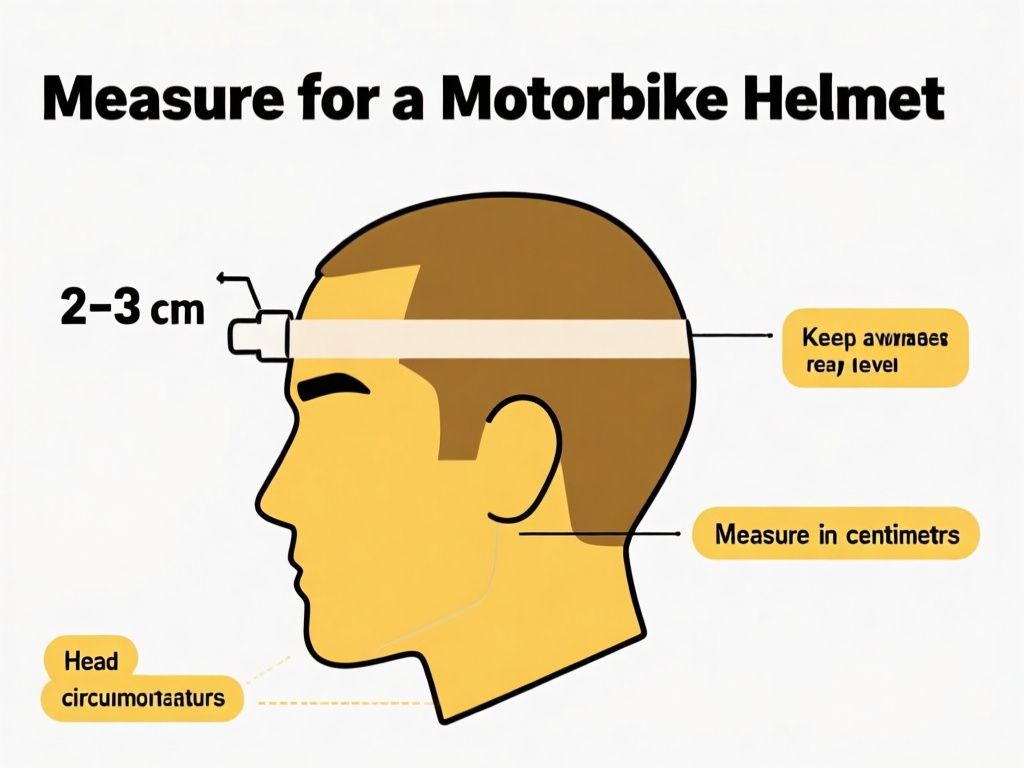
How should a correctly fitted helmet feel?
A correctly fitted helmet feels snug from the first try. The cheek pads should press the cheeks firmly, and the crown liner should touch the top of the head without creating a sharp, localised headache. Some pressure is expected because new padding compresses slightly with use.
The helmet should not wobble independently from the head. Hold the helmet still and try to rotate your head inside it. The skin on the forehead and cheeks should move with the helmet rather than sliding freely underneath it.
A simple movement check can reveal a poor fit:
- Fasten the chin strap according to the helmet instructions.
- Try to roll the helmet forward and backward.
- Open your mouth widely, as if taking a large bite. The cheek pads should become more noticeable but not painfully sharp.
- Look down and shake your head gently from side to side.
- Check for gaps, shifting, or pressure that becomes severe within a few minutes.
The helmet should remain in place when the strap is fastened, but the chin strap should not be used to compensate for an oversized helmet. If the shell moves substantially while the strap is tight, the size or shape is probably wrong.
Why does head shape matter as well as circumference?
Head circumference tells you how large the helmet needs to be, but head shape tells you how its interior will sit. Two people can measure 58 centimetres around and still need different helmets because one head may be longer from front to back while another is wider from side to side.
Manufacturers often describe internal shapes using terms such as intermediate oval, long oval, or round oval. These labels are useful, but they are not perfectly consistent between brands. A rider with a long-oval head may feel pressure at the front and back in a helmet designed for a wider shape, while a rounder-headed rider may feel pressure at the temples in a long-oval model.
Pressure location offers a practical clue. Even pressure around the head usually indicates a reasonable shape match. A single painful spot after five to ten minutes suggests that the helmet’s interior shape does not suit the rider, even if the circumference measurement is correct.
Do not solve a shape problem by moving up one size automatically. A larger helmet may remove one pressure point while leaving the rest too loose. Trying another model with a different internal shape is usually the better solution.
How long should you wear a helmet when checking the fit?
Wear a new helmet for at least 15 minutes before deciding. Briefly putting it on may not reveal pressure that develops over time, especially around the temples, forehead, or base of the skull.
Try the helmet indoors with the visor open and closed, and with the motorcycle glasses or prescription eyewear you normally use. Glasses can change the fit around the temples and may interfere with the helmet’s channels. Do not test a helmet with a thick winter hat underneath; that changes the intended fit and can reduce retention.
New cheek pads often feel quite firm. That is normal if the pressure is even and manageable. Numbness, throbbing pain, a strong headache, or a concentrated hot spot is not normal and should not be dismissed as “breaking in.” Interior padding can settle, but it cannot fix the wrong shell shape.
What should you do if your measurement falls between sizes?
If your measurement sits between two sizes, start with the smaller size only if it feels snug without painful pressure. A helmet that is slightly tight in the cheeks may become more comfortable as the cheek pads settle, but a shell that shifts or lifts is too large.
Do not deliberately buy a loose helmet for comfort. Excess space allows the helmet to move during a crash and can reduce its ability to stay correctly positioned. If the smaller size causes strong pressure at the crown, temples, or forehead, try a different model rather than forcing the choice.
Some helmets allow replacement cheek pads or crown liners in different thicknesses. These parts can fine-tune a good basic fit, but they should be approved for that exact helmet and installed as the manufacturer specifies. They are not a safe substitute for selecting the right shell size.
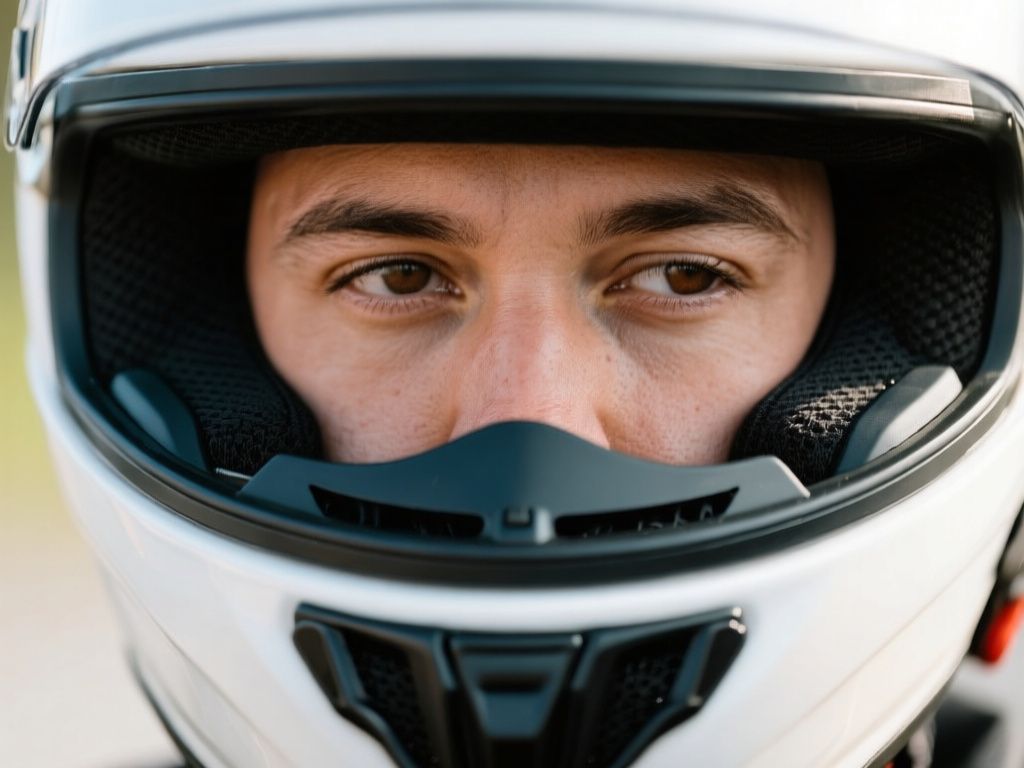
What common measuring mistakes should riders avoid?
- Measuring over a hat: Fabric adds extra circumference and can lead to an oversized helmet.
- Holding the tape too high: Measuring only around the upper forehead misses the widest part of the skull.
- Pulling the tape tight: Compression produces an artificially small result.
- Measuring only once: A crooked tape or wrong position can change the number by a centimetre or more.
- Relying on a universal size label: “Medium” does not have exactly the same dimensions across all brands and models.
- Ignoring the chin strap: A proper shell fit still requires the strap to sit securely under the jaw.
- Buying used without checking its history: A helmet may have suffered an impact, age-related material changes, or hidden damage.
How can you confirm that the helmet stays secure?
The helmet’s retention system must sit correctly under the chin and be adjusted according to the manufacturer’s instructions. Depending on the design, that may mean a double-D ring, micrometric buckle, or another approved fastening system. The strap should be snug enough that the helmet cannot roll forward off the head.
Check the helmet’s certification label before purchase and follow the rules that apply where the helmet will be used. Certification requirements differ by country and may change over time. A correct measurement does not make an uncertified or damaged helmet suitable for road use.
A helmet should also be replaced after a significant impact, even if the outside looks undamaged. The energy-absorbing liner can compress internally and may not recover its protective properties. Follow the maker’s replacement guidance for age, wear, and storage conditions.
Frequently Asked Questions
Can I measure for a motorbike helmet with my hair down?
Measure without a hat or bulky accessory, but keep your hair in the style you will normally wear under the helmet. Long or thick hair may need to be flattened naturally rather than tied into a large bun, which can create an inaccurate reading and an uncomfortable fit.
Is helmet size based only on head circumference?
No. Circumference determines the starting size, while head shape, cheek-pad thickness, shell design, and interior shape determine the final fit. A correctly measured helmet can still feel wrong if its internal shape does not match the rider’s head.
Should a new helmet feel tight?
A new helmet should feel snug and apply even pressure, particularly through the cheek pads. It should not cause sharp pain, numbness, or a severe headache. Padding may settle slightly, but a major pressure point usually means the model or shape is unsuitable.
What if my head measures between two helmet sizes?
Try the smaller size if it is comfortably snug and does not create concentrated pressure. If it is painful or the larger size moves around, choose another model with a different size range or internal shape rather than accepting a loose fit.
Can I use a helmet liner or thicker padding to change the size?
Only use replacement liners or cheek pads approved for that specific helmet model. They can fine-tune a close fit, but they should not be used to make an oversized or incorrectly shaped helmet safe.
How often should I remeasure my head?
Most adults do not need to remeasure regularly, but measuring again is sensible after major changes in hairstyle, weight, facial surgery, or when buying a replacement helmet. Always try the actual helmet on, because the same numerical size can fit differently across models.

Olivia
Writer at Helmet Today, covering helmet reviews, fit and riding safety.