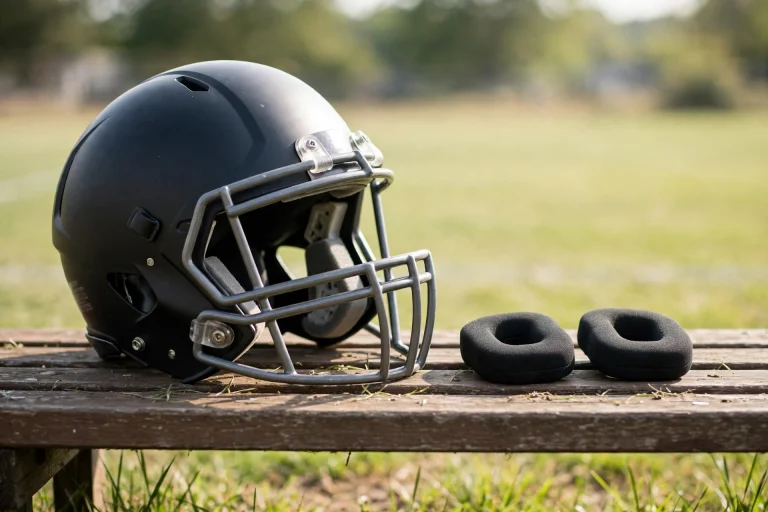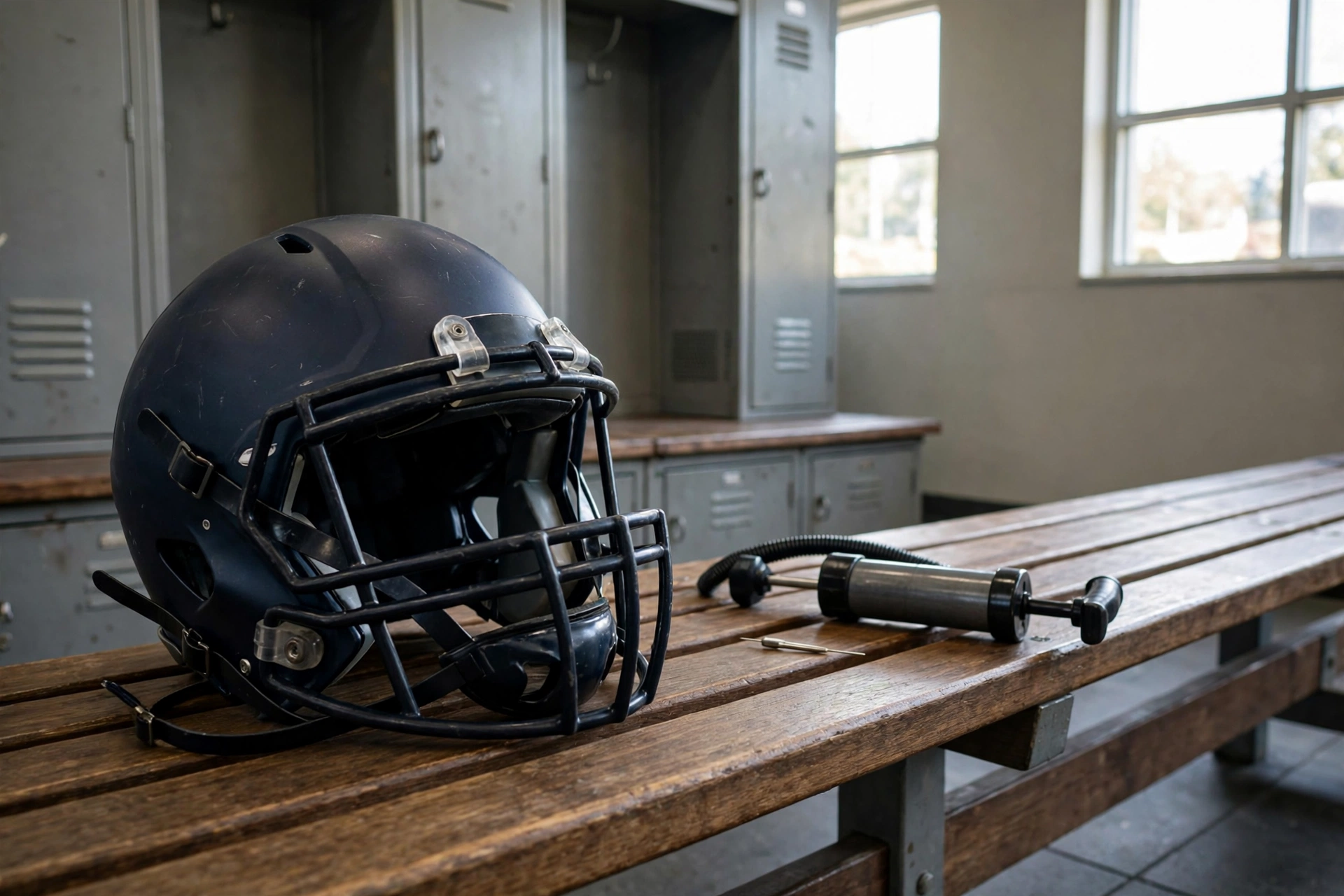
Yes, you can inflate a football helmet with a standard ball pump and inflation needle, but only if your helmet has air bladders. Add air in very small amounts, a short pump at a time, and check the fit on your head after every adjustment. If your helmet uses foam padding instead of air, it cannot be inflated at all, and forcing a needle into it can damage the liner.
Check If Your Helmet Uses Air or Foam
Not every football helmet is adjustable with air. Some models use inflatable bladders inside the crown and sides, while others rely entirely on foam pads of different thicknesses to create the fit. Before you reach for a pump, look for the inflation ports. On an air helmet, you will usually find one or more small round openings in the shell, often near the top or the back, sometimes marked with the bladder location or partly covered by a small flap of padding.
Your helmet manual is the safest guide here. It will show exactly where the ports are, which bladder each port controls, and how the manufacturer wants the helmet adjusted. If you no longer have the printed manual, most brands post the same instructions on their support pages. If there are no ports anywhere on the shell and the padding feels like solid foam when you press it, you almost certainly have a foam-fit helmet. For that type, fit changes come from swapping pad sizes, not from adding air, and a coach or equipment manager can help you get the right pad set.
What You Need Before You Start
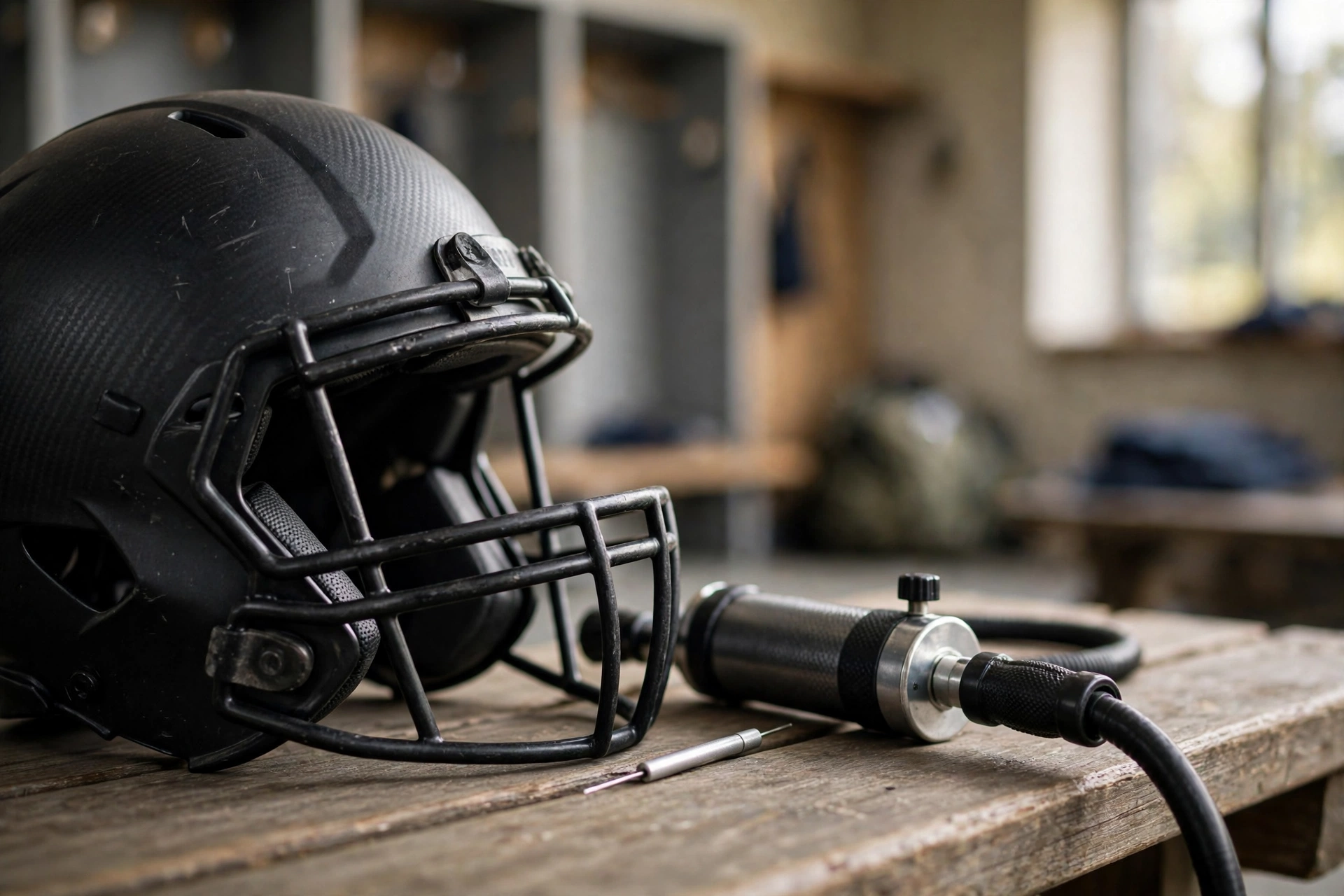
You do not need much equipment, but the right needle matters. Use a standard sports ball inflation needle, fitted to a hand pump you can control easily, because the goal is tiny adjustments, not filling the bladder like a ball.
- Gather a hand pump and a clean, undamaged inflation needle.
- Keep a small amount of needle lubricant or a drop of water handy, as your manual directs, so the needle slides in without tearing the valve.
- Find a mirror, or ask a teammate, coach, or parent to help you judge the fit.
- Have your chin strap done up the way you wear it in a game, because strap tension changes how the helmet sits.
- Work somewhere clean and dry, away from dirt that could get pushed into the port.
Never use a shop compressor or a high-pressure air hose. Those tools deliver air far too quickly for a small helmet bladder, and a single blast can overinflate or rupture it before you have time to react.
Step-by-Step: How to Inflate It
Work on one bladder at a time and go slowly. The whole process should take a few minutes, and rushing it is how most problems happen.
- Locate the right port. Match the port to the area that feels loose, such as the crown or one side. If several ports exist, start with the crown bladder.
- Prepare the needle. Moisten or lubricate the needle if your manual recommends it, and make sure it is straight. A bent or burred needle can tear the valve.
- Insert the needle gently. Push it straight into the port with a light, steady motion. Never force it, angle it sharply, or push it in farther than the manual shows.
- Add one short pump of air. Give the pump a single small stroke, then stop. Helmet bladders hold very little air compared with a ball.
- Remove the needle and test the fit. Put the helmet on, fasten the chin strap, and check how it feels before adding any more air.
- Repeat in small amounts. If an area still feels loose, add one more short pump and test again. Stop as soon as the fit feels snug and even.
- Release air if you overshoot. If the helmet feels too tight or creates pressure points, insert the clean needle by itself, without pumping, and let a little air escape as your manual directs, then test again.
If you hear hissing or a side will not hold air, stop. A damaged bladder or valve should be checked by the manufacturer or a qualified equipment manager, not used in a game.
How to Check the Fit After Inflating
A correctly fitted helmet should feel snug all the way around, with even pressure and no hot spots. The front of the helmet should sit about a finger’s width above your eyebrows, the ear holes should line up with your ears, and the back should cover the base of your skull. The helmet should not slide forward, rock side to side, or twist when you shake your head.
Push gently on the front and back; the skin on your forehead should move with the helmet a little rather than the shell sliding freely. Open and close your jaw; the fit should stay secure without painful pressure. Fastening the strap correctly matters as much as the air, so follow a proper guide on how to attach a chin strap to a football helmet and keep it snug and centered.
Snug does not mean painful. Headaches, numbness, or sharp pressure at one point mean something is wrong. Let a little air out, shift the pads, or ask a coach to look before you play in it.
Mistakes to Avoid and When to Stop
The most common mistake is overinflating. Too much air makes the bladder hard, reduces how well the padding can do its job, and can even damage the fit system. Air is meant to fine-tune the contact between the helmet and your head, not to turn the liner into a rock. If you find yourself adding pump after pump, something else is wrong, possibly the helmet size itself.
Another mistake is judging the fit by squeezing the helmet in your hands. Bladders that feel firm on a table can feel completely different on your head, so always judge by wearing it. Never leave a needle sitting in the port while you walk around; a knock could drive it in and damage the valve.
Stop and get help if the helmet is the wrong shell size, pads are cracked or missing, a bladder will not hold air, or the helmet has taken a severe impact and has not been inspected. Air cannot fix a helmet that does not fit your head shape, and it cannot restore worn-out padding.
Frequently Asked Questions
How often should I check the air in my football helmet?
Check the fit at the start of the season, after any big hit that leaves the helmet feeling different, and whenever it starts to feel loose. A quick fit check before games is a good habit, since bladders can lose small amounts of air over time.
Can I use an electric pump to inflate a football helmet?
It is safer to use a hand pump, because you can feel and control each small stroke. An electric or compressor-powered pump moves air too fast for a small bladder and makes overinflating or rupturing it much more likely.
What if my helmet has no inflation ports?
Then it is a foam-fit helmet and cannot be inflated. Fit is adjusted by changing pad thickness or pad sets. Ask your coach or equipment manager for help, and do not try to push a needle into foam padding, because that only damages the liner.

Olivia
Writer at Helmet Today, covering helmet reviews, fit and riding safety.