A football helmet is too big if it moves when you shake your head, rotates or slides down over your eyes, or lets your skin stay still while the shell shifts over it. A correctly fitted helmet feels snug all the way around, sits level about an inch above the eyebrows, and stays put when the chin strap is fastened. If the helmet wobbles after the straps are snug, it is the wrong size or the pads are the wrong thickness.
Fit matters because a helmet can only protect you if it stays in the right position at the moment of impact. A loose helmet can shift on contact, leave part of the head exposed, and add a second, harder jolt as the head moves inside the shell. The checks below take a few minutes and can be done at home with a mirror and a helper.
What are the quick tests to check if a football helmet is too big?
Start with the shake test. Put the helmet on, fasten the chin strap snugly, and shake your head side to side and then up and down, the way you might when following a play. The helmet should move with your head as one unit. If it lags, wobbles, slides, or thumps against your forehead and the back of your head, it is too big or the padding needs to be adjusted.
Next, try the rotation test. Hold your head still and have a helper gently try to rotate the helmet left and right and tilt it forward and back while you resist. A small amount of movement that pulls your skin with it is normal. If the shell rotates freely while your head stays still, the helmet is too loose. Also check the forehead test: push up on the face mask and watch whether the helmet rides up and exposes your forehead. A well-fitted helmet resists that movement.
How should a football helmet feel on your forehead and head?
A fitted helmet feels snug and evenly firm around the whole head, with gentle pressure rather than pain. There should be firm contact at the forehead, the back of the head, and both sides, with no gaps you can slide a finger into easily. New helmets often feel tight for the first few wears, but tight is different from loose: the warning sign of an oversized helmet is movement, not firmness.
Try the skin movement test. Place your hand on the front of the helmet and move it slightly. On a good fit, the skin on your forehead moves with the helmet. If the helmet slides across your forehead while your skin stays still, there is too much room inside. Also pay attention while jogging in place or doing a few jumping jacks: an oversized helmet will bounce, shift, or need constant readjustment.
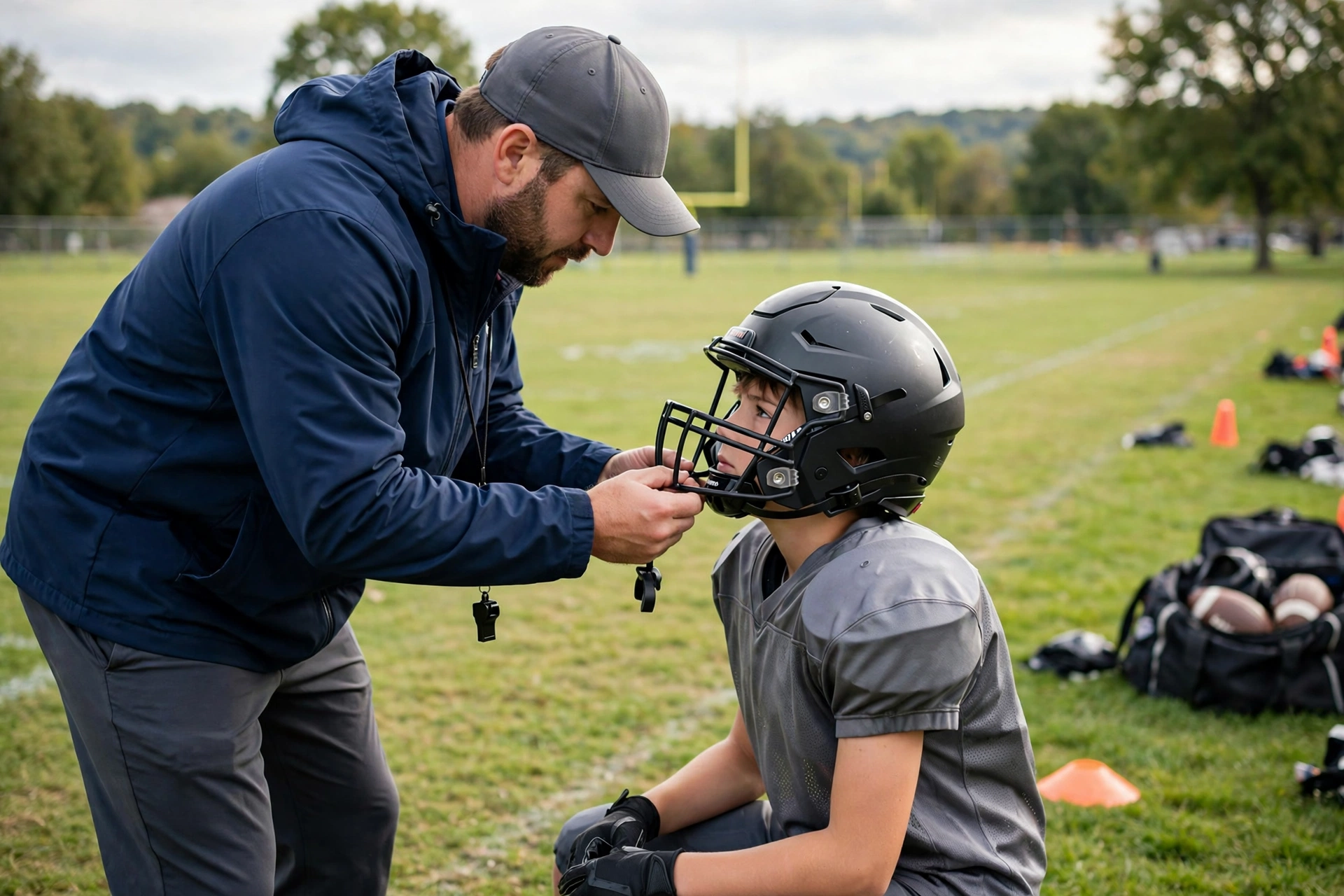
Where should a football helmet sit on your head?
Position is a simple clue. A helmet that fits sits level on the head, with the front edge roughly an inch, about two finger widths, above the eyebrows. If the helmet keeps sliding down so it presses on the eyebrows or blocks the top of your vision, it is likely too big or the front pads are too thin. If it rides high and leaves the lower back of the head exposed, that is also a poor fit.
Check the coverage from the side and back in a mirror. The helmet should cover the base of the skull at the back, sit evenly on both sides, and the ear holes should line up with your ears. If the helmet tips to one side, or one ear hole lines up while the other does not, the fit is off even if the size seems right. Remember to do these checks with your normal game haircut and no hat or durag underneath, since anything worn under the helmet changes the fit.
What do the chin strap and jaw pads tell you about fit?
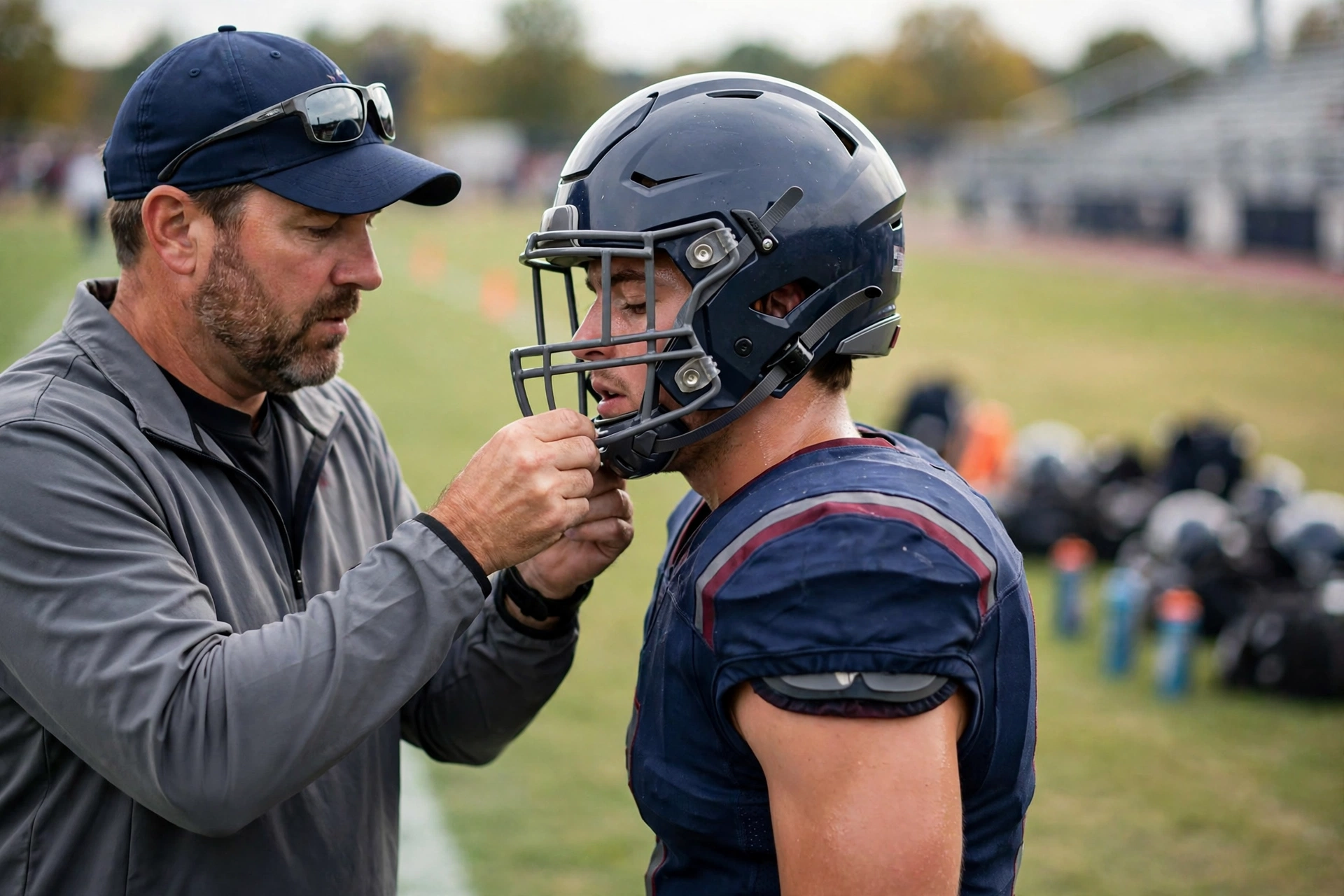
The chin strap should center the chin in the cup and hold the helmet down firmly when all snaps are fastened. If you have tightened the straps as far as they reasonably go and the helmet still shifts, the shell is too large. Knowing how the strap system works helps here, and this step-by-step guide on how to attach a chin strap to a football helmet shows how it should be fastened and adjusted.
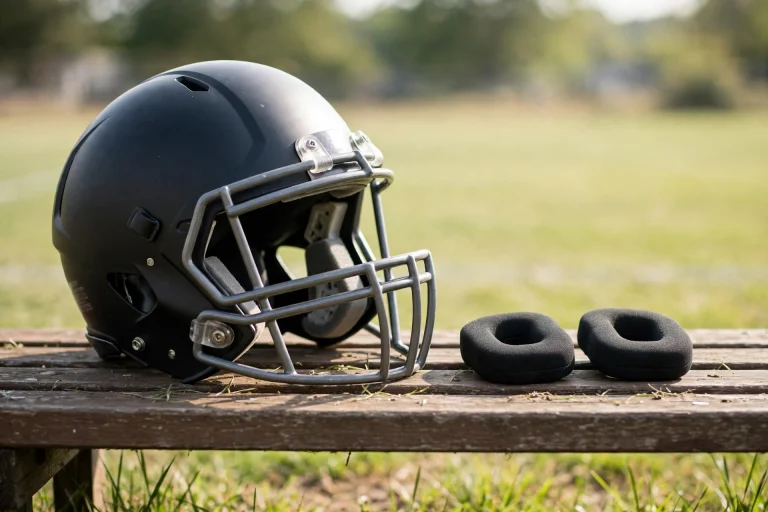
Jaw pads are another clear sign. They should press firmly against both sides of your jaw and cheeks. If there is a visible gap, or the pads barely touch, the helmet is too wide for your head or the pads are too thin. Many helmets offer interchangeable jaw pads and cheek pads in different thicknesses, so a slightly loose helmet can sometimes be corrected with thicker pads rather than a full size change.
What can you do if a football helmet is too big?
First, confirm the basics: correct position on the head, chin strap centered and snug, and any inflatable air liners pumped to the manufacturer’s recommended fit if your model has them. Some helmets use air bladders at the crown or back that a coach can adjust with a helmet pump for a closer fit.
If movement remains, try thicker jaw pads or crown pads made for your exact helmet model, and only use parts approved by the manufacturer. Never add foam, towels, or extra padding that did not come with the helmet, because unapproved padding can change how the helmet absorbs impact. If the shell itself is simply too large, the only safe answer is a different size. Measure around the head just above the eyebrows and ears with a soft tape and compare the measurement with the manufacturer’s size chart before ordering.
Why do youth players need extra care with helmet fit?
Children and teens grow quickly, so a helmet that fitted in August may be loose or tight by the following season, and a helmet borrowed from an older sibling is often the wrong size. Check a young player’s fit at the start of every season and again mid-season. A youth player also cannot always describe a poor fit clearly, so coaches and parents should run the shake and rotation tests themselves rather than asking only whether it feels fine. Never buy a helmet a size up for a child to grow into; a helmet that is too big today does not protect properly today.
Frequently Asked Questions
Should a football helmet feel tight?
It should feel snug and firm all around without causing pain, numbness, or headaches. Snug is good; movement is bad. If the helmet shifts when you shake your head, it is too big regardless of how it feels at rest.
Can thicker pads fix a helmet that is too big?
Sometimes. If the shell size is close, manufacturer-approved thicker jaw or crown pads can take up the extra room. If the shell is a full size too large, pads will not make it safe and you need a smaller helmet.
How often should helmet fit be checked?
Check the fit at the start of every season, after any padding or chin strap change, and whenever the helmet starts to feel different. Youth players should be checked more often because their head size changes as they grow.

Olivia
Writer at Helmet Today, covering helmet reviews, fit and riding safety.