
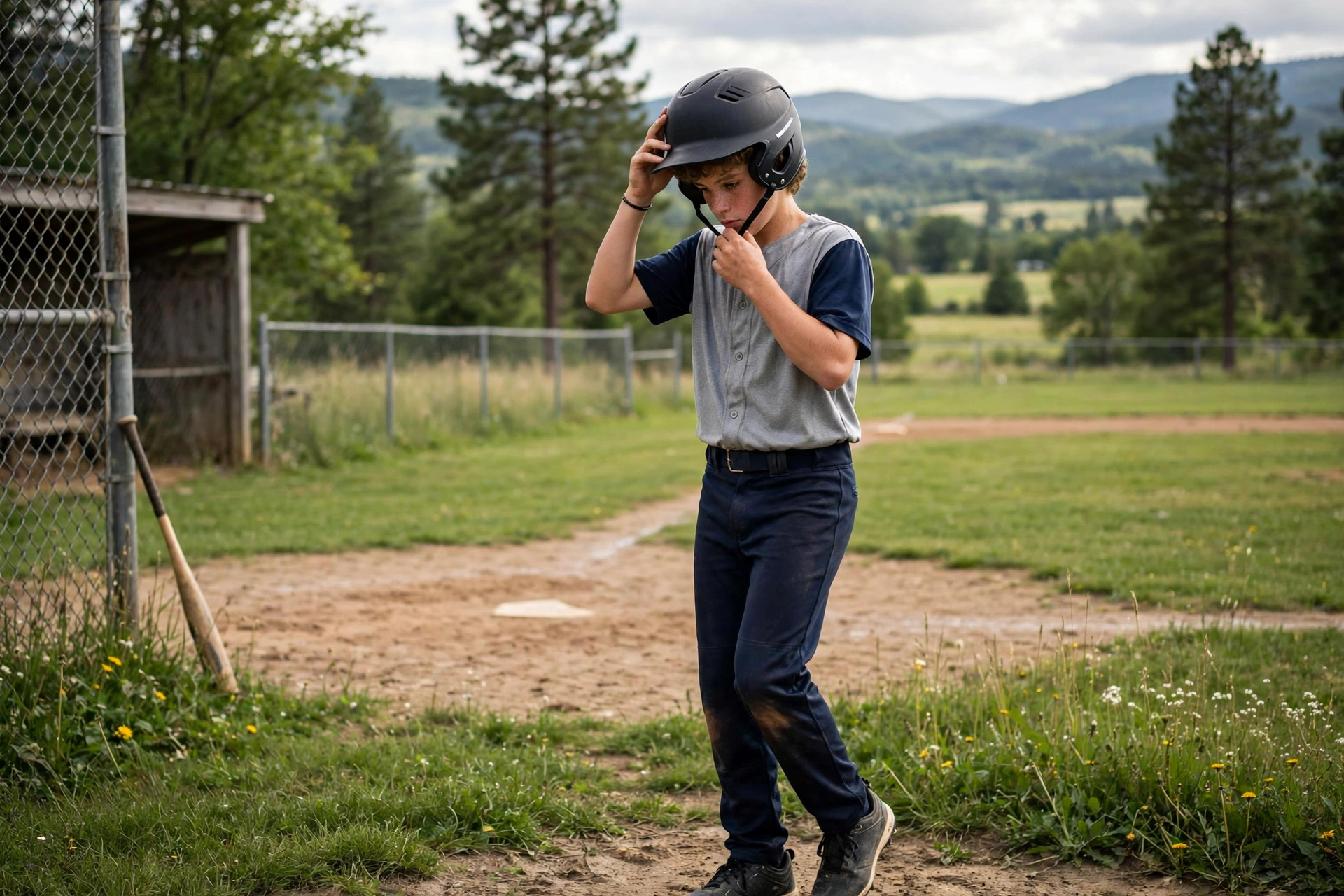
Put a batting helmet on by holding it with both hands, lowering it straight down onto the head so it sits level, and checking that the front brim is about an inch above the eyebrows. The helmet should feel snug all around with no wobble when you shake your head, the ear holes should line up with your ears, and any chin strap should be fastened before you step into the batter’s box.
It only takes a few seconds, but putting a batting helmet on correctly makes a real difference. A helmet that is tipped back, sitting crooked, or loose enough to shift can leave the forehead, temples, or back of the head exposed at exactly the wrong moment. The routine below works for baseball and softball players of every age.
How do you put a batting helmet on step by step?
Start by checking the inside of the helmet for cracks, loose padding, or anything left inside it. Hold the helmet by both sides with the brim facing forward, tilt it slightly, and place the front edge on your forehead first. Then roll or lower the back down so the helmet settles evenly over the whole head. Lowering it straight on, rather than dragging it on from the back, keeps it level and keeps long hair from bunching up under the padding.
Once it is on, use both hands to settle it with gentle downward pressure and a small twist side to side. The padding should compress slightly and grip the head evenly. Look straight ahead in a mirror if one is available, or have a coach or teammate check you. The helmet should look straight from the front, not tipped to one side.
How high should a batting helmet sit on your head?
The front of the helmet should sit roughly an inch above the eyebrows, low enough to protect the forehead but high enough that the brim does not block your view of the pitcher. The helmet must be level, not tipped back like a cap worn backwards and not pulled down over the eyes. A helmet tipped back exposes the forehead, which is one of the areas it is there to protect.
Check the back as well. The back edge of the helmet should cover the lower back of the head, and the ear holes, on helmets that have them, should line up with your ears so you can hear and so the helmet covers the sides of the head properly. If the helmet sits so high that the ears are below the padding, or so low that the brim touches your eyebrows, adjust the fit or check the size. Some modern helmets also use rotational-impact designs such as MIPS, and those liners only work as intended when the helmet is worn level and snug in the correct position.
How snug should a batting helmet feel?
A batting helmet should feel snug and secure, with the padding touching all around the head. Shake your head gently from side to side and nod up and down, the way you might track a pitch. The helmet should move with your head and not slide, bounce, or rotate. If it shifts when you swing, run, or turn your head quickly, it is too loose, and it will move again at a worse moment.
Snug does not mean painful. Pressure that causes a headache, numb spots, or red marks that last long after you take the helmet off means it is too small or the padding has hardened with age. A helmet that fitted last season may not fit this one, especially for growing kids, so run this check at the start of every season rather than assuming nothing has changed.
How do face guards and chin straps change how you wear it?
Many batting helmets come with a face guard, and some leagues require one. If your helmet has a guard, make sure it is firmly attached with all screws in place, that you can see the pitcher clearly through it, and that it does not press against your face or chin. The helmet goes on the same way with a guard fitted; just take extra care lowering it straight so the guard does not catch on your nose or chin.
Where a chin strap is fitted or required, fasten it before batting and adjust it so it is snug under the chin without choking. The strap keeps the helmet from flying off during a swing or while running the bases. Some helmets have one ear flap or two depending on the league and the batter, and dual-flap helmets are common in youth ball; whichever style you wear, the position and snugness checks stay the same.
What should parents and coaches check for kids?
Young players often pull a helmet on any way it lands and run to the plate, so an adult should do a quick fit check before every game and practice. Confirm the helmet is level, low over the forehead, and snug, and run the shake test with the child. Check that hair, especially thick ponytails and braids, is worn low or arranged so the helmet still sits in the correct position rather than perched on top of the hair.
Never hand a child a helmet that is visibly cracked, missing padding, or large enough to wobble, and never buy a helmet a size up for a child to grow into. Teach kids the routine themselves, show them what level and snug look like, and they will quickly learn to put the helmet on correctly without being reminded.
What are the most common mistakes when putting on a batting helmet?
The most common mistake is wearing the helmet tipped back, which exposes the forehead. Close behind are wearing it crooked, skipping the chin strap, and wearing a cap or thick headband underneath, which lifts the helmet and makes it unstable. Wearing the helmet over a high ponytail has the same effect. Another frequent mistake is using a helmet that belongs to a much bigger or smaller teammate without checking the fit first. Each of these mistakes takes seconds to fix, and fixing them is what turns a helmet from a uniform accessory into real protection.
Frequently Asked Questions
Should a batting helmet cover your ears?
Yes, on helmets with ear flaps or ear holes, the ears should line up with the openings and the sides of the head should be covered. That coverage protects the temples and the side of the head.
Can you wear a hat under a batting helmet?
It is not a good idea. A hat lifts the helmet, makes it sit higher and looser, and can make it shift during a swing. Wear the helmet directly on your head as it was designed to be worn.
How do you know if a batting helmet fits properly?
It sits level about an inch above the eyebrows, feels snug all around, covers the back of the head, and does not move when you shake your head. If it wobbles, slides, or causes pain, the size or padding is wrong.

Olivia
Writer at Helmet Today, covering helmet reviews, fit and riding safety.