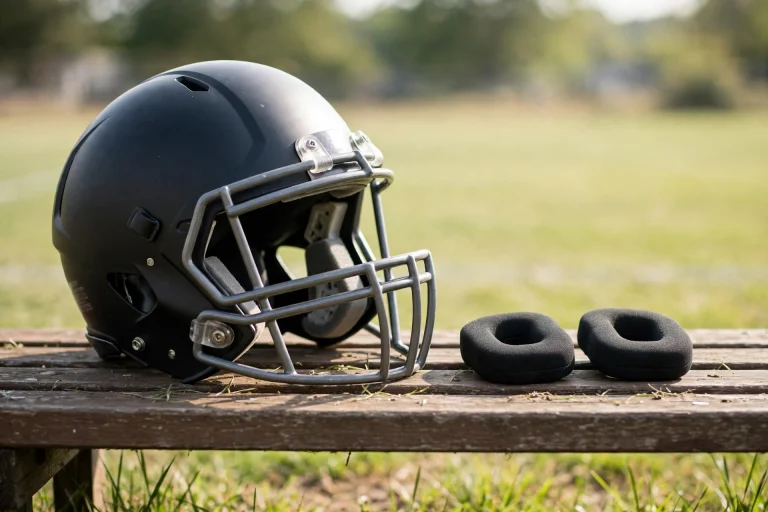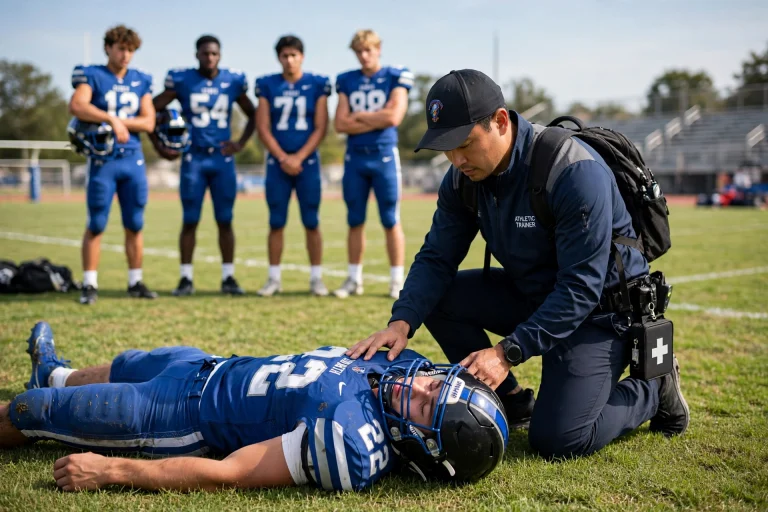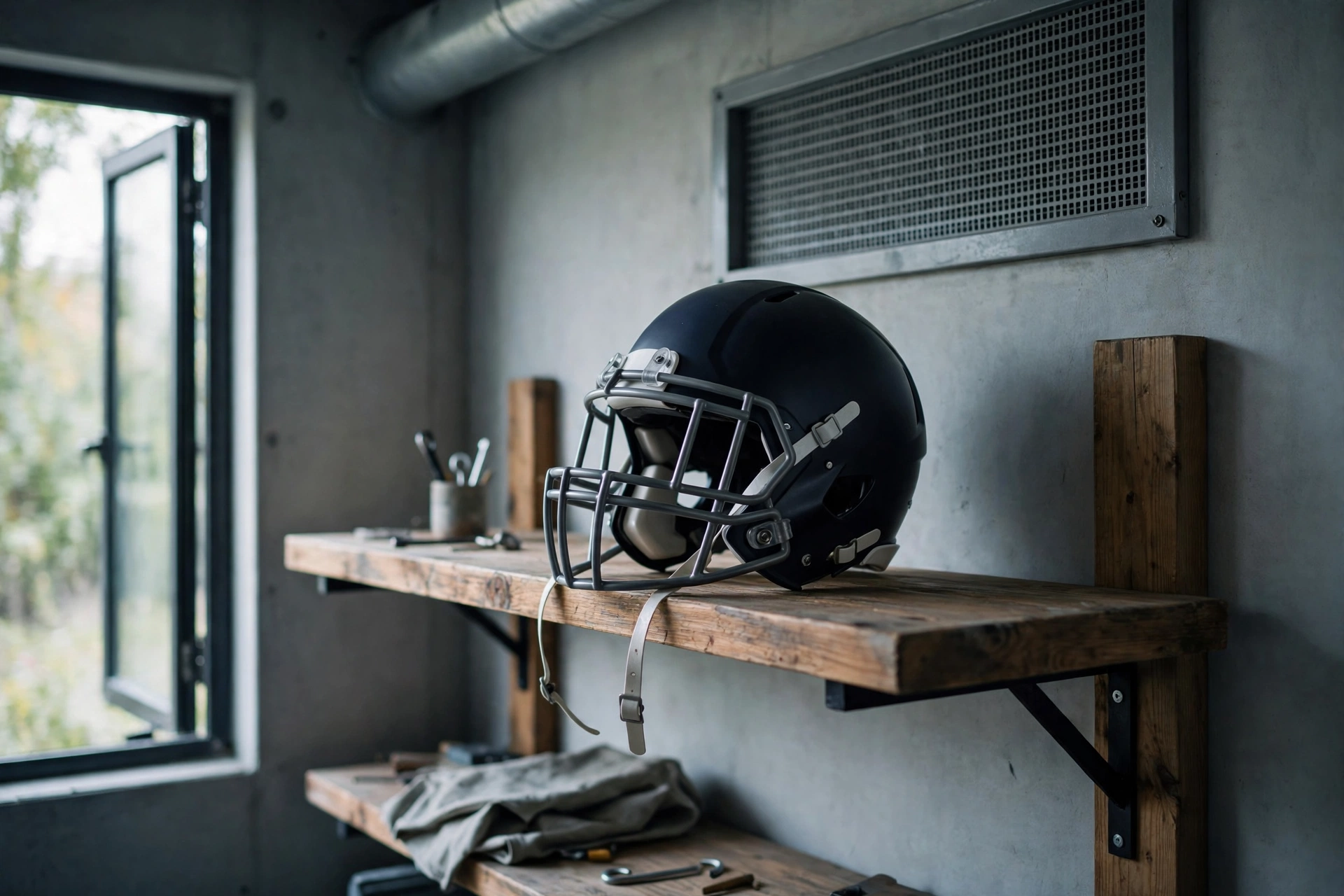
Store a football helmet clean, fully dry, and indoors in a cool, ventilated room, out of direct sunlight and away from heat. Keep it on a shelf or helmet stand with nothing stacked on top of it, and never leave it in a hot car trunk or garage. Before the next season, inspect the shell, padding, and hardware, and replace anything worn or damaged.
A football helmet is built to absorb hard impacts, but the materials inside it break down slowly over time. Heat, moisture, sunlight, and pressure all speed that process up. Good storage habits cost nothing, take only a few minutes, and can keep a helmet performing the way it was designed to for its full service life.
Why does the way you store a football helmet matter?
The padding inside a football helmet is made of foam and vinyl-covered cushions that are designed to compress on impact and then recover. When a helmet sits in heat for weeks at a time, that padding can dry out, harden, or lose its ability to absorb energy. Moisture trapped inside after a sweaty practice encourages odor-causing bacteria and can break down adhesives and foam over a long off-season.
The outer shell is tough, but it is not indestructible either. Long exposure to sunlight can make polycarbonate and ABS shells brittle and fade the finish, and storing heavy gear on top of a helmet can stress the shell and bend face mask hardware. Storing the helmet properly protects both the protective parts and your investment, since a quality helmet is expected to last several seasons with the right care.
What should you do before putting a football helmet away?
Never store a helmet while it is still damp. After the last game or practice, wipe the shell down with a damp cloth and mild soap to remove dirt, grass, and sweat. Clean the inside padding with a cloth dampened with mild soapy water, then wipe again with a clean damp cloth so no soap residue is left behind. Avoid harsh chemicals, solvents, and abrasive cleaners, which can damage the shell finish and weaken plastics.
Let the helmet air-dry completely at room temperature before storing it. Set it somewhere with good airflow for at least 24 hours, and make sure the deepest pads feel dry to the touch. Do not use a hair dryer, space heater, or clothes dryer to speed things up, because direct heat can warp padding and adhesives. If odor is a problem, a light spray of a helmet-safe deodorizing spray or a removable washable liner, where the manufacturer allows it, can help before storage.
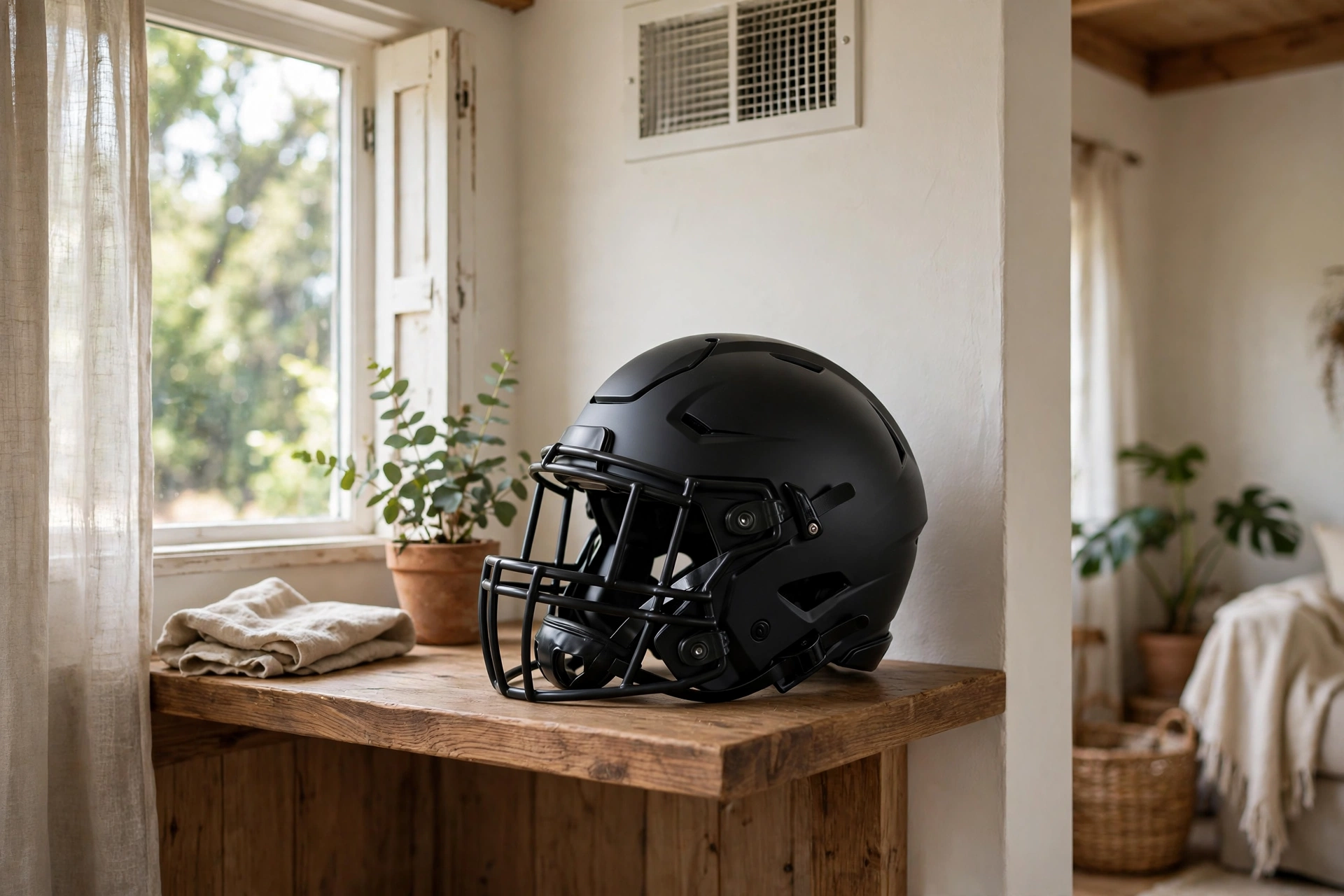
Where is the best place to store a football helmet?
The best storage spot is indoors, in a climate-controlled room with steady, moderate temperature and low humidity. A closet shelf, a bedroom shelf, or a dedicated gear rack inside the house all work well. A helmet stand or a wall-mounted helmet hanger keeps air moving around the padding and keeps the helmet off the floor, where it could be kicked, tripped over, or chewed on by pets.
If you use a gear bag for short-term transport, choose a ventilated bag and take the helmet out when you get home rather than leaving it zipped inside for weeks. For longer storage, some players keep the helmet in a breathable cloth bag to keep dust off while still allowing airflow. Whatever you choose, the goal is the same: cool, dry, dark, and uncrushed.
What should you avoid when storing a football helmet?
The most common mistake is leaving a helmet in a car trunk or a hot garage. Temperatures inside a parked car on a summer day can climb high enough to soften adhesives, dry out foam, and age the helmet far faster than normal use. Garages and attics have the same problem, along with big swings in humidity.
Also avoid storing the helmet in direct sunlight, such as on a windowsill or an open porch, because ultraviolet light degrades the shell over time. Do not stack cleats, pads, weights, or other equipment on top of it, and do not hang it by the face mask, which can bend the mask or stress its mounting hardware. Keep it away from gasoline, paint thinner, and other chemicals stored in sheds and garages, since fumes and splashes can attack the shell and padding materials.
How do you store a football helmet for the whole off-season?
For off-season storage, start with the full cleaning and drying routine above. Check that all screws, clips, and chin strap snaps are present and snug, and note anything that looks worn so you can deal with it before the season starts. If you removed the chin strap for cleaning, reattach it correctly before the helmet goes back into use; this guide on how to attach a chin strap to a football helmet walks through the steps.
Store the helmet in its indoor spot with the chin strap loosely fastened so parts stay together, and keep the manufacturer’s paperwork and purchase date with it if you can. Many helmets carry a label with the manufacture date and certification information, and knowing the helmet’s age matters because schools and leagues often require helmets to be reconditioned and recertified by an approved reconditioner on a regular cycle, commonly every one to two seasons depending on the program’s rules.
What should you check before using a stored helmet again?
When the season approaches, take the helmet out and inspect it carefully. Look over the shell for cracks, dents, or deep scratches. Squeeze and press the padding to confirm it feels firm and springy rather than flat, cracked, or crumbly. Check the face mask for bends and rust, confirm all mounting hardware is tight, and make sure the chin strap, buckles, and snaps work smoothly.
Try the helmet on and confirm the fit is still snug with no wobble or pressure points, especially for younger players who may have grown during the off-season. If anything looks or feels wrong, do not ignore it. Send the helmet to an approved reconditioner for evaluation, replace worn padding or hardware with manufacturer-approved parts, or retire the helmet if it is cracked or beyond its serviceable life.
Frequently Asked Questions
Can I store a football helmet in the garage?
It is not recommended. Garages get hot in summer and damp in winter, and both heat and moisture age the padding and shell faster. A cool, dry indoor room is a much better choice.
Should I keep my football helmet in its bag?
A ventilated gear bag is fine for carrying a helmet to and from games, but take it out at home so air can circulate around the padding. Long-term storage inside a closed bag traps moisture and odor.
How long can a football helmet be stored between seasons?
A helmet can be stored for a full off-season without problems if it is clean, dry, and kept in a cool indoor place. Inspect it and check its certification status before using it again, and follow your school or league rules on reconditioning.

Olivia
Writer at Helmet Today, covering helmet reviews, fit and riding safety.