You can replace football helmet ear pads at home in about ten minutes: remove the old pads by unsnapping or peeling them off their mounts, match the new pads to your helmet model and size, press or snap them firmly into place, and then check the fit while moving your jaw. The key rule is compatibility — ear pads are model- and size-specific, so buy the exact pads made for your helmet.
How do you know ear pads need replacing?
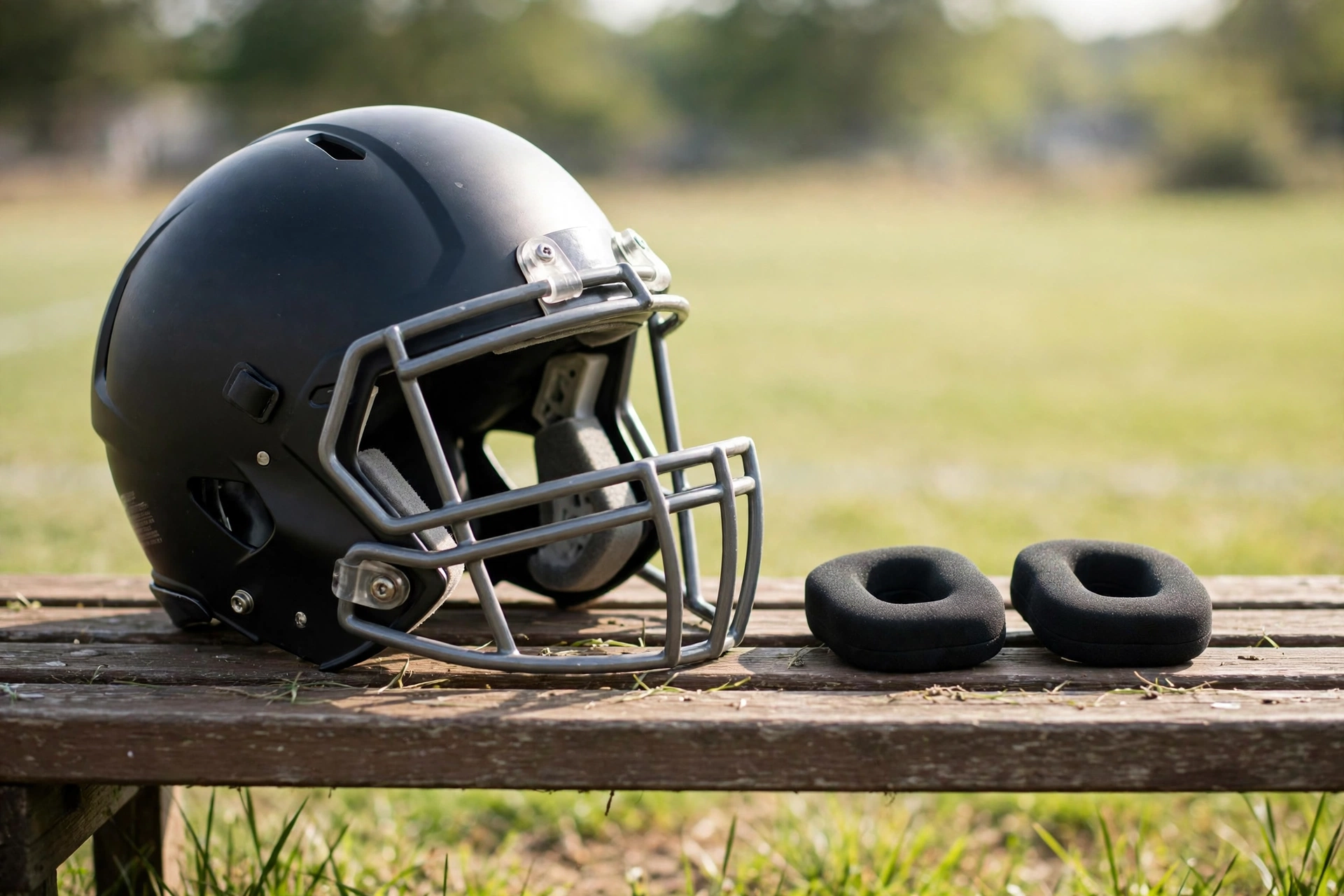
Ear pads — often called ear covers or ear inserts — cushion the sides of your head and help hold the helmet in the correct position. They need replacing when the vinyl covering splits or peels, the foam inside feels flat, cracked, or permanently compressed, or the snaps or hook-and-loop backing no longer grip. A pad that keeps popping loose during play has already told you it is finished.
Fit changes are another sign. If the helmet suddenly feels loose around the ears, rocks side to side, or sits differently than it did at the start of the season, worn ear pads are a common cause. Also replace pads that have developed a persistent odor or visible mold from stored sweat — that padding sits directly against your skin and ears all game. Damage or wear in the pads matters beyond comfort: a helmet that moves on your head cannot protect you as designed.
How do you match new ear pads to your helmet?
Football helmet ear pads are not universal. They are made for specific helmet models and usually come in several thicknesses, because pad thickness is one of the ways the helmet is fitted to different head widths. Start by finding your helmet’s model name and size, printed on the label inside the shell and in the rear bumper area. Then order the ear pad set listed for that exact model and shell size.
If the original fit was good, order the same thickness that came out — pads are often marked with their thickness or size on the back. If the helmet always felt slightly loose at the sides, a step thicker may be the correct fitting fix; if it squeezed your jaw and ears painfully, a step thinner may be right. Any thickness change is a fit change, so treat it seriously and follow the fit check at the end of this guide.
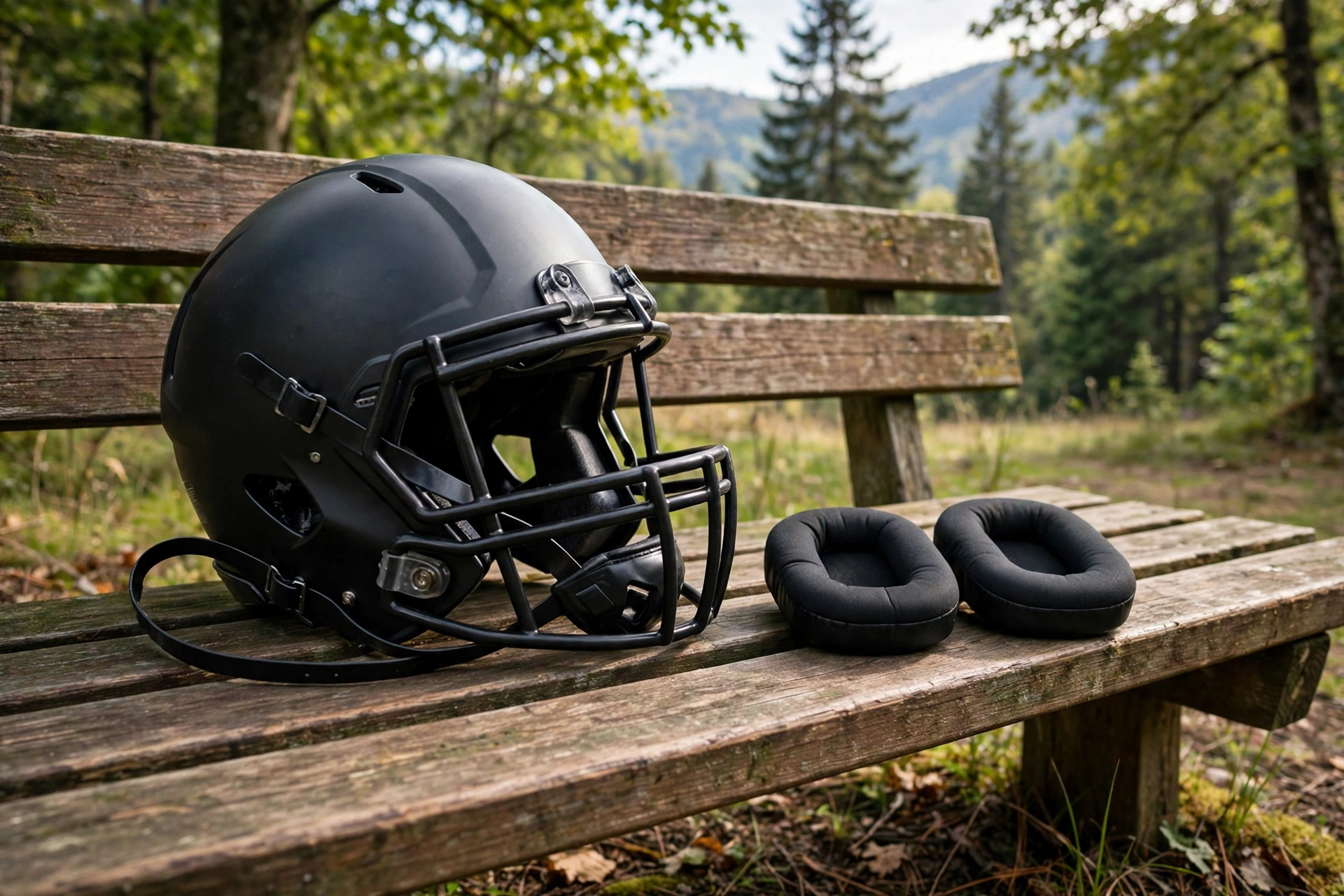
Buy pads from the helmet’s manufacturer or a reputable equipment supplier. No-name pads with the wrong snap spacing or foam density can detach during play or leave a gap exactly where your ear and jaw need coverage.
How do you remove the old ear pads?
Most ear pads attach in one of two ways. Snap-on pads fasten to posts inside the shell: work your fingers behind the pad near each snap and pull straight out with steady pressure, supporting the pad close to the snap so the vinyl does not tear. Hook-and-loop pads simply peel away from their mounting patches — pull slowly to avoid ripping the backing patch off the shell.
On many helmets the ear pad area is easier to reach if you first loosen or remove the chin strap where it passes the ear opening — if you need a refresher, our guide on how to attach a chin strap to a football helmet shows exactly how the strap routes and re-fastens. Work on one side at a time and keep the removed pad beside you as a reference for the pad’s orientation, because left and right pads are mirror images and some are shaped top to bottom as well.
Before fitting the new pads, wipe the mounting area clean and check that every snap post or hook-and-loop patch is intact and firmly attached. A new pad on a broken post will never stay put.
How do you fit and secure the new pads?
Hold the new pad up to the shell first and confirm the shape matches the ear opening and that the snap holes or backing align with the mounts. For snap-on pads, line up each snap and press firmly directly over it until you feel and hear it seat — work through every snap, not just the first one. For hook-and-loop pads, position carefully before pressing down, since repositioning repeatedly weakens the grip.
Once attached, run your fingers around the pad’s edge. It should sit flat against the shell with no folded corners, no exposed gap over the ear opening, and no loose section you can lift with light pressure. Give the pad a firm tug in a few directions. It should not shift, rock, or pop a snap. If a snap refuses to seat, check for a bent post or debris rather than forcing it hard enough to crack the pad’s backing.
Repeat on the other side with the matching pad, then refit the chin strap if you loosened it, making sure the strap has not twisted where it passes the ear area.
How do you check the fit after replacing the pads?
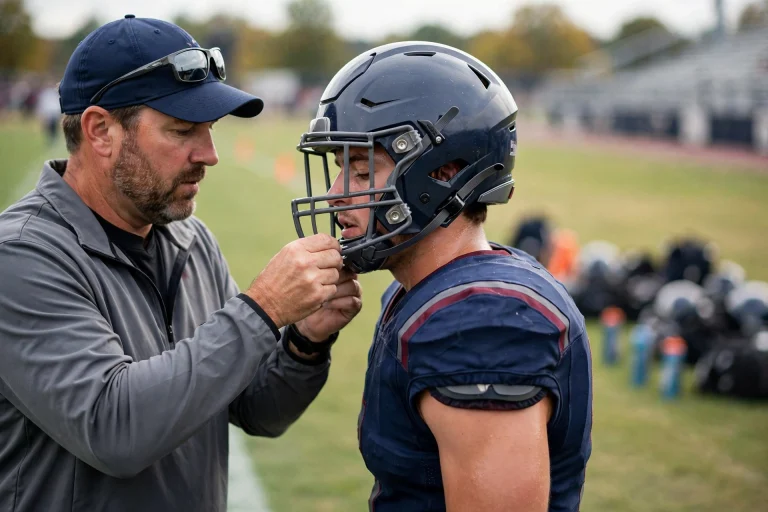
Put the helmet on and fasten the chin strap snugly. The ear pads should cover your ears fully and feel firm and even on both sides — noticeable pressure on one side only means a pad is misaligned or the thickness is wrong. The helmet should feel snug around the whole head, with no side-to-side rocking when you shake your head.
Now move your jaw: talk, open your mouth wide, and clench. The pads sit close to the jaw, so you should feel contact without sharp pressure or pain, and the helmet should not shift or ride up as your jaw moves. Have a teammate or coach try to roll the helmet forward and sideways from behind — a correctly fitted helmet barely moves. If the new pads made the helmet too tight or left it loose, swap thickness rather than playing in a bad fit.
When should you let an equipment manager handle it?
If your team has an equipment manager, route the job through them whenever the pads are part of a reconditioned helmet, the helmet is still under a recertification schedule, or you are unsure which pads your model takes. School and league helmets often must be inspected and fitted by trained staff, and unauthorized parts changes can affect the helmet’s certification status.
Also hand the helmet over if you find cracked snap posts, shell damage around the ear holes, or any other structural problem while swapping pads. Those are not pad problems — they are helmet problems, and the helmet should come out of service until a professional clears it.
Frequently Asked Questions
Can you use ear pads from a different helmet brand?
No. Snap spacing, pad shape, and foam density are model-specific. Pads from another brand or model may detach in play or leave your ear uncovered. Always buy the pads made for your exact helmet.
How thick should football helmet ear pads be?
Replace like with like: use the thickness marked on your old pads as the starting point. Change thickness only to correct fit — thicker to remove side-to-side looseness, thinner to relieve painful squeezing.
How often should ear pads be replaced?
Inspect them every season and replace them whenever the foam is flat or cracked, the covering splits, or the attachments stop holding. Heavy-use helmets may need fresh pads every season or two.

Olivia
Writer at Helmet Today, covering helmet reviews, fit and riding safety.