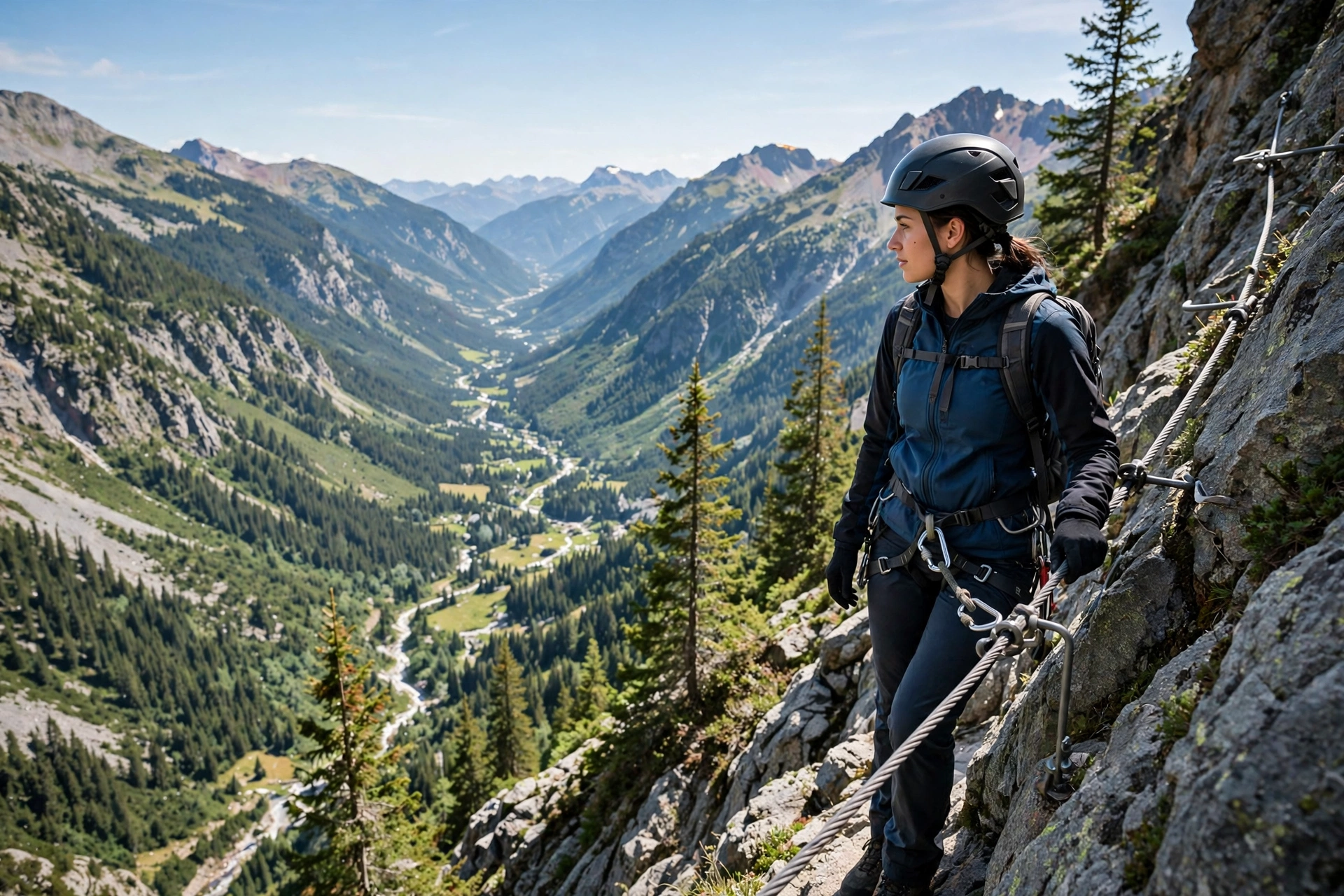
There is no separate via ferrata helmet category: a via ferrata helmet is a climbing helmet. Both are certified to the same standards, EN 12492 and UIAA 106, and both are designed mainly to protect you from rockfall from above and from side impacts against rock. Any difference you see between models is about weight, ventilation, and features such as headlamp clips, not about a different kind of protection.
Shops often list the same helmet under both activities, because the listing describes use, not a different test. If a certified climbing helmet fits you and is in good condition, it is suitable for via ferrata.
What EN 12492 and UIAA 106 Actually Mean
EN 12492 is the European standard for mountaineering helmets, and UIAA 106 is the safety standard from the international climbing and mountaineering federation. Helmets sold for climbing in Europe must meet EN 12492, and many models also carry the UIAA label after additional testing. There is no separate EN or UIAA standard written only for via ferrata helmets.
These standards focus heavily on impact from above. That makes sense for both sports. On a rock climb and on a via ferrata, one of the most serious hazards is a stone knocked loose by a climber above you, a dropped carabiner, or other debris falling onto your head. The tests also check impacts to the front, side, and back of the helmet, because a fall on rock rarely involves a perfectly vertical landing. Retention is tested too, so the chin strap should keep the helmet in place during a tumble without releasing too easily.
So instead of asking whether a helmet is a real via ferrata model, ask whether it is certified, fits without wobbling, and matches long, warm days on steel cable. Certification is the safety question; everything else is comfort.
How a Via Ferrata Day Differs From a Rock Climbing Day
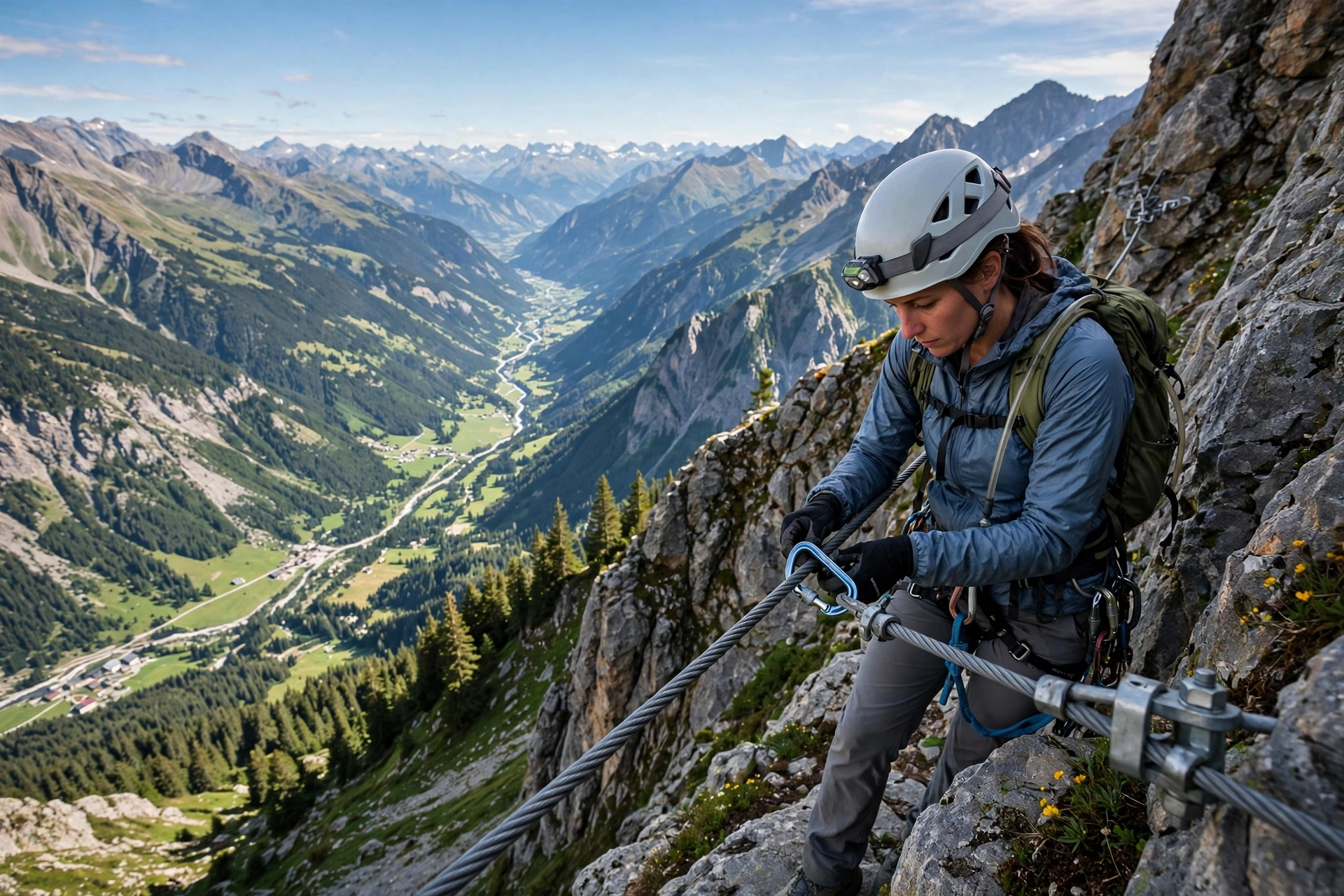
The activity feels different even though the helmet is the same. A typical via ferrata involves continuous movement along steel cables, rungs, and ladders, often for several hours. You are usually upright, working steadily, and clipping and unclipping lanyards hundreds of times. There may be exposed traverses, vertical ladders, and wire bridges where you can swing or bump against rock and metal fixings.
Rock climbing tends to involve shorter hard efforts at a pitch, followed by belaying. You look up a lot while belaying, so a low, comfortable back of the helmet helps.
For via ferrata, glancing contact with cables, rungs, and rock is common, and your helmet will get knocked and scraped more often than you expect. A durable hard shell or hybrid shell handles that daily wear well. For pure rock climbing, some climbers accept a lighter foam helmet that scratches more easily because weight matters more on long multi-pitch days. The protection standard is the same; your tolerance for weight and wear is what changes.
Climbing Helmet vs Via Ferrata Helmet: Side by Side
Because the two labels usually describe the same product, the honest comparison is between the safety requirements, which are identical, and the buying priorities, which can differ slightly by trip.
| Feature | Climbing Helmet | Helmet Sold for Via Ferrata |
|---|---|---|
| Certification | EN 12492 and often UIAA 106 | EN 12492 and often UIAA 106 |
| Main protection | Falling rock and impacts with rock | Falling rock and impacts with rock |
| Shell types | Foam, hybrid, or hard shell | Often hybrid or hard shell for durability |
| Weight | Ranges from very light to sturdy | Usually mid-weight, built to take knocks |
| Ventilation | Fixed vents or adjustable vents | Good fixed ventilation helps on long, warm routes |
| Headlamp clips | Common on most models | Especially useful for tunnels and early starts |
| Best buying focus | Fit, weight, and use on rock and alpine routes | Fit, durability, comfort for hours of steady movement |
Read the table as a shopping checklist rather than as two different safety classes. If two helmets are both certified and both fit well, choose the one you will happily wear all day. A helmet left in your pack because it is hot or uncomfortable protects you from nothing.
Features That Genuinely Help on Via Ferrata
Fit comes first. Try the helmet with the hairstyle and thin hat you actually climb in, tighten the chin strap, and shake your head gently. It should stay level without pressure points. An adjustment wheel at the back helps fine-tune the fit as the day warms up, and a strap divider that sits flat under your ears makes the helmet easier to forget about.
Ventilation matters more than many buyers expect. Via ferrata routes often sit in full sun, and you move continuously. Generous fixed vents suit summer routes; for cooler seasons, choose a helmet that pairs well with a thin beanie underneath. Match it to the season you climb most.
Headlamp clips are the other feature worth checking before you buy. Some via ferrata routes pass through old military tunnels, and many climbers start before dawn to avoid afternoon storms. Four simple clips, or two clips and an elastic strap at the back, hold a lamp securely when you look down at your feet. Also check that the helmet works with sunglasses and does not push them down your nose, because you will wear both for most of a sunny route.
Foam, Hybrid, and Hard Shell Options
Lightweight foam helmets use expanded foam similar in idea to a bike helmet, sometimes with a thin shell. They are comfortable and very light, which is why sport climbers like them, but the surface dents and scratches more easily. On via ferrata, where cable and ladder contact is frequent, that cosmetic damage adds up faster.
Hybrid helmets combine a harder outer shell with foam underneath. They are the most common recommendation for mixed climbing and via ferrata because they balance weight, durability, and price. Hard shell helmets use a thicker plastic shell over foam or webbing suspension. They tend to be heavier and warmer, but they shrug off years of rough handling, which is why guide services and rental shops often use them.
Whichever type you choose, inspect it regularly for cracks, deep dents, frayed straps, and damaged adjustment parts. Retire it after a significant impact, even without visible damage, follow the manufacturer’s lifespan guidance, and store it away from strong heat and solvents.
Frequently Asked Questions
Can I use my regular climbing helmet for via ferrata?
Yes. If it is a certified climbing helmet that fits you properly and is in good condition, it is suitable for via ferrata. There is no extra via Ferrata-specific certification you need to look for.
Can I use a bike helmet or ski helmet instead?
No. Those helmets are certified for different impact patterns and do not provide the same protection against rockfall from above. Use a helmet certified to EN 12492 for climbing and via ferrata.
How should a via ferrata helmet fit?
It should sit level, cover your forehead without blocking your view, and stay in place when you shake your head with the strap fastened. You should be able to fit about two fingers between the strap and your chin.

Olivia
Writer at Helmet Today, covering helmet reviews, fit and riding safety.