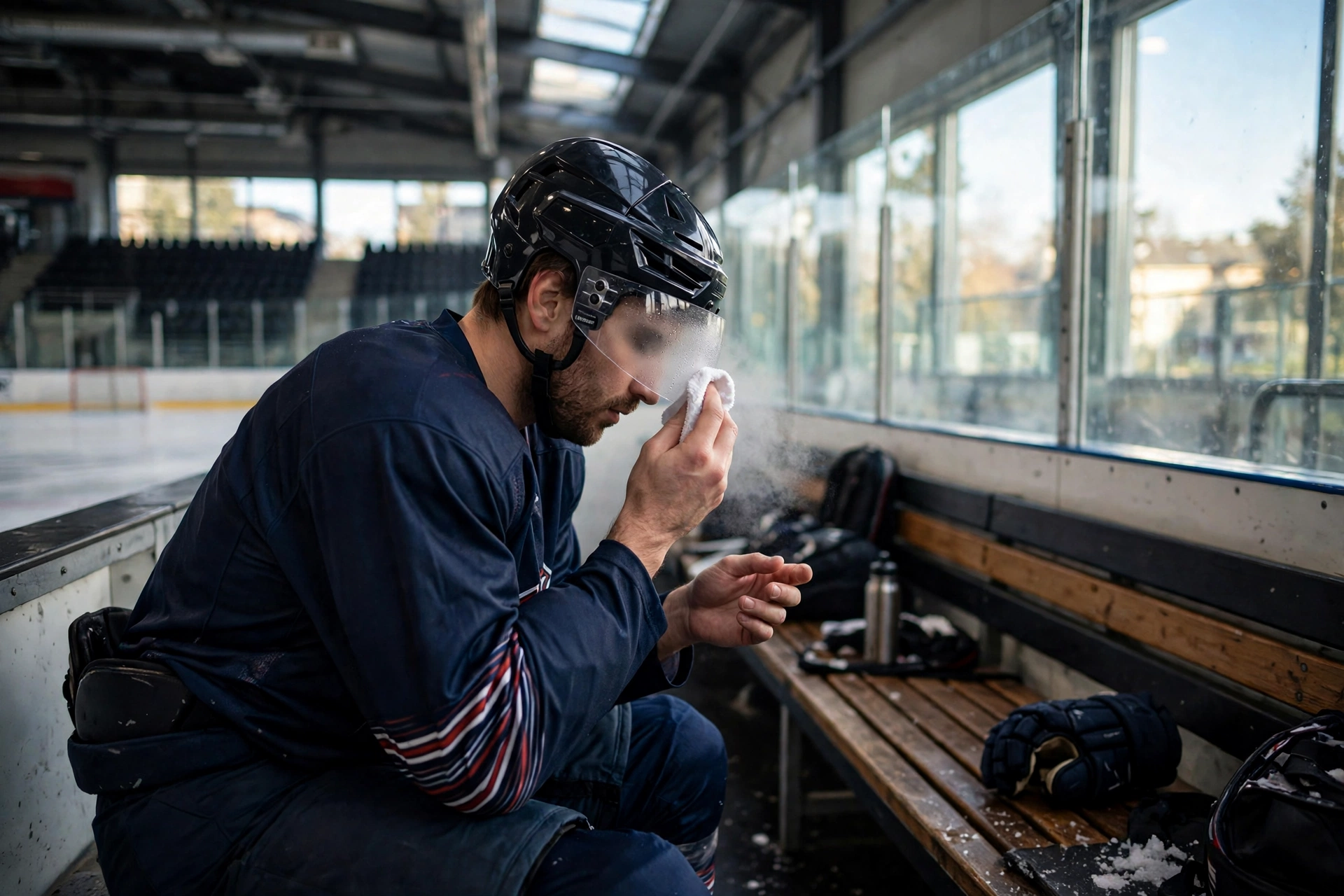
The quickest way to defog a hockey helmet visor is to wipe the inside surface with a clean microfiber towel on the bench, then keep air moving across it when you get back on the ice. For a fix that lasts the whole game, apply an anti-fog spray or wipe before puck drop and let it dry fully. Fog is just condensation, so anything that removes moisture or warms the visor surface buys you clear shifts.
Why does a hockey helmet visor fog up in the first place?
Fog forms when warm, moist air meets a colder surface. Your face and breath pump out warm air, the rink keeps the visor cold, and the moisture in that air condenses into thousands of tiny droplets on the inside of the shield. The harder you skate, the more warm air you produce, which is why a visor that is clear in warm-ups can cloud over during a long, intense shift.
A few things make it worse. A helmet that sat in a warm car or locker room hits the cold rink air and fogs almost instantly. Dirty visors fog faster because oils and residue give droplets something to cling to. And once the factory anti-fog coating on the inside surface gets scratched or worn away, the plastic underneath has no defense at all, so fog returns quicker every game.
What should you do before the game to stop fog starting?
Pre-game prep does most of the work. Start with a clean visor, because anti-fog products bond poorly to a dirty surface. Rinse the visor with lukewarm water, pat it dry with a microfiber cloth, then apply your anti-fog spray or wipe to the inside surface in smooth, even strokes. Let it dry completely — putting the helmet on while the coating is still wet is a common reason the treatment seems not to work.
Bring the helmet into the cold early. If your gear lives in a warm house and goes straight onto your head at game time, the temperature gap is at its worst. Leaving your bag in the rink, or at least opening it during warm-ups, lets the visor cool down gradually. Finally, check that the helmet’s vents are open and clear. Even a visor benefits from the general airflow around your head, and blocked vents trap humid air inside the helmet.
How do you defog a visor fast during a game?
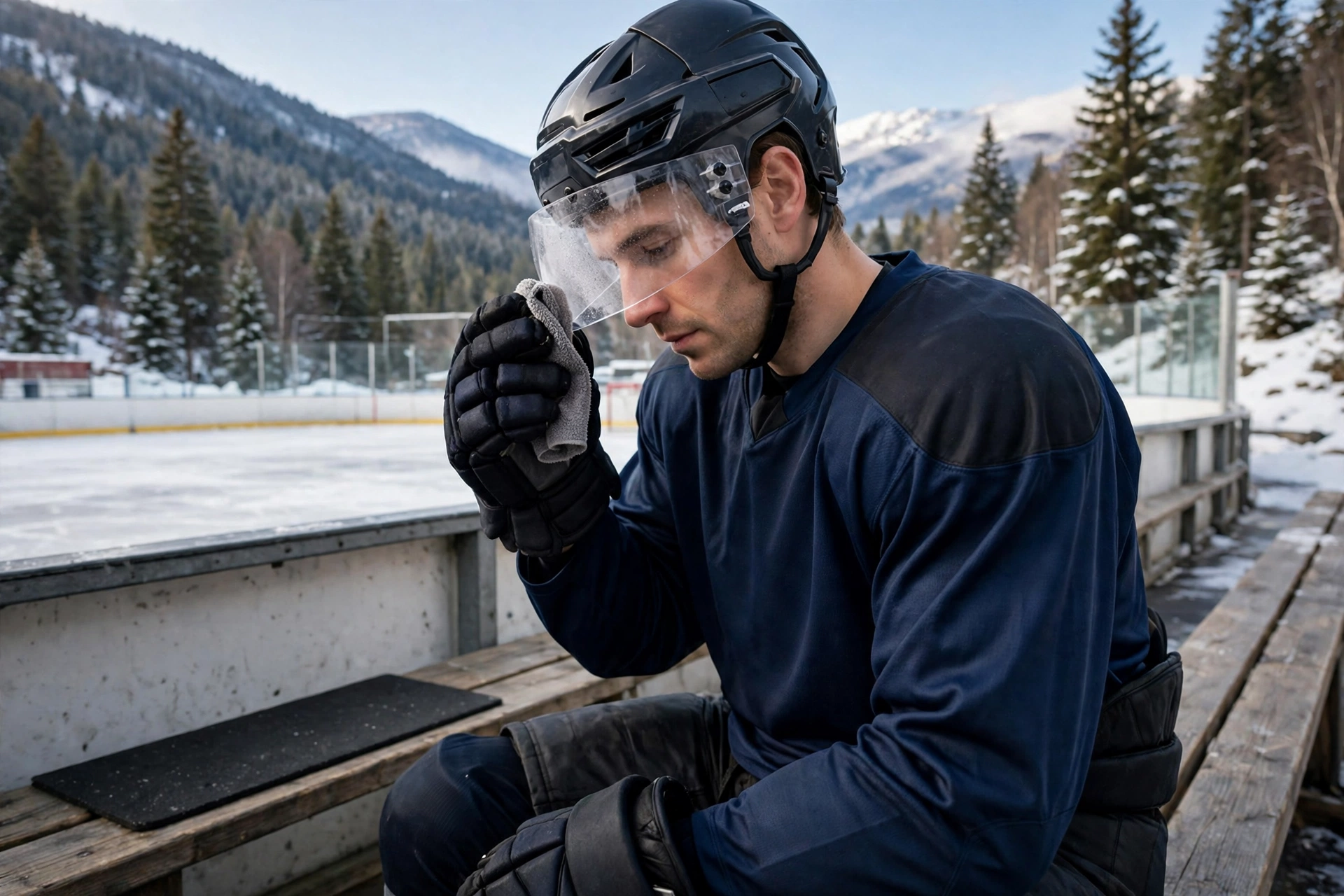
Keep a small microfiber towel or a piece of a soft bench towel where you sit. Between shifts, one gentle wipe across the inside of the visor clears most fog. Wipe in one direction rather than scrubbing in circles, and never use your glove — glove palms are dirty, abrasive, and loaded with the oils that cause the next round of fog.
Back on the ice, airflow is your friend. Fog builds when you are stationary on the bench or standing in a faceoff circle, and it often clears on its own once you are skating and air is moving through the helmet. Flipping the visor up for a few seconds between whistles also helps equalize the temperature. What does not help is wiping with a jersey sleeve, which mostly smears moisture around, adds scratches, and gives you about ten clear seconds before the haze comes back thicker than before.
Carrying a single-use anti-fog wipe in your glove or pants pocket is a decent emergency option for tournament days when you play twice. Press it lightly across the inside of the visor during a break rather than scrubbing. It will not match a proper pre-game treatment, but it can rescue the third period. Avoid the old locker-room habit of spitting on the visor and rubbing it in — it is unhygienic, barely works, and the rubbing does more harm than the moisture ever did.
How do you clean a visor without ruining the coating?
The anti-fog and anti-scratch coatings on a visor are thin and easy to destroy with the wrong cleaning method. Use lukewarm water and, if needed, a drop of mild dish soap. Wash with your fingertips or a soaked microfiber cloth, rinse, and let the visor air-dry or pat it gently. Never use paper towels, tissues, or the rough edge of a stitched towel — they are abrasive enough to haze the surface over time.
Keep ammonia-based glass cleaners, alcohol sprays, and solvent products away from the visor entirely. They can strip the coating and even cloud the plastic itself. Between games, store the helmet in its bag or a soft cloth cover so the visor is not rubbing against skates, sticks, or zippers in your gear bag. Most “permanent” fog problems are really scratched-coating problems caused by rough storage and cleaning.
When should you replace a foggy visor instead of fighting it?
If a freshly cleaned and treated visor fogs again within minutes, the coating is likely worn out and no spray will bring it back for long. Deep scratches in your sight line, cracks around the mounting holes, and a hazy or yellowed surface are all signs the visor has done its job and should be swapped. A visor is protective equipment, not just a window, so damage matters beyond visibility.
Use the swap as a chance to check the whole setup. Make sure the helmet itself still fits snugly and that its safety systems are intact — if you are not sure how modern rotational protection works, our guide to what MIPS is in helmets explains it in plain terms. A new visor on a well-fitting helmet, prepped properly before each game, is the combination that finally ends the fog fight for most players.
Frequently Asked Questions
Does the shampoo or shaving cream trick work on a hockey visor?
It can work for a game or two, because soap residue leaves a thin film that spreads moisture out instead of letting it bead. Treat it as a backup option, not a routine — heavy residue can smear your vision, and repeated use is rough on factory coatings.
Should you treat the outside of the visor too?
Most fog forms on the inside surface, so that is where anti-fog belongs. The outside mainly collects ice spray and water, which sheds on its own while you skate. Treat the inside, and simply keep the outside clean.
Why does only the bottom half of the visor fog?
Your breath rises from below and hits the lower part of the shield first, and that area sits closest to the warmest air leaving your mouth and nose. It is normal, and better airflow plus a proper pre-game treatment usually evens it out.

Olivia
Writer at Helmet Today, covering helmet reviews, fit and riding safety.