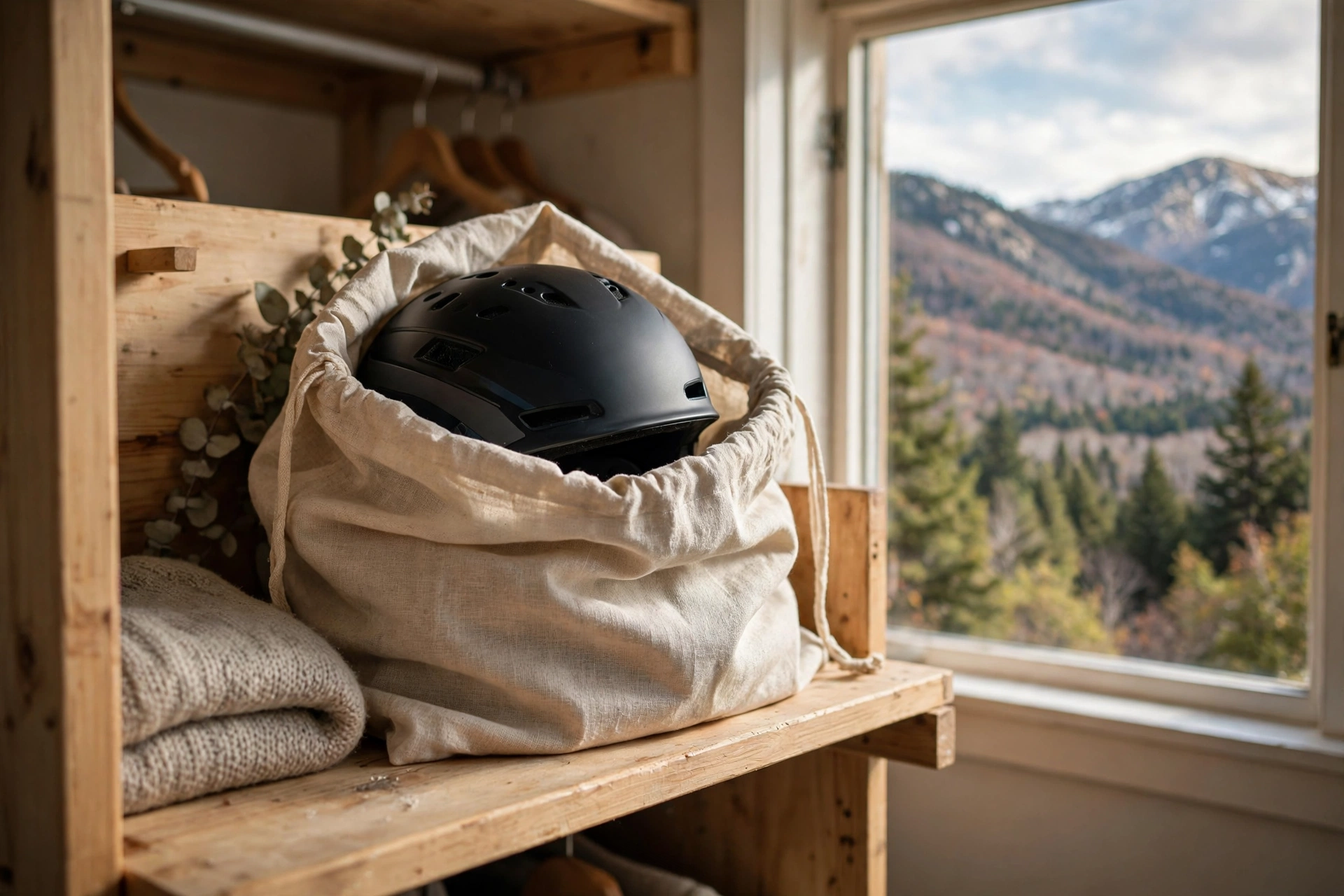
Store your ski helmet clean, completely dry, and uncompressed in a cool, dry, dark place — ideally in its loose cloth bag on a closet shelf. Heat, sunlight, garage fumes, and anything stacked on top of the helmet quietly age the foam and padding, so how you store it over the summer directly affects how well it protects you next winter.
Why does off-season storage matter for a ski helmet?
A ski helmet’s protective EPS foam is tougher than it looks in some ways and more fragile in others. It shrugs off everyday bumps, but it degrades slowly when exposed to heat, UV light, and chemical vapors. A garage that bakes all summer, a shelf next to paint thinner or gasoline, or a sunny windowsill can shorten the helmet’s useful life even though it is just sitting there.
Storage conditions also affect the comfort parts. Padding stored damp grows mildew and odor that no amount of airing fully removes. Straps left twisted or under tension can take a set. Goggles left pressed against the helmet can lose their foam seal. Even dust matters: grit that settles into the fit dial and vent sliders over a long summer makes the adjustments stiff by autumn.
Good storage is simply cheap insurance: ten minutes of care in spring saves you a helmet that smells, fits worse, or needs replacing a season early. Think of the off-season routine as part of the helmet’s service life, no different from checking your bindings before a new season starts.
How should you clean a ski helmet before storing it?
Never put a dirty, damp helmet away. Sweat, sunscreen, and skin oils left in the liner for six months will set into the fabric and feed odor-causing bacteria. Start by removing the liner and ear pads if your model allows. Hand-wash them in lukewarm water with a small amount of mild soap, rinse thoroughly, and press the water out with a towel — do not wring them hard.
Wipe the shell inside and out with a soft cloth dampened with water and a drop of mild soap. Pay attention to the strap, which collects the most sweat: wipe it down along its full length, including under the buckle. Clean around the vents and the fit dial where dust collects. Avoid solvents, strong detergents, and anything abrasive, all of which can attack the foam and shell finish.
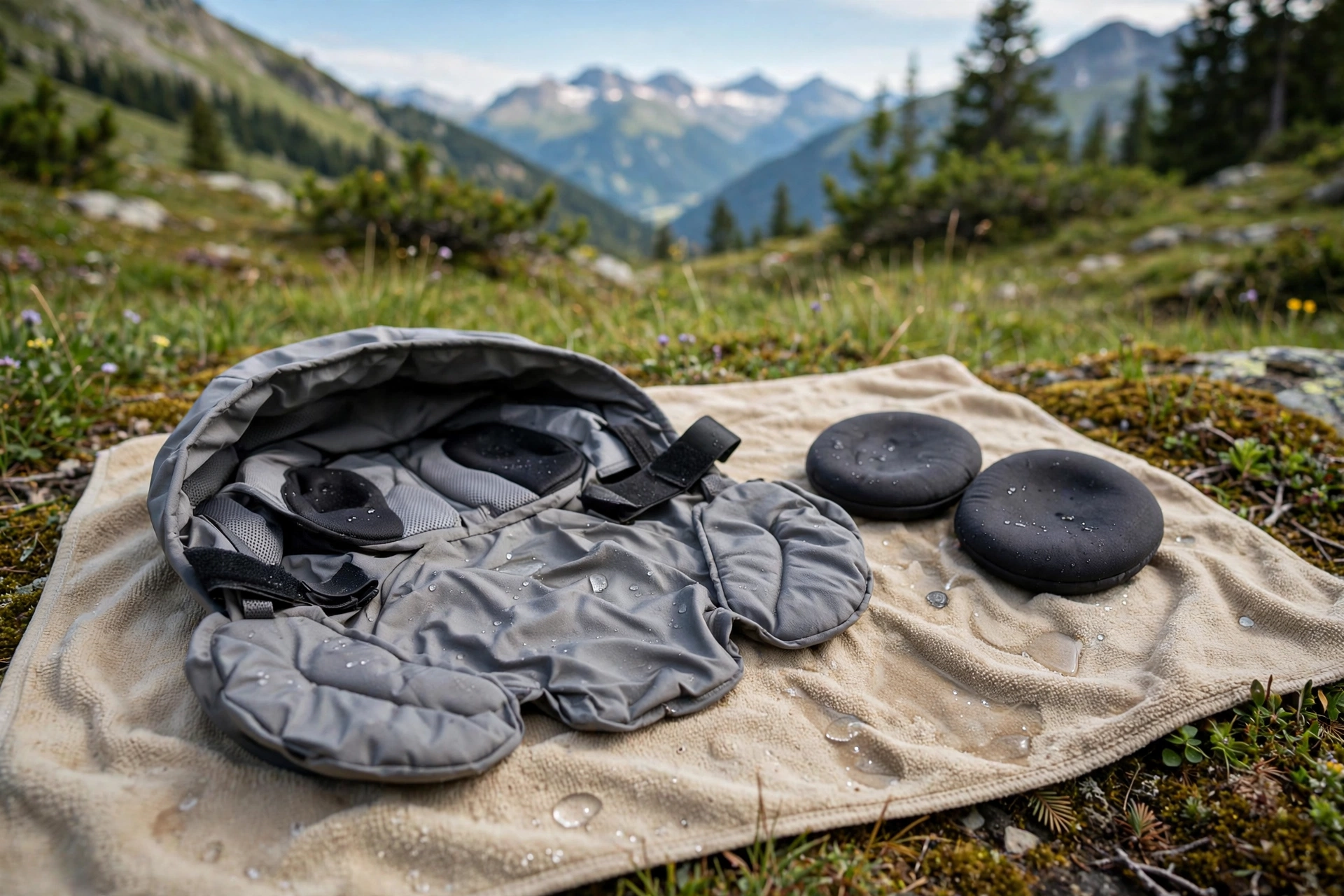
Then let everything dry fully — this step matters more than the washing. Air-dry the liner, pads, and helmet separately in a ventilated room, out of direct sun, for at least 24 to 48 hours. Do not use a hair dryer, radiator, or tumble dryer; heat warps foam and melts adhesives. Only reassemble the helmet once every part is dry to the touch all the way through.
Where is the best place to store a ski helmet?
A closet shelf, a bedroom cupboard, or a storage box in a living space is ideal: cool, dry, dark, and at a stable temperature. The same basic storage logic applies across snow helmets — our ski helmet vs snowboard helmet comparison covers both designs, and both store best indoors rather than in outbuildings.
Places to avoid include the garage (heat cycles, vehicle exhaust, fuel and solvent fumes), the attic (extreme summer heat), a damp basement (mold risk), and anywhere in direct sunlight. Keep the helmet away from paints, thinners, cleaning chemicals, and insecticides — their fumes can attack EPS foam. If a closet is your only option but it shares space with strong chemicals, move the chemicals, not the helmet.
How should you position and bag the helmet during storage?
Use the soft cloth bag the helmet came with, or a pillowcase or breathable storage bag. The bag’s job is to keep dust off and prevent scuffs, not to seal the helmet in — avoid airtight plastic bins or sealed plastic bags, which trap residual moisture. If you must use a plastic storage box, leave the lid slightly ajar and make sure the helmet went in bone dry.
Set the helmet upright or resting on its side on a flat surface, with nothing stacked on top of it. Compression is the quiet enemy: a heavy box or pile of gear pressing on the shell for months can stress the shell and foam. Keep the chin strap loosely fastened so it does not tangle or twist, and store goggles separately rather than strapped to the helmet, so neither the goggle foam nor the strap is under constant tension.
If you store several helmets, give each its own bag and shelf space rather than nesting them together. A quick label with the purchase year on a piece of tape inside the bag helps you track each helmet’s age.
What should you check before the first ski day next season?
Take the helmet out a week or two before your first trip, not the night before. First, inspect the shell for cracks, dents, and crazing, then remove the liner and check the EPS foam for cracks, flaking, or compressed spots. A helmet that was dropped or knocked during storage should be judged the same way as one damaged on the slope.
Next, check the fit. Padding can pack down or the fit can change if your hairstyle or weight changed. The helmet should sit level, feel snug all around without pressure points, and stay put when you shake your head with the strap fastened. Test the buckle, adjusters, and fit dial, and replace any frayed strap or cracked buckle with manufacturer parts.
Finally, check the age. Find the manufacture date sticker inside the shell. Most makers recommend replacing a helmet about every five years, so if yours is approaching that mark, start the season on a new one rather than stretching a doubtful helmet through another winter.
Frequently Asked Questions
Can I store my ski helmet in the garage?
It is not recommended. Garages cycle between hot and cold, and fuel, paint, and solvent fumes can degrade the foam. A cool indoor closet is a much better choice.
Should I store my helmet in a sealed plastic box?
Only if the helmet is completely dry, and even then a breathable cloth bag is better. Sealed plastic traps moisture, which leads to mildew and odor in the liner.
Can I hang my ski helmet by its strap?
Brief hanging for drying is fine, but months of hanging stretches the strap and stresses its stitching. Store the helmet resting on a shelf instead.

Olivia
Writer at Helmet Today, covering helmet reviews, fit and riding safety.