

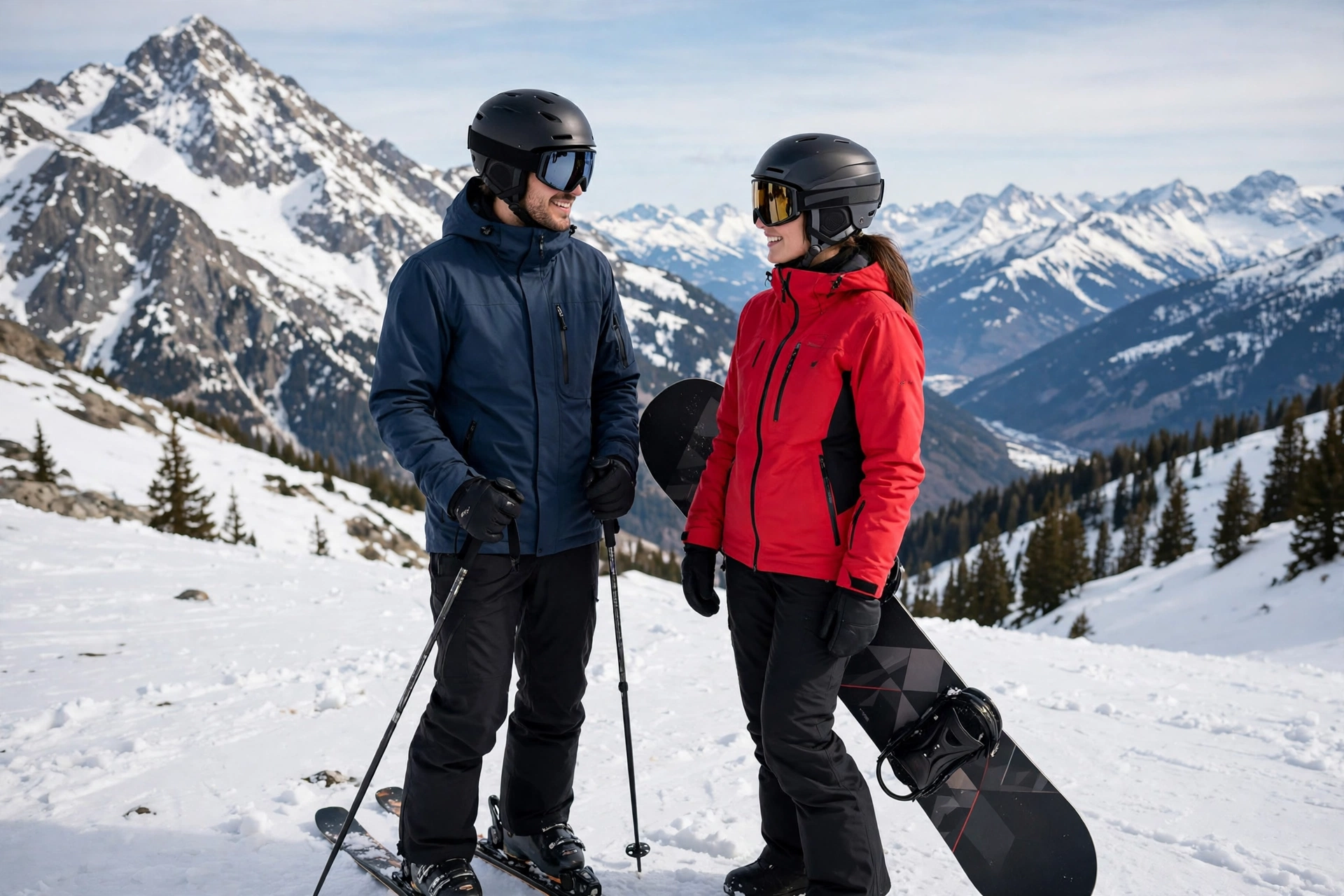
Ski helmets and snowboard helmets are essentially the same helmets. Both are tested to the same snow sports standards, mainly ASTM F2040 in North America and CE EN 1077 in Europe, and one good helmet can serve you for both skiing and snowboarding. The differences you will find in shops are about style, fit details, brims, and features such as audio compatibility, not about a separate safety category.
Many riders do both sports, so this is good news: you do not need two helmets. You need one certified snow helmet that fits well and works with your goggles.
Same Standards: ASTM F2040 and EN 1077
ASTM F2040 is the standard most snow helmets sold in North America are tested against. CE EN 1077 is the European standard for helmets for alpine skiers and snowboarders. Notice the wording: the European standard names both sports in a single standard. Manufacturers design one helmet, test it against these requirements, and then market it to skiers, snowboarders, or both.
These standards cover impact protection for the kinds of falls and collisions that happen on snow, and they also address retention, coverage, and use in cold conditions. Snow helmets often use construction similar in spirit to other sports helmets, with a hard outer shell and energy-absorbing foam, but they add insulation and ear coverage because they are worn all day in winter weather.
So when you compare two helmets, ignore whether the product page is labelled ski or snowboard and read the certification line instead. If it lists ASTM F2040 or CE EN 1077, it is a proper snow sports helmet for both activities. If a winter-looking helmet lists neither, treat it as fashion rather than protective equipment.
Where the Real Differences Are: Style
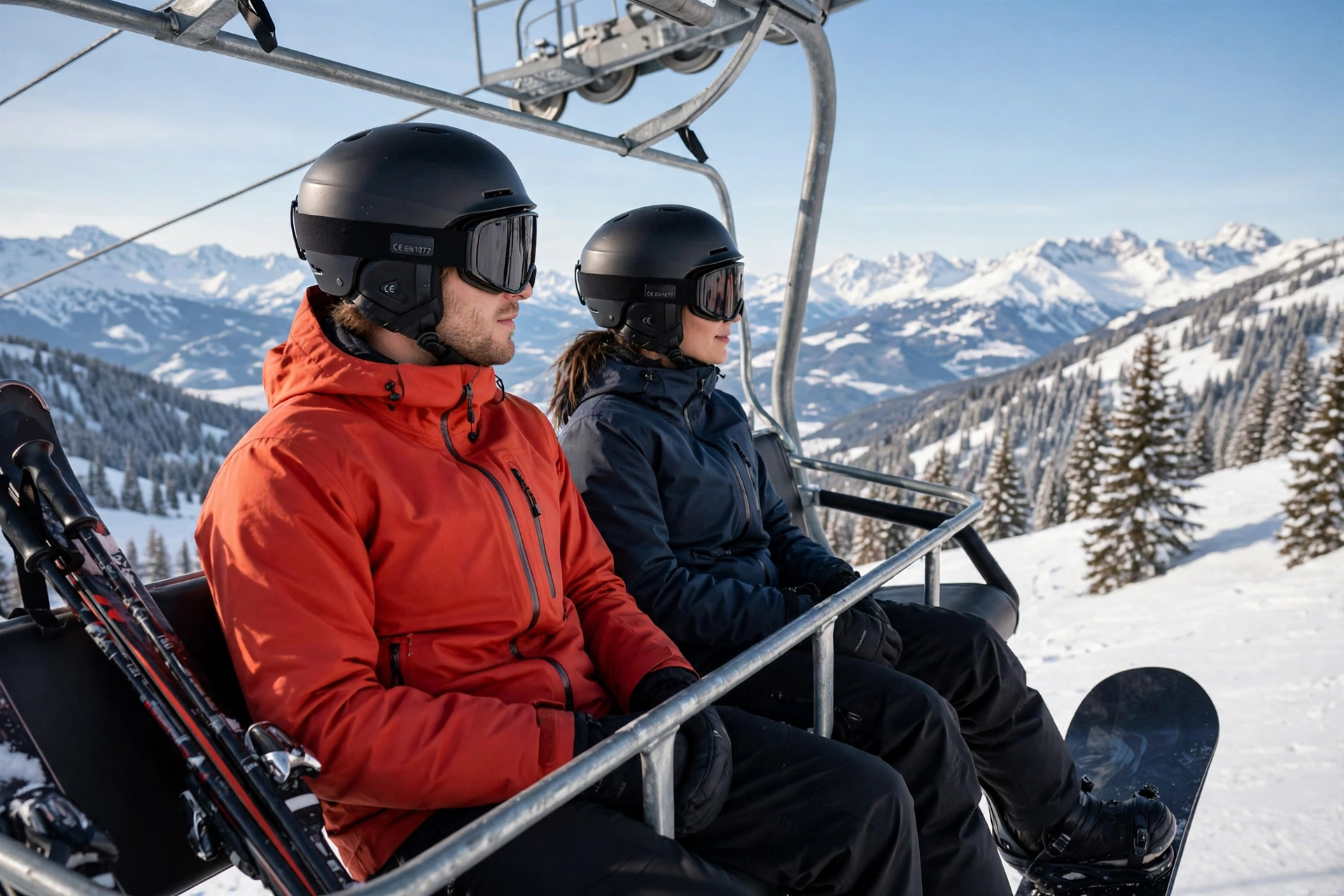
Historically, snowboard helmets were marketed with a skate-inspired look: rounder shapes, matte finishes, and sometimes a short brim or peak. Ski helmets were marketed as sleeker and more aerodynamic, with a racing influence. Those styling traditions still shape product ranges, and many riders simply prefer one look over the other.
None of that styling changes the job the helmet does. A brim can keep snow and low sun off your goggles, but it is a comfort feature. Brands photograph and name models for one sport even when the same helmet could be sold to either group in a different colour.
The practical takeaway is liberating: shop the full snow helmet wall, not just your sport’s corner of it. The best-fitting certified helmet in the shop might be photographed with the other sport on the box, and it will protect your head exactly the same way.
Fit, Goggles, and Warmth Matter More
Fit is where helmets genuinely differ. Head shapes vary, and so do helmet shapes. A snow helmet should sit level, feel snug without a headache, and stay put when you shake your head. The back of the helmet should work with your goggle strap, and the front edge should sit just above your goggles with no large gap on your forehead, a gap riders often call the gaper gap.
Bring your goggles when you shop. Goggles and helmets from the same brand often integrate neatly, including vents that line up to reduce fogging, but cross-brand combinations can work just as well if you test them together. Check that the helmet does not push your goggles down your nose and that the strap retainer at the back holds the strap securely.
Vents, liners, and ear pads
Warmth features are shared across ski and snowboard models. Removable ear pads, fleece liners, and adjustable vents let you run the same helmet on a bitter January morning and a sunny spring afternoon. Snowboarders who hike a park or a backcountry line may value vents that open widely. Skiers who ride fast lifts in cold wind may prefer a warmer liner. Again, these are preferences within one helmet family, not separate standards.
Some helmets also add rotational impact systems, which you can read more about in our explanation of what MIPS is for helmets. Such a system can be fitted to a helmet used for either sport, and it does not change the ski-versus-snowboard answer.
Audio, Cameras, and Other Features
Audio compatibility is the feature most often linked with snowboard marketing, but skiers buy it just as happily. Many snow helmets have ear pads with pockets for drop-in audio chips, so you can listen to music or take calls with the speakers held inside the padding. Check whether the speakers are included or sold separately, and keep the volume low enough to hear other riders and slope announcements around you.
Camera mounts, magnetic chin strap buckles, and boa-style fit adjusters are also shared features. A fit dial at the back is especially useful if you sometimes wear a thin liner or balaclava under the helmet and sometimes do not. Look for a liner that can be removed and washed, because a full season of lift days builds up quickly.
One caution: do not modify the helmet to add a feature. Drilling or gluing rigid mounts can damage the shell or foam. Use the accessories the manufacturer offers for your model.
Can One Helmet Really Do Both?
Yes, and for most recreational riders it should. Switching between skis and a snowboard during the same trip, or across a season, does not require switching helmets. Learning riders fall differently on a board than on skis, with more backward falls when catching an edge and more forward falls on skis, but a snow helmet is designed to protect around the head, including the back, rather than guarding one sport-specific spot.
Only a few reasons justify a second snow helmet. A racer may need a model meeting specific competition rules, which should be checked with the organizer. A helmet that no longer fits or has been damaged needs replacing anyway.
Look after the one helmet you choose. Store it dry and out of strong heat, wash the liner as directed, inspect the shell and foam after any hard hit, and retire it after a significant impact even if it looks fine. A certified, well-fitting snow helmet, worn on every run, is the whole answer for both sports.
Frequently Asked Questions
Are snowboard helmets safer than ski helmets?
No. They are tested to the same ASTM F2040 and CE EN 1077 standards. Choose on fit, goggle compatibility, and features you will actually use, not on the sport named on the box.
Can I use a ski helmet for snowboarding lessons?
Yes. A certified snow helmet is suitable for both skiing and snowboarding, including lessons. Make sure it fits the rider properly and works with their goggles.
Can I wear a bike helmet for skiing or snowboarding instead?
No. A bike helmet is certified for cycling conditions, has no insulation or ear coverage, and is not tested as a snow sports helmet. Use a helmet that lists ASTM F2040 or CE EN 1077.

Olivia
Writer at Helmet Today, covering helmet reviews, fit and riding safety.
Pingback: How to Stop a Snowmobile Helmet Visor From Fogging