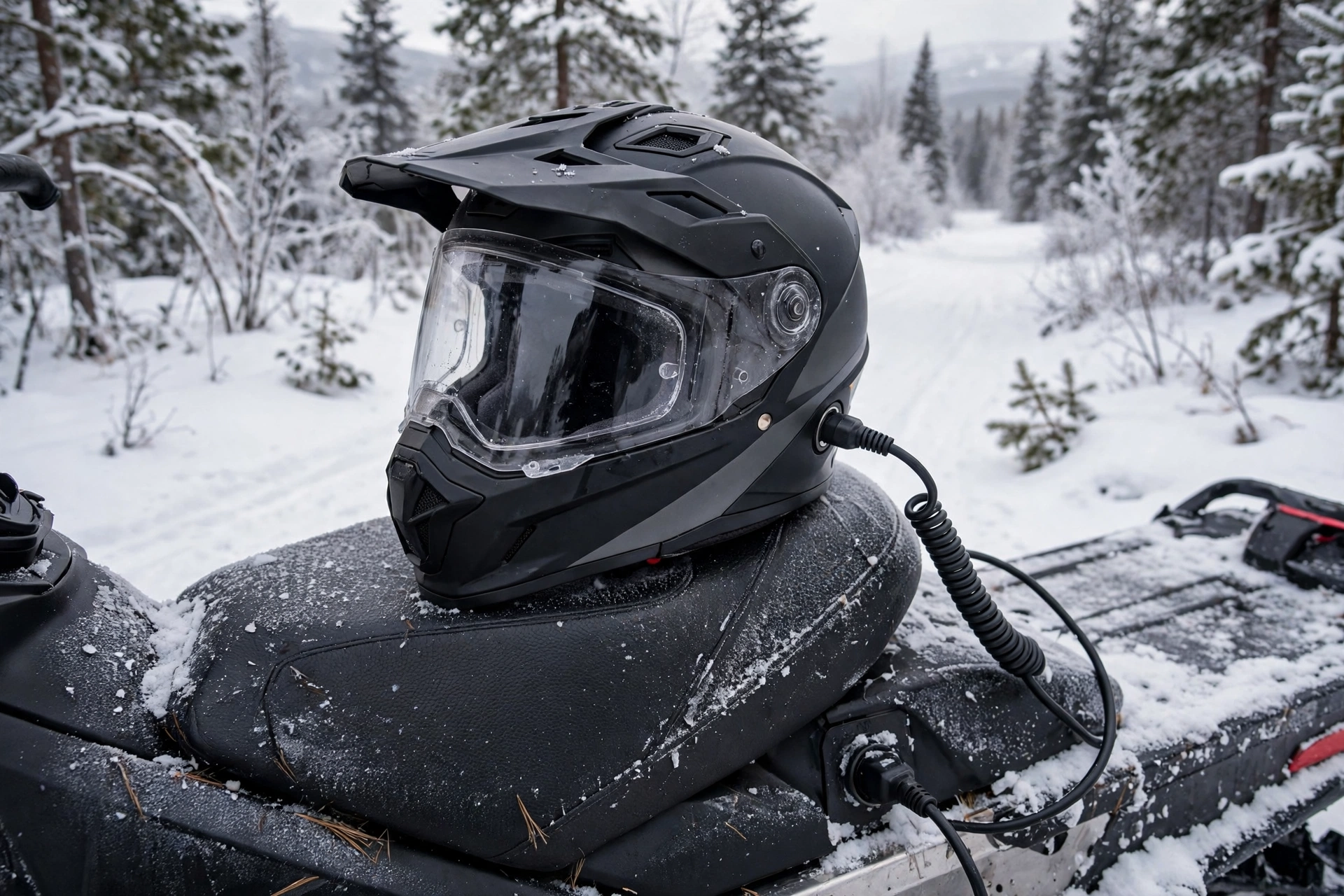
The reliable way to stop a snowmobile helmet shield from fogging is to combine a dual-pane (or heated) shield with a properly sealed breath deflector, then manage your vents and crack the shield open at stops. Fog is simply your warm breath condensing on a cold surface, so every fix works by either warming the shield, keeping breath off it, or both.
Almost every snowmobiler fights fog at some point, usually at the worst moment — a slow technical section right after a fast, cold stretch. The good news is that fogging is one of the most solvable problems in snowmobiling once you understand what causes it and set your helmet up as a system.
Why does a snowmobile helmet shield fog up?
Your breath is warm and saturated with moisture. When that air reaches a shield chilled by sub-freezing wind on its outer surface, the moisture condenses into a film of tiny droplets — fog. Three things make it worse: heavy breathing from effort, stopping (which cuts the airflow that clears the shield), and a poor seal that lets breath rise inside the helmet instead of being vented downward.
Glasses wearers get a double problem, because lenses fog for the same reason and are even closer to the breath stream. Everything below helps glasses too, and the comparison in our guide to ski vs snowboard helmets shows how other winter helmets handle the same moisture battle with goggles instead of shields.
How does a dual-pane or heated shield prevent fog?
A dual-pane shield works like a double-glazed window: two layers with a sealed air gap between them. The inner pane stays much closer to the temperature inside the helmet, so breath moisture has no cold surface to condense on. For most trail riders, a quality dual-pane shield in good condition solves fogging the majority of the time.
A heated shield goes a step further, using a thin electric element — powered by a cord to the sled — to actively warm the shield. It can melt frost as well as prevent fog, which is why it excels on the coldest, longest rides. The trade-offs are the cord to manage and the need for a working power connection. Whichever type you use, a scratched, aged, or poorly sealing shield will fog regardless, so inspect the gasket and surface each season.
How should you set up the breath deflector?
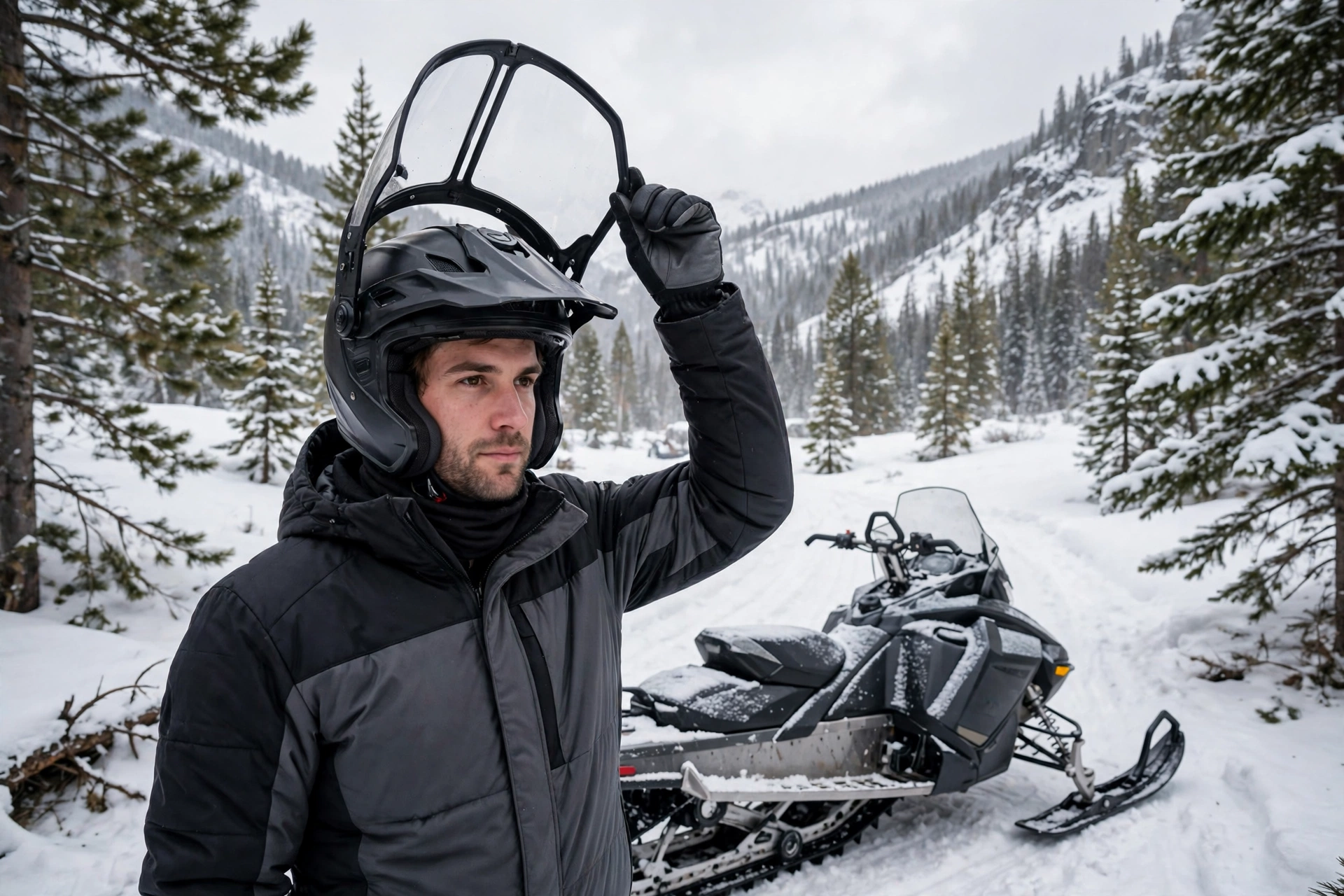
The breath box or deflector is the unsung hero of the system. It should sit snugly over your nose and mouth area, sealing against your face (or balaclava) so exhaled air is channeled down and out of the helmet rather than up behind the shield. Even the best heated shield struggles if breath is flooding the helmet interior.
Adjust the deflector’s shape, check that the chin curtain is in place to block air rushing up from below, and test at home: put the helmet on, breathe heavily, and feel for air leaking upward past your cheeks. Small gaps at the sides are the usual culprit and can often be fixed by repositioning the balaclava or the deflector itself.
What vent and riding habits keep the shield clear?
Moving air is your friend. Open the chin and forehead vents while you are working hard — slow, technical riding and digging out generate the most breath — and crack the shield a notch at stops instead of leaving it sealed while heat and moisture build up. Many shields have a dedicated slight-open detent position for exactly this.
At a stop, lifting the shield fully or flipping up a modular chin bar for a minute clears accumulated moisture before it turns to frost. Try not to bring the helmet into a warm building and then back into the cold repeatedly with a wet interior; a frosted inner pane takes far longer to recover than simple fog. Wearing a balaclava that covers your mouth with breath directed downward — rather than a loose neck gaiter that funnels air up — makes a noticeable difference too.
How should you clean and care for an anti-fog shield?
Gently, and only with mild soap and water or a cleaner specifically made for helmet shields. Many inner panes carry a delicate anti-fog treatment that harsh chemicals, glass cleaners, and rough cloths will strip or smear — turning a fog-resistant shield into one that fogs worse than a plain one. Use a clean microfiber cloth, pat rather than scrub the inner surface, and let it air dry.
Aftermarket anti-fog sprays and wipes can help on plain shields, but results vary and they need reapplying. Never use automotive rain treatments or abrasive polishes on the inside of a shield. If a dual-pane shield develops moisture between the panes, its seal has failed and replacement, not cleaning, is the cure.
Riders who wear glasses should pay extra attention to the deflector and venting setup, because the usual shortcut — cracking the shield — often just moves the fog from the shield to their lenses. A helmet with generous eyeglass channels, a well-sealed breath box, and in stubborn cases a heated shield usually solves the pair of problems together. Contact lens wearers have an easier time here, which is why some regular riders switch to contacts for snowmobiling season.
When is a heated shield actually worth it?
If you regularly ride in very low temperatures, ride long distances at night, or have tried a good dual-pane shield with a proper breath box and still lose the battle, a heated shield is generally worth it — it is the closest thing to a guaranteed fix, and it clears frost that no passive system can handle. Occasional riders in milder conditions are usually well served by the dual-pane setup and good habits alone.
Before spending, check the cheaper causes in order: deflector seal, chin curtain, vent habits, shield condition. Most “my helmet fogs no matter what” stories turn out to be a breath box sitting a centimeter too low. Fix the system first, then upgrade the shield if you still need more.
Frequently Asked Questions
Why does my shield fog only when I stop?
Stopping cuts the airflow that sweeps moisture away while your warm breath keeps coming. Crack the shield open at stops or lift it for a moment to let the moisture escape.
Can I use anti-fog spray on a dual-pane shield?
Check the shield maker’s guidance first. Many dual-pane inner surfaces have a factory anti-fog layer that sprays can damage. Mild soap and water is the safe default.
Do heated shields fog if the cord comes unplugged?
Yes — without power it behaves like an ordinary single shield and can fog or frost quickly in deep cold. Riders who rely on one check the connection at every stop.

Olivia
Writer at Helmet Today, covering helmet reviews, fit and riding safety.