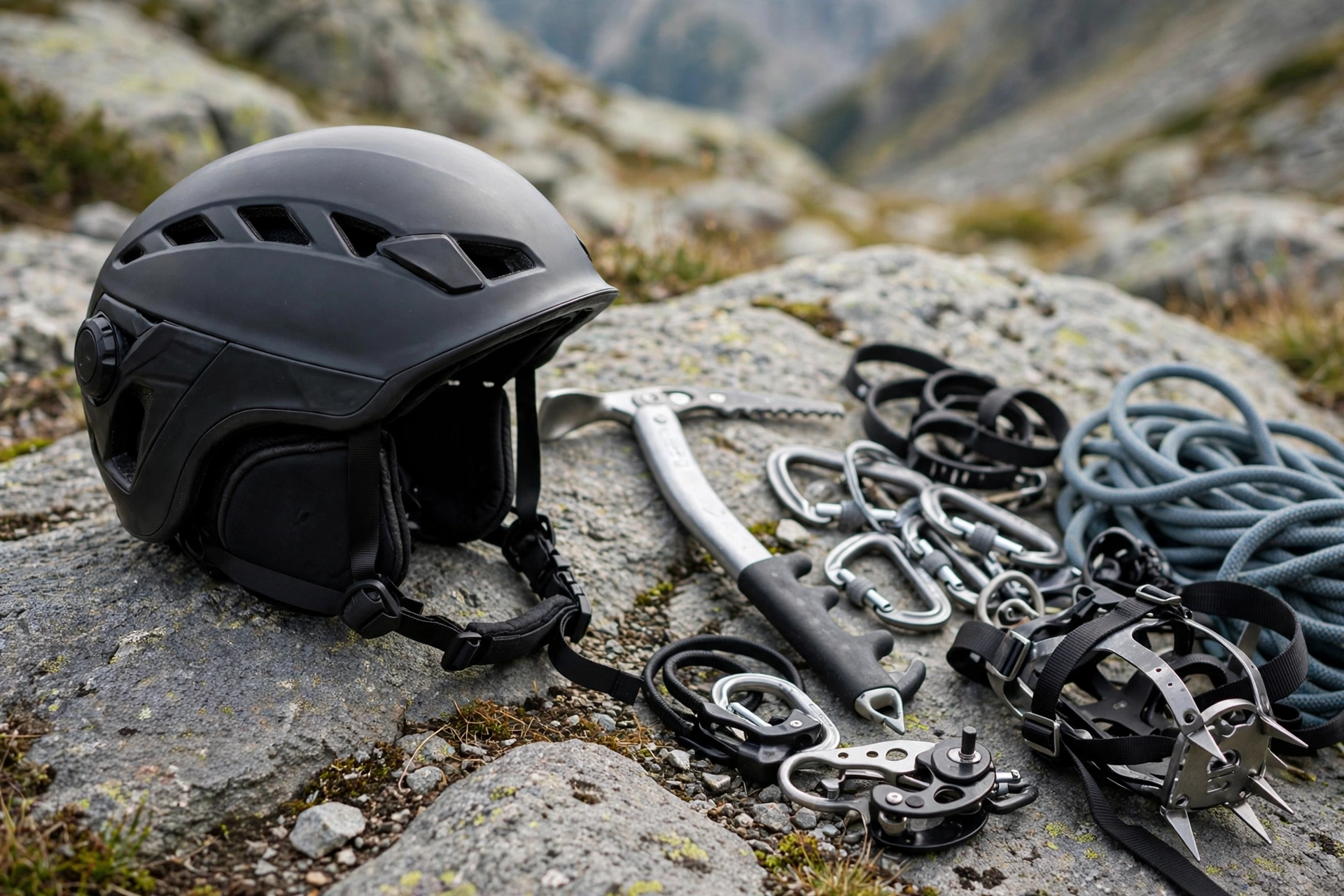
The difference is coverage and purpose: a rock climbing helmet is a light, well-ventilated helmet optimized mainly for impacts from above — falling rock — while a mountaineering helmet adds more side and rear coverage and insulation for alpine terrain, where falls, ice, and sliding all threaten the head from several directions. In practice the categories overlap heavily, and many modern helmets are certified and built to serve both.
Understanding the design intent helps you pick the right helmet for your objectives — and know when one helmet genuinely covers both sports.
What Is Each Helmet Designed to Protect Against?
Rock climbing helmets evolved around one classic accident: something falls from above — a stone dislodged by a rope, dropped gear, ice melting off a cliff — and strikes the top of the head. Their strongest protection sits on the crown, and the design brief prioritizes low weight and ventilation for long, hot days of cragging and multi-pitch climbing.
Mountaineering helmets answer a messier problem set. In alpine terrain you can be hit by falling ice or rock, but you can also slip on a snow slope, tumble, or swing into the mountain — impacts from the side and back are realistic, not rare. Mountaineering helmets therefore extend coverage lower around the sides and rear of the head, often with less ventilation and sometimes compatibility with goggles and warmer liners for wind and cold.
Neither helmet is “stronger” in a simple sense. They allocate protection differently, and a mountaineering helmet’s extra coverage comes with extra weight and warmth that a sport climber may not want.
How Do Shell Constructions Differ?
Three constructions dominate both categories:
- Hardshell — a durable plastic shell over foam, often with a small gap between shell and foam. Tough, affordable, and forgiving of travel abuse; the classic choice for mountaineering and instructional use, at some weight cost.
- In-mold foam — a thin shell bonded directly to expanded foam. Very light and well ventilated, which is why sport climbing helmets favor it; the thin shell dents more easily and demands gentler handling and storage.
- Hybrid — a hard shell over key impact zones with in-mold construction elsewhere, balancing durability, coverage, and weight. Many alpine helmets use this approach.
Materials vary within each type, and newer energy-absorbing foams have blurred the lines further. Judge a specific model by its certification, coverage, and condition rather than by construction labels alone. And as with the helmets in our climbing versus via ferrata comparison, fit and coverage for your head matter more than marketing categories.
Do They Follow the Same Safety Standards?
Yes — both are certified to the same core standard: EN 12492, the European standard for mountaineering helmets, with many models also carrying the voluntary UIAA safety label, which adds requirements such as greater coverage area and energy absorption tests. A helmet sold for climbing or mountaineering in reputable shops will meet EN 12492 regardless of which label the marketing uses.
What can differ is performance beyond the minimum. Some helmets are tested and rated with additional side and rear impact coverage, and some carry extra certifications for other sports — ski standards for ski-mountaineering, for example — which tells you the helmet was designed with those impacts in mind.
When comparing two helmets, look for the certification labels inside the shell, then look at how much of your own head the helmet actually covers. The standard guarantees a floor; coverage and fit decide how much above that floor you get. Try helmets on with the layers, balaclava, or goggles you actually climb in, because a certified helmet that shifts around on your head delivers far less than its test results promise.
How Do Weight and Ventilation Compare?
Rock climbing helmets are typically the lightest and airiest: generous vents, minimal padding, and shells shaped to shed heat on summer rock. On a long approach and a ten-pitch day, those grams and that airflow are genuinely noticeable, and a helmet you forget you are wearing is a helmet you keep on — which is when falling rock arrives.
Mountaineering helmets trade some of that for coverage and weather resistance. Vents may be smaller, closable, or absent; the shell extends lower; and the helmet must play nicely with goggles, a hood, and a headlamp in spindrift and darkness. In cold alpine conditions, limited ventilation is a feature — your head stays warm, and goggles fog less when the helmet seals well with them.
Weight differences between comparable modern models are smaller than they used to be, though. Plenty of alpine helmets are now light enough that sport climbers happily use them, and plenty of climbing helmets have enough coverage for summer alpine rock.
Can One Helmet Serve Both Climbing and Mountaineering?
Often, yes. If you climb rock in the summer and do moderate alpine routes — glacier travel, snowy approaches, alpine rock ridges — a hybrid helmet with good side and rear coverage, headlamp clips, and reasonable ventilation is a sensible single purchase. It will be certified to the same standard and will handle both impact profiles.
Choose a dedicated climbing helmet if your life is mostly warm-weather cragging and multi-pitch rock, where maximum ventilation and minimum weight keep it on your head all day. Choose a dedicated mountaineering helmet if your objectives involve serious winter conditions, ski mountaineering, or expedition use, where goggle compatibility, insulation options, and the lowest coverage matter most.
Whichever you pick, treat it as single-purpose safety equipment: inspect it regularly, store it cool and uncompressed, and retire it after any significant impact or at the end of its stated service life. The best helmet for both sports is the sound one you actually wear.
Frequently Asked Questions
Is a mountaineering helmet safer than a climbing helmet?
Not overall — both meet the same EN 12492 standard. A mountaineering helmet usually offers more side and rear coverage, which suits alpine falls, while a climbing helmet optimizes top protection, ventilation, and weight for rock.
Can I use a climbing helmet for glacier travel and alpine routes?
Yes, provided it fits well with your layers, has headlamp clips, and offers decent coverage. Many climbers use one helmet for both. For very cold or ski-based objectives, a mountaineering model with goggle compatibility may be more comfortable.
What does EN 12492 mean?
It is the European safety standard for helmets for mountaineers, covering impact absorption, penetration resistance, and retention-system strength. The optional UIAA label adds further requirements on top of it.

Olivia
Writer at Helmet Today, covering helmet reviews, fit and riding safety.