To fit a snowmobile helmet correctly, measure your head, choose the size that matches, and then test it while wearing the balaclava you ride in — the helmet should feel snug and even all around, with firm cheek pressure, no hot spots, and no movement when you shake your head. Skipping the balaclava test is the most common fitting mistake snowmobilers make.
A snowmobile helmet works in harsher conditions than almost any other helmet: deep cold, wind at speed, and long hours. A fit that is merely “okay” in the shop becomes a headache, a fogging problem, or a cold leak two hours into a ride. Taking ten minutes to fit it properly pays off all season.
How do you measure your head for a snowmobile helmet?
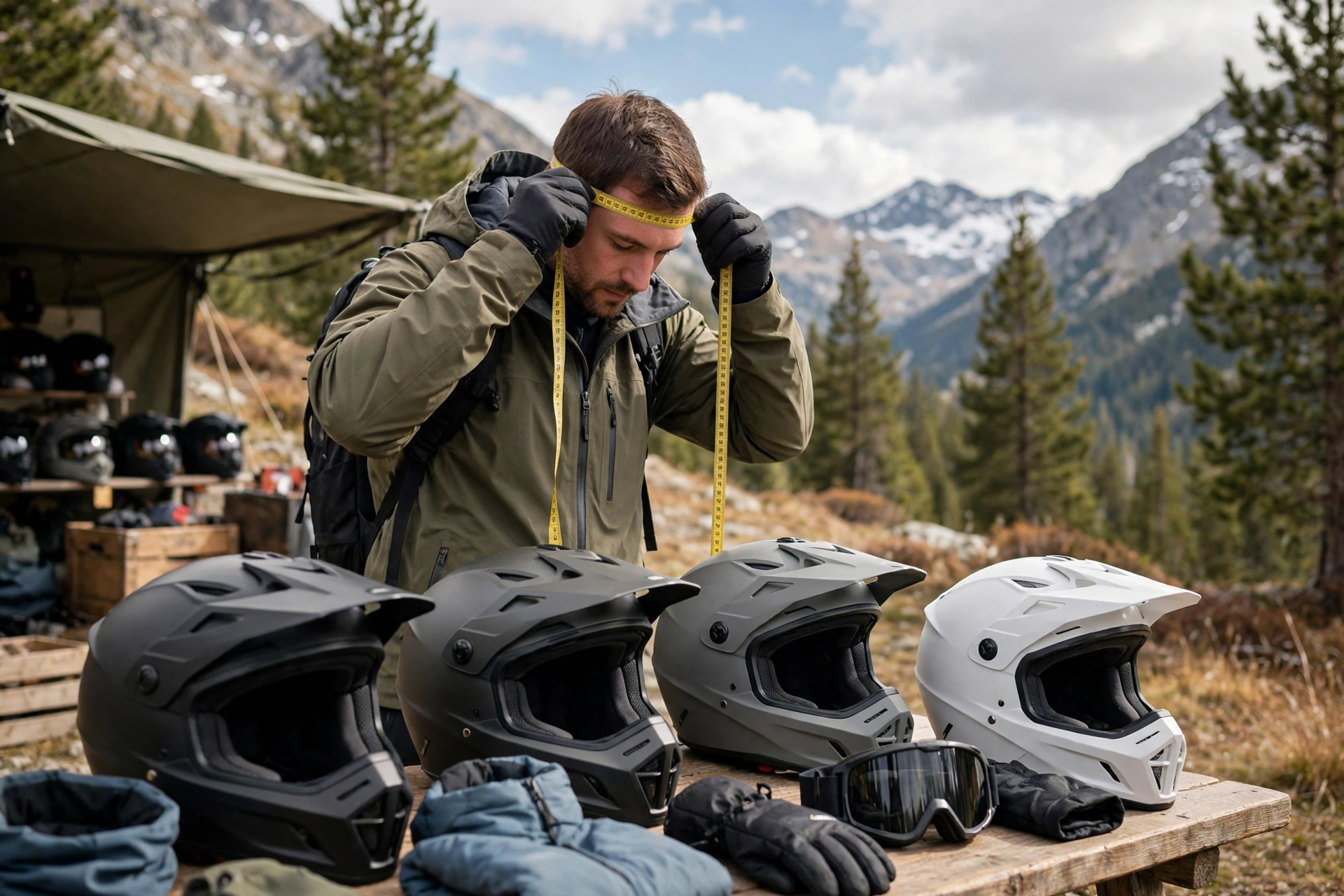
Wrap a soft tape measure around your head at the widest point — roughly an inch above your eyebrows and ears, around the back of the skull. Keep the tape level and snug but not tight, note the measurement in centimeters or inches, and compare it to the size chart of the specific brand you are considering. Sizes are not identical between brands, so your “large” in one may be a “medium” in another.
If you are between sizes, most riders do better starting with the smaller size, because helmet padding compresses and breaks in with use — typically loosening noticeably over the first several rides. The exception is if the smaller size creates a hard pressure point on your forehead or temples; break-in will not fix a shape mismatch.
Head shape plays a part here as well. Helmets are built around different internal shapes — some rounder, some longer front-to-back — and a rider whose head does not match the shell shape will feel it as pressure at the forehead and back with looseness at the sides, or the opposite. If one brand in your measured size feels wrong in that pattern, try another brand in the same size before going up or down. The number on the chart gets you close; shape gets you the rest of the way.
Why should you always fit the helmet with a balaclava?
Because you will never ride without one in real cold, and even a thin balaclava adds measurable thickness around your whole head. A helmet fitted to your bare head can end up painfully tight over a fleece balaclava, while a helmet fitted over a thick one may be loose on the milder days you wear a thin layer. Fit with the balaclava and mid-layer collar setup you use most often.
Bring your balaclava to the shop, or test at home during the return window with everything on: balaclava, jacket with its collar up, and glasses if you wear them. Then sit with the helmet on for ten to fifteen minutes. Fit problems rarely announce themselves in the first thirty seconds; they show up as a slow forehead ache or numb ears after a while.
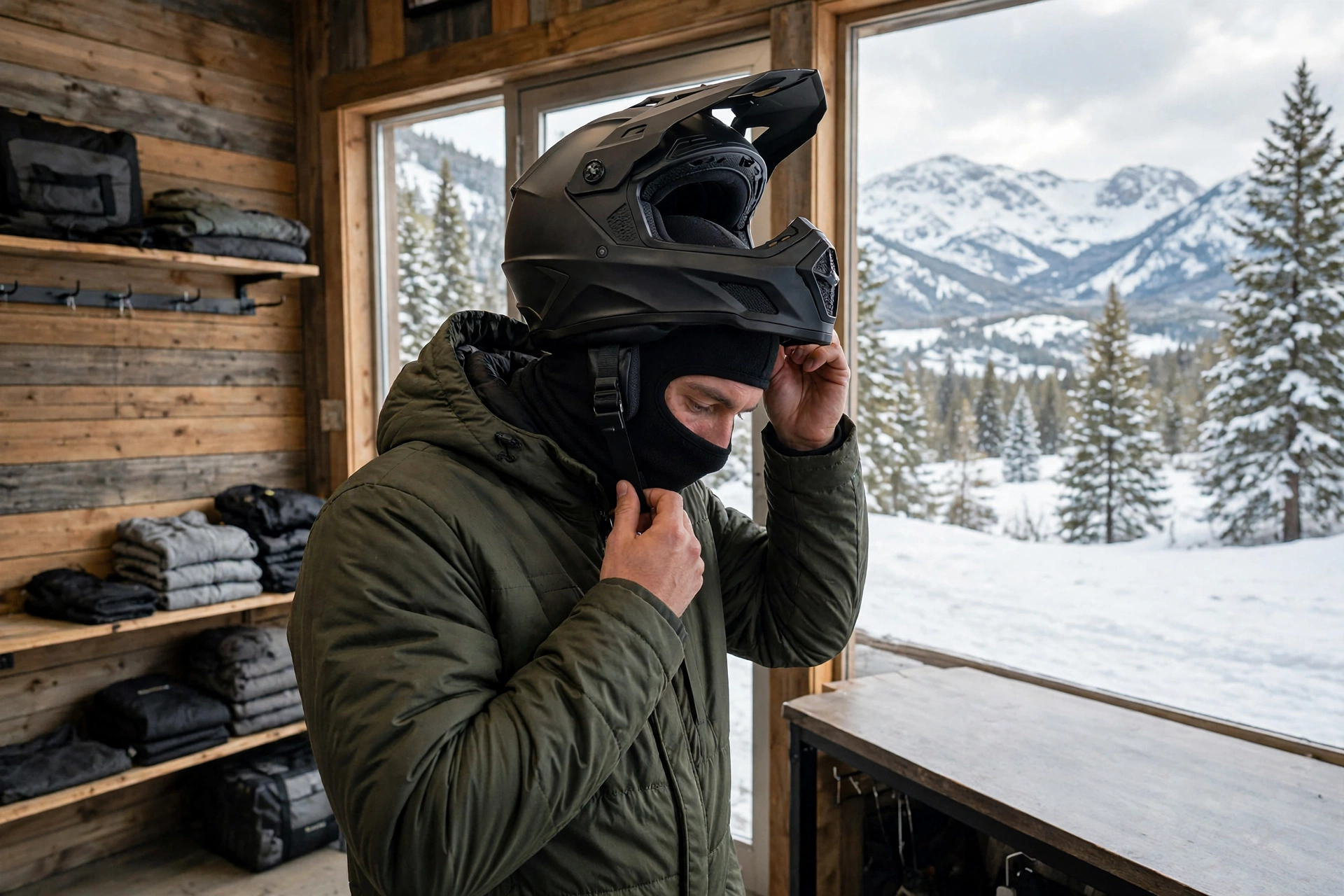
How tight should the cheek pads feel?
Firm. On a new full-face snowmobile helmet, the cheek pads should press in enough to slightly puff your cheeks, and speaking should feel a little effortful — riders often describe it as making you gently bite the insides of your cheeks when you talk. This is normal and eases as the pads break in.
What is not normal: pain, a jaw that aches within minutes, or pressure that gives you a headache. Check overall movement too — grip the helmet and try to rotate it; your skin should move with it rather than the helmet sliding over your skin. Shake your head side to side and nod: the helmet should follow without a delay or a clunk.
How do the breath box and deflector affect fit?
Most snowmobile helmets use a breath box or breath deflector to route your exhaled air down and away from the shield — it is the main defense against fogging. For it to work, the breath box must seal gently around your nose and cheeks without pushing the helmet up or leaving gaps at the sides.
Adjust it with the balaclava on, since the fabric changes the seal. Breathe normally and check that air is not streaming up toward the shield. If the breath box presses hard enough to be uncomfortable, most are adjustable or reshapable, and some helmets accept different sizes. Riders picking between snow and other winter helmets will find our comparison of ski helmets vs snowboard helmets useful background on how winter helmets differ in fit and venting.
One more fit check riders skip: the neck and chin area. A snowmobile helmet should seal reasonably well at the neck roll and chin curtain, because a gap there lets frigid air blast up inside at trail speed, chilling your face and fogging the shield from the inside. With your jacket on and zipped to the top, turn your head fully left and right, then look up and down. The helmet should not catch on your jacket collar, lift, or open a gap at the back of the neck. If cold air can pour in during this test in a warm shop, it will be far worse at speed in January.
Do full-face and modular snowmobile helmets fit differently?
Yes. A traditional full-face helmet has a fixed chin bar and usually the most consistent, secure fit. A modular (flip-up) helmet adds a hinge and latch at the chin bar, which can make it slightly heavier and sometimes a touch looser around the cheeks; fit one carefully and make sure the chin bar latches with a positive click and does not wobble.
Modulars are popular with trail riders who stop to talk, eat, or fuel up often, while a full-face tends to seal better against wind. Either style needs the same checks. Also confirm your glasses slide into the helmet’s eyeglass channels without the temples being forced outward — bent temples mean pressure headaches later — and that the drop-down sun shield, if fitted, clears your glasses.
Frequently Asked Questions
Should a snowmobile helmet be tighter than a motorcycle helmet?
Not tighter — the same snug standard applies. It only feels different because the balaclava, breath box, and heavier sealing change how the fit presents. Snug and even, never painful.
How long does a snowmobile helmet take to break in?
Cheek pads usually settle within the first several rides. If the helmet is still creating hot spots after a few full days of riding, the shape is wrong for your head.
Can I fit a snowmobile helmet for a child the same way?
Use the same measuring method, but never buy a size to “grow into.” A loose helmet on a child is unsafe, and youth sizes exist for a reason.

Olivia
Writer at Helmet Today, covering helmet reviews, fit and riding safety.