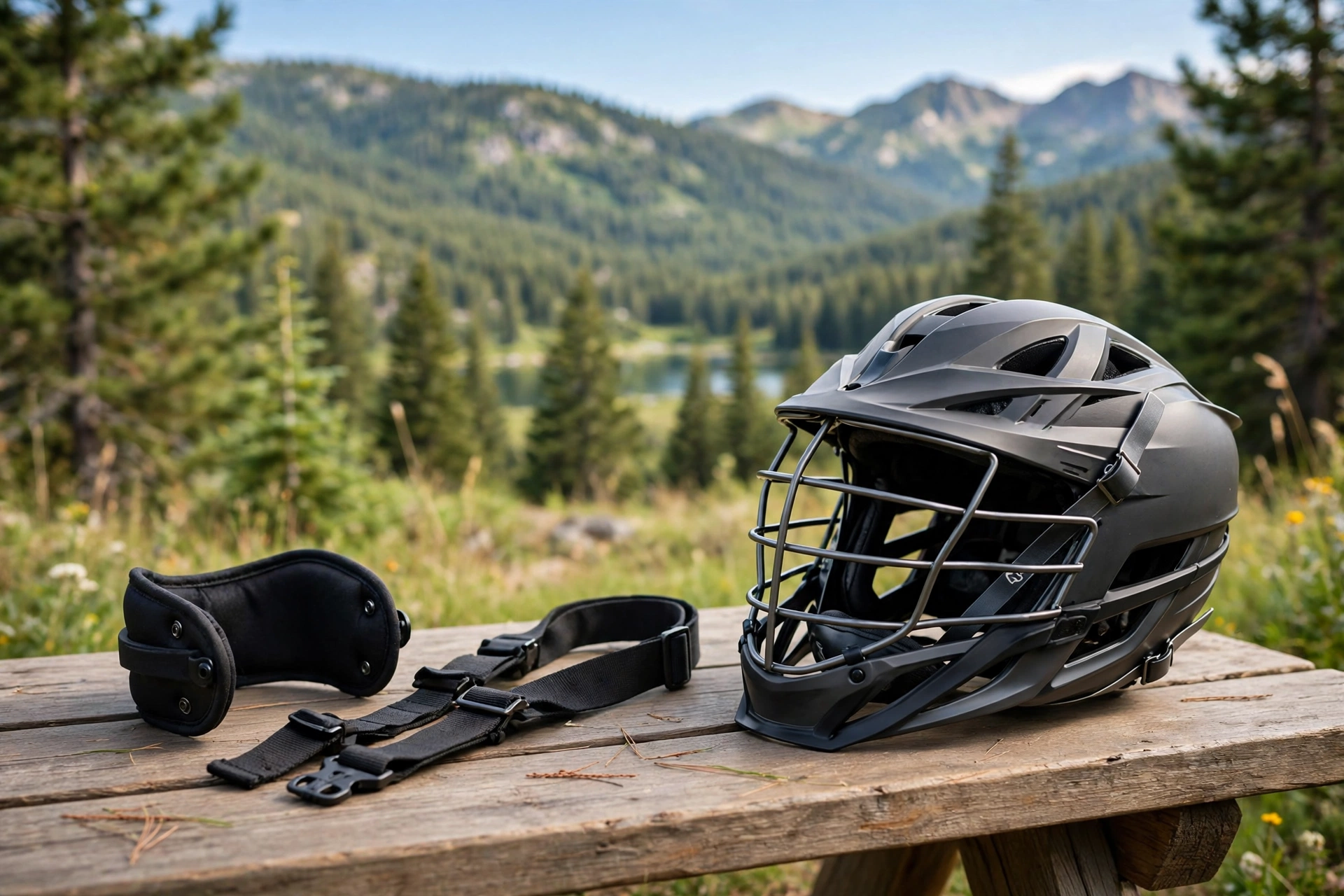
Replacing a lacrosse helmet chin strap is a straightforward job: unclip or unscrew the old strap at its attachment points, fit a compatible replacement strap and chin cup in the same routing, and adjust it until the cup sits centered and snug on your chin. Most players can do it in about fifteen minutes with no special tools beyond, on some models, a screwdriver.
The chin strap is the part that keeps the helmet positioned during checks and collisions, so a worn strap is a safety issue, not a cosmetic one. Work methodically, note how the old strap is routed before you remove it, and your replacement will go on exactly as the original did.
When Should You Replace a Chin Strap?
Replace the strap when the webbing is frayed, cut, or stretched out, when the stitching at the ends is pulling loose, or when the chin cup is cracked, torn, or so compressed it no longer cradles your chin. Snaps or buckles that no longer click positively, pop open under a firm tug, or show rust or cracking are also clear signs. A strap that needs constant re-tightening during a game has usually stretched or has a worn adjuster, and it will not get better.
Also replace the strap after any significant impact in which the helmet took a hard hit while you were wearing it — webbing and hardware can be weakened in ways that are not obvious at a glance. And treat the strap as part of your routine inspection: run your fingers along its full length before the season and every few weeks during it, feeling for thin spots, stiff sections from dried sweat and dirt, and damage near the attachment points where wear concentrates.
A strap that is merely dirty is a different case. Sweat and grime can be washed out with mild soap and water and air-dried, which often restores grip and comfort. If cleaning does not bring it back to supple, secure condition, replacement is the answer.
How Do You Remove the Old Strap?
Before touching anything, take a photo of the strap routing on both sides of the helmet — which slots the webbing passes through, which side each buckle sits on, and how the cup is oriented. Replacement straps thread the same way, and the photo saves guesswork later.
Most lacrosse chin straps attach with snap buttons, screws through the shell, or webbing slots, and many helmets combine them (snaps at the front, slots at the back, for example). For snaps, pull firmly and evenly at the snap itself rather than yanking the webbing, which can tear the strap end or damage the socket. For screwed attachments, undo the screws with the correct screwdriver, keep the screws and any backing plates in a small container, and note which length of screw came from which hole — they are not always identical. For slotted webbing, note the threading direction as you slide each end free.
With the strap off, inspect the attachment points on the shell. Cracked snap sockets, elongated screw holes, or damaged slots are shell problems, not strap problems; a new strap cannot fix them, and a helmet with damaged attachment points should be assessed by the manufacturer or replaced. Clean the area around the mounts while you have access — grit here grinds into new webbing surprisingly fast.
How Do You Choose a Compatible Replacement Strap?
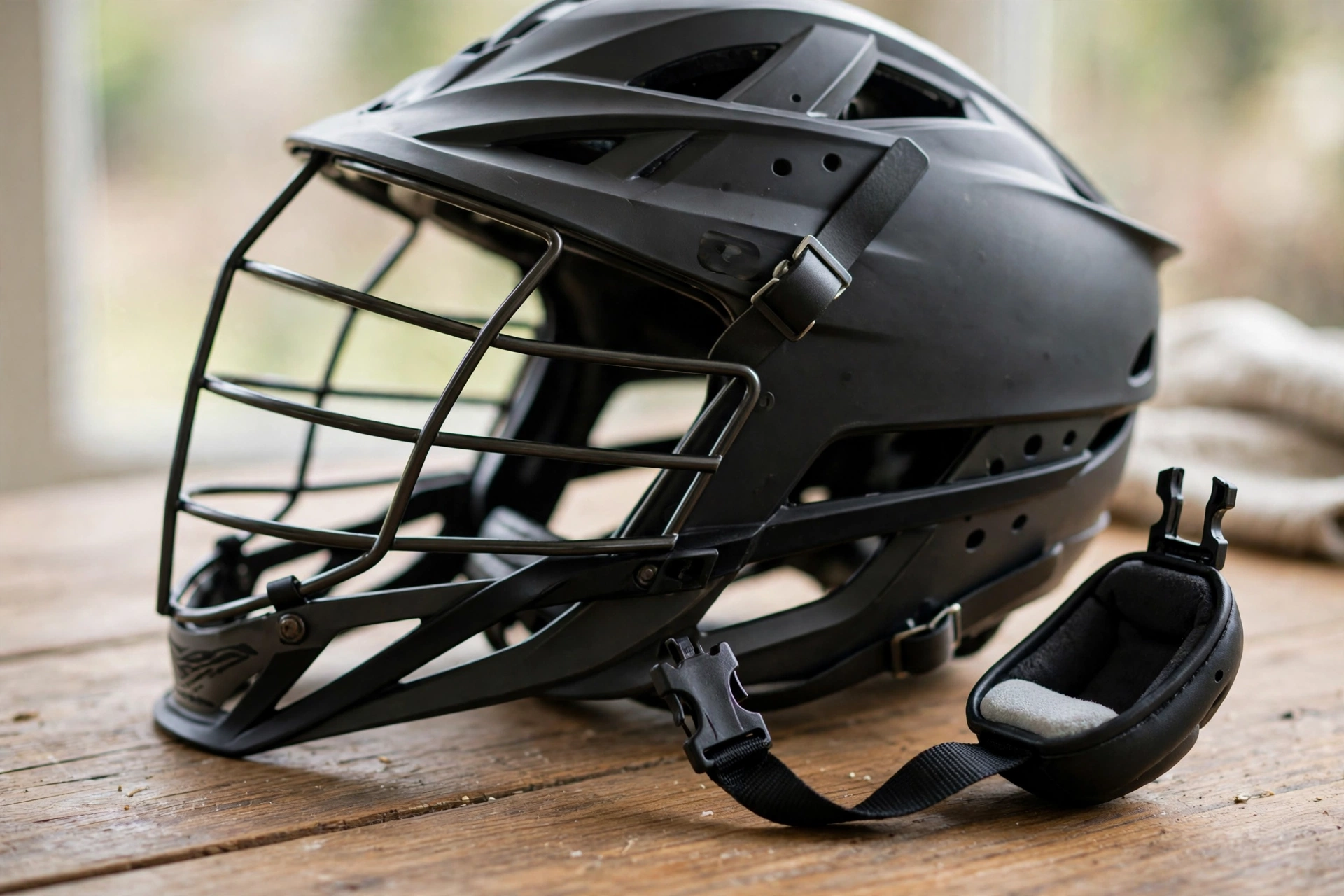
Buy a strap made for your helmet’s brand and model, or one the helmet manufacturer lists as compatible. Chin straps differ in attachment type (snap pattern and spacing, screw positions, slot width), in webbing length, and in cup shape and size. A strap that almost fits usually means hardware under strain at an angle — which is how straps pull free at the worst moment.
Choose the chin cup style deliberately. Hard cups give a firm, positive location on the chin and are common in field lacrosse; softer, padded cups trade a little of that locked-in feel for comfort over a long game. Either is fine if it fits your face and the helmet — what matters is that the cup centers on your chin and stays there. Check also that any replacement meets your league’s equipment rules, since some leagues require manufacturer-supplied components. Thinking about how straps work alongside the rest of the helmet’s safety design is useful too; our article on MIPS helmet safety systems shows how much of a helmet’s protection depends on every part holding position as designed.
How Do You Fit and Thread the New Strap?
Attach the new strap in the reverse order of removal, following your photo. Thread slotted ends in the original direction, press snaps home until each clicks, or refit screws snugly — firm, but not forced, since the mounting points are in the shell and stripped or cracked mounts end a helmet’s life. If the strap has a distinct front and back or left and right (many do, because of cup orientation), confirm it before final tightening.
With everything attached but loose, put the helmet on. Center the cup on the point of your chin, then take up the slack evenly on both sides using the adjusters, a little at a time. The webbing should lie flat everywhere with no twists — a twisted section concentrates pressure and shortens unevenly. Check that the ear loops frame your ears symmetrically, which confirms the lengths are balanced, and that buckles sit in a comfortable spot below the jaw rather than pressing on it.
How Do You Do the Final Safety Check?
First, the tug test: with the strap fastened, pull each attachment point firmly. Every snap, screw mount, and slider should hold without slipping or partial release. Then the movement test: shake and nod your head hard. The helmet should track your head, the cup should stay centered, and nothing should click or shift.
Finally, the jaw test: open your mouth wide and talk. The helmet should move with your jaw instead of sliding up or down, and the strap should feel snug with roughly a finger’s width of give under the chin. Recheck everything after your first practice — new webbing settles slightly — and add strap condition to your regular kit check from then on.
Frequently Asked Questions
Can I use any chin strap on my lacrosse helmet?
No. Use a strap made for your helmet model or listed as compatible by the manufacturer. Attachment spacing, hardware, and cup shape vary, and a near-fit strap can pull free under load.
How tight should a new chin strap be?
Snug enough that the helmet moves with your jaw when you open your mouth, the cup stays centered when you shake your head, and about one finger fits between strap and chin.
What if a snap socket or screw hole in the shell is damaged?
Do not rely on a new strap to fix it. Damaged attachment points are a shell problem — have the helmet assessed by the manufacturer or replace it, because the strap must hold firmly in a collision.

Olivia
Writer at Helmet Today, covering helmet reviews, fit and riding safety.