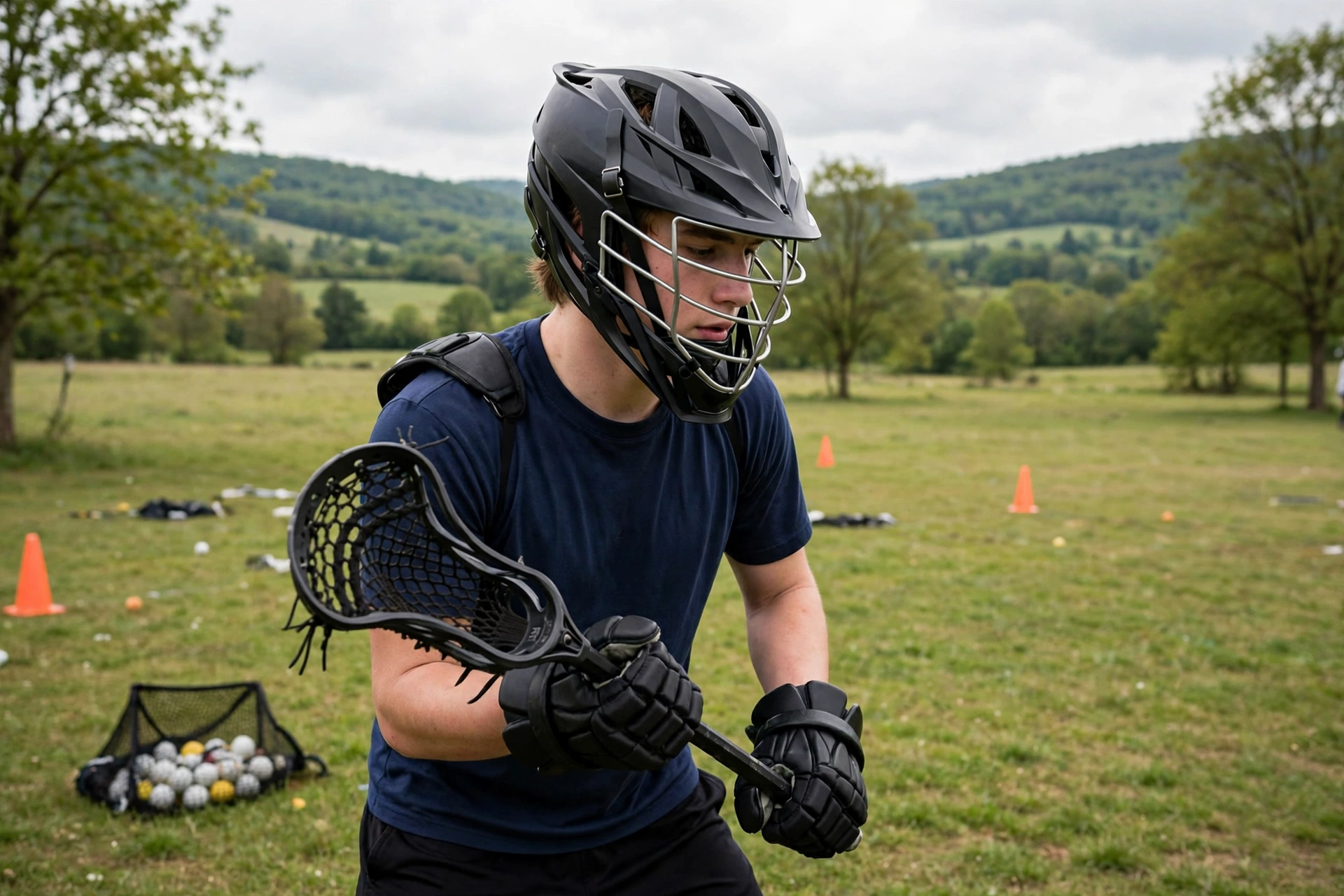
To choose a lacrosse helmet for beginners, start with certification: pick a new helmet that meets the NOCSAE standard and carries SEI certification, then size it from an accurate head measurement. After that, check fit, comfort, and adjustability, because a certified helmet only protects well when it stays in the right position.
Lacrosse helmets look different from most sports helmets because they combine a hard shell, face mask, and chin protection in one unit. That design can make a first purchase feel confusing, but the decision gets simple if you work in order: safety standard first, size second, fit and comfort third.
Why does certification matter first for a beginner lacrosse helmet?
Every lacrosse helmet used in organized play should meet the NOCSAE performance standard for lacrosse helmets and be certified by SEI, the Safety Equipment Institute. Look for the NOCSAE and SEI markings on the helmet and its packaging, and check that the model has not been recalled or altered.
Certification matters because lacrosse involves stick checks, ball impacts, player contact, and falls. A fashion helmet, a helmet made for another sport, or an old helmet with no clear certification is not a safe substitute. League and school rules usually require certified equipment, so buying the right standard first also avoids problems at check-in.
Do not modify the helmet to make it look better or fit differently. Cutting foam, removing padding, bending the mask, or repainting with harsh products can change how the helmet performs and may void its certification.
How do you size a lacrosse helmet correctly?
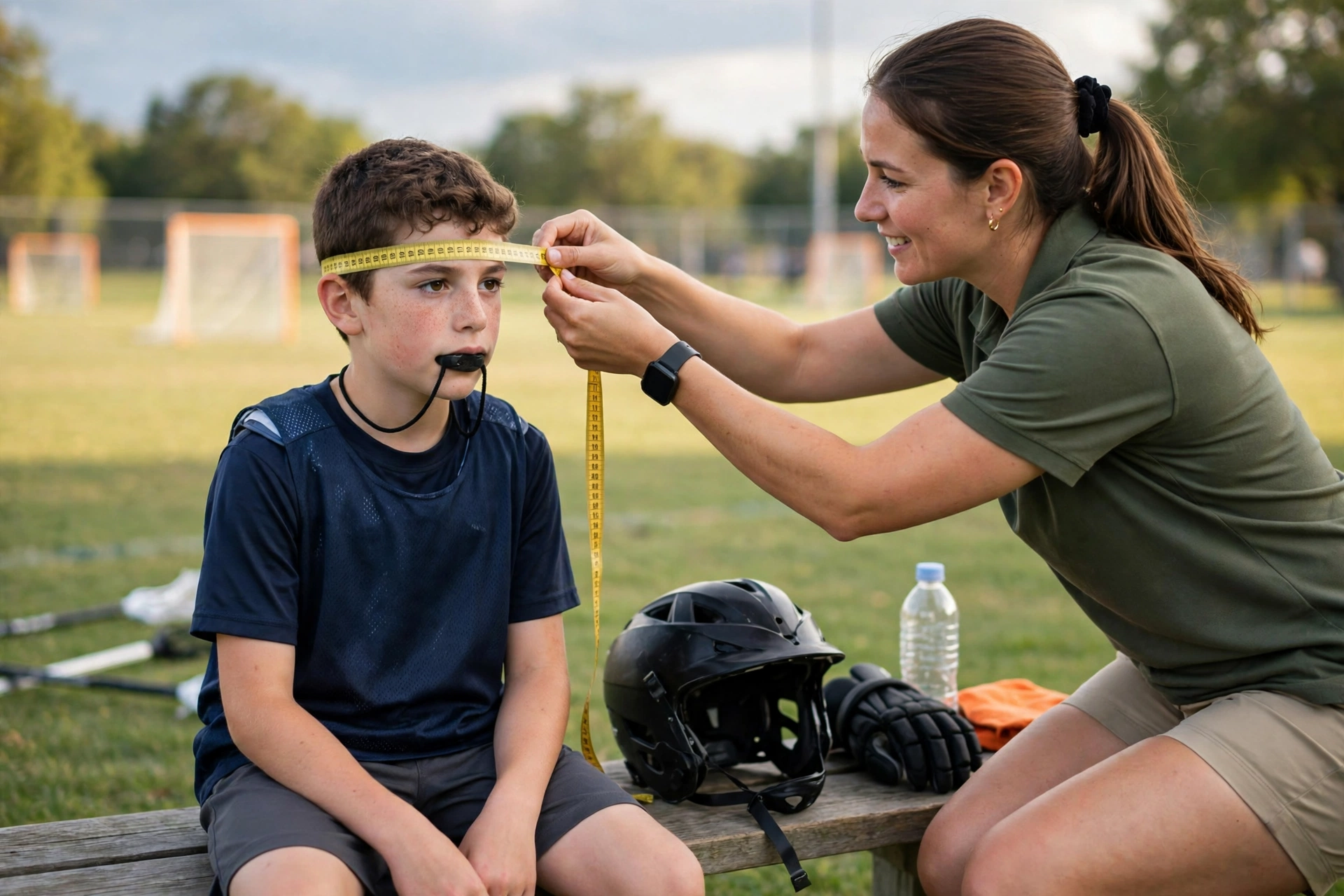
Measure the head before you shop. Wrap a soft tape measure around the head just above the eyebrows and ears, where a sweatband would sit, and keep it level. Write down the measurement in inches or centimeters and compare it with the size chart for the exact model you are considering, because size ranges vary between designs.
If the player is between sizes, follow the maker’s guidance and pay attention to the fit check rather than the label alone. A lacrosse helmet should sit level, with the front edge low over the brow, and it should feel snug all around without painful pressure points. It should not rock side to side, slide forward over the eyes, or lift easily when the chin strap is fastened.
Try the helmet with the hairstyle and any under-helmet layer the player normally wears. A quick fitting in a store is useful, but wear it for several minutes if possible. Pressure that feels minor at first can become a headache during practice.
What fit systems help growing players?
Many beginner-friendly helmets use adjustable fit systems, such as dial adjustments, interchangeable pads, or flexible shell panels. These features help fine-tune the fit as a young player grows or as padding settles with use. They are helpful, but they do not turn the wrong size into the right size. Start with the closest shell size, then use the adjustments for small corrections.
Check three contact areas during fitting. The helmet should touch evenly around the head, the chin cup or strap should hold the helmet steady without choking, and the face mask should give a clear view without pressing the nose or cheeks. Ask the player to shake and nod their head, look side to side, and open their mouth. The helmet should move with the head, not around it.
Modern helmet design often borrows ideas from other contact sports, including liners made to manage different kinds of impact. If you want background on one common safety technology used in other helmets, this guide to what MIPS is in a helmet explains the basic idea, but lacrosse buying decisions should still start with NOCSAE and SEI certification.
Is a new helmet better than a borrowed or used one?
For a beginner, a new helmet is usually the safer and simpler choice. You know its history, the padding is fresh, the straps and fasteners are complete, and the certification labels are easy to verify. A borrowed helmet from a sibling or teammate may be acceptable for a very first tryout if it is certified, undamaged, the right size, and allowed by the team, but it should still be inspected carefully.
Avoid used helmets with unknown crash history. Cracks in the shell, loose mask hardware, compressed foam, frayed straps, missing pads, rust, or a musty liner that will not clean properly are all reasons to walk away. Helmets also age, and older models may not meet current requirements or league rules.
Reconditioning is another point to check with older helmets. Some helmets need periodic inspection or reconditioning by approved services to remain eligible for play. If you cannot confirm the helmet’s age, condition, and status, replacing it is the responsible option.
Do positions and budgets change what a beginner should buy?
Most field players use the same basic style of certified lacrosse helmet, but goalies need extra throat protection. A goalie setup normally includes a throat guard attached to the helmet, and many leagues require it. If the beginner may play goalie even occasionally, ask the coach what throat protection is required before buying accessories.
Attackers, midfielders, and defenders mainly differ in sticks and sometimes other gear, not in the need for a properly certified and fitted helmet. Comfort matters for every position because a player who keeps adjusting a helmet is distracted and may wear it incorrectly.
Set a realistic budget without treating price as a safety rating. Certified helmets are sold at different price levels, and higher cost may reflect fit features, weight, ventilation, or finish rather than a simple guarantee of better protection. For a beginner, spend first on correct certification and fit, then on comfort features the player will actually use. Leave room in the budget for a mouthguard, gloves, and other required gear if those are not already provided.
Before the first game, do a final check at home: labels visible, mask secure, straps adjusted, chin protection centered, and vision clear. If anything feels wrong, ask the coach or an experienced equipment manager to look before play begins.
Frequently Asked Questions
Can a beginner use a hockey helmet for lacrosse?
No. Lacrosse helmets are certified for lacrosse and built with an attached mask and different coverage. Use a NOCSAE/SEI-certified lacrosse helmet that your league accepts.
How tight should a lacrosse helmet feel?
It should feel snug and even, with no wobble when the strap is fastened. It should not cause sharp pain, numbness, or a headache after a few minutes of wear.
When should a youth player move to a new size?
Move up when the current helmet no longer sits level, cannot be adjusted to stay secure, feels painfully tight, or leaves the forehead exposed. Recheck fit during growth spurts and at the start of each season.

Olivia
Writer at Helmet Today, covering helmet reviews, fit and riding safety.