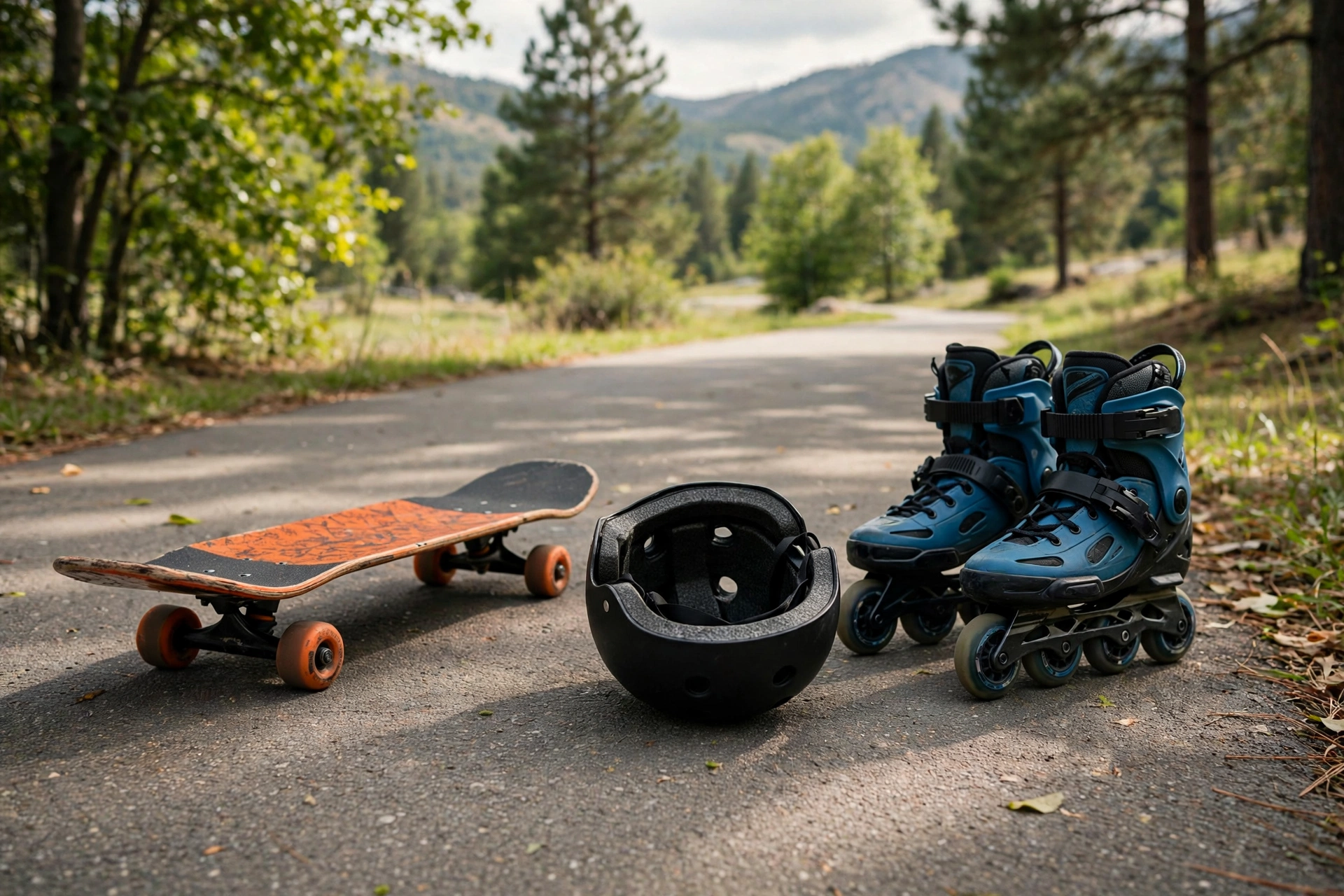
The honest difference between a skateboard helmet and a rollerblade helmet is smaller than many shoppers expect: many helmets for both sports are built in the same skate style and certified to similar safety standards. The real differences are usually coverage shape, ventilation, fit, and whether the helmet is dual-certified for the activities you do.
Marketing names can make it sound as if skateboarding and inline skating need completely separate helmets. In practice, you should buy by certification, coverage, and fit rather than by the sport printed on the box.
Are skateboard and rollerblade helmets certified the same way?
Many skate-style helmets are certified to ASTM F1492, the standard commonly used for skateboarding and similar wheel sports. Bicycle-style helmets are usually certified to the CPSC bicycle standard in the United States. Some helmets carry more than one certification, which is often called dual-certified.
Rollerblade and inline skating helmets are often the same skate-style helmets sold for skateboarding, scooters, and roller skating. If a helmet is certified for skateboarding under ASTM F1492, it is generally designed for the kinds of falls that happen in skating sports, including falls backward. Always read the label inside the helmet and confirm the intended uses listed by the maker.
Do not assume a helmet is certified just because it has a hard shell and foam. Some novelty or uncertified helmets look similar but do not meet a safety standard. For both skateboarding and rollerblading, choose a certified helmet that fits properly and has not been damaged.
What coverage differences should you look for?
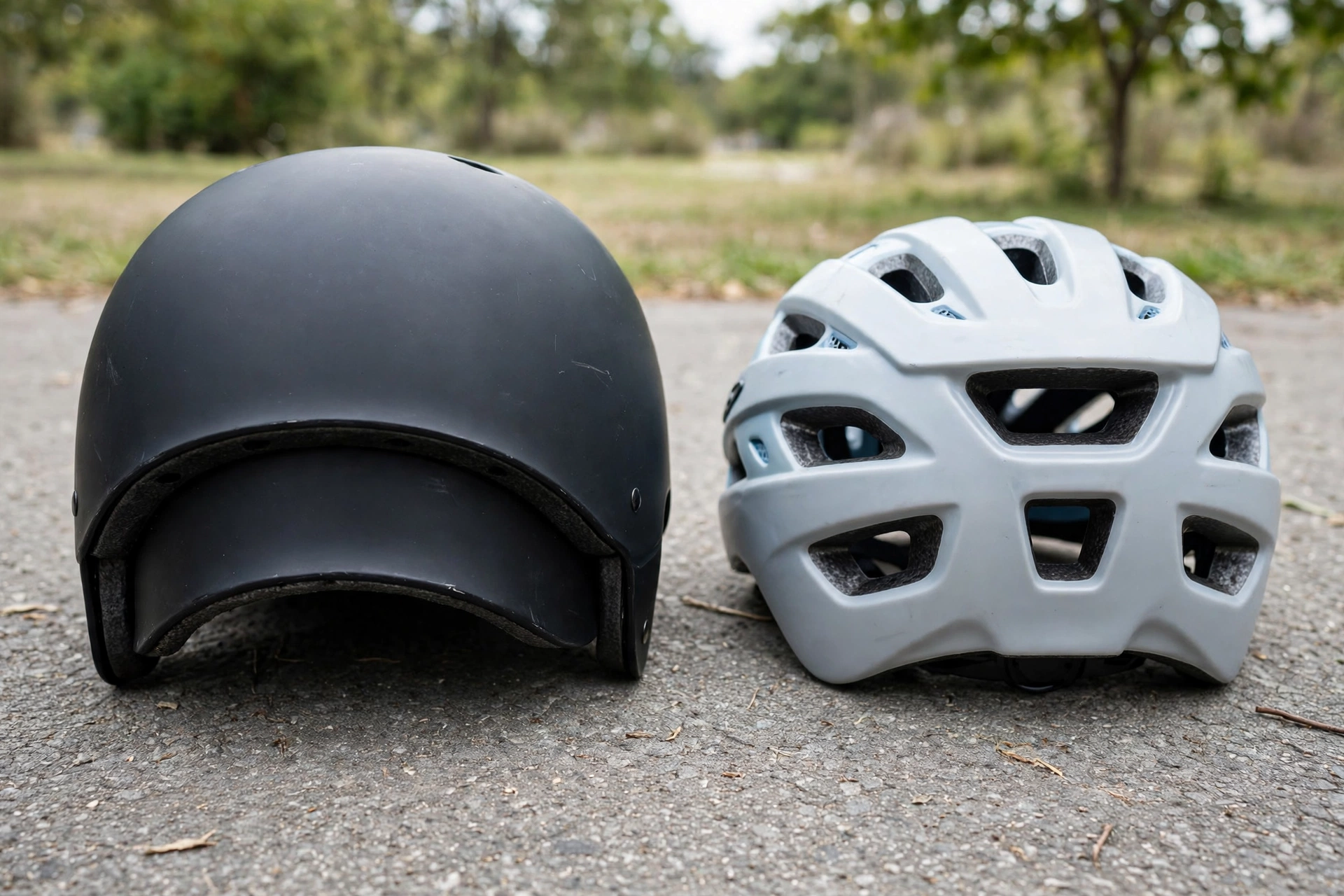
Skateboard helmets usually have a round, bowl-like shape that sits lower on the head and gives more coverage at the back and sides. That shape is popular because skateboard falls can throw the rider backward, and the extended rear coverage helps protect the back of the head.
Helmets aimed at inline skating may look almost identical, but some are lighter, have more vents, or sit slightly higher and feel closer to a bike helmet. Inline skaters often travel faster in a straight line and may value airflow more, while skateboarders doing tricks may prefer the classic low coverage and durable shell.
Check coverage on your own head. The helmet should protect the forehead, sides, and back of the head without blocking vision or hearing. If the rear edge leaves a large gap above the neck or the front rides high over the brow, try another size or model. Good fit matters as much as the category name, and understanding basic helmet fit and safety design, including systems described in this guide to MIPS in helmets, helps you judge whether a helmet stays stable during movement.
Can one helmet work for both skateboarding and rollerblading?
Yes, one helmet can often work for both if it is certified for both uses or for the broader skating category, fits correctly, and is in good condition. A dual-certified helmet is the easiest choice for people who skateboard, inline skate, roller skate, and ride scooters with the same gear.
The main caution is mixing skating helmets with bicycle use. A helmet certified only for skateboarding may not be the right choice for cycling unless it also carries the bicycle certification required in your area. Likewise, a bicycle helmet may not give the rear coverage many skateboarders prefer. Read the certifications instead of guessing from the shape.
Think about how you fall in each sport. Skateboarding includes repeated low-speed tumbles and board slips. Inline skating can involve higher speeds on paths and roads, where visibility, ventilation, and a secure fit over longer sessions matter. A helmet that is comfortable enough to wear every time is better than a technically suitable helmet that sits in a bag.
How do fit and straps differ between the two?
Most skate and rollerblade helmets use similar straps, side buckles, and rear adjustment systems, but small details change how stable the helmet feels. Skate-style helmets often rely on internal pads for fit, while more cycling-influenced inline helmets may include a rear dial for finer adjustment.
Fit the helmet level on the head, low on the forehead, with the straps forming a neat V under each ear. The chin strap should be snug enough that the helmet does not shift when you push it from the front, back, or sides, but not so tight that it hurts the jaw.
Try the helmet while moving your head as you would when skating: look over your shoulder, bend down, and shake gently. For inline skating, check that the helmet does not creep while you look back for traffic or other skaters. For skateboarding, check that it stays put when you crouch and turn quickly.
Which helmet should you buy if you do both sports?
Buy the certified helmet that matches all your regular activities, covers the back of your head well, and fits without pressure points. If you only skateboard and rollerblade, a quality skate-style ASTM F1492 helmet is usually a sensible shared choice. If you also cycle often, look for a model that is also bicycle certified.
Choose ventilation based on how and where you skate. Hot-weather inline skaters may prefer more vents, while park skateboarders may accept a warmer bowl helmet for its coverage and durability. Neither choice is automatically safer if certification and fit are equal, but comfort affects whether you wear it consistently.
Also think about replacement pads and strap condition before sharing one helmet across sports. Sweat and frequent use wear pads quickly, and a helmet that fitted well last season may feel loose now if the pads have thinned or the straps have stretched.
Inspect the helmet before deciding it can serve double duty for another season. Crushed foam, cracked shell, stretched straps, or a previous hard impact mean the helmet should not be trusted for either sport. When in doubt, replace it and keep the old one out of use so nobody wears it by mistake.
Frequently Asked Questions
Is a rollerblade helmet the same as a skateboard helmet?
Often yes in design, because many are the same skate-style helmets. The label and certifications matter more than the sport name used in marketing.
Can I wear a bike helmet for skateboarding?
You can only rely on it if it fits well and you accept the different coverage shape. Many skateboarders prefer a skate-certified helmet with lower rear coverage, and some bike helmets are not skate certified.
What does dual-certified mean?
It means the helmet meets more than one standard, commonly skate and bicycle standards. That makes it a flexible option if you regularly switch between board, skates, scooter, and bike.

Olivia
Writer at Helmet Today, covering helmet reviews, fit and riding safety.