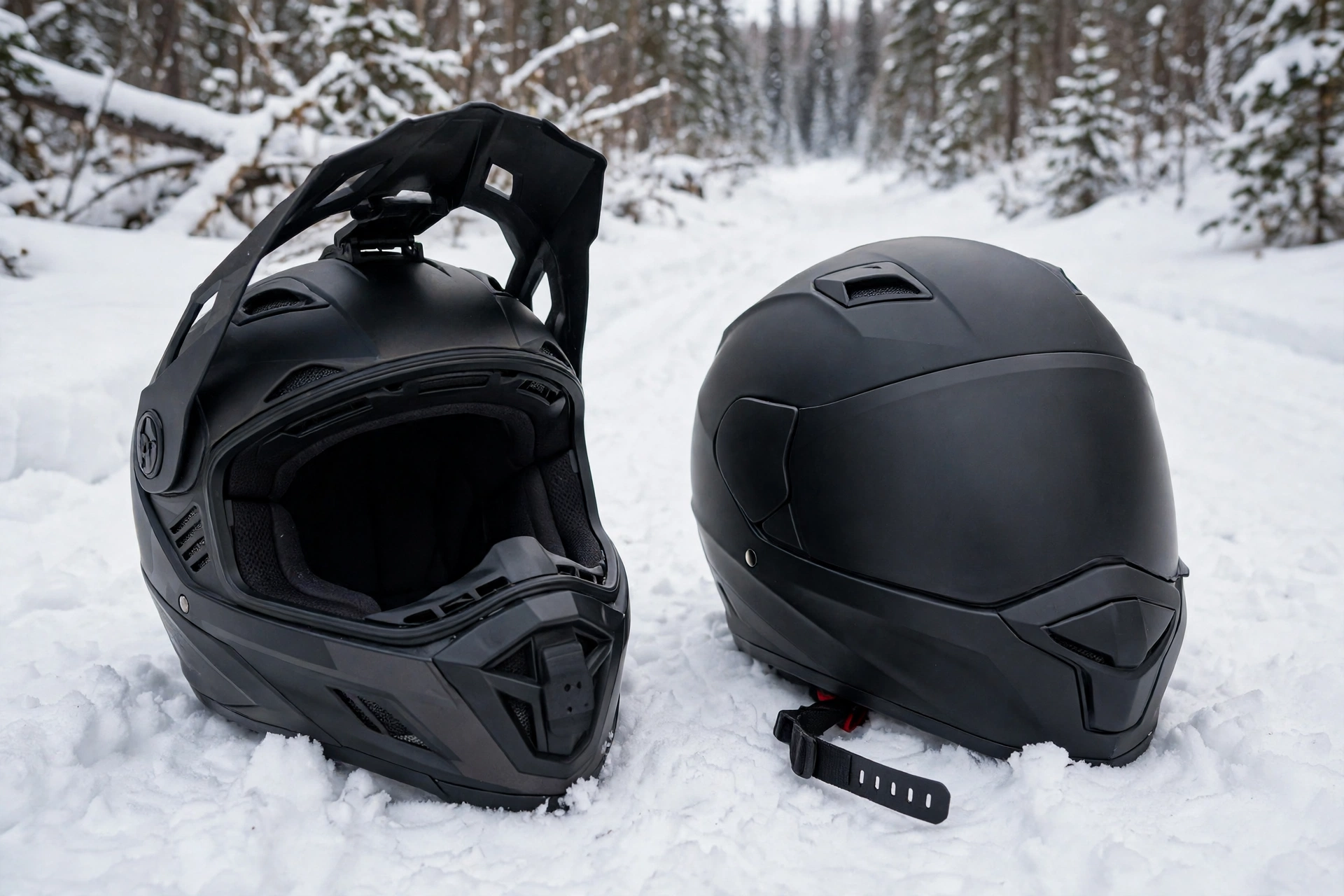
A modular snowmobile helmet has a chin bar that flips up, while a full face helmet has a fixed chin bar that never moves. Modular helmets win on convenience at trail stops, and full face helmets win on simplicity, lighter weight, and usually a tighter seal against cold air and snow dust.
Both styles can work well for snowmobiling, and both are available with heated shields. The right choice depends on how you ride: relaxed trail touring favors modular, while fast, aggressive riding in deep cold usually favors a fixed full face design.
What Is the Main Difference Between Modular and Full Face Snowmobile Helmets?
The difference is the chin bar. On a modular helmet, the whole chin bar and shield pivot upward on hinges, turning the helmet into an open face style you can talk, drink, and breathe through easily. On a full face helmet, the chin bar is molded as one piece with the shell, so the front of the helmet never opens.
That single design change affects almost everything else. Modular helmets need hinges, latches, and a locking mechanism, which adds parts, weight, and cost. Full face helmets have fewer moving parts, so there is less to wear out, less to rattle, and less that can let cold air sneak in around the front of the helmet.
Both types use a full shield that covers your eyes and face, both accept breath boxes and balaclavas, and both are built to handle the same winter conditions. The shell materials and impact protection are broadly similar, so the real decision is about daily convenience versus sealed, simple protection.
Why Do So Many Trail Riders Prefer a Modular Helmet?
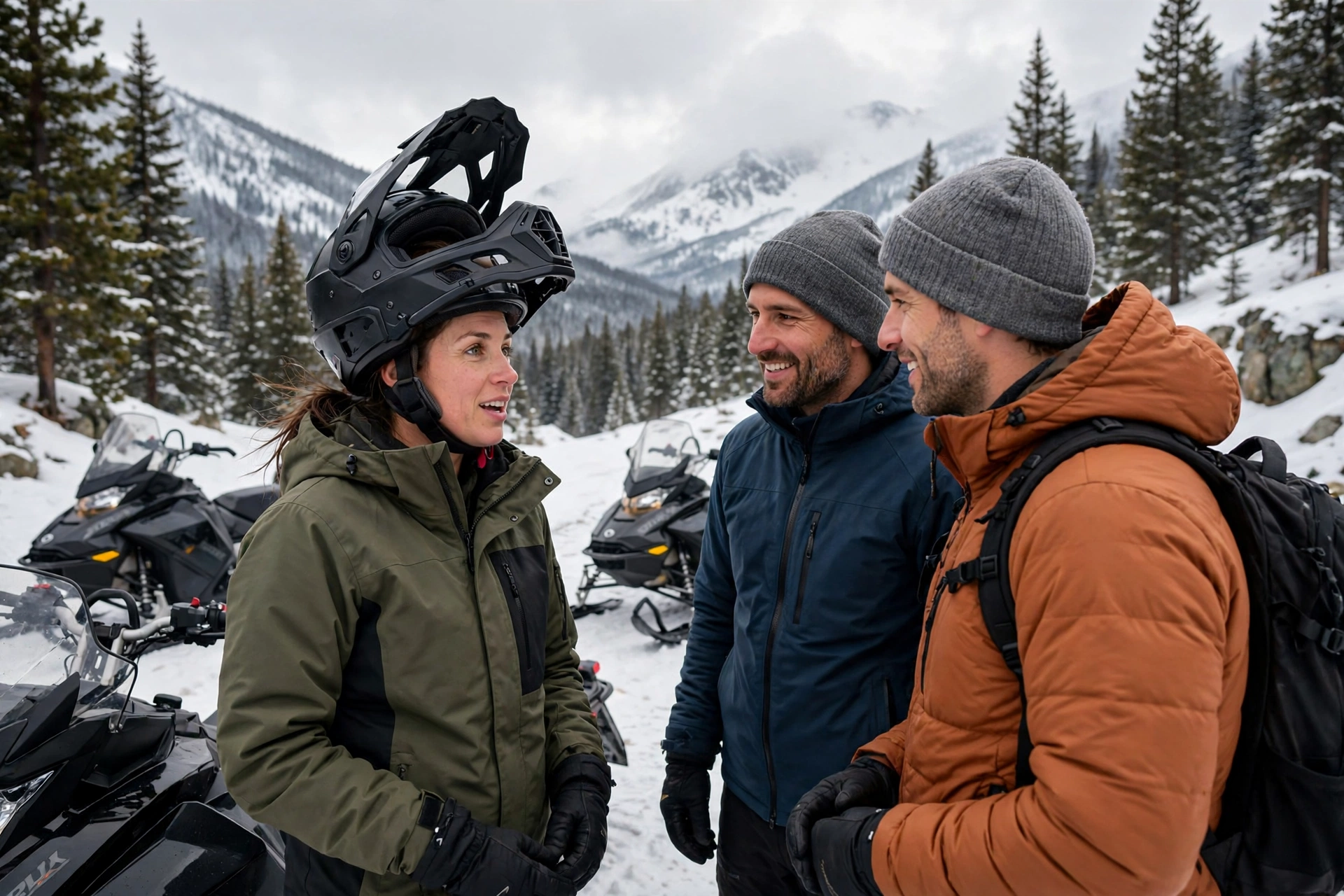
Trail touring involves a lot of stopping. You pause to check a map, talk to your riding group, take a photo, grab a drink, or chat at a fuel stop. With a modular helmet, you flip the chin bar up in one motion instead of pulling the whole helmet off every time, which keeps your head warm and your balaclava in place.
Modular helmets are also easier to put on and take off, especially if you wear glasses. The open front lets you slide glasses on comfortably, have a quick conversation without shouting through a chin bar, and get fresh air during a slow, warm section of trail.
For riders who stop often, ride in groups, or lead tours, that convenience adds up over a long day. Many riders say once they get used to flipping the front open at every stop, going back to a fixed helmet feels like a step backward.
How Well Does Each Type Seal Out Cold Air and Snow Dust?
This is where the full face helmet usually has the edge. A one-piece front has no hinge gaps or latch seams, so makers can seal it tightly with a good neck curtain and a well-fitted breath box. In bitter cold and powder, fewer seams generally means fewer drafts on your chin and cheeks.
A modular helmet can still seal well, but the seal depends on the latch and hinge condition. As hinges wear, small gaps can appear that let in cold air and fine snow dust, especially at speed. Keeping the latch clean of ice and checking that the chin bar closes with a solid click helps a lot.
Snow dust is a real issue when following other sleds. Fine powder finds every opening. Riders in very cold, powdery conditions often prefer the simpler front of a full face helmet, while modular riders in milder weather rarely notice a difference. Whichever you choose, a properly fitted breath box that directs your breath downward is essential for comfort.
Can You Get a Heated Shield on Both Types?
Yes. Heated electric shields are widely available for both modular and full face snowmobile helmets, and they work the same way: a heating element in the shield warms the surface so moisture does not freeze or fog on it. For most snowmobile riders, a heated shield is the single most effective anti-fog tool there is.
Both styles also use double-lens shields, breath boxes, and vents to manage moisture. Fog behavior is similar overall, although a modular helmet gives you one extra option: at a stop or at very low speed, you can crack or flip the chin bar to dump warm, moist air instantly instead of waiting for the vents to clear the shield.
One small caution with modular helmets is to route the heated shield cord so it does not get pinched by the moving chin bar. With that handled, fog control is essentially equal, and your choice can be based on fit and convenience rather than visibility.
Which Helmet Should Aggressive Riders and Deep-Cold Riders Choose?
If you ride hard, stand up a lot, ride off-trail, or head out in serious sub-zero weather, a full face helmet is usually the better match. It is typically lighter, has nothing to work loose, and delivers the most consistent seal mile after mile. The fixed chin bar also keeps the helmet feeling solid and quiet at speed.
If you are a trail tourer who values conversation, easy drinking and eating stops, and glasses-friendly convenience, a modular helmet fits your day better. Many crossover and touring riders consider the small weight penalty a fair trade for the flip-up front.
Either way, fit comes first. A helmet that presses on your forehead or wobbles will be miserable in the cold no matter which front it has. Try helmets on with your balaclava, check the shield seal, and if you are comparing winter setups across sports, our guide to the ski helmet vs snowboard helmet differences shows how winter helmets vary by activity. Choose the style that matches how you actually spend your day on the snow.
Frequently Asked Questions
Is a modular snowmobile helmet as warm as a full face?
Almost, if the latch and hinges seal tightly and you use a breath box and neck curtain. A full face usually seals slightly better in extreme cold because it has no hinge seams.
Can I ride with the modular chin bar flipped up?
Most modular helmets are designed to be ridden with the chin bar closed and locked. Riding with it up removes chin protection and can catch wind, so flip it up only at stops or very low speeds unless the maker states otherwise.
Do modular snowmobile helmets weigh more?
Yes, generally. The hinges and locking mechanism add some weight compared with a similar full face helmet, though many riders find the difference minor over a normal trail day.

Olivia
Writer at Helmet Today, covering helmet reviews, fit and riding safety.